
Irish low-cost airline Ryanair is being sued for violating consumers' rights with "sneaky pricing tricks" and false claims when booking a trip.
As three previous complaints filed with the Economic Inspectorate yielded no results, Belgian consumers' rights organisation Testachats (with the support of its umbrella organisation Euroconsumers) is now taking the company to court.
"Anyone who has booked on Ryanair or other low-cost airlines will be familiar with the tactics used, but may not know many of them to be in breach of well-established consumer law and passenger rights," said Euroconsumers.
Consumers booking a flight with Ryanair have to choose between different bundles: Basic, Regular, Plus or Flexi Plus. If they want to take hand luggage, the 'Regular' fare seems to be the right choice. This bundle gives passengers instant priority boarding and lets them choose their own seats.
However, those options may not be needed, and hand luggage can be added separately later in the booking process – at a lower price than the bundle price of the 'Regular' fare. But Ryanair does not mention this at the start of the booking process, to encourage consumers to choose the more expensive package.
'Only five seats left'
Secondly, Ryanair falsely claims that certain tickets are only available for a limited time to pressure consumers into making immediate purchases. Notably, through messages such as 'only five seats left at this price.' These messages are sometimes displayed on the website for a flight with what is ostensibly a discounted fare.
This gives the impression that consumers should quickly book a flight at what is presented as the discounted 'promo price', while research by Testachats and Euroconsumers shows that prices often drop after that.
Additionally, when people search for a flight on a particular date, Ryanair presents the lowest-priced flight available that day – even when there are multiple flights available at different prices. The information suggests that there is a fixed price for one day, which is not the case.
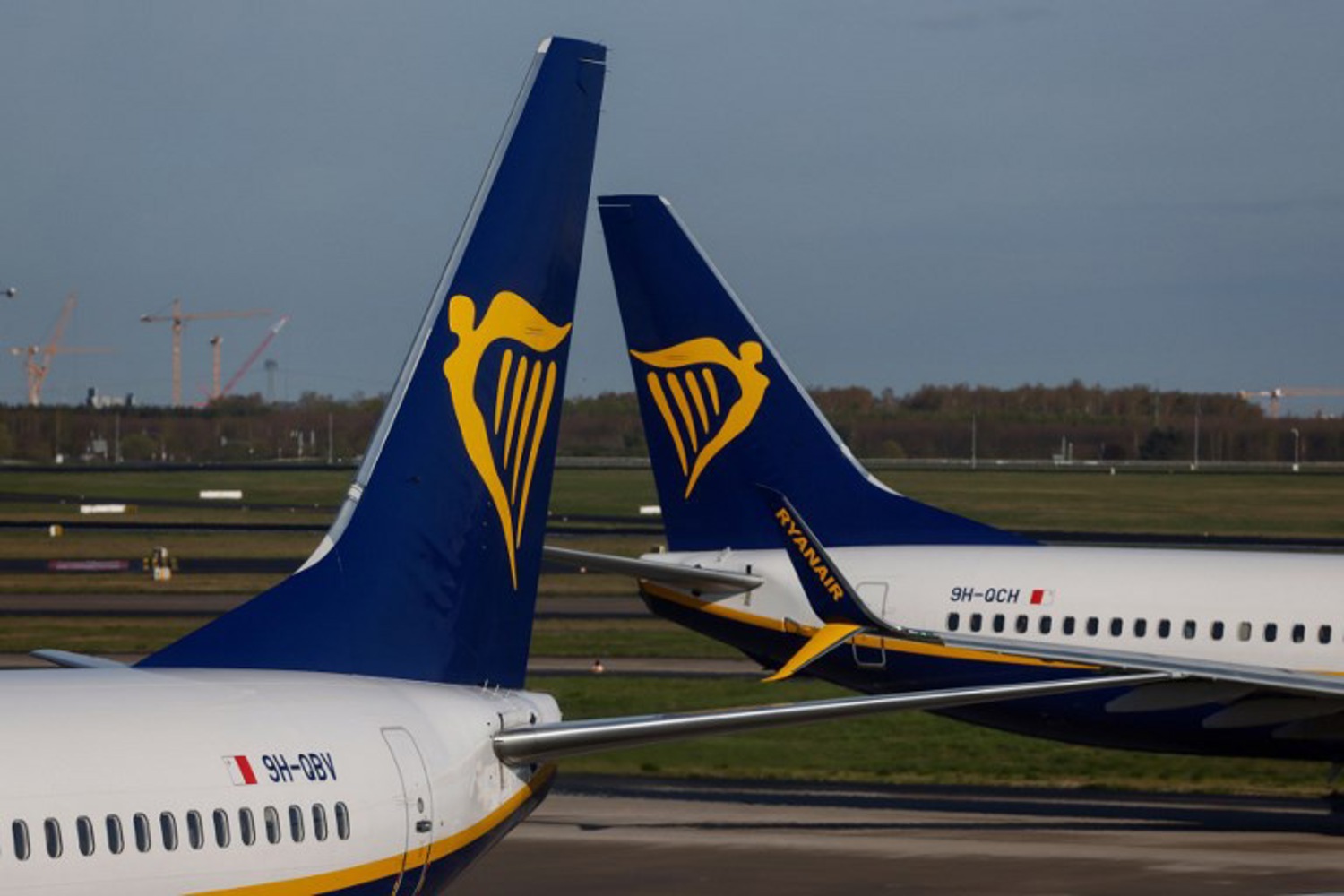
Aircraft of low-cost Irish airline Ryanair, on April 4, 2024. Credit: David Gannon/AFP/Belga
This practice – called 'bait pricing' or 'drip pricing' – is banned under EU Regulations on the operation of air services and Belgian law. However, Ryanair continues to display an initial price as "bait" for consumers, but optional fees are revealed as the booking progresses.
This way, the company delays the disclosure of essential pricing information, distorts consumers' price perceptions, and stops effective price comparison and competition between airlines.
'Reasonably-sized luggage'
In May 2024, Testachats filed a first complaint with the Economic Inspection against several airlines – including Ryanair – for charging for trolley-sized hand luggage. "This way, they make price comparisons difficult, as passengers only know their total price at the end of the booking process."
This violates European regulations and Belgian consumer protection law, which state that the full price must be clear at all times and from the beginning of the process. Additionally, the Court of Justice of the European Union (CJEU) has ruled that reasonable hand luggage is a "necessary aspect of the carriage of passengers" which therefore cannot attract a price supplement.
However, Ryanair's basic fare excludes carry-on baggage of a reasonable size and weight – meaning passengers must pay for it, in direct opposition to the CJEU judgement.
If checked-in baggage fees vary between outward and return flights, consumers will only see the lower fee on display by default, and both prices are automatically added at checkout. These hidden baggage fees are classed as "a misleading omission" and run contrary to EU and Belgian regulations.
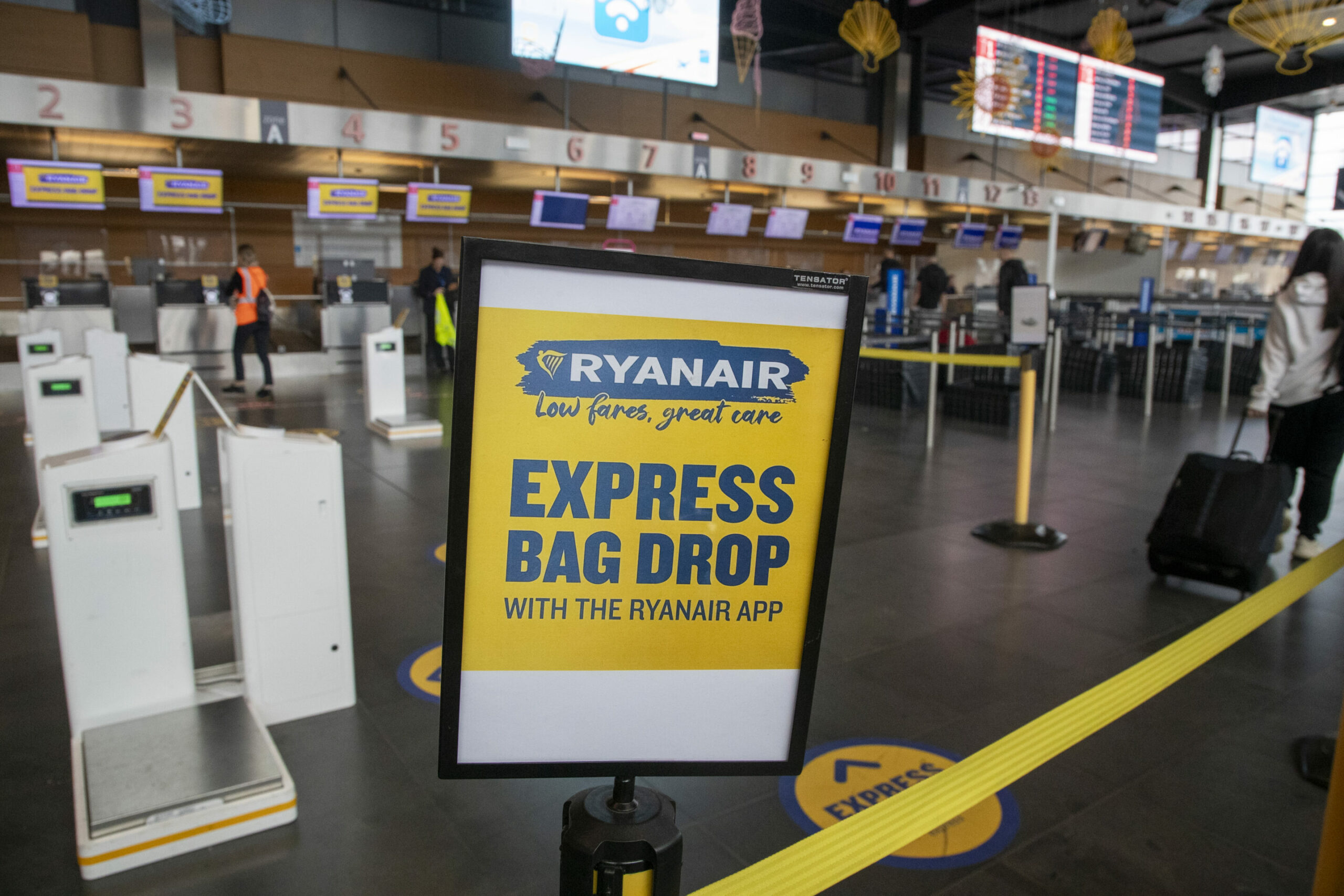
Ryanair is one of the airlines charging extra for hand luggage. Credit: Belga/Nicolas Maeterlinck
In Spain, Ryanair was even condemned for this, but the airline continues to charge the extra cost. What's more, Ryanair charges further surcharges, which forced Testachats to write to the Inspectorate twice more. "Yet, the problems keep piling up," the organisation said.
On top of that, Ryanair's booking process creates the false impression that it does not allow passengers travelling together to select different options – a family of four would all have to opt for the same luggage allowance, for example.
They also lump together extras like lounge access, extra legroom seats and extra baggage, and seem to give no options for consumers to opt out of parts of the bundle.
However, as consumers find out later on in the checkout process, cheaper options for unbundled extras like luggage are offered. If they have been misled into paying for the higher-cost bundle, their only option is to cancel and restart the booking in the hopes that their flights have not gone up in price.
"Several points in Ryanair's booking process are currently unclear or misleading," said Testachats spokesperson Laura Clays. "As European legislation also demands, we want prices to be clear to consumers from the beginning of the booking process, including for each service separately, to make it easier to compare different airlines."
Transparent and compliant?
Contacted by The Brussels Times, Ryanair said it "welcomed the filing of this false claims injunction" by Testachats. The company added that the injunction will confirm that its booking flow pricing and bags policies are "transparent and fully comply with EU law, which grants all EU airlines the freedom to set prices, including prices of optional services."
Additionally, the company dismissed some of Testachats' claims, stating that all prices are clearly displayed – designed in line with EU pricing freedom laws. "The option to buy flights and other ancillary products in a bundle, provides additional convenience for consumers and is again, fully transparent and lawful, and is standard practice across the transport industry, including bus and train services."
Ryanair also stressed that it allows each passenger to carry a "generous (40x25x20 cm) personal bag" on board for free, as part of its basic air fare. "With the option to add extra bags for an optional fee, should they so wish."
According to Ryanair, its policy promotes low fares and consumer choice. "If airlines were forced to include additional carry-on bags as part of the basic fare, it would reduce choice and drive up air fares for all passengers, which would harm consumers."
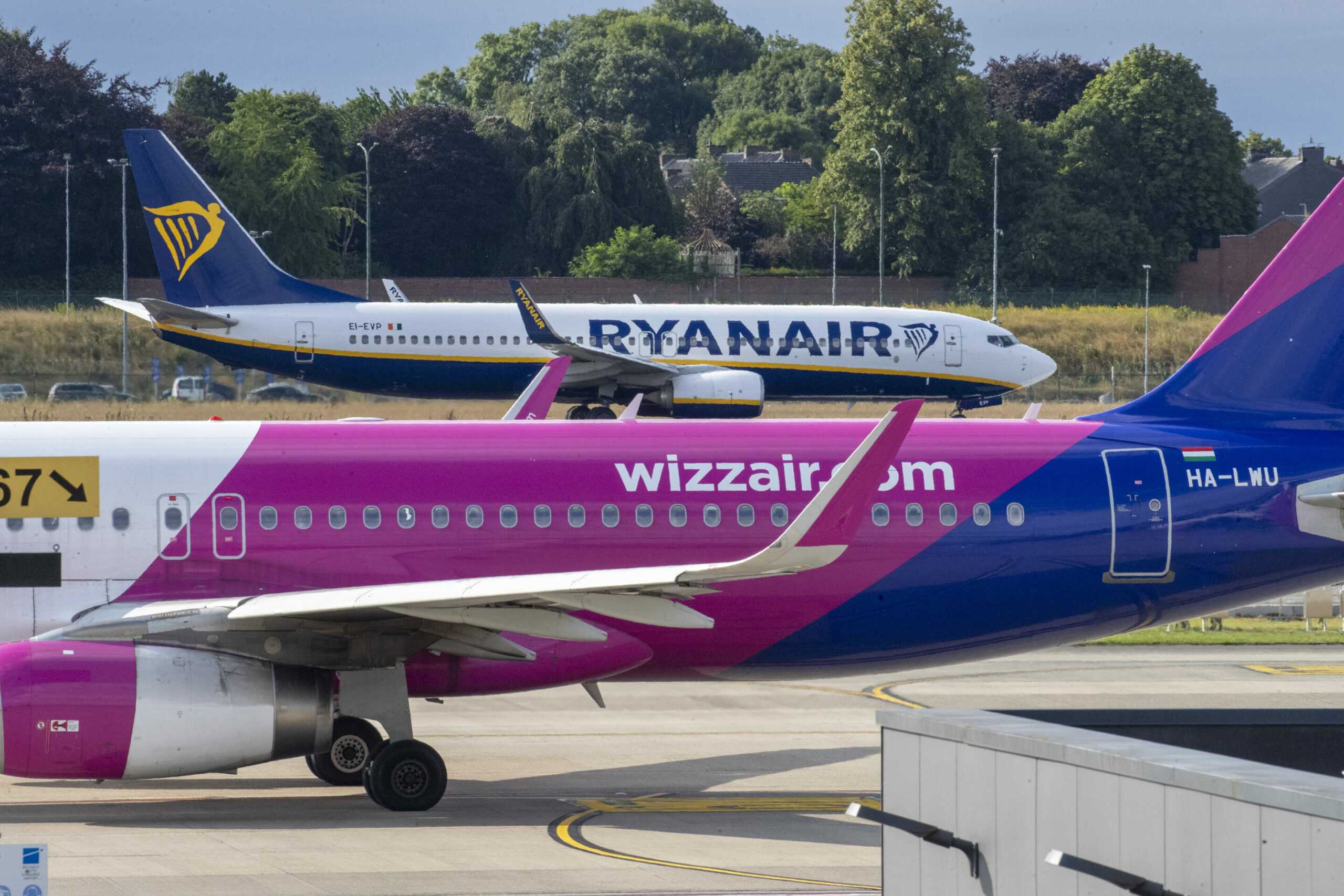
A Ryanair plane and a WIZZ Air plane, at Charleroi Airport, Saturday 29 July 2023. Credit: Belga/Nicolas Maeterlinck
The company also referred to the 2014 precedent ruling of the EU Court of Justice (ECJ) in the 'Vueling' case, which established that airlines are entitled to charge fees for the carriage of checked bags and extra cabin baggage on top of the free personal cabin baggage included in basic fares.
However, Testachats' lawsuit at no point suggests that Ryanair should include extra carry-on bags as part of its 'basic' fare or that it is not entitled to charge fees for checked bags and extra cabin baggage, only that it should allow for "reasonably-sized" hand luggage.
For comparison, Brussels Airlines allows passengers to carry significantly larger bags (55x40x23 cm) as hand luggage than Ryanair. Other low-cost airlines also allow larger bags than Ryanair: EasyJet applies 45x36x20 cm dimensions, but even WizzAir and Vueling allow for slightly larger bags (40x30x20 cm).
