
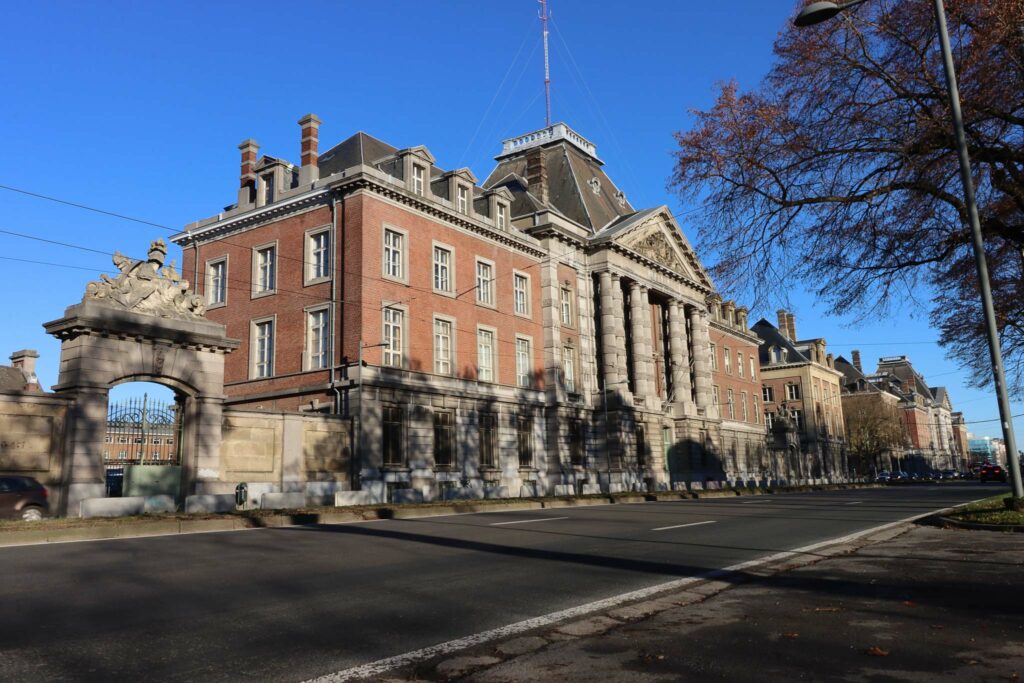
Etterbeek’s Witte de Haelen police barracks in Brussels have undergone extensive renovation work to convert the former 19th-century building into a modern, secure and very low-energy complex.
Last Saturday, the Buildings Agency and the Federal Police inaugurated a brand new eco-friendly building on the site of the Witte de Haelen barracks in Brussels in the presence of Minister of the Interior Bernard Quintin, and Minister of Justice Annelies Verlinden.
Various departments and directorates of the Federal Police occupy the modernised De Witte de Haelen barracks.
"For these men and women who contribute day after day to the security of our country, it is important that we recognise their many efforts and professionalism by providing them with modern and well-secured housing," said Interior Minister Annelie Verlinden (CD&V) during the opening.
It is part of a wider rejuvenation strategy of the Brussels' Barracks district, which straddles both Etterbeek and Ixelles, launched in 2016.
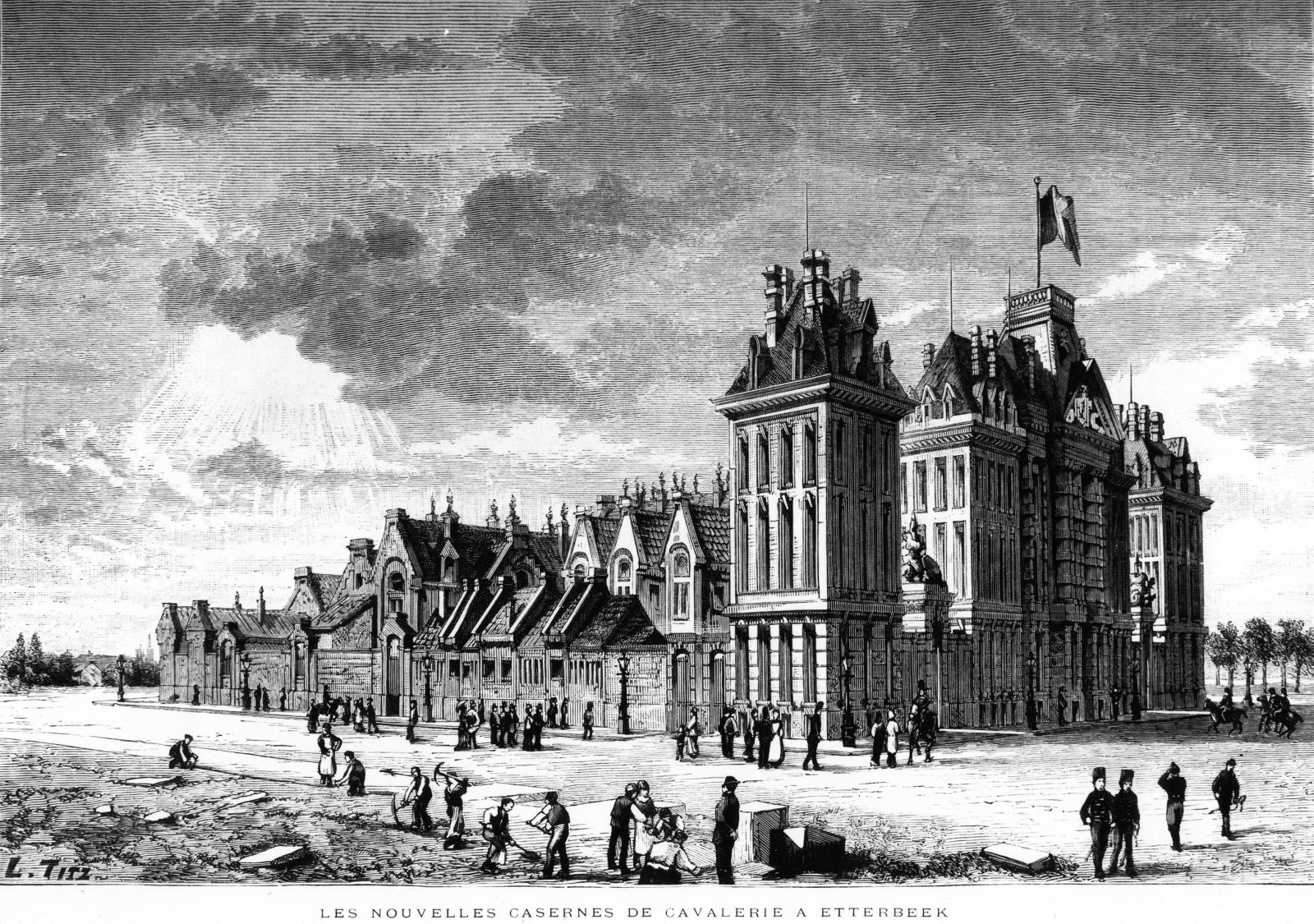
Etterbeek in particularly is known for its army barracks, reflecting Brussels' historic role as a garrison town – known as a place of rest for passing troops since well before Belgian independence in 1830.
The district still possesses enormous urban potential, even if most of the barracks were built in the late 19th century.
Some have now been transformed into new spaces – such as the former Royal Gendarmerie School in Ixelles, which today has been reconverted into the creative hub, Usquare. Others have needed large maintenance works but are still used as barracks.
The newly renovated Etterbeek’s Witte de Haelen was built in the 1870s as the first cavalry barracks of the Belgian capital. It was later renamed in honour of Belgium’s First World War hero Léon de Witte, who fought off the invading German army at the Battle of Haelen in 1914.
Alongside the Witte barracks are parallel ones named after Major A Geruzet – an artillery officer who died at the Battle of the Yser in 1917 during a German gas attack. These are still used by the military today, and were not included in the recent renovation. Both were directly targeted in the Allied bombing of Nazi-occupied Brussels on 7 September 1943.
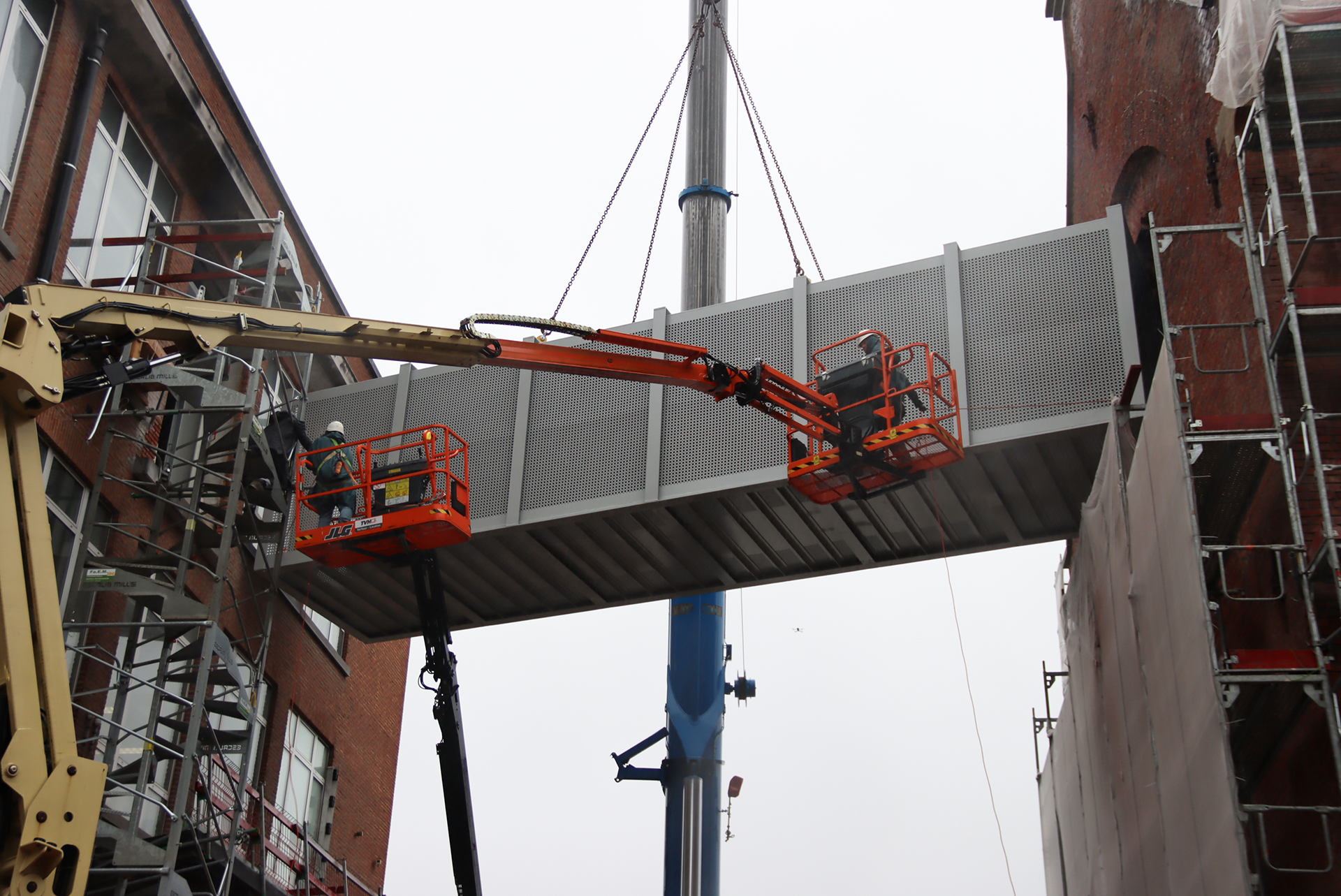
Construction works on the tunnel
Since the turn of the century, major renovation work has been needed. In 2019, legionella was found in the showers. That same year, it was found that personnel living there had been drinking water containing toxic concentrations of substances such as lead and iron.
"This building is not just a real estate project: it symbolises our common ambition for a modern police, effective and close to the citizen," said Federal Minister for Public Works, Vanessa Matz (Les Engagés).
Works began in November 2022, and were completed in April 2025. The large complex building of about 4,650 m², only the exterior walls were preserved, while the interior has been totally rebuilt and redeveloped to meet the specific needs of the Federal Police.
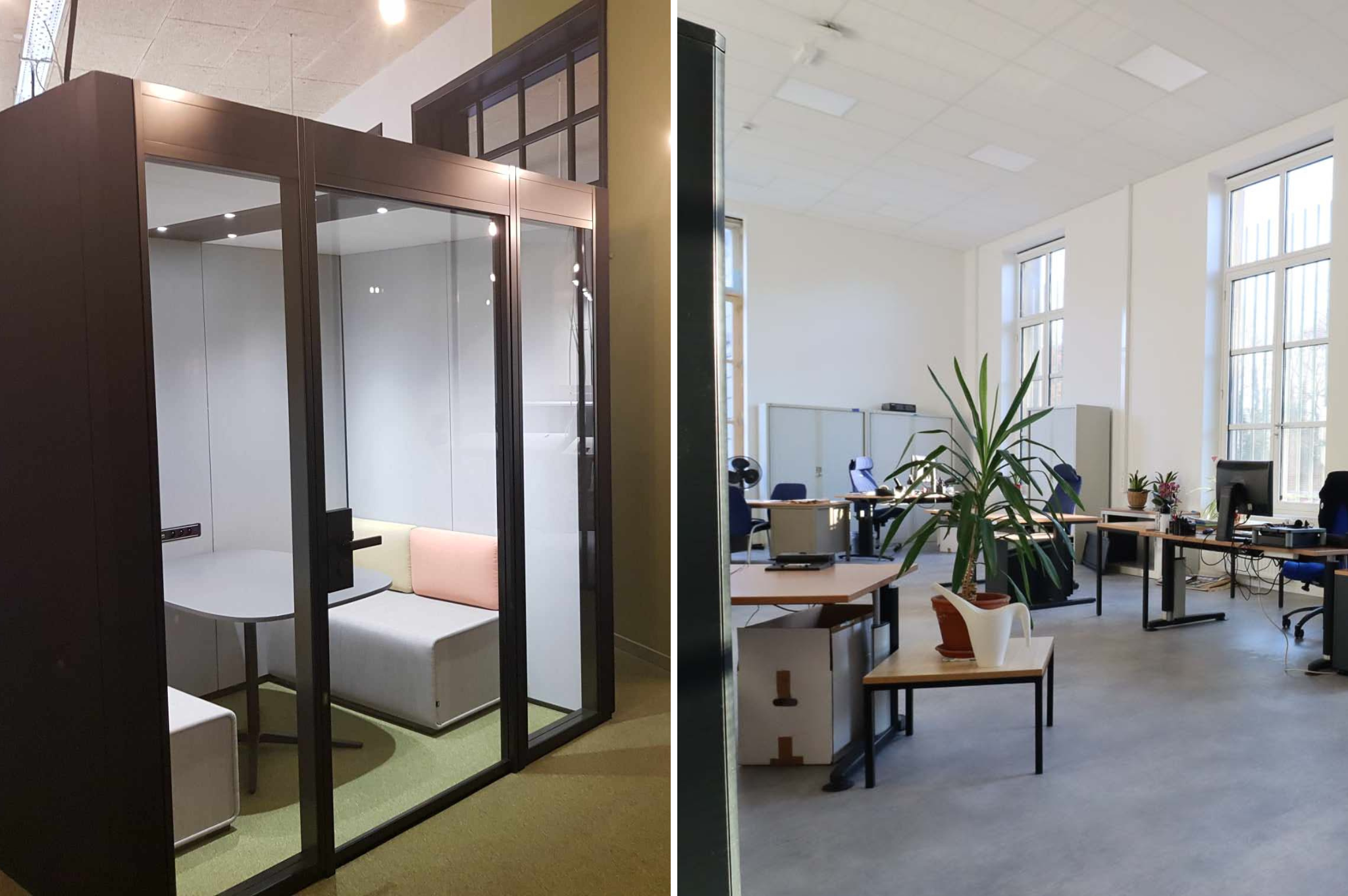
Inside the new federal police station. Credit: Regie de Batiments
In addition, the old annexes were demolished and new, taller ones were built to enlarge the floor space and provide more flexible spaces that better meet the needs of the occupying services.
The new buildings have been equipped with better accessibility for people with disabilities, and an improved structure to give it a lower energy consumption, including better insulation and ventilation, heat pumps and double-glazing.
The budget for this project is approximately €18.5 million.
