
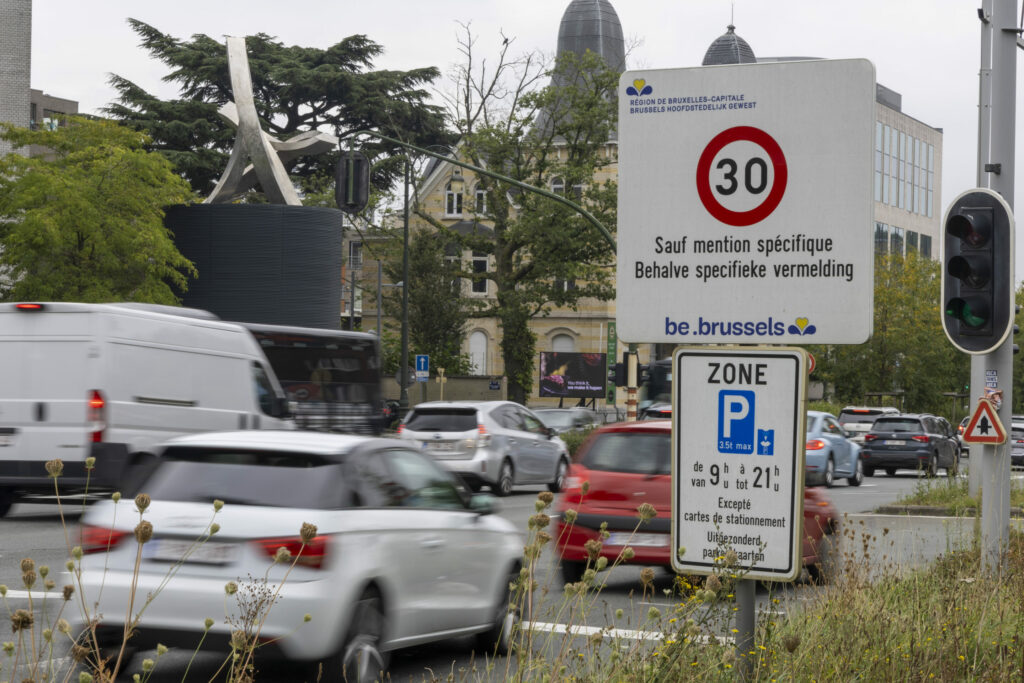
Four associations are taking legal action against the two-year postponement of the Brussels Low Emission Zone (LEZ). They are asking the Constitutional Court to annul the Brussels Parliament's decision to delay the stricter standards last October.
The postponement was decided in October last year in the Brussels Parliament. Three citizens, who are victims of air pollution, are also taking part in the lawsuit.
"The two-year delay represents a serious setback in the protection of the right to health and a healthy environment," the associations said on Wednesday. "Air pollution, mainly caused by road traffic, is responsible for an estimated number of hundreds of premature deaths in Brussels every year."
In practice, the delay means that the next phase of Brussels' LEZ – which was set to ban Euro 5 diesel and Euro 2 petrol vehicles from January 2025 – will now only be implemented from 1 January 2027. In the Capital Region, this concerns 35,284 private and 8,512 company vehicles.
While these make up less than 10% of the car fleet in Brussels, they account for over 40% of nitrogen emissions, as well as a significant amount of particulate matter, and therefore contribute significantly to the current air pollution.
Causing serious health problems
The associations stressed that currently, the Brussels-Capital Region does not achieve the values recommended by the World Health Organisation (WHO) for nitrogen dioxide (10 µg/m3) in any of its official measuring stations.
"Worse still, on some major thoroughfares and in so-called 'canyon streets' – narrow streets surrounded by tall buildings that trap pollution – even the less stringent European standards in force (40 µg/m³) are not met," they said. "This air pollution causes serious health problems, especially in children under five, with consequences such as premature births, low birth weight, asthma and other lung diseases."
They argue that only the introduction of the LEZ can provide relief and improve air quality in Brussels – a fact that has been proven by several studies. "The low-emission zone is currently the most effective instrument for reducing air pollution. Since its introduction in 2018, the amount of harmful substances in the air has fallen significantly."
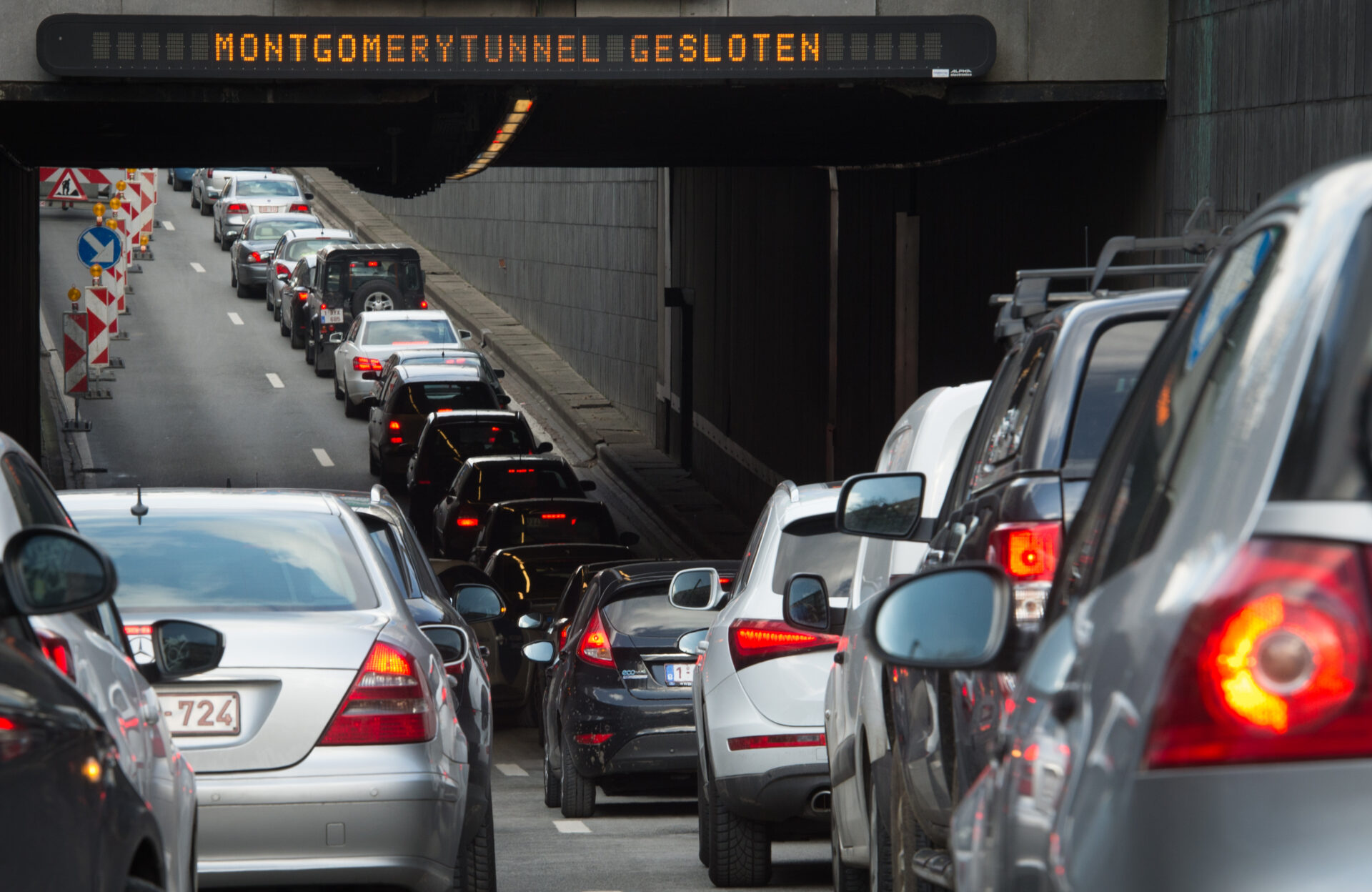
Credit: Belga / Benoit Doppagne
While the political parties behind the decision to postpone the stricter LEZ – Brussels Francophone liberal MR, socialist PS and centrist Les Engagés, and Dutch-speaking liberals Open VLD – said they wanted to "spare the most vulnerable Brussels residents," who would otherwise have had to adapt their mobility or buy a new vehicle, the associations oppose this.
They believe that the postponement of the LEZ violates the 'standstill principle' – which guarantees the right to protection of health and a healthy environment. "This principle prohibits 'significantly' reducing the level of protection of existing regulations without good reason."
The postponement would also violate the principle of non-discrimination, they stressed: the delay "disproportionately affects the health of people in poorer neighbourhoods."
'Unacceptable'
With this appeal, the associations and citizens hope to put the air quality issue back at the heart of the political debate. "Postponing the 2025 milestone for the low-emission zone by two years, without seriously considering the associated problems – social exclusion, economic vulnerability and reduced attractiveness of Brussels – will not provide a solution."
"When health rights are postponed under pressure from political compromises, the protection of the most vulnerable is undermined – and that is unacceptable," they stressed.
