
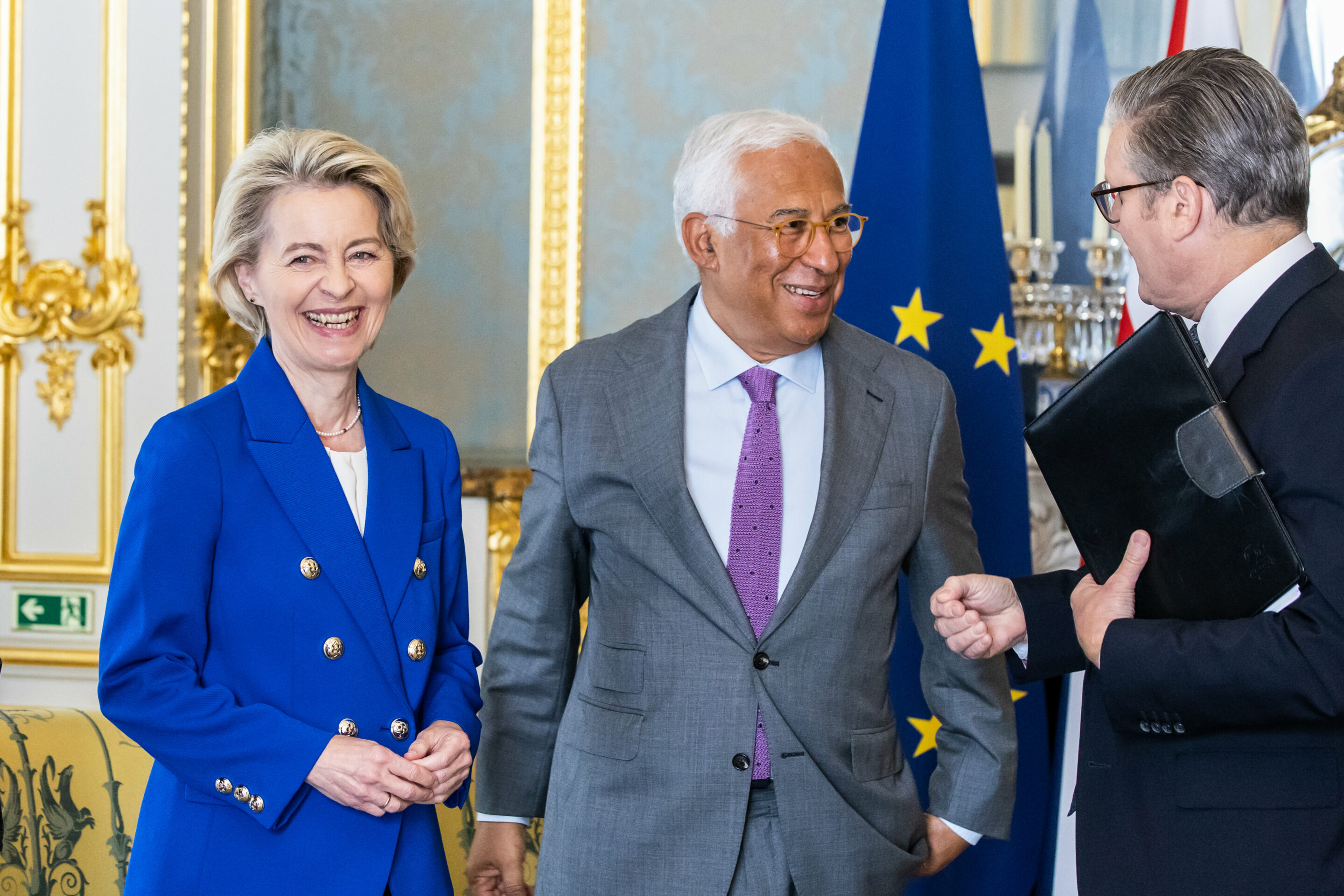
The European Union and United Kingdom have agreed to improve how they trade electricity and fight carbon emissions. This careful bit of Brexit navigation could trigger huge benefits for both sides.
Fish, passport queues and youth mobility dominated the headlines after Monday’s EU-UK summit in London, a long-awaited meeting designed to help reset cross-Channel relations to an extent.
UK Prime Minister Keir Starmer has had to be careful with how he engages with Brussels following his election victory last year, as many of his campaign promises revolved around keeping the EU at arm’s length. Even if that does mean choosing the second-best solution in many cases.
So that meant that dicey issues like freedom of movement, the European Court of Justice and—shock—rejoining the EU, were not on the official agenda of the Monday meeting.
Instead, EU bosses Ursula von der Leyen and Antonio Costa discussed fishing rights, better security cooperation, e-passport gates and British membership of the Erasmus student exchange programme.
They also agreed to improve how electricity is traded and to potentially link their two carbon markets together. These two policies are extremely important and could have enormous benefits for both sides, despite the lack of column inches generated by the development.
When the UK left the EU following the 2016 Brexit vote and dragged-out negotiation process, the country no longer enjoyed premium access to the bloc’s electricity exchange platform.
That means that under the current arrangements, the way power is traded is quite inefficient, so costs are higher. The UK is connected to the European mainland by a number of interconnectors, so the price paid to use them is higher than it actually needs to be.
Improving this situation means that the business case for building more of these cross-Channel links will be improved. It also means that developers will be more likely to invest in renewable energy generation, as it can be traded with other countries.
It is quite a niche subject but it’s one that’s reckoned to have resulted in huge costs, which are ultimately felt by households. Estimates show that millions of pounds in extra costs have been triggered by the inefficient arrangements.
This is bad for everybody around the North Sea, as the UK is building a clean energy juggernaut that will be able to export lots of clean power. If it's too expensive, then the chance to go greener even quicker will be squandered.
ETS SOS
Both sides will also look into linking their emission trading systems. Similarly to the electricity trading issue, the UK left the EU’s ETS and set up its own, smaller system after Brexit.
The two systems assign a price to a tonne of carbon emissions and industrial facilities, power generators, domestic air travel and, in the case of the EU, shipping needs to pay for the pollution they emit.
Prices have hovered around the €80-90 mark for a while and are expected to breach €100 and not look back as further legislative reforms to the market start to take effect. However, the UK system’s price cannot sustain as high a price.
That is due to a lack of liquidity and the simple fact that the system is much smaller. So linking the two markets has long been called for by industries and energy generators.
Creating a link would also mean that UK imports to the EU will not feel the pinch of the bloc’s new carbon border tax, which is set to slap extra levies on products like steel, fertiliser and electricity.
By associating the two systems together, the UK can easily claim that any product they export has already been subject to carbon pricing, so extra border taxes should not be levied. It will also avoid any unpleasantness that might be triggered by EU imports being hit with charges levied by the UK's planned tax.
The EU has already linked its ETS with Switzerland's, so officials know how to do it. From a technical and legal standpoint, there are few obstacles and now that there has been political sign-off, experts insist that work can proceed without impediment.
At the end of the year, world leaders will meet in Brazil for the COP30 climate summit. It has been speculated that the EU and UK could use that opportunity to formally announce the ETS linkage.
If the agreement is negotiated, then it could be a powerful display of climate policy collaboration and could just maybe convince other countries to take the carbon market leap or even reform their systems to make further linkage possible.
In any case, the EU and UK are quite deftly navigating the red lines and hangover still left by Brexit in order to make the best of being close neighbours.
Rejoining the EU will always remain the most obvious and logical solution to most of the problems the UK creates for itself, but the political climate simply will not allow for that conversation to even be suggested.
Engineering a way around the 2016 vote and its negative impacts will be a feature of policymaking for both sides for years, if not decades, to come.
Want more updates and analysis of what is happening in the world of energy and climate? Interested in finding a job in the sector or more information about public tenders? Sign up to our Energy Rundown newsletter here!
