
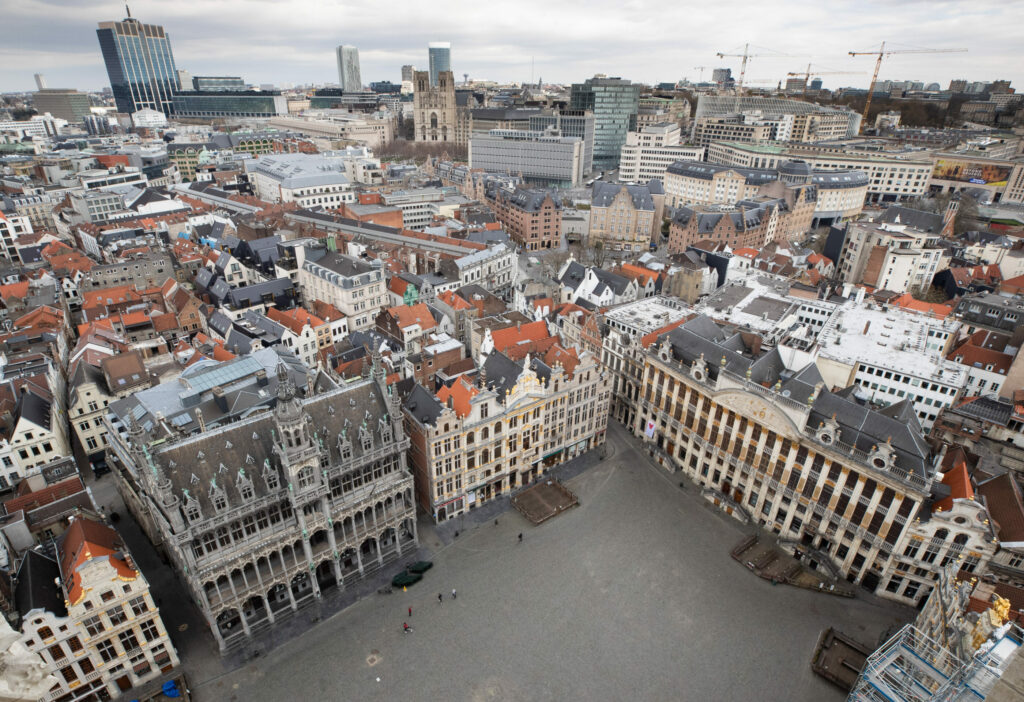
While Belgium's major cities historically were centres of wealth and economic development, that changed in the 1970s. Since then, the rich have been leaving behind urban life in favour of the suburbs – a move often classified as "a very Belgian phenomenon."
The downward trend is occurring in all the country's major cities: Brussels, Antwerp, Liège, Charleroi, Ghent, Bruges, Leuven and Namur. Whereas these still accounted for 30% of national taxable income in 1977, that share has fallen to 20.4% in 2021.
"The average income per inhabitant is lower in the heart of those cities than in suburban areas," according to Professor Vincent Vandenberghe, the author of the study 'Grandes villes belges: le revenu s'érode au profit de la périphérie' published in UCLouvain's journal Regards Economiques on Thursday.
This phenomenon is also accompanied by a lower employment rate in cities, despite a younger population, and a high concentration of people with a migrant background, he explained.
Old but persistent phenomenon
According to Vandenberghe, the relative decline of the country's major cities is mainly explained by "suburbanisation." He called this an "old but persistent phenomenon" often linked to Belgium, in which the upper and middle classes have been gradually moving from city centres to the outskirts since the 1960s.
That dynamic, Vandenberghe said, is compounded by businesses moving away from city centres. Between 2014 and 2021, the Brussels-Capital Region lost 810 businesses net (entries minus exits) – which represented 29,218 jobs.
More fundamentally, he pointed to the "heavy industrial heritage," which is hard to bear for many cities. "The old industrial areas and neighbourhoods at the heart of cities, often located along canals and rivers, have become run-down and unattractive."
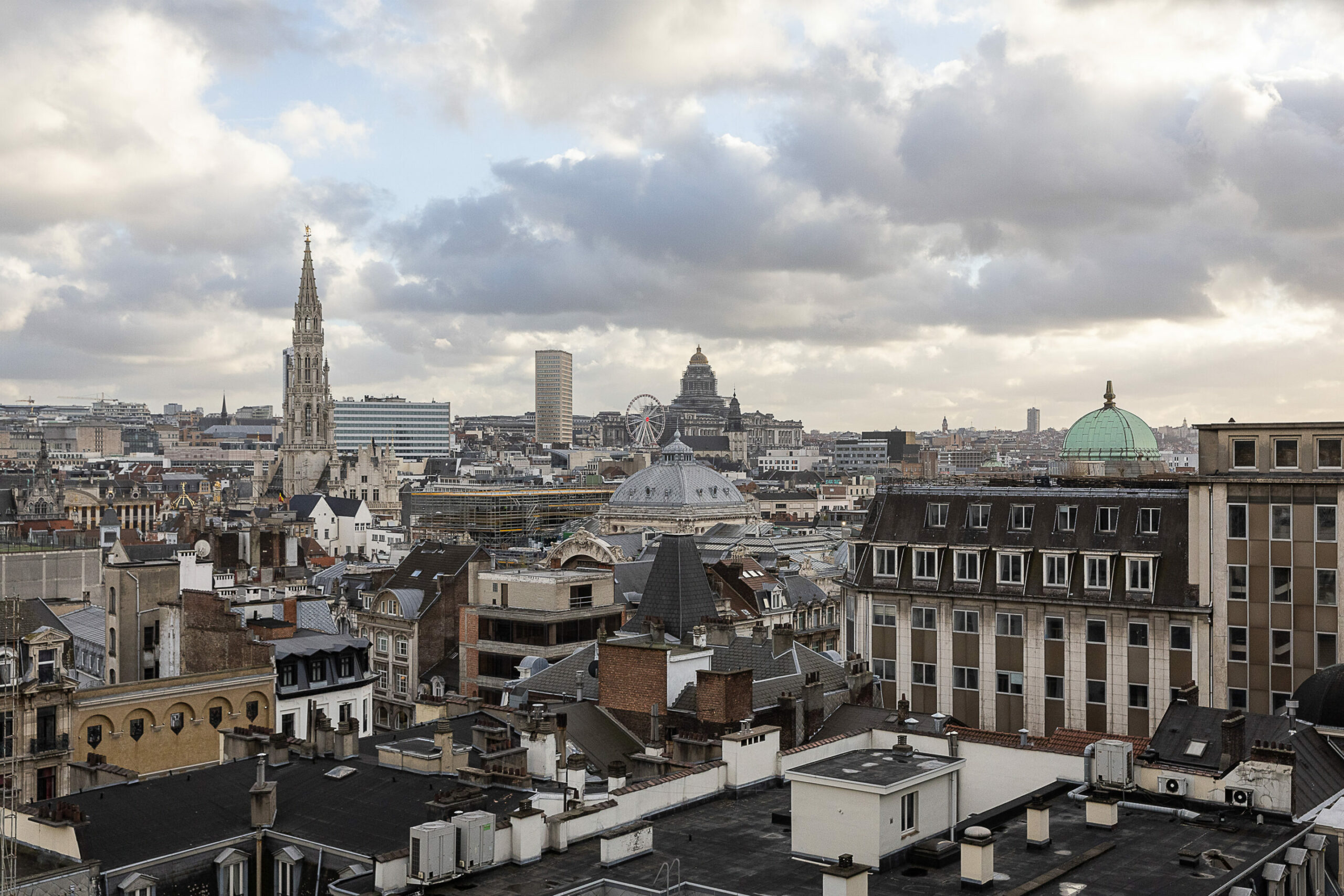
The Brussels skyline. Credit: Belga/James Arthur
Vandenberghe also noted that the Belgian situation contrasts sharply with that in most European countries and the United States. In most big cities, the core area is generally richer than the periphery.
Brussels, however, is the only capital city in the study whose core is significantly less wealthy than the surrounding municipalities. "In 1977, the income of the inhabitants of Brussels was 10% higher than that of the inhabitants of the periphery. In 2021, it was 24.9% lower," the study found.
This is due to several factors specific to Belgium, which have reinforced this trend towards suburbanisation. Most importantly, the federalisation of the country has likely weakened the economic and political weight of the capital. Additionally, there is a permissive policy on land use planning in the outskirts of the Capital Region, and no binding "green belt" type measures to limit urban sprawl.
Vandenberghe also referred to fiscal policies that favour car use and commuters, and a lack of strategy for dispersing migrant populations, favouring their concentration in urban centres.
Coherent and integrated policies
To find a solution to reverse this drop in income in major cities, countries need to evaluate their solidarity mechanisms and set up a system to offset the imbalances between large cities and the suburbs.
"This could require a broadening of the city's tax base to include some of the resources currently domiciled in the suburbs," he said. "The exodus of the wealthy benefits the suburbs in tax terms, while many infrastructures and services continue to be financed by the city."
At the same time, major cities need to attract new residents and businesses, while also continuing to contribute to the enrichment of existing residents. This could be done through an adjustment of education or employment support policies that would give greater priority to the major urban centres, said Vandenberghe. Traditionally, however, tax, education or employment policies in Belgium have always favoured the peripheral areas.
"In a context of continuing suburbanisation, there is an urgent need for ambitious, coherent and integrated urban policies," he said. "If not, territorial inequalities and socio-economic imbalances are likely to continue to grow."
