
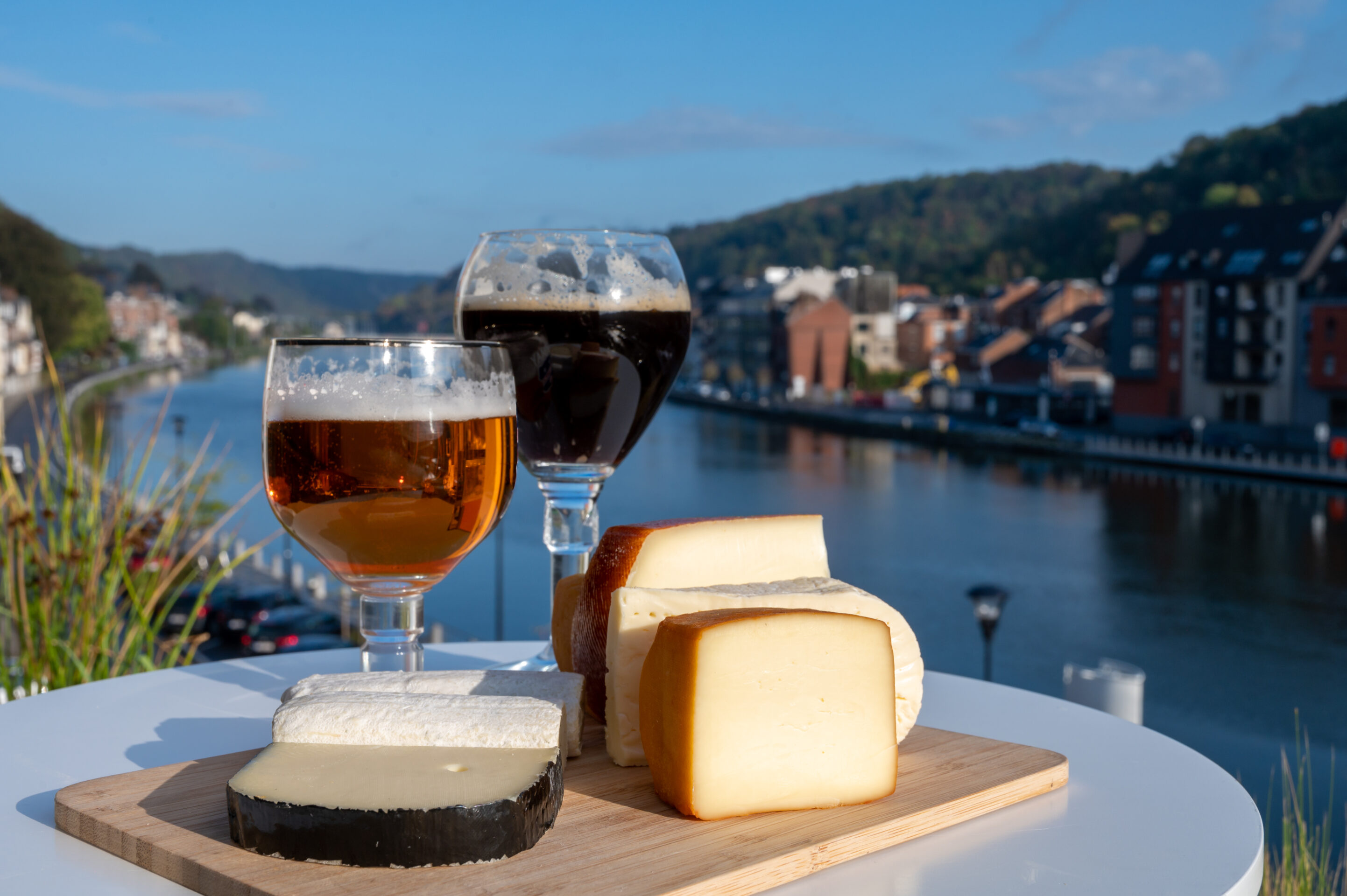
Beer and cheese have a shared history. Born out of necessity, offering a safe drinking option and sustenance from agriculture, they have evolved in Belgium under the careful stewardship of monasteries, farmhouses, and village taverns. While wine has often claimed to be the natural partner for cheese, Belgian beer—with its vast spectrum of styles, high carbonation, and nuanced flavours—can elevate a cheese board like few other beverages.
Pairing beer and cheese successfully relies on a few key principles.
Matching intensity is to be considered; delicate beers gently hold the hands of mild cheeses like trusted lovers, while robust, higher-alcohol beers demand stronger, characterful companions.
Complementary pairings amplify similar flavours: the caramel sweetness of an aged Gouda with the malty richness of a Belgian Dubbel.
Conversely, contrasts can excite the palate, with the acidity of gueuze cutting through the creaminess of a Brie, or a salty blue cheese lifting the sweetness of an Amber ale.
Texture, too, plays a role: carbonic bite in beer cleanses the palette, and bitterness helps drinkability; both can heighten the experience of a rich, fatty cheese.
The key with lambics, for example, is to use their acidity as a foil for rich or salty cheeses, and their wild fermentation notes either as a complement to funky cheeses or as a contrast to fresh, creamy ones.
Saisons are remarkably versatile, but they particularly shine with washed-rind and goat’s milk cheeses—those that share a bit of farmhouse character.
The complexity of abbey styles pairs best with cheeses that are rich yet not overpowering: think creamy, bloomy-rind cheeses or semi-firm alpine-style cheeses that can act as a canvas for nuance.
Witbiers, on the other hand, love fresh, zesty cheeses and herbs; their clean citrusy flavours resonate especially with the tang of fresh chèvre, for example.
Below are some suggested pairings of classic Belgian beers with cheeses.
1. Coat of Arms
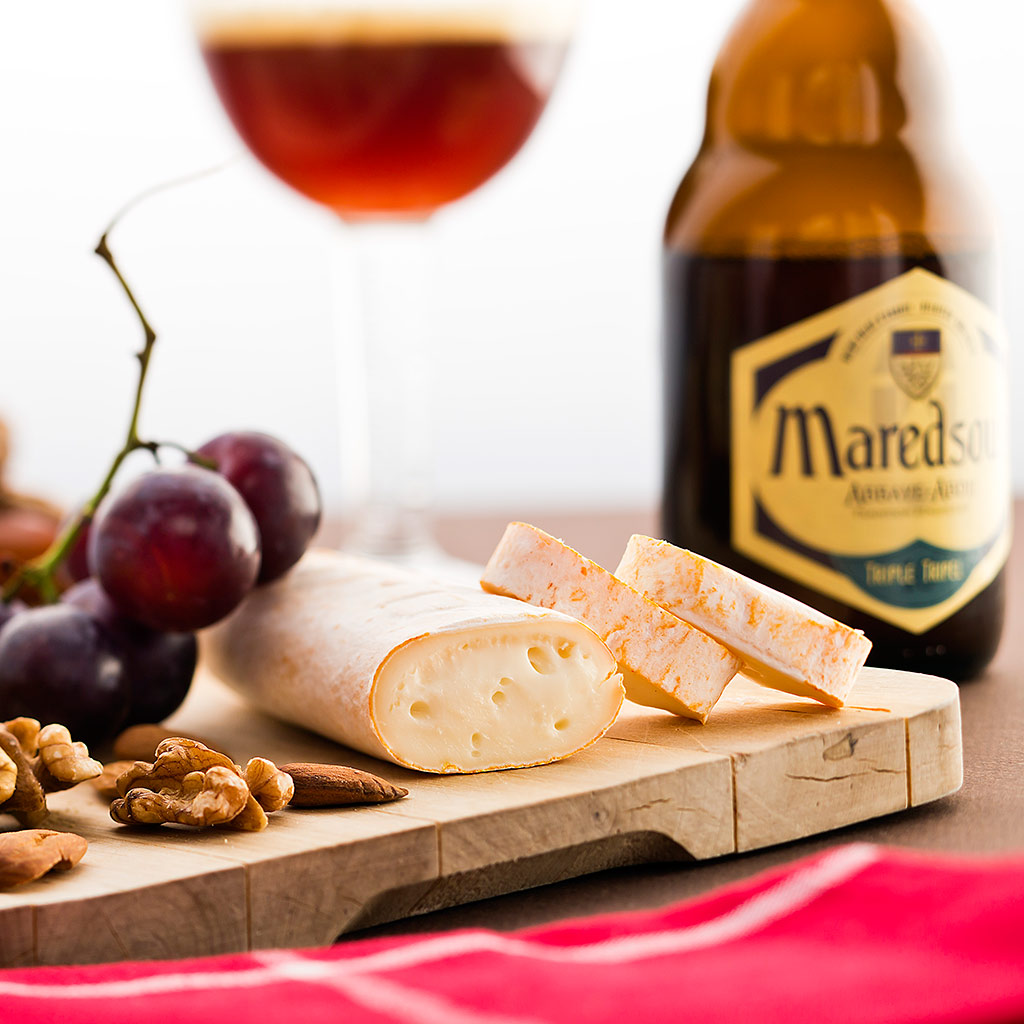
Beer: Maredsous Triple, an amber-coloured tripel of 10% ABV.
Cheese: Vieux Moulin’s Le Palet, an AOP Belgian Herve cheese produced in Battice.
~
An escutcheon is the form of shield on which a coat of arms is displayed, derived from actual shields used by knights in combat. The shape is used on the labels of bottles of Maredsous beer, the abbey opting for the strong symbols of its history in a cloverleaf and a holy cross.
The Benedictine monks that live and work in the Valley of the Molignée at the Maredsous Abbey do not themselves brew the beers bearing the abbey’s name but partner with the Duvel Moortgat brewery to together create a line-up of “Certified Belgian Abbey Beers”. It’s an arrangement which involves Moortgat paying a licence fee to the abbey and the monks supervising the production and commercialisation of the beers.
The monks of Maredsous do, however, mature their own cheeses in the cellars of the Abbey. It’s a venture which ties into their ethos of self-sufficiency and — together with the income from their beer — allows them another revenue stream to maintain the abbey and contribute to charitable projects within their community. This opportunity to combine its beer and cheese adds an extra dimension for visitors interested in visiting the abbey.
The Maredsous Triple is relatively classic in its formulation as abbey beers go, but it also bears the hallmarks of Duvel Moortgat’s penchant for drier beers with higher carbonation. It features less of the phenolic spiciness you might see in other commercial examples of the style. There’s the alcoholic warmth you’d expect from a 10% ABV beer, as well as a range of ester notes that might be described as peach and ripe banana. The fermentation flavours are backed up by a malt backbone derived from two caramel malts which together make up 20% of the grist bill, also contributing to its quasi-autumnal colour.
Your pairing for the Tripel — Le Palet, a red mould Belgian Herve cheese from Le Vieux Moulin and the only Appellation d’Origine Protégée cheese in Belgium — has the intensity of flavour required to stand up to such a big beer.
It’s the only Herve cheese that uses raw cow’s milk. Having been washed in beer and matured in cellars underneath an old milling barn in Battice, it's equipped with a tanginess and background smokiness which accentuate the earthy spiciness of the Saaz-Saaz and Styrian Goldings hops and compliments the beer’s subtle dried fruit character. Raise your shield and get ready for battle.
2. Cherry-picked
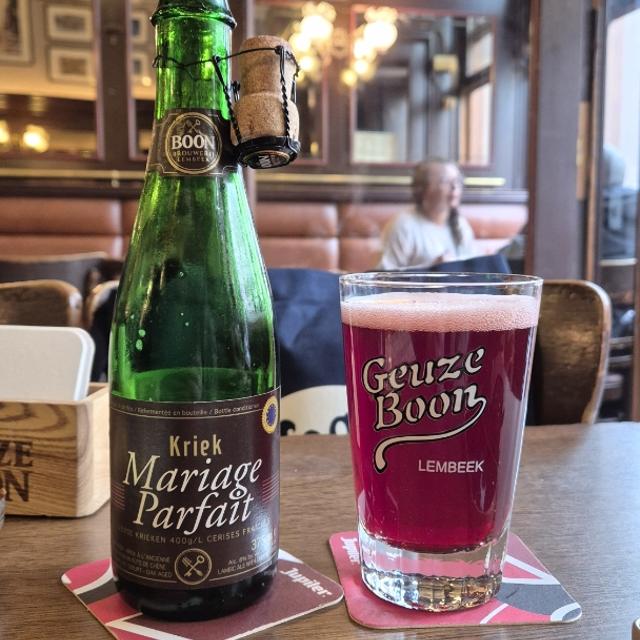
Beer: Boon Kriek Mariage Parfait (8% ABV, lambic steeped with fresh cherries)
Cheese: Cashel Blue (farmhouse blue cheese from County Tipperary, Ireland)
~
The Boon brewery in Lembeek is well-known for producing gueuzes and fruit beers from lambic. Lambic is a regional wheat beer whose major flavour characteristics derive from wild yeast and bacteria which drop from the night sky onto exposed cooling wort which is then transferred into wooden barrels or foeders for a slow, organic spontaneous fermentation.
Lambics can be old and young, carbonated or flat, fruited or unfruited, and sweetened or unsweetened. Different lambics are blended into gueuze (sometimes spelt as geuze). In their deeply-researched book, LambicLand, Tim Webb, Chris Pollard and Siobhan McGinn describe Lambics as, “both the crudest and the most complex beer styles in the world.” The kriek Mariage Parfait from Brouwerij Boon is an unsweetened, aged, and well-known cherry lambic.
The Marriage Parfait name of the beer refers not only to the perfect marriage of ingredients (Schaerbeek cherries and lambic) but to the way it’s produced. In blending, coupage is when you skillfully blend away faults into imperceptibility. Mariage, on the other hand, is when you combine only high-quality Lambic, an additive approach rather than a reductive one.
Kriek Mariage Parfait is produced when 18-month-old Lambic undergoes a maceration in oak barrels of 400g of fresh wild cherries for every litre. After about six to eight months, the beer is bottled and undergoes a secondary fermentation of at least six months.
If you’re trying to decipher the vintage on a bottle, note that the year on the bottle's neck label is the year the cherries were harvested. The distinctive soft wine-like character of the Kriek Mariage Parfait, as well as its cherry pit spiciness, vanilla oakiness, and jammy fruitiness, make it an especially adept partner to rich, flavourful cheeses.
Cashel Blue — Ireland’s renowned farmhouse blue with a buttery yellow appearance and distinctive earthy blue marble veining — is spicy, creamy, and sweet. It complements the cherry tartness of Boon’s Kriek Mariage Parfait, with a similar but brighter dynamic to a pairing of fine port with Stilton. The kriek’s acidity tempers the cheese’s pungency, revealing layers of sweet fruitiness in the cheese, while Cashel Blue rounds out the Lambic’s acidity.
3. The Grand Finale
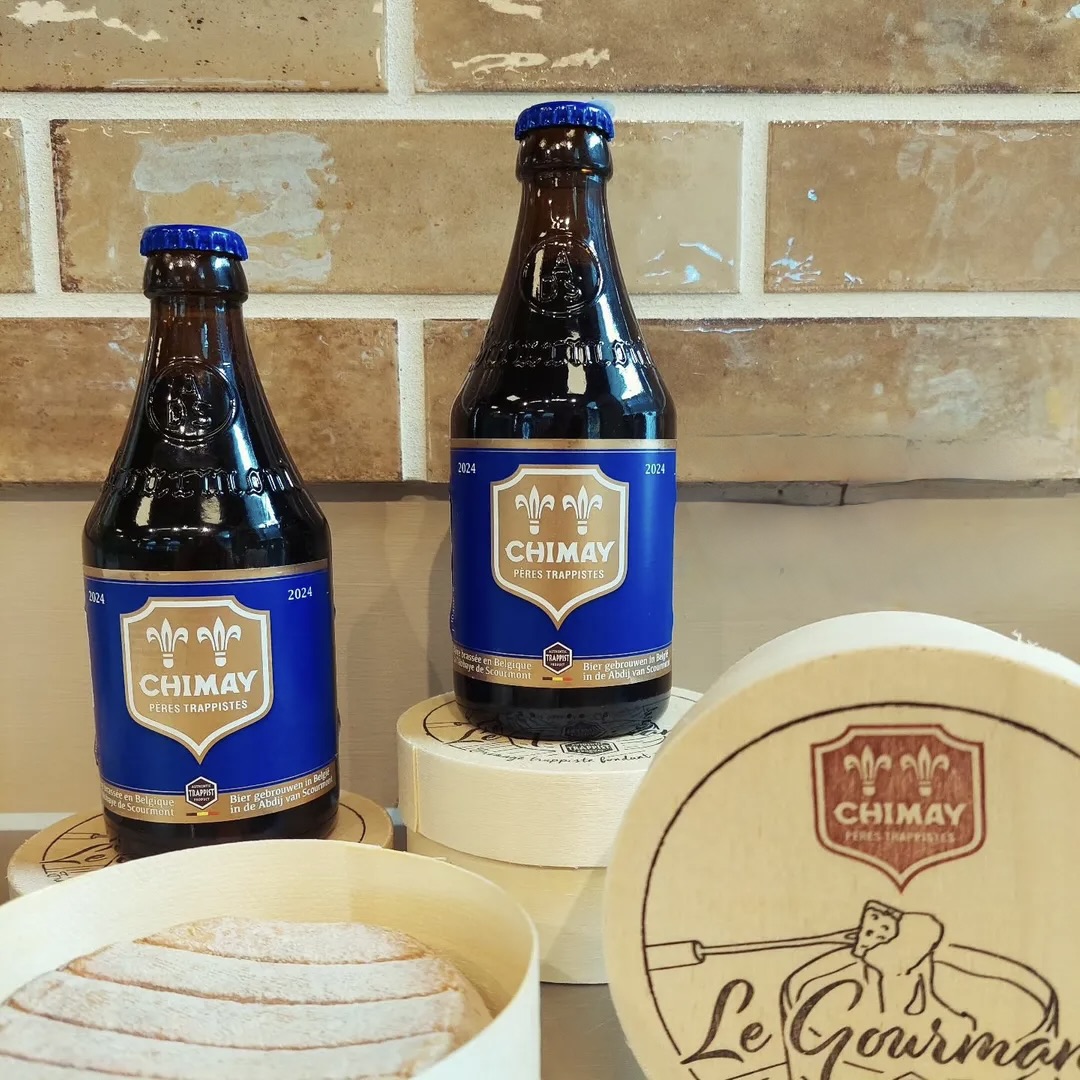
Beer: Chimay Grande Réserve (9% ABV, Belgian strong dark ale)
Cheese: Chimay Mont du Secours (aged, creamy abbey cheese)
~
Founded in 1850 at the Abbey of Notre-Dame de Scourmont, Chimay is one of Belgium’s five Trappist breweries. Although it’s known around the world for its beers, the abbey also boasts a longstanding tradition of cheese-making, one that predates its brewing operations.
Chimay’s cheeses share the same Authentic Trappist Product logo seen on their beers, suggesting quality, local sourcing and ethical production under the careful supervision of the monks. From semi-hard to aged and creamy, each cheese variety is uniquely tied to Chimay’s beers, creating exciting potential for pairings.
Chimay Grande Réserve, presented in its common Bières Belge bottle with distinctive curves or, for special editions, the more sophisticated Imperiale bottle with its wider shoulders, is the abbey’s most celebrated ale. Colloquially referred to as bleue for its royal blue-coloured label, it presents with a deep malt complexity, fermentation flavours reminiscent of dried fruits, chocolate, and spice, and a warming alcohol aftertaste.
The beer’s bold personality finds its match in Chimay Mont du Secours cheese, known for its velvety decadence and buttery, hazelnut finish. If you’re inclined to bake, one idea might be to put the Mont du Secours centre-stage against Chimay Grande Réserve in a cheesecake with a spicy Speculoos crust and homemade salted butterscotch.
