
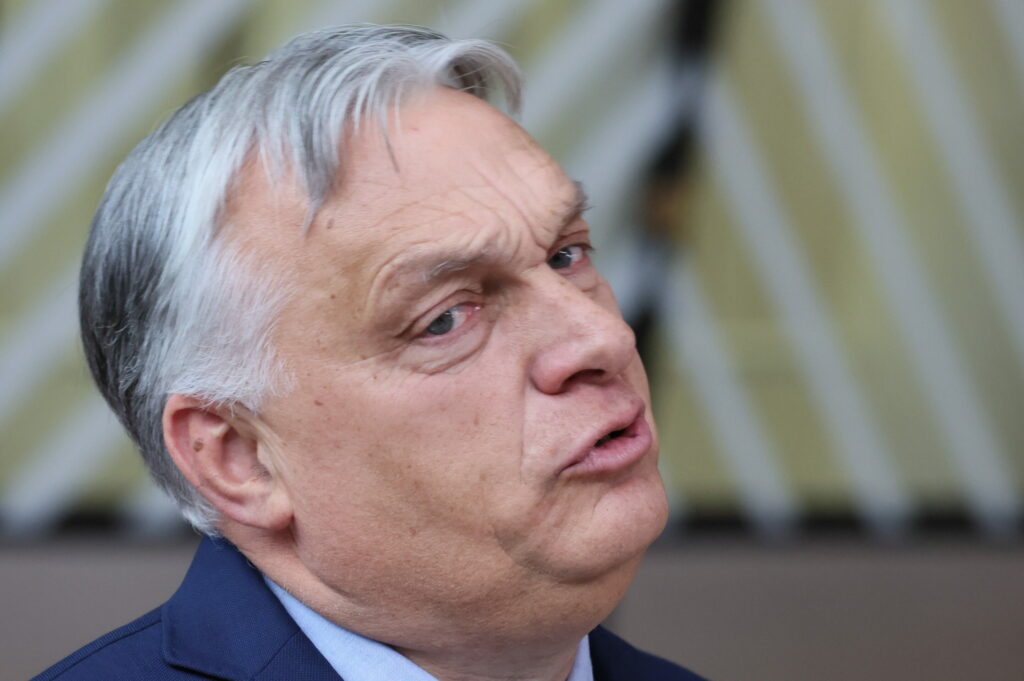
The European Commission has urged Hungary to withdraw a proposed law that it believes threatens NGOs and independent media, warning that its adoption would amount to “a serious violation” of European Union principles.
Last week, the party of nationalist Prime Minister Viktor Orban submitted a bill to the Hungarian parliament concerning “public life transparency,” which numerous NGOs have criticised as an attempt to silence dissenting voices in the country.
“We will not hesitate to take necessary action if this proposal is enacted,” an EU spokesperson stated in a press release on Friday evening.
The Commission has grave concerns about the proposal, warning that its adoption would violate EU principles and laws. Consequently, the Commission has called for its removal from the legislative process.
Around twenty Members of the European Parliament have urged the Commission to suspend all funds intended for Hungary, accusing Orban’s government of repeated breaches of European laws in a public letter issued Wednesday.
Currently, the EU is withholding €18 billion from Hungary due to concerns over LGBT+ rights, asylum seekers, public procurement practices, and conflicts of interest.
Last Sunday, tens of thousands protested in Hungary against the “public life transparency” bill, which the government claims aims to dismantle “propaganda networks” financed by foreign funds.
Under the bill, organisations that “violate or criticise” constitutional values, such as “the primacy of marriage, family, and biological sex,” could be blacklisted.
Such organisations would need authorisation to receive foreign funding, their bank accounts monitored, and donor transfers blocked if funds are intended to “influence public life.”
Violations could incur fines up to 25 times the received aid’s amount, with activities potentially banned for repeat offences.
The opposition has criticised this as the “Putinisation” of Hungary.
More than 300 NGOs and media outlets, including Amnesty International and Transparency International, have signed a joint letter denouncing the proposal as an “authoritarian move to remain in power,” ahead of next year’s tightly contested legislative elections.
They claim the government seeks to silence all critical voices and eradicate what’s left of Hungarian democracy, mirroring Russia’s tactics.
