
Belgium's Director-General for Multilateral Affairs has endorsed a reform of the United Nations and says Belgium must continue to act as a global mediator.
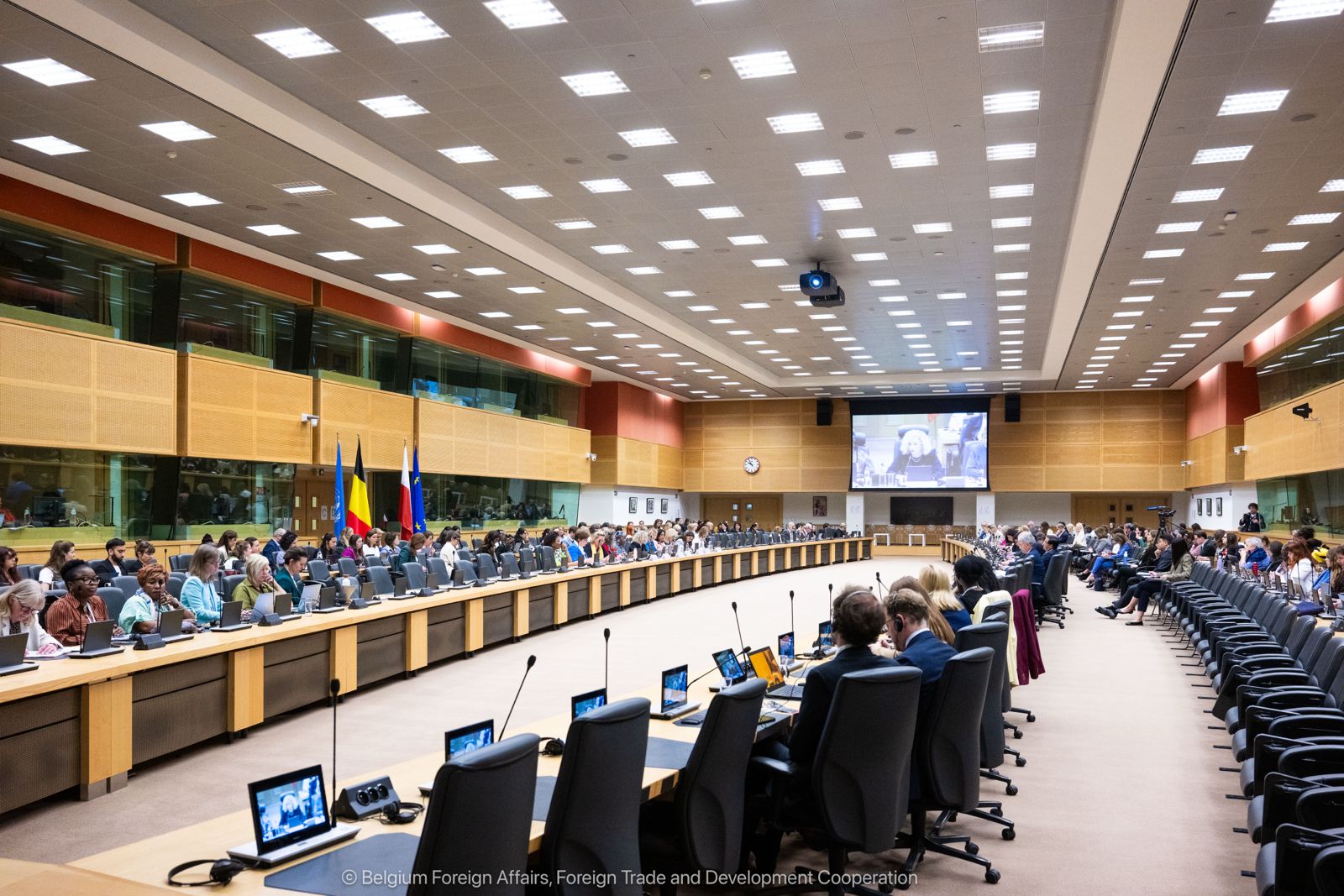
Véronique Petit, Director-General of Multilateral Relations at the Belgian Foreign Affairs Ministry, opened a High-Level Conference co-organised by the Belgian Foreign Affairs Ministry, the EU, UN Women and the Polish Presidency of the EU on Wednesday 21 May.
The conference marked 25 years of UN Resolution 1325 on Women, Peace and Security (WPS). The Resolution was passed in 2000 and commits to involving women in peacebuilding efforts and protecting women in conflict zones.
Speakers at the conference called for the advancement of the WPS agenda. Some voices called for institutional accountability and action to help women in warzones rather than empty rhetoric.
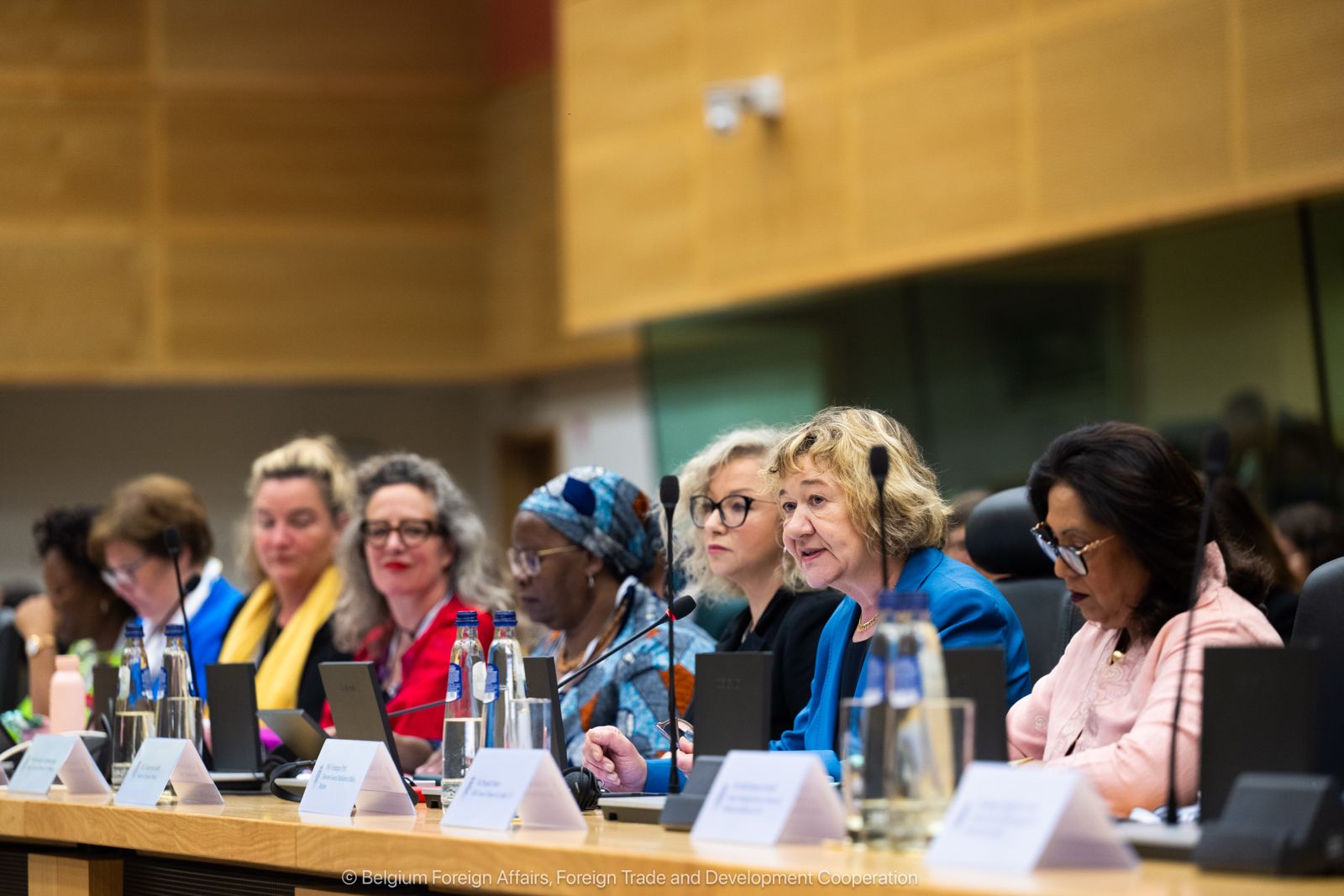
Director-General for Multilateral Affairs at the Belgian Foreign Affairs Ministry Véronique Petit. Credit: Belgian Foreign Affairs Ministry
Petit's opening speech addressed the need to counter "deliberate attacks" against the WPS agenda.
Petit was formerly Belgian Ambassador to Morocco and Iran. "In every crisis, there is an opportunity," she told The Brussels Times. "There is an opportunity to make the UN more efficient, more coherent and more coordinated. But at the same time, we have to be vigilant and not lose important elements of what we build over time."
She called Resolution 1325 a "landmark" but recalled the need to "stay vigilant" regarding women's rights.
Belgium a 'bridge builder'
The Director-General also stressed Belgium's important role in the current geopolitical upheaval, namely Donald Trump's return to the US Presidency, his unfavourable comments about Europe and his rollback on foreign aid.
Petit believes Belgium should continue to exercise a strong, mediating role in global affairs. "Our country has always been a bridge builder within the international community. We are known for our sense of compromise and our ability to talk to others – even partners who do not always share our points of view."
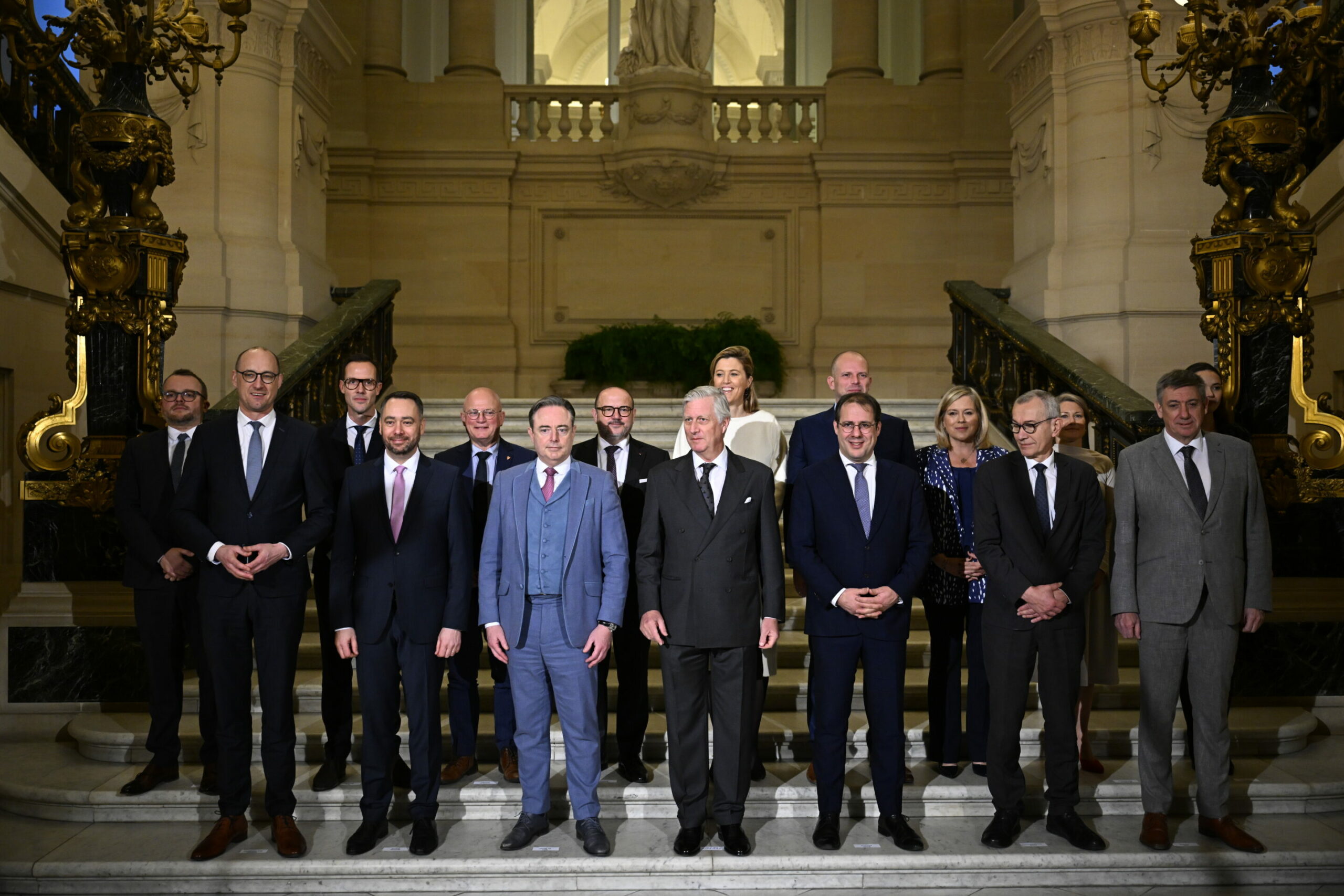
The complete Arizona government pictured after the oath ceremony of the new Prime Minister and members of the federal government at the Royal Palace, Monday 03 February 2025, in Brussels. Credit: Belga/Jasper Jacobs
Only four of 14 Federal ministers in Prime Minister Bart De Wever's cabinet are women, a significant decrease in representation (half of the former Federal Government's ministers were women). Petit does not believe this damages Belgium's credibility internationally.
"What is really important is to see that you have women in important positions," she said. "A minister is an important position, but how many women do you have in parliament? How many women do you see in high positions in the administration and public service, in important institutions, in universities, in governing boards of companies? This is a common agenda that we have to push."
Consensus on need for change
The majority of other speakers at the conference echoed Petit's desire for UN reform.
Iwad Elman is a Somali-Canadian social activist and Chief Operating Officer of the Elman Peace Centre. "We don't lack language, we lack action and the courage to implement what we talk about," she said during a panel discussion about female participation in peace and security.
Credit: Belgian Foreign Affairs Ministry
"If we have learnt anything from the last two years in Gaza, Congo, Sudan and Ukraine, it is that selective outreach and limited diplomacy are eroding trust in this agenda [...] We pick and choose our conflicts and it is emboldening already hostile and aggressive states. We need a system reset."
Elman said that institutional accountability would "future-proof" WPS. "We need to stop managing WPS like a project and start governing it like a political commitment."
Security is not just defence
Multiple speakers underlined the fact that security is not just about defence and weaponry but about wellbeing and stability too.
"We are sitting at an inflection point where we are putting our taxes into weaponry in the hope that they will remain unused," said Sanam Naraghi-Anderlini, Founder and CEO of International Civil Society Action Network. "Because if we start using those weapons, our security and peace is gone anyway. And at the same time, we're destroying the very fabric of the societies that we've sought to foster here in Europe and abroad."
Belgium will reduce its foreign aid by 25% during this mandate. Meanwhile, its defence expenditure will balloon to €4.5 billion in an effort to meet the NATO spending minimum of 2% of GDP by 2029.
Naraghi-Anderlini pointed to numerous examples of using defence budgets in other ways. For instance, 16 terror attacks in Pakistan were prevented via grassroots peace initiatives. "I can give you many, many more stories of the real peace and security work happening on the ground for a fraction of the cost of militarisation and war and weaponry," she said. "This is the real work that is happening, and is today at risk of being completely erased."
What does UN reform look like?
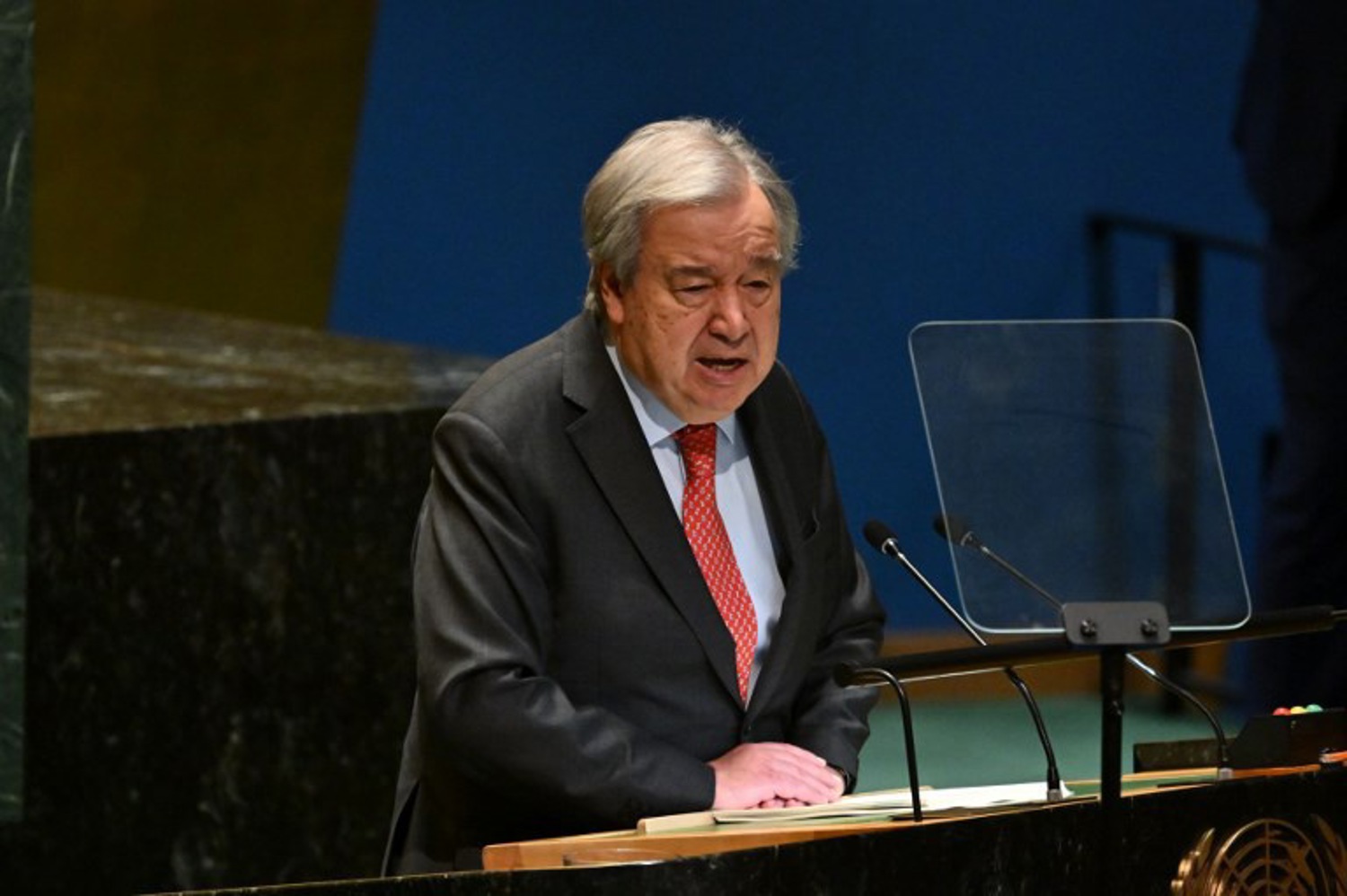
United Nations Secretary-General Antonio Guterres speaks on 2025 priorities to the UN General Assembly at UN Headquarters in New York on 15 January 2025. Credit: Angela Weiss / AFP / Belga
UN reform mainly relates to budgetary revisions, a review of existing mandates and structural changes.
Budget reductions of up to 20% may be possible via a decrease in employee numbers and the termination of postings in expensive locations.
Only Member States have the right to review the legitimacy of existing UN mandates but it is possible for the organisation to review how the mandates are carried out. A review of this nature would focus primarily on bureaucratic operations.
Preliminary ideas for structural reform are already underway and have identified areas for improvement in peace and security, development, human rights, humanitarian, training and research and specialised agencies.
These are times of peril, but they are also times of profound opportunity and obligation," UN Secretary-General António Guterres stated in April. "Let us seize this momentum with urgency and determination, and work together to build the strongest and most effective United Nations for today and tomorrow."
