
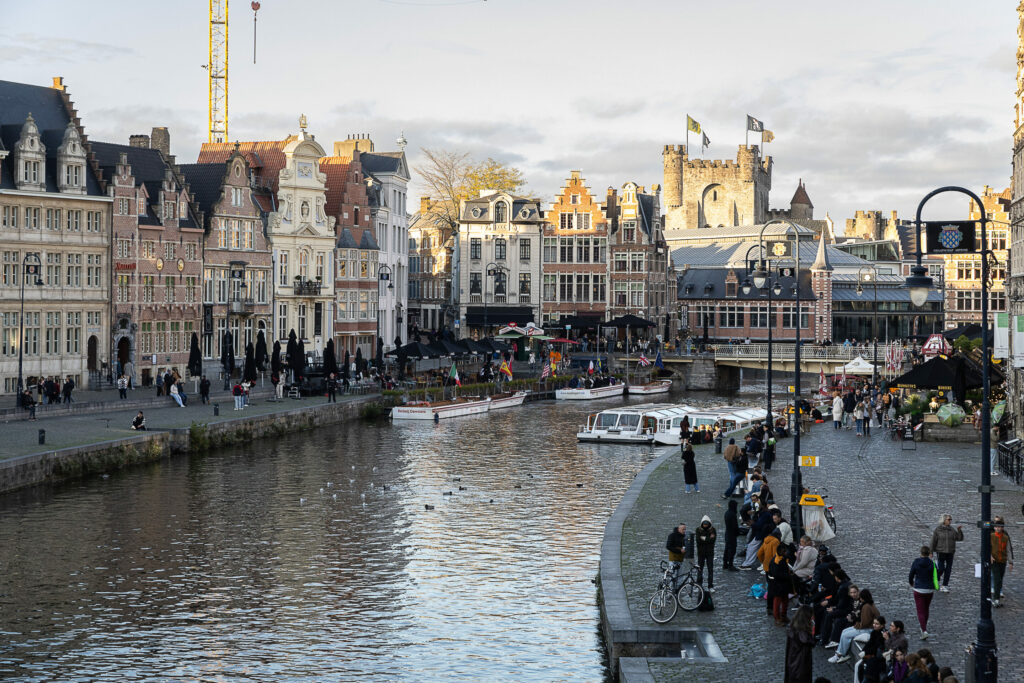
Fifteen European cities, including the city of Ghent, have appealed to the EU to take “bold and immediate” steps to address the continent’s housing crisis.
The Mayors4Housing Alliance – comprised of representatives from Ghent, Amsterdam, Athens, Barcelona, Bologna, Budapest, Florence, Leipzig, Lisbon, Grand Lyon, Milan, Paris, Rome, Zagreb and Warsaw - has come up with an ambitious action plan, which it presented to the European Commission earlier this month.
According to the alliance, which is led by the mayor of Barcelona, rents in the 15 cities have risen by 60% on average over the past 10 years, while housing prices have gone up by an average of 78% in the same period.
Across Europe, housing costs exceed 40% of people’s income for one in 10 urban residents, at a time when wages have stagnated and food and energy prices have surged.
In larger cities, the spread of online short-term rental companies has exacerbated the situation and displaced locals out of their communities while shrinking the stock of affordable homes.
Housing in Ghent unaffordable for many residents
Ghent, the second largest city in Flanders, has been gripped by a housing crisis for many years. A 2023 report by the European Observatory on Homelessness said that rent and house prices had “risen extensively” over the past decade, making housing unaffordable for many residents.
According to the report, while Ghent has more social housing than most Flemish cities, there is “still too little to cover its needs”. In 2022, there were 11,000 people on the waiting list for social housing, some for more than 10 years. As a result, many people end up renting “unhealthy, unsafe, too small private houses” or end up living on the streets.
The proposal by the Mayors4Housing Alliance calls on the EU to create fast-track EU funding for cities to build and renovate social and affordable housing. The mayors are asking the EU to channel at least €300 million in grants and loans to cities through a proposed Affordable Housing Fund.
The alliance also wants the bloc to reform its state aid rules to boost investment in public housing and to excluding green housing investment from national deficit and debt calculations.
In January, the European Parliament created a special committee on the housing crisis to explore measures that can be taken at an EU level to tackle the problem.
