
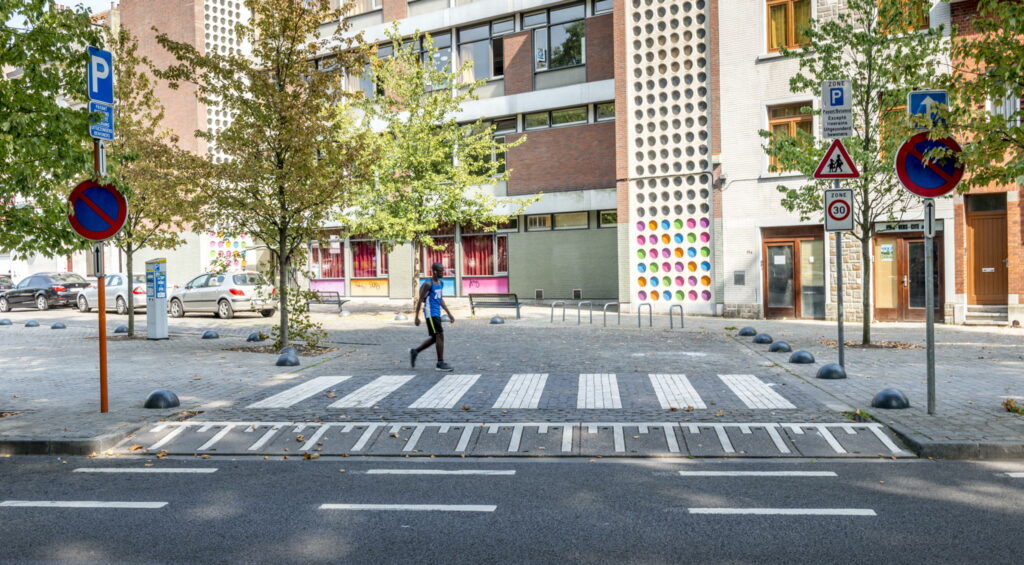
The Brussels-Capital Region introduced the generalised 30 km/h speed limit in 2021. Five years on, the measure continues to have a positive effect on both speed, and the number and severity of accidents.
One of Brussels' main objectives is 'Vision Zero' – having zero traffic deaths on its roads by 2030 – and the 30 km/h speed limit is one of the capital's "essential pillars" in the strategy to get there, according to Brussels Mobility Minister Elke Van den Brandt (Groen).
"Five years later, this measure, along with dozens of others we have implemented, allows us to nurture the ambition to do as well as Oslo or Helsinki," she said. "There is still work to be done, and the next few years will be crucial."
Van den Brandt stressed that she wants to make Brussels a city "where every parent can let their children run around and make the journey to school in complete safety."
Average speeds
Brussels Mobility has been carrying out annual speed measurements at 80 locations in the capital since November 2020. The cameras are barely visible and are never located where speed checks are taking place to avoid a distorted picture; drivers tend to slow down when they see a speed camera.
Following the implementation of the 30 km/h across the Capital Region, a visible drop in average speed was recorded on all roads. This indicates that motorised drivers are increasingly complying with speed limits.
These lower speeds are observed during all hours of the day, including at night – meaning they are not related to traffic jams during rush hours. Additionally, the new speed limits do not lead to longer journey times either.
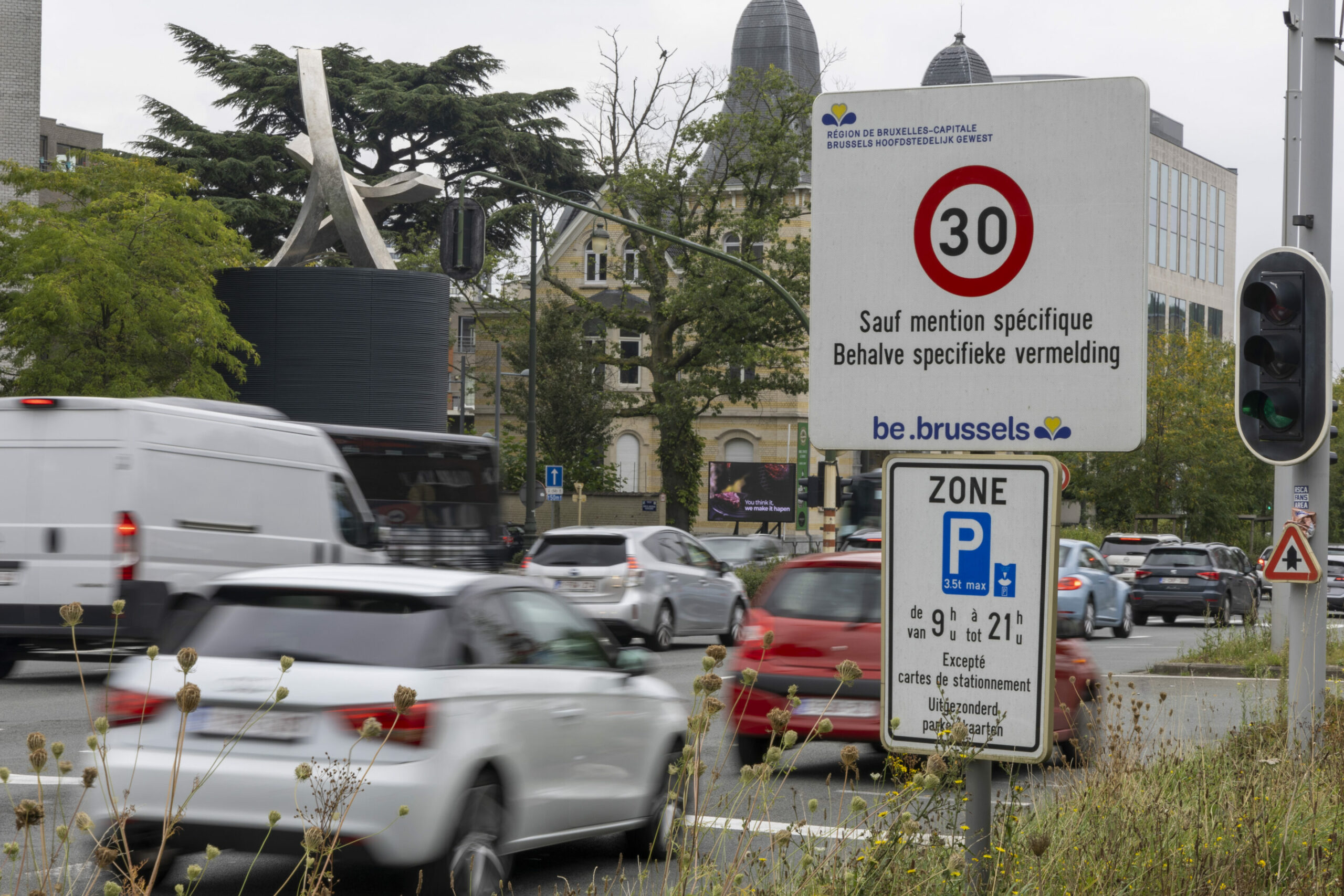
A sign introduces the 30km/h speed limit in the LEZ in Ganshoren, on Wednesday 4 September 2024. Credit: Belga/Nicolas Maeterlinck
"The effects of the generalised 30 km/h are permanently positive, both on roads where the speed was reduced from 50 to 30 km/h and on streets where the speed limit was not adjusted," Brussels Mobility stated.
The speed limit also has a direct impact on the number and severity of accidents, the figures show.
Brussels' road safety policy focuses on three pillars: positive awareness campaigns on compliance with traffic rules and risks in traffic, infrastructure measures that encourage people to drive slower and promote road legibility, and speed checks at sensitive locations.
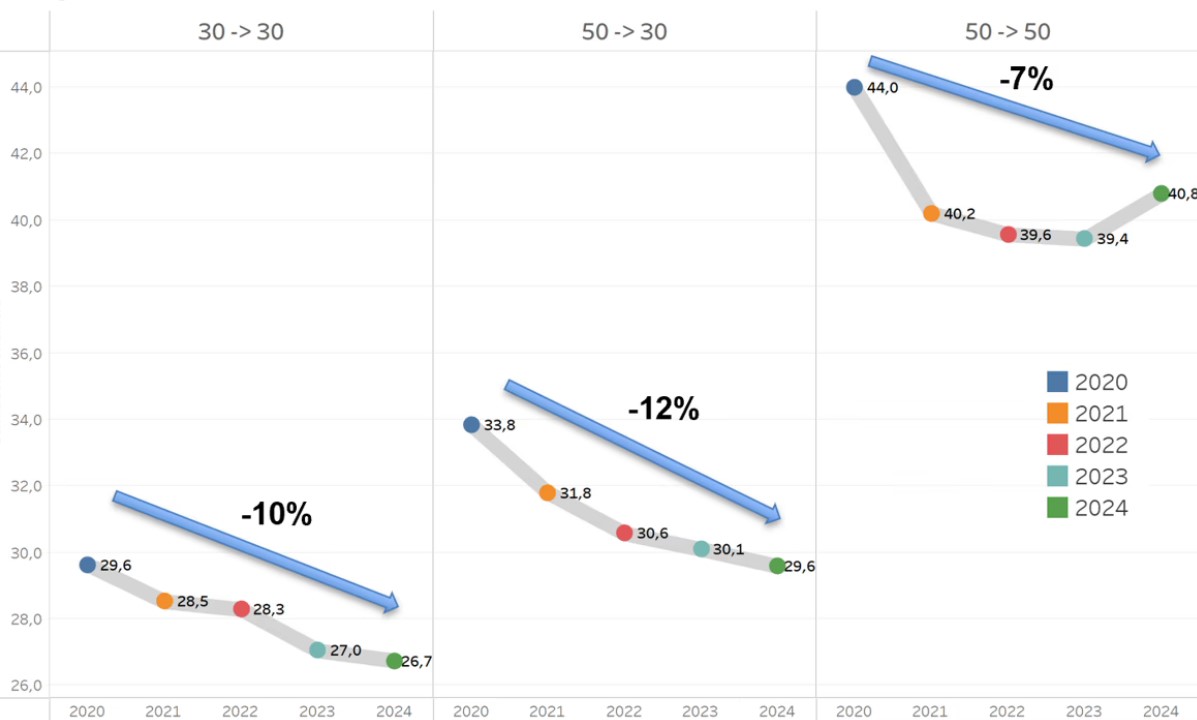
Difference in average speeds between November 2020 to 2023. Credit: Brussels Mobility
The combination of these three factors has already saved many lives: there were six traffic deaths in 2023, and ten in 2024. While Brussels Mobility stressed that every death is one too many, these number are much lower than the 23 fatalities registered in 2019, before the implementation of the 30 km/h speed limit.
"In fact, further analysis shows that in 2024, excessive speed did not play a role in fatal accidents."
New speed cameras coming soon
As speed checks are still crucial and therefore, the police continuously organise different types of checks. The location of these checks is never arbitrary: it may be a location where speeding is frequent, a sensitive location (such as a school area with many pedestrians), to secure a road where the speed limit is higher than 30 km/h.
To ensure everyone's safety, several additional speed cameras will be installed this year in the municipalities of Anderlecht, Ixelles, Molenbeek, Auderghem, Schaerbeek and Saint-Gilles.
The locations of all speed cameras and route controls already installed can be consulted on this map. "Some speed cameras not only monitor speed, but can also be used to issue an offence report when someone drives through a red light."
