
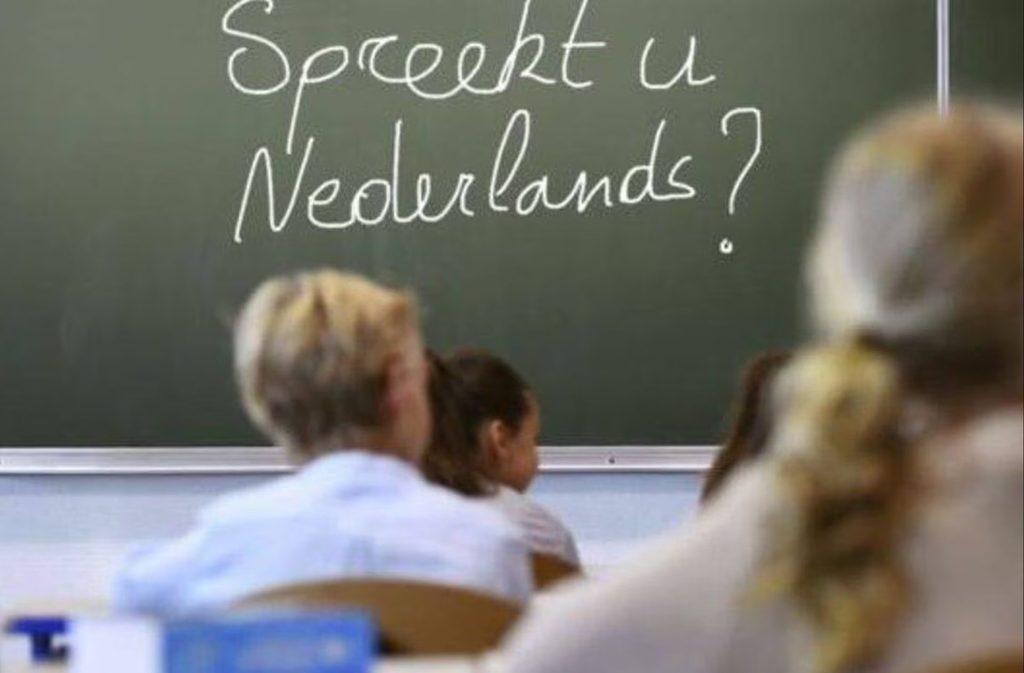
Flanders is re-shaping its adult education system to focus on activating people by making job-guaranteed training cheaper and raising the prices of courses not focused on work. As a result, language courses will go up considerably.
Flemish Education Minister Zuhal Demir (N-VA) announced that the prices of so-called "hobby courses" offered in adult education centres in Flanders will rise, as they do not guarantee employment. These include such as exotic cooking and flower arranging – but also foreign languages.
"The minister neglects the importance of multilingualism. It is not a luxury, it is absolutely a necessity – including for our economy," Maryse Boufflette, director of the Centre for Living Languages (CLT) in Leuven, told The Brussels Times.
The 'Dutch for non-native speakers' course will not be affected by the changes, and the price for Flemish Sign Language is even going down. However, the cost of all other languages will rise from €1.50 to €4 per hour – an almost threefold increase.
Enhancing job prospects
The language centres do not offer classes per hour, but learning modules of 35 or 60 teaching hours. An annual course usually has 120 teaching hours. "This used to cost €180 per year. But it will now go up to €480," she said.
The issue, Boufflette stressed, is not so much the new price but rather the sudden increase. "The €1.50 rate had been in place since 2015. It had not been raised or indexed for ten years. But now, they are making up for that all at once – because languages are apparently 'hobby courses'."
"By categorising language education as a hobby, the minister overlooks the fact that many people enrol in language programmes to enhance their job prospects," she said.
Indeed, figures by the Flemish Service for Employment and Vocational Training (VDAB) show that over 50,000 job vacancies explicitly ask for the knowledge of a second language – usually French and/or English, but many require knowledge of Spanish, Italian, Arabic, or Ukrainian, for example.

Mugs with the map of Belgium in the colours of the Belgian flag, captioned 'Pray for Belgium' in French, English, Dutch and German. Credit: Belga / Eric Lalmand
Contacted by The Brussels Times, Demir's office confirmed that Dutch and Flemish Sign Language are the only two courses that will not become more expensive. However, Belgium's other official languages, French and German, or English – often used as a bridging language in Belgium's complex linguistic system – will rise in price, just like all other languages.
"Those who want to take Spanish [...] can of course continue to do so – but they will pay slightly more for it. For courses that are not focused on work, we will raise the registration fee to €4 per hour. That is only fair to the taxpayer," Demir said in a press release.
When asked for more information about including language classes in the list of "hobby courses," her office declined to comment further for the time being.
Importance for society and economy
For Boufflette, the key issue is that Demir "openly declares that she wants to invest mainly in training that leads people to the labour market. And adds that language training is not one of those."
Additionally, studies have proven that companies that invest in multilingualism have a higher return: language knowledge allows employees to negotiate better, to understand the culture behind the language, the habits of their business partners – which all result in economic benefits.
At the CLT in Leuven, the new regulations will impact 5,700 people taking a language course. Of those, 30% are taking a class for professional reasons, and 10% for educational reasons (to study abroad, for example) – meaning at least 40% are not, as Demir said, a "hobbyist."
"It is absolutely wrong of the minister to label people who consciously invest in their language knowledge as hobbyists," Boufflette underlined. "She ignores not only the personal commitment of those people for the sake of the labour market, but also the importance of multilingualism in our society and for our economy."
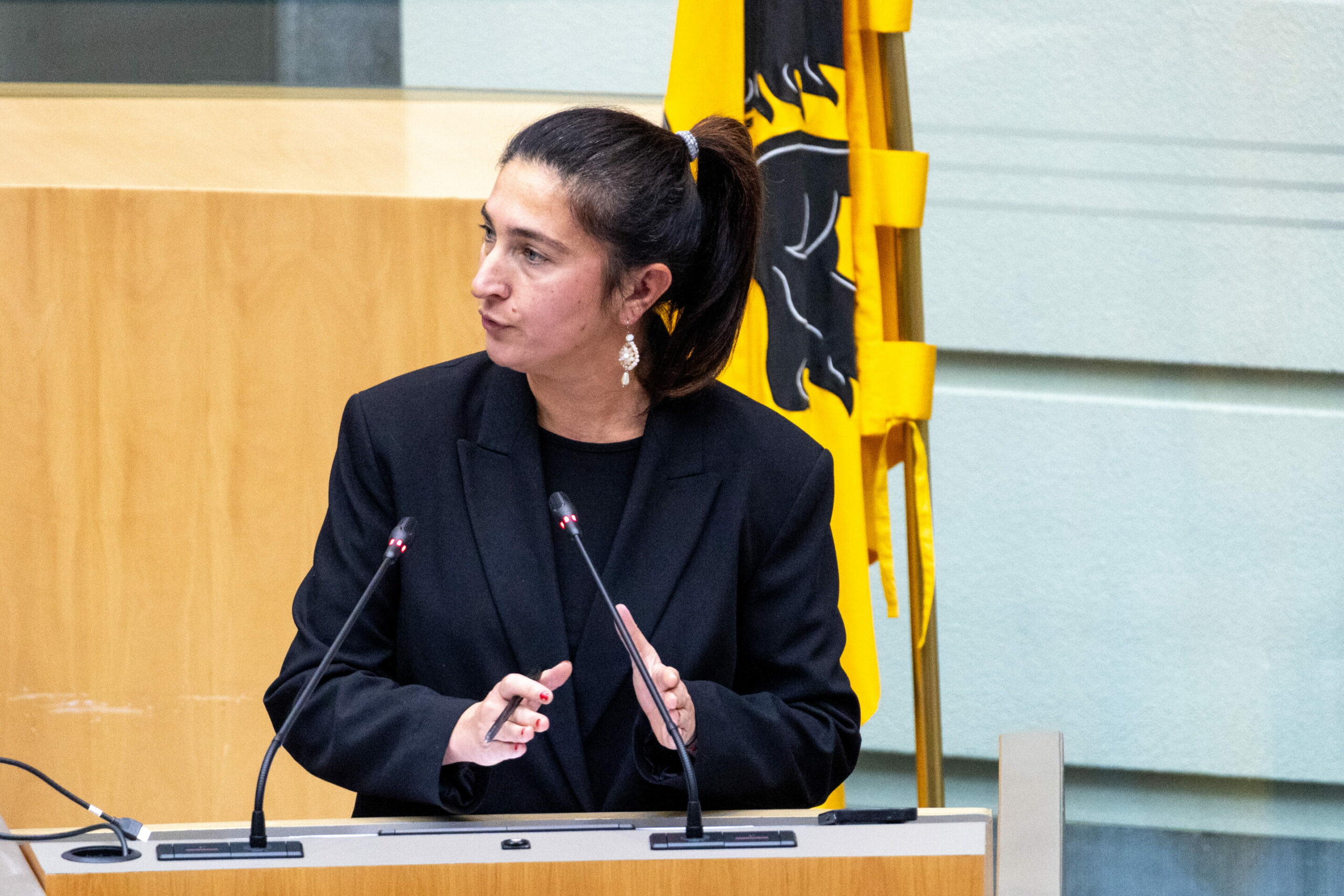
Flemish Minister for Education and Work Zuhal Demir (N-VA). Credit: Belga/Ward Vandael
The reform also means that some people will no longer be able to afford a course: in addition to the general price hike, the "social corrections" that existed until now will completely disappear from now.
These corrections meant that some participants enjoyed a partial exemption from payment of the registration fee because of unemployment, incapacity to work, or because they were dependent on a subsistence income, for example.
"As this measure disappears, I fear that investing in language knowledge – whether it concerns strengthening language skills or learning a new language – is no longer an option for the less wealthy," Boufflette said.
The measure has now received initial approval by the Flemish Government. It will need to be approved a second time (following submitted amendments), as well as pass through the Flemish Parliament. The change might not be fully approved until 16 June, but the changes will already take effect on 1 September.
According to Demir, the reform will generate a total of €33 million for the Flemish treasury.
