

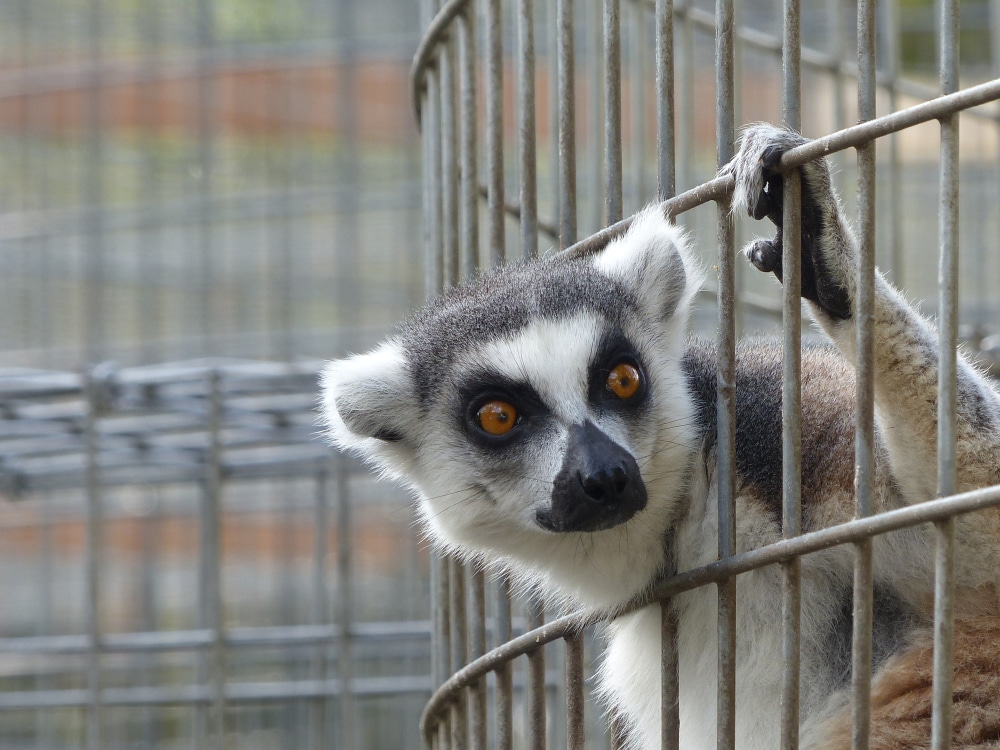
Across the EU, millions of wild animals from thousands of different species are kept as pets: geckos, snakes, turtles, amphibians in artificial terraria; hundreds of bird species in cages; and exotic mammals in city apartments.
Just recently in Brussels, I saw a magnificent macaw, in a cage hardly large enough to spread its wings; and a small parrot, probably terrified, left caged in the middle of a square, while the “responsible” human went to the shop! Walk through Brussels; you’ll see turtles basking in public ponds and parakeets nesting in city parks, both descendants from once-escaped or released pets. These exotic animals, though sentient beings, can cause harm to native wild animals.
You may have heard that wild animals in different areas can speak in dialects, or different accents. But should their welfare depend on which country they are kept in? Current EU rules suggest exactly that, with protection levels varying from one Member State to another, some with no welfare laws on the protection of wild animals kept as pets, a wild west of pet keeping.
This fragmented approach fails to promote responsible pet ownership. After all, an animal’s needs don’t change simply because it is kept in Brussels or Bologna. In 2022, EU Member States asked for a study to assess an encouraging solution: an EU-Wide Positive List. So, where do we stand now? And what opportunities are coming to fix these inconsistencies?
The problem: thousands of wild species in homes, different rules
Many of these species, whether wild caught or captive bred, have complex needs: space, social interaction, diet, temperature, and enrichment that typical homes cannot provide. The result? Animal suffering, public health and conservation risks, and, if they escape or are abandoned, ecological harm. Though strong evidence from vets and animal welfare experts shows this, disturbingly, there still remains insufficient information on husbandry of wild animals and problems persist due to lack of owner knowledge.
Most EU countries rely on “negative lists”, banning the trade and keeping of certain species, often based on environmental or safety concerns, but leaving thousands unregulated by default. This creates confusion for owners, burdens enforcement, and allows the trade in pets that suffer in captivity.
The EU-wide laws in place that pertain to wild animals as pets fall short; international rules on conservation cover only a fraction of the species that are currently traded as pets in the EU and are slow to react when species in trade are identified as being threatened.
Moreover, EU rules on invasive alien species currently leave out many pet species that could pose ecological risks. It’s not fair to blame individuals. When the law says it's legal, and advice given by sellers can be generalised or lack proper documentation, how can consumers know better?
The solution: An EU-Wide Positive List
A Positive List flips the script: only species that are independently, and scientifically assessed as suitable can be kept or placed on the market as pets. With eleven Member States already implementing or developing a Positive List, and several others considering it in law, this system offers multiple benefits and supports a more mutual human-animal bond.
A harmonised EU list would provide clearer rules for consumers, simplify enforcement for authorities, enhance animal welfare through targeted care, reduce ecological and health risks by limiting invasive species and disease spread, allow responsible businesses to adjust which species they trade and breed, and improve veterinary expertise through focused training on approved species.
Some fear that a Positive List is a “blanket ban”, it is not. The list can be improved over time based upon new scientific knowledge. Nor is it a punishment for “responsible” keepers: existing pets would be allowed to be kept until the end of their natural life, with no forced removal from people’s homes.
Moreover, concerns that a large number of animals, waiting to be sold, would flood rescue centres are unfounded, given that a positive list would be introduced with sufficient transition times to help businesses adjust. Far from driving illegal trade underground, experience shows enforcement becomes easier, not harder. An EU-wide Positive List can be improved over time, and is a system that allows complementary welfare measures for wild animals in trade.
Where do we stand?
The EU has the legal competence to harmonise these rules and we are in the eye of a perfect policy storm; where science, public concern, and legislative momentum are finally riding in the same direction. Belgium blazed the trail on the positive list and many follow. The Commission study, which Member States asked for in 2022, will conclude this summer;
Furthermore, the European Parliament's Committee on Environment, Public Health and Food Safety (ENVI) voted on their official Opinion last month to amend the proposal on an “EU Regulation on the traceability of cats and dogs” by adding an EU-wide Positive List. The final vote in the Parliament on the proposal is expected later this summer.
The ENVI rapporteur suggested that the evaluation process should assess the feasibility of creating such a list of animals deemed suitable as pets, under appropriate welfare conditions, without harming the wildlife populations in the natural environment and without hampering biodiversity. The list would be based on a thorough evaluation of species-specific welfare needs and the risks associated with their trade and ownership.
