
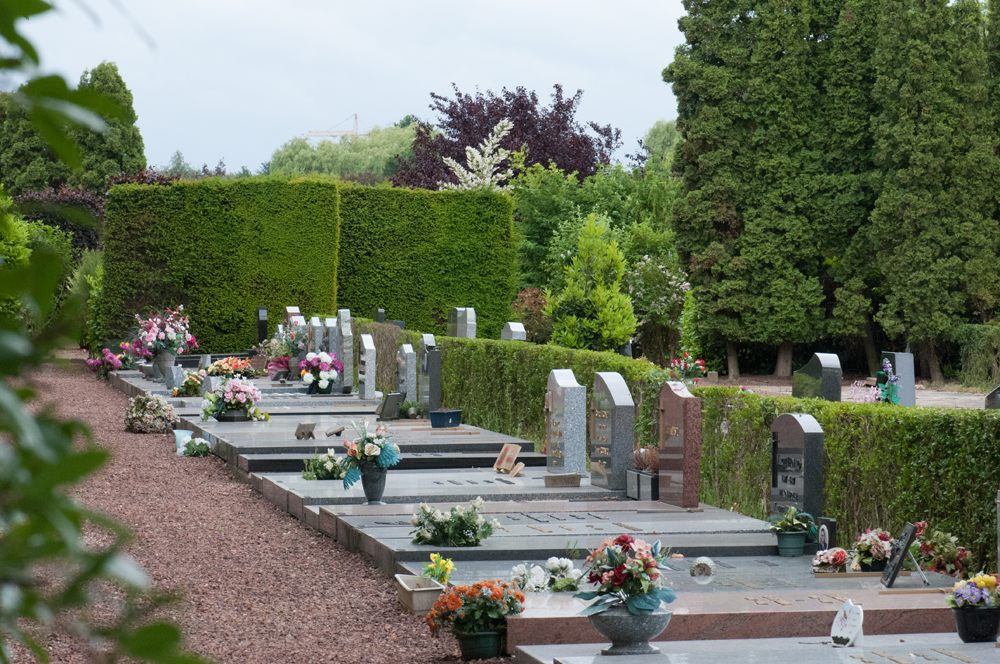
In a quiet corner of the Schaerbeek cemetery located in Evere, a unique institution is redefining how death and diversity meet.
The Intercommunal Multifaith Cemetery of Brussels stands as the only burial site in Belgium designed from its inception to welcome people of all recognised religions – Muslim, Catholic, Orthodox, Protestant, Anglican, and Jewish—on equal footing.
The cemetery was born out of necessity and foresight. "The idea was to respect the rites of all officially recognised faiths in Belgium," explains Isabelle Thomas, the cemetery’s director since 2022. It offers not only physical space but symbolic recognition to communities often forced to compromise their burial traditions.
The Covid Turning Point
According to Khalid Mansouri, current chairman of the cemetery’s board and representative of Saint-Gilles, the cemetery’s Muslim section reached full capacity at the beginning of the pandemic. “It started with Covid,” he recalls. “Repatriation of bodies was no longer possible. Families were forced to bury their loved ones here, and many discovered this cemetery for the first time.”
The sudden need, combined with travel restrictions, revealed a long-term shift: families began opting for local burial instead of transporting the deceased abroad. The municipality of Schaerbeek responded by allocating an additional Muslim parcel to meet the demand.
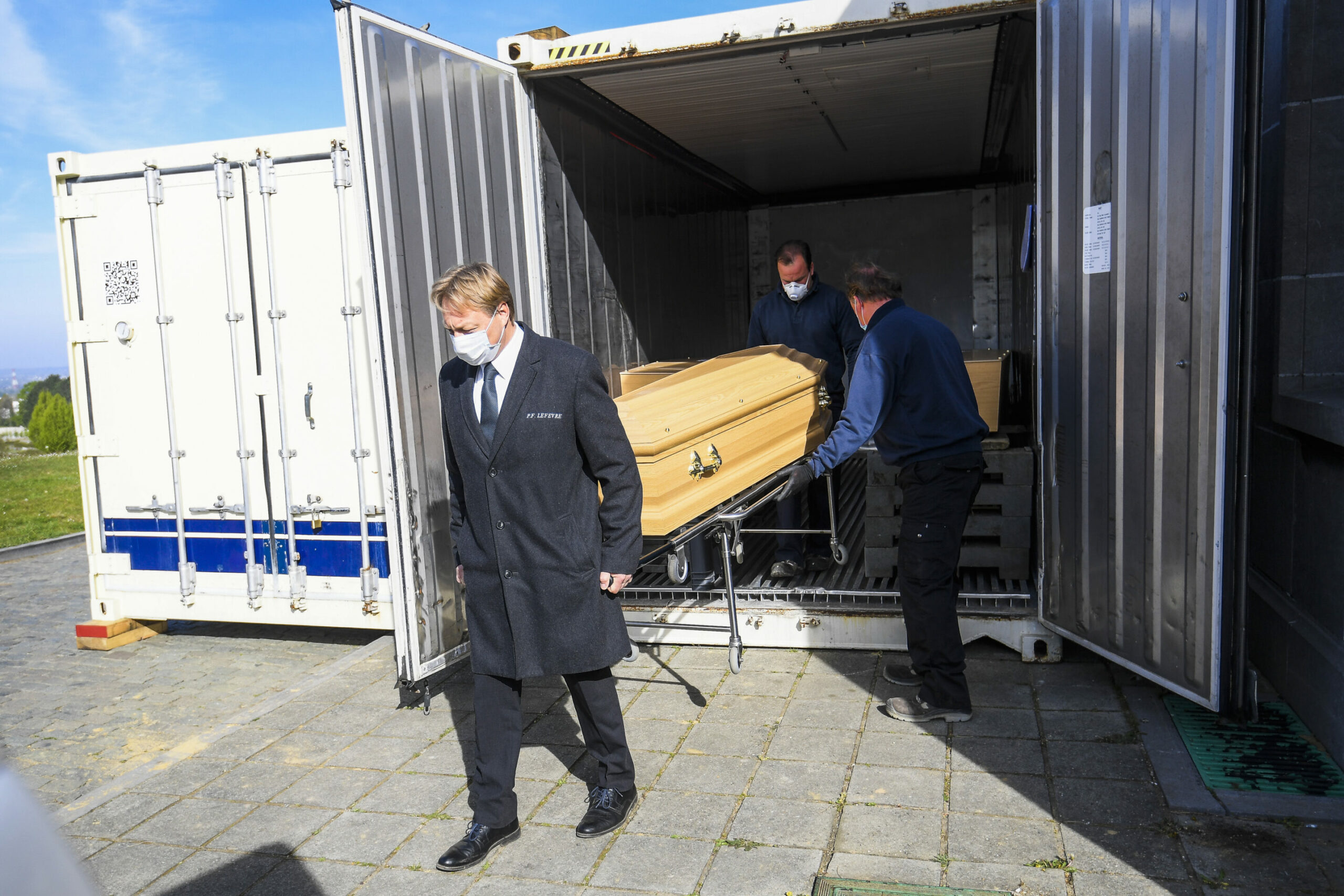
Illustration picture shows undertaker's carrying a coffin from on the way to a funeral ceremony, Wednesday 15 April 2020. Credit: Belga
Today, 90% of the cemetery’s burials are Muslim, with dedicated sections for adults, children, and even unborn fetuses. The majority of Muslim burials are done in a linceul (shroud), a practice allowed in only one other cemetery in Belgium – located in Antwerp.
A Democratic, Intercommunal Model
Twelve municipalities in the Brussels region jointly manage the cemetery through an intercommunal association established in 1999. Each has one delegate and one administrator on the board, and the presidency rotates every three years. Mansouri will hand the baton to Ganshoren’s Serge Janssen in June.
This collaborative structure ensures collective ownership and inclusive policy-making. The general assembly, composed of representatives from the twelve participating municipalities, has final say on matters such as budget approval, rule changes, and new member admissions.
Despite other cemeteries in Brussels having multi-faith plots, they often fall short in terms of cultural sensitivity and operational clarity. “People prefer coming here because it works,” says Mansouri. “They want to be buried together, in dignity, with respect for their beliefs.”
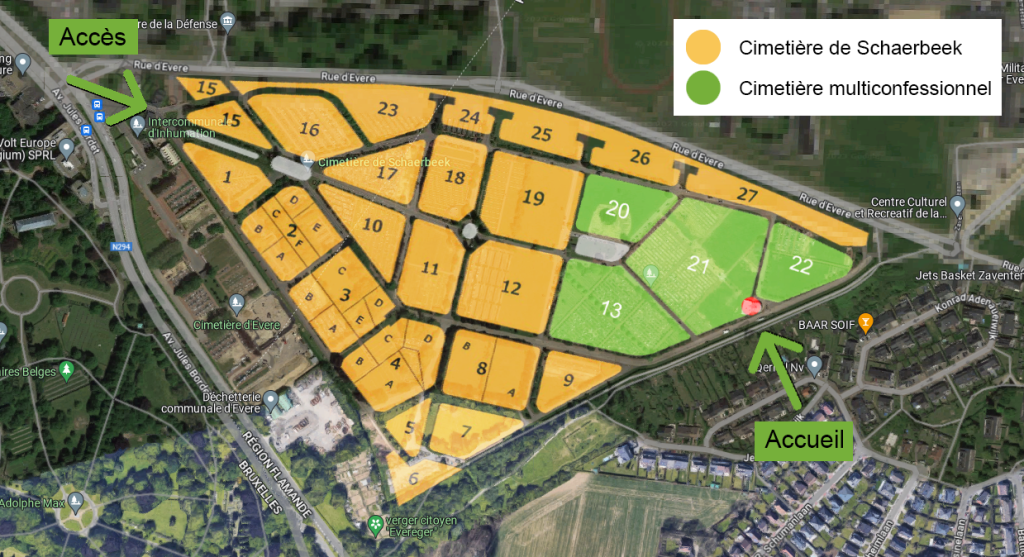
Schaerbeek Cemetery plan. NB: 'Multiconfessionel' translates to multi-faith, with the green demarcating the different cemetery areas.
Faith Without Proof
The cemetery operates on trust. No documentation is required to verify a person’s faith. While there are two pricing tiers—standard rates for residents of the twelve member municipalities and an 80% surcharge for non-residents – the cemetery welcomes everyone, regardless of their place of residence or faith. For example, the cost to bury an adult for a 25-year concession is €1,500 for residents of the member municipalities, compared to €2,700 for those living outside these areas.
“There are no specific rules per plot,” says Director Isabelle Thomas. “We let families choose what fits their traditions.” Whether it’s a Muslim grave without a headstone or a Jewish burial where the tombstone is placed one year later, all are accommodated without judgment.
“We’re not here to tell people how to express their faith,” Thomas adds. “It’s something deeply personal—between you and your creator.”
Ceremony, Choice, and Cultural Respect
The cemetery provides a neutral, solemn environment. Families are advised to bring their own religious leaders for the burial ceremony. There is also a dedicated room for prayer and remembrance.
Christian families are encouraged to scatter earth or place flowers during the ceremony. Some Orthodox priests even pour wine and grain over the grave. For Jewish funerals, a rabbi delivers the eulogy, and mourners recite the Kaddish. Small stones – placed on tombs as a sign of remembrance – are readily available.
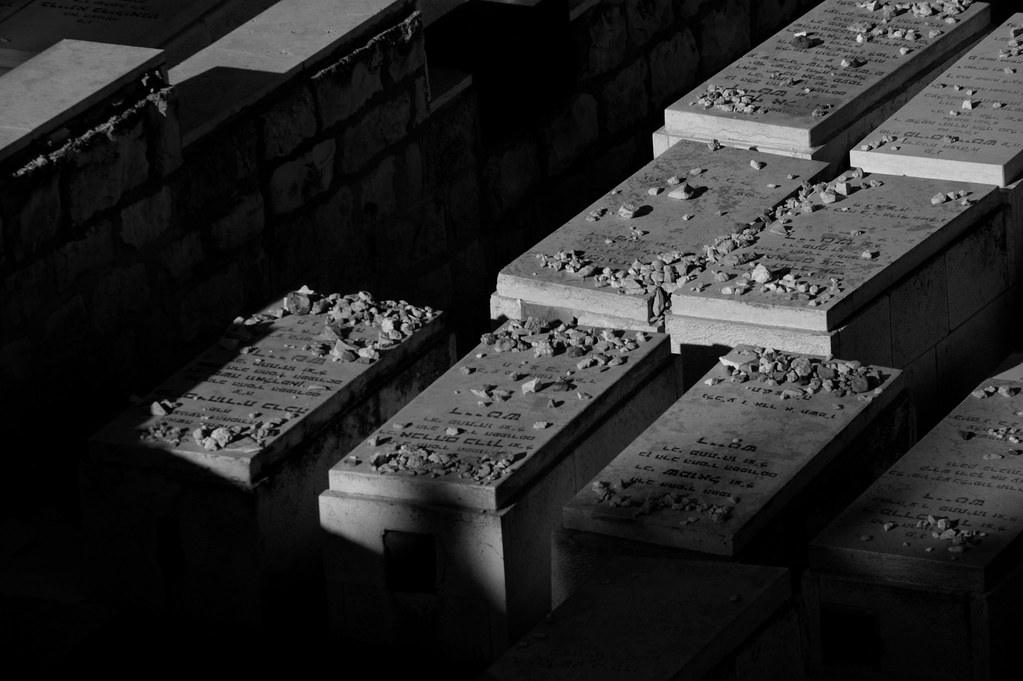
Illustration image of Jewish visiting stones. Credit: Openverse
The cemetery’s staff are trained to assist in burials for all confessions and are present during all key moments. In Muslim burials, two family members may descend into the grave with the deceased, and the rest of the family may help fill the grave – weather and safety conditions permitting.
A Place for Now and the Future
With around 800 burials a year, this cemetery is not only a solution for today but a vision for Belgium’s multicultural future.
The Catholic section remains small, largely due to the increasing preference for cremation among Catholics—a practice forbidden in Islam and Judaism. As a result, this cemetery fills a growing and crucial role.
