
The European Commission against Racism and Intolerance (ECRI) said that a letter penned by nine European leaders to the European Court of Human Rights (ECHR) last week speaks to the "difficult political context" in which equality bodies are attempting to preserve their independence.
ECRI is an independent body under the structure of the Council of Europe (CoE), Europe's largest human rights organisation.
The ECHR, the CoE's legal arm, said last week that it had received a letter from nine European leaders (including Belgian Prime Minister Bart De Wever) calling for a "reinterpretation" of the European Convention of Human Rights in a bid to increase deportations of "criminal foreign nationals". The letter was condemned as a "politicised" attack on the judiciary by the CoE, lawyers and human rights institutions.
Speaking at the presentation of ECRI's annual report on Wednesday, ECRI chair Bertil Cottier said the letter was an example of the "very difficult context" in which equality bodies were attempting to hold onto their independence. Challenges to the body's judicial independence were highlighted as one of the most significant challenges in its recent report.
Equality bodies are "sometimes critical of government action when it touches on migration and other issues," added ECRI Executive Secretary Johan Friestedt. "That is why, at the national level, we are defending the independence and the competencies of equality bodies all over Europe so much."
"We need very strong equality bodies, especially in these times. Unfortunately, the winds are not in our favour, and this why all member states should be very careful."
Credit: Belga / Benoit Doppagne
ECRI's annual report praised an EU Directive passed in May 2024 which "creates momentum" for the strengthening of national equality bodies. However, shortcomings in the form of scarce human and financial resources, delayed parliamentary discussions of reports and sometimes questionable independence persist.
Racial profiling
The ECRI report also drew attention to a persistent, "Europe-wide trend" of racial profiling and unfair stop-and-search practices that target Black people, people of African descent, migrants, people with a migration background, Roma and Travellers, Muslims and people perceived to be Muslim.
This type of discrimination is often linked to counter-terrorism and extremism efforts or increased surveillance in certain neighbourhoods. ECRI warns that racial profiling generates feelings of humiliation and distrust and tarnishes the reputation of authorities among affected communities.
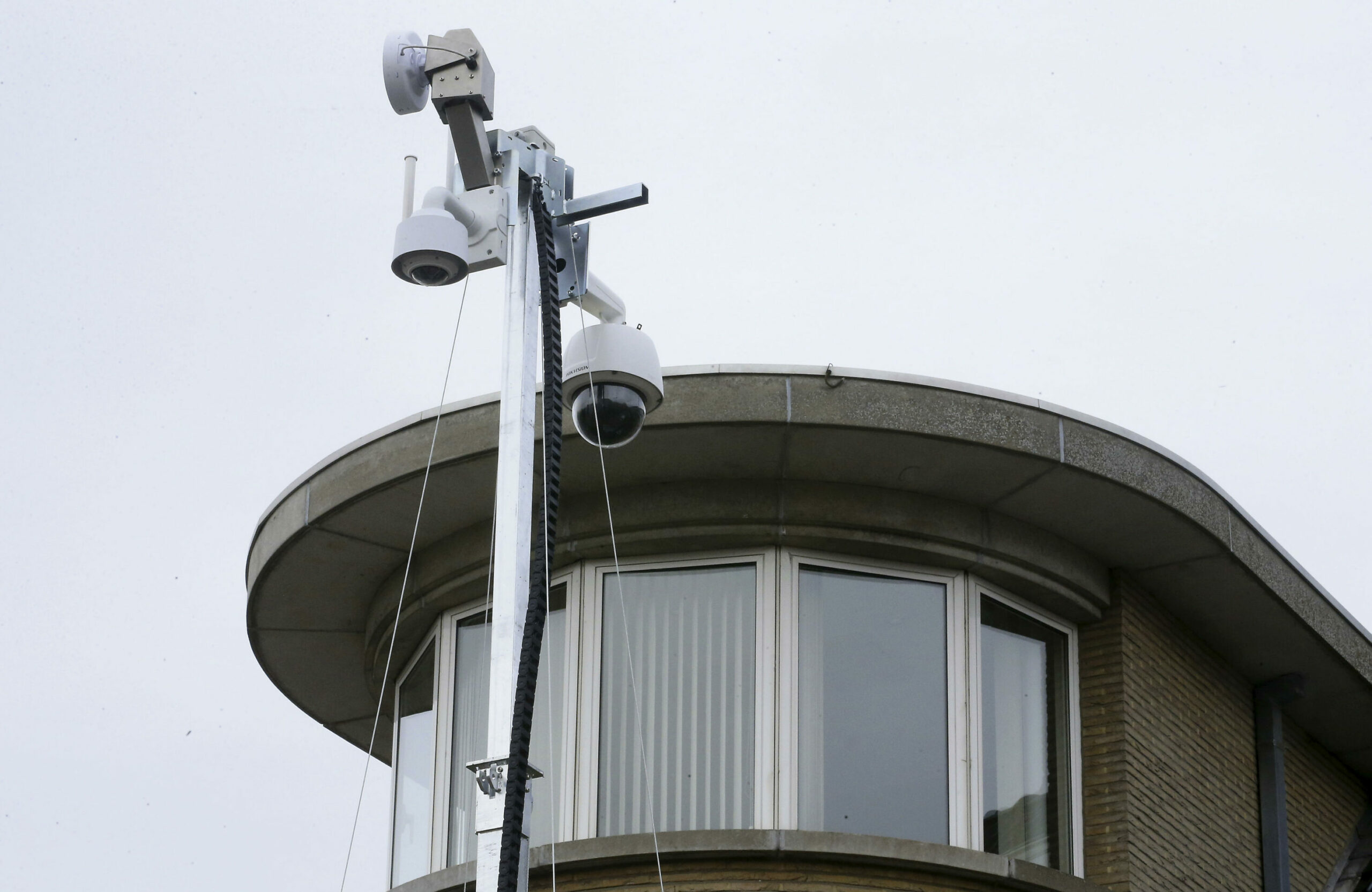
Illustration picture shows a police surveillance cameras. Credit: Belga/Nicolas Maeterlinck
Notably, Roma children are often segregated in schools, leading to a poorer quality education. Despite several legislative steps to combat this, progress is slow, the report states.
This form of discrimination "often happens quietly, through separate classes in a school, in separate buildings, through placement in special education without a proper justification, or through residential segregation," said ECRI member and Unia director Els Keytsman. "This segregation is not neutral. It is a violation of the right to quality and inclusive education."
Surge in transphobia
Transphobic discourse has surged across Europe and becomes particularly virulent during electoral campaigns or when legislation attempting to improve this community's rights is under negotiation.
Transgender and intersex people face a range of issues, including violent assault, barriers to accessing healthcare and a greater risk of mental health problems. The parents and guardians of intersex children often struggle to access basic information about how to cater to their child's needs.

Illustrative image. Credit: Wikimedia Commons
ECRI said it was "encouraging" that several member states had adopted its general policy recommendations in this area. The body's methodology means that specific countries cannot be named until country-specific reports are published.
"There has never been such a level of awareness about the dangers of racism and intolerance as being a direct threat to our European democracies, the rule of law and human rights," said Cottier. "But paradoxically, on the other hand, action against racism and intolerance and the promotion of equality have never been so challenged."
"We see several areas of concern when it comes to countering racism and intolerance in Europe. But we also see signs of hope: there are also areas where significant policy action is being taken in many different parts of the continent."
