
According to the European Centre for Disease Prevention and Control (ECDC), 1 in 5 people living with HIV in Europe remain undiagnosed. Across the continent, outdated laws are standing in the way of progress in the fight against HIV. Despite clear evidence that community-based testing by trained, non-medical lay providers improves access and outcomes, many European countries still prohibit this life-saving approach.
These restrictions aren’t just bureaucratic—they are blocking effective tools that could help eliminate AIDS as a public health threat.
Lay provider testing plays a crucial role in reaching people often missed by traditional healthcare systems: people who inject drugs, men who have sex with men, sex workers, and migrants. These key populations may avoid clinics due to stigma, discrimination, or logistical barriers.

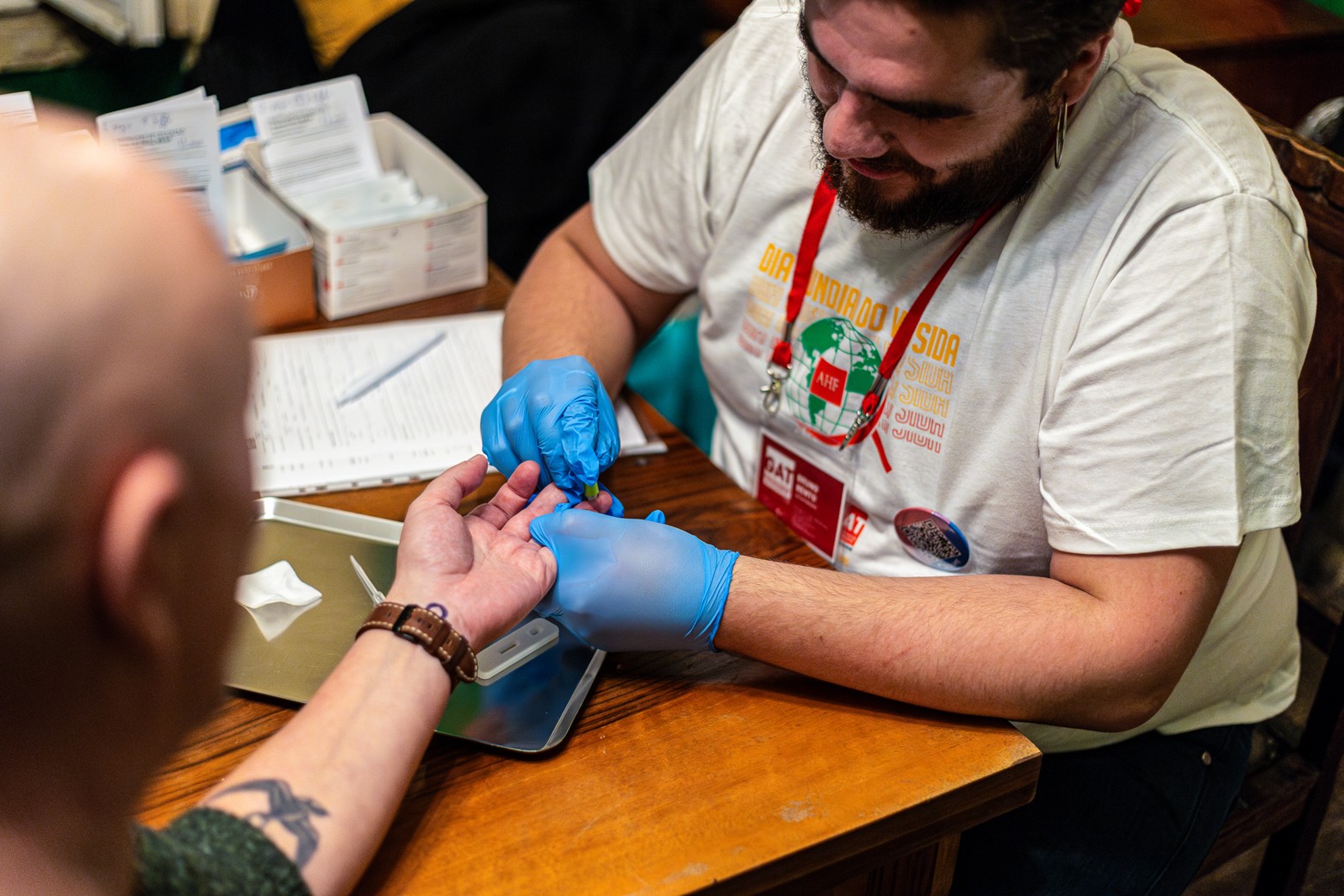
A mobile HIV testing unit operated by GAT (Grupo de Ativistas em Tratamentos) brings services directly to underserved migrant communities in Portugal, expanding access through community-based outreach
According to a 2022 report from the ECDC, 73% of countries in Europe and Central Asia restrict who can legally perform an HIV test. Even where community-based testing is allowed, it is often limited to medical professionals—undermining accessibility and impact.
This goes directly against the World Health Organization’s 2015 guidelines, which recommend task-sharing to trained, non-medical providers to expand access and increase uptake of HIV services—especially in community settings.
So, what does this look like in practice? It means trained community members providing rapid, confidential HIV tests in real-world environments: at truck stops and transit hubs, in nightclubs and bars, at locations where sex work occurs, in communities where migrants live and work, or in underserved urban areas with high rates of drug use. These are places where trust matters, and where traditional health services often don’t reach.
Crucially, community-based testing comes with strong peer support. People are more likely to test and follow up when they’re supported by someone who understands their lived experience. This peer-led model helps more people get linked to care—something that can’t always be guaranteed in traditional health systems.
Beyond improving access, lay provider testing enhances the responsiveness, efficiency, and cost-effectiveness of HIV services. It reduces pressure on overburdened clinics and makes care more people-centered. And it leads to better health outcomes: earlier diagnosis means earlier treatment. Late presentation remains a serious issue across Europe, with too many people entering care only after their immune systems are already compromised.
Allowing lay provider testing is a low-cost, high-impact reform and one that aligns with the EU’s broader priorities under the European Health Union and Sustainable Development Goals.
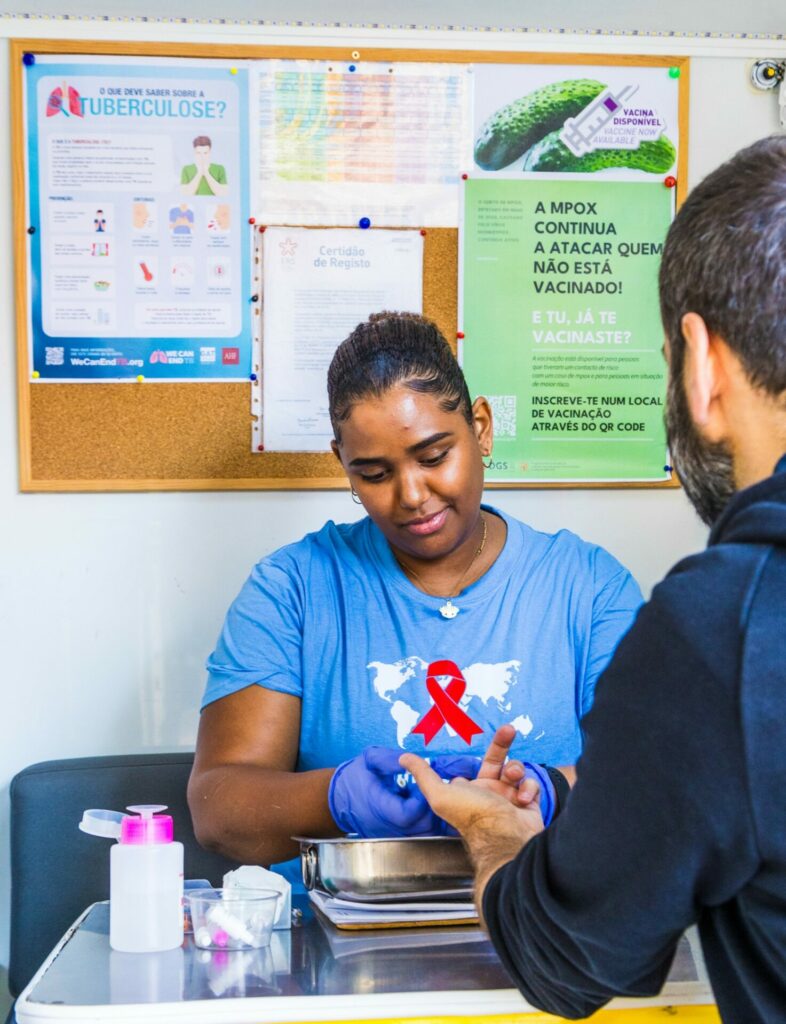
A trained lay provider administers a free rapid HIV test during an outreach event serving Portugal’s migrant community, helping to break down barriers to early diagnosis and care
At AIDS Healthcare Foundation (AHF), we witness the impact of legal barriers to lay provider testing every day. In countries like Ukraine, Georgia, Estonia, and Poland—where such testing is still prohibited—our ability to reach people most at risk is significantly constrained. In contrast, countries that have embraced this approach, such as Portugal, demonstrate the tangible benefits. Our partner, GAT (Grupo de Ativistas em Tratamentos), successfully advocated for the legalization of lay testing after many years of persistent effort.
Since 2010, Portugal has permitted lay provider testing—a model first pioneered by GAT and now implemented in partnership with AHF by more than 20 community-based organizations (CBOs). These trained lay providers offer stigma-free, high-impact HIV testing services specifically designed to reach marginalized and underserved populations. Today, lay testing is a cornerstone of Portugal’s national HIV response: CBOs account for approximately 77% of all HIV screening tests conducted in the country and are responsible for identifying around one-third of all new HIV diagnoses. Among those diagnosed, 90% are successfully linked to healthcare services, and 52% were undergoing HIV testing for the first time.
The Portuguese success story should be the norm—not the exception. HIV testing is the gateway to prevention and treatment. Without it, progress stalls. Removing legal barriers to lay provider testing isn’t just smart policy—it’s a human rights imperative.
It’s time for European governments to bring national laws in line with global best practices. Community-led testing works. Let’s empower the people already doing the work—and break down the barriers standing in their way.
