
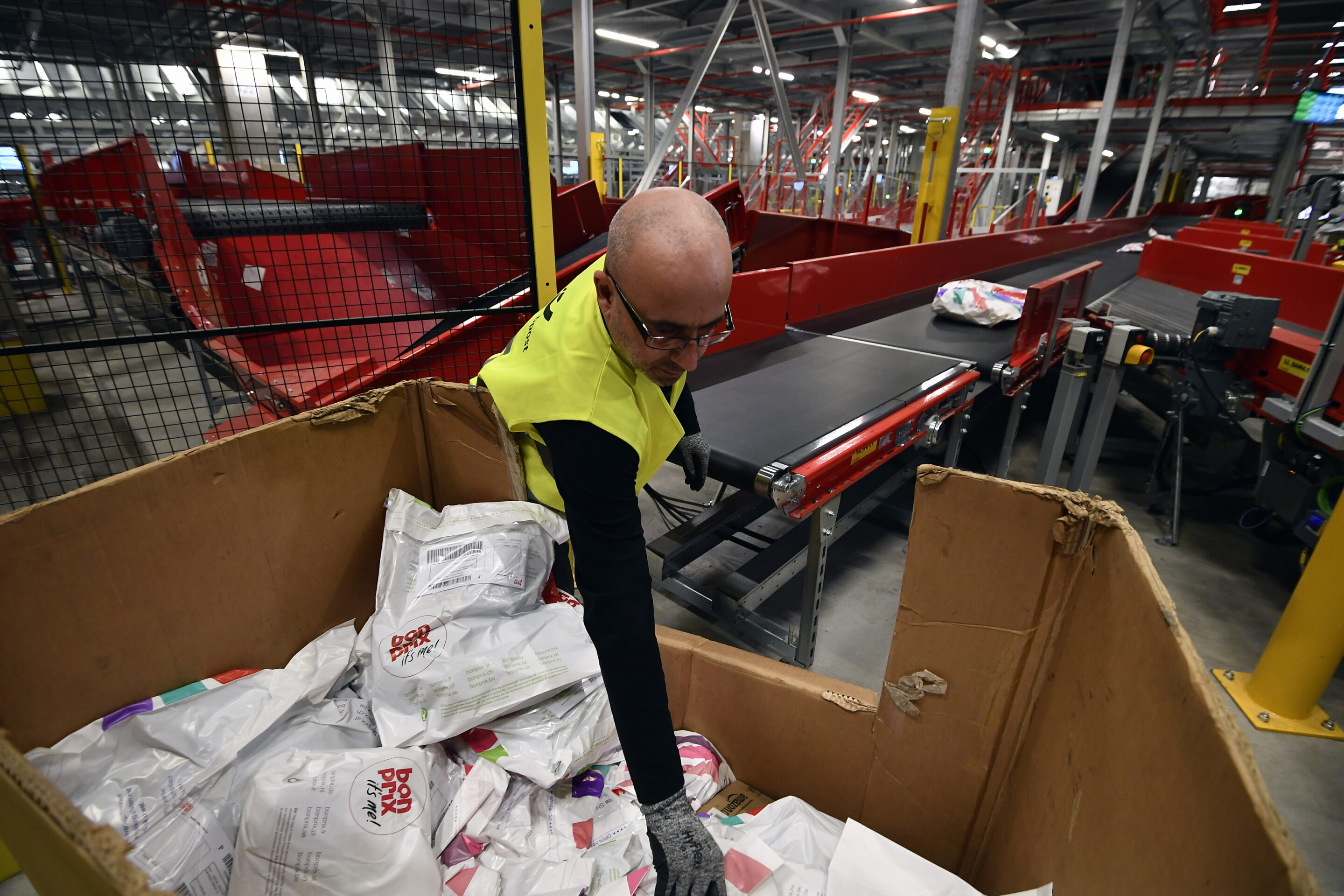
Belgian employees work the fewest hours per year in Europe, according to new research. They invest more in leisure, maintaining prosperity through high productivity, but some experts question whether this is sustainable in the future.
1,021 hours per year. That is how much the working population between the ages of 15 and 64 in Belgium works on average, according to data from the German Institute for Economic Research. This is the lowest figure of all European countries. Why is this?
High unemployment, inactivity
Part of the reason is Belgium’s high level of unemployment. The number of people aged between 15 and 64 who have a job is not as high as elsewhere. In Belgium, it is 72.3%, considerably lower than in the Netherlands (83.5%), Germany (81.3%) or even France (75.1%).
Bart Van Craeynest, chief economist at the employers' organisation Voka told The Brussels Times that Belgium’s employment figures were pushed down by high rates of economic inactivity in Belgium’s majority French-speaking regions.
“Brussels and Wallonia have the lowest employment rates in Europe, along with some other regions. The situation is better in Flanders, but it is still only average for Europe,” the Flemish employment expert explained.
“These low figures are due to a number of issues facing the Belgian labour market: high wage costs, which make certain jobs less attractive, but also stricter rules. Night work for example in Belgium until recently started at 20:00, compared to midnight in the Netherlands.”

Credit: Belga/Hatim Kaghat
Belgium performs better in terms of total annual work hours, amounting to an average of 1,437 hours. In this list, it outperforms its neighbouring countries, as well as Austria, Denmark and Sweden.
However, it is not in the top half of the list either. Americans, who, like other foreigners are sometimes surprised by the large number of holidays Belgians have, work 1,810 hours per employee. That is a quarter more.
The reason is that Belgium has a relatively short working week of 38 hours and quite a lot of leave days, says Craeynest.
“There is also a lot of part-time work in Belgium. In addition, we stop working earlier than the European average. The actual retirement age in our country is 61, which is among the lowest in all industrialised countries. In Scandinavian countries, the average is 65. It is proving difficult to change this. The government now wants to take measures to do so, but there is a lot of protest against it.”
No slackers
Despite the low number of working hours, Belgium is one of the most prosperous regions in the world. The explanation lies in the productivity of Belgian workers, which is among the highest in Europe. Only two countries do better: Ireland and Luxembourg. This has a historic precedent.
"Because labour costs are so high in Belgium, we were quicker than other countries to invest more in machinery and automation. So far, this has worked well to maintain our high level of prosperity,” the Voka expert explained.
Belgium also has a relatively high percentage (8,8%) of people that work 49 hours per week or more. Only five European countries have higher figures. Because they’re so productive, Belgian workers earn high wages, which allows them to take more holidays and/or work part-time.
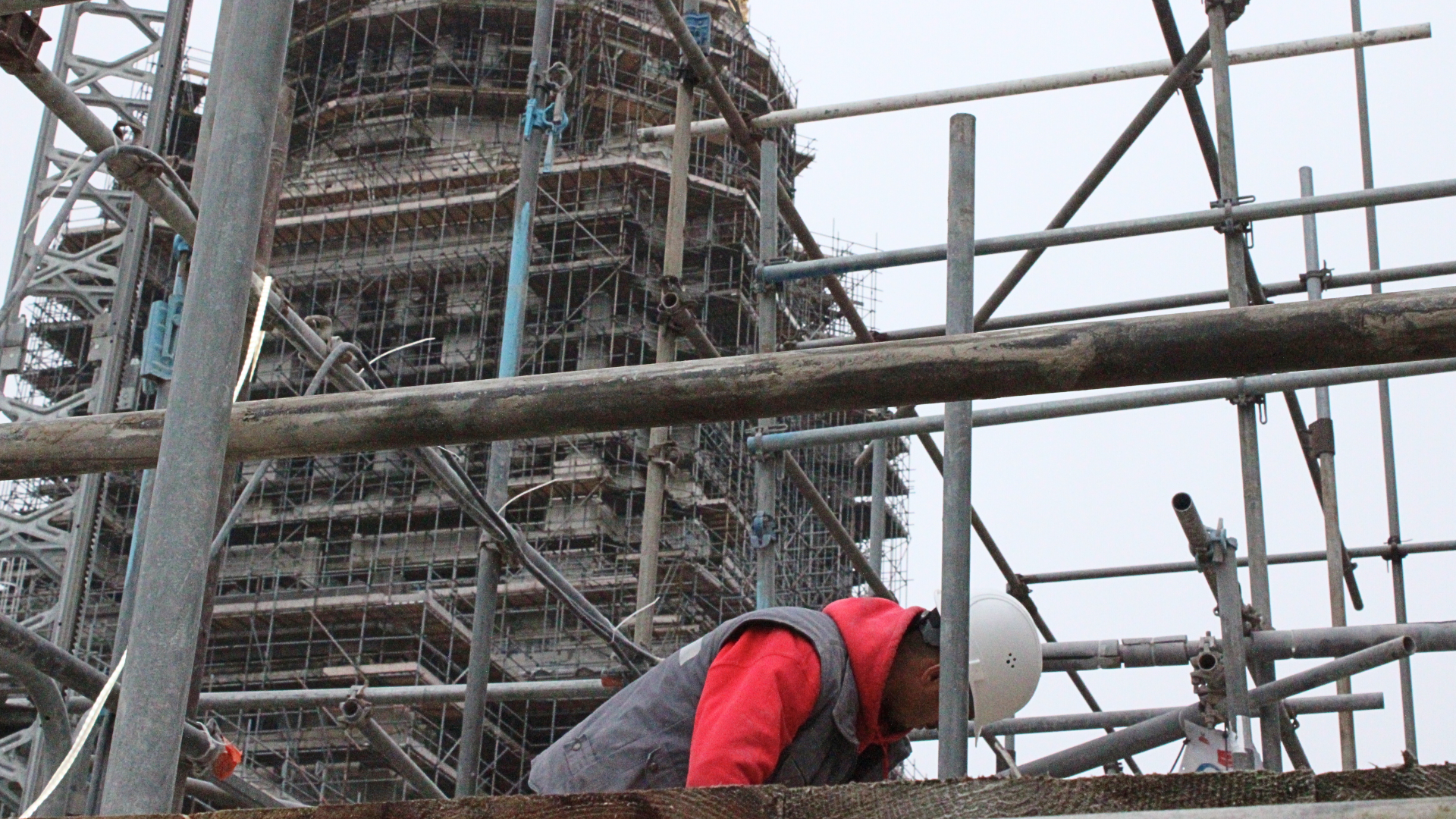
A construction worker on the roof of the Palais de Justice. Credit: The Brussels Times / Lauren Walker
But is Belgium’s relatively low working hours a threat to the economy? Hans Bevers, chief economist at Degroof Petercam bank doesn’t think so.
“We shouldn't just look at it from an economic point of view: there's simply more to life than work. Economic growth is not an end in itself, but a means to an end. Once people have reached a certain level of prosperity, they no longer want to work long hours,” he said in a comment to The Brussels Times.
Boosting productivity
The situation in Belgium is not unique, the senior economist explained. There are similar trends in other prosperous countries. Workers in increasingly wealthy countries tend to dedicate more time to other pursuits, such as time relaxing with friends, travelling or hobbies.
“If you nevertheless want to achieve economic growth to uphold the social security system, as this government intends to, it will have to come from productivity growth,” Bevers believes. This is no easy feat, he argues. To achieve this, the government should invest in education, which is tailored to specific sectors. “Public investment is needed: better infrastructure and better roads so that people can get to work more quickly.”
The expert encourages the government to also focus on playing to its strengths. Belgium has traditionally invested massively into innovation. In 2023, the country invested €19.8 billion in R&D related projects, accounting for 3.32% of its GDP, according to Eurostat figures.
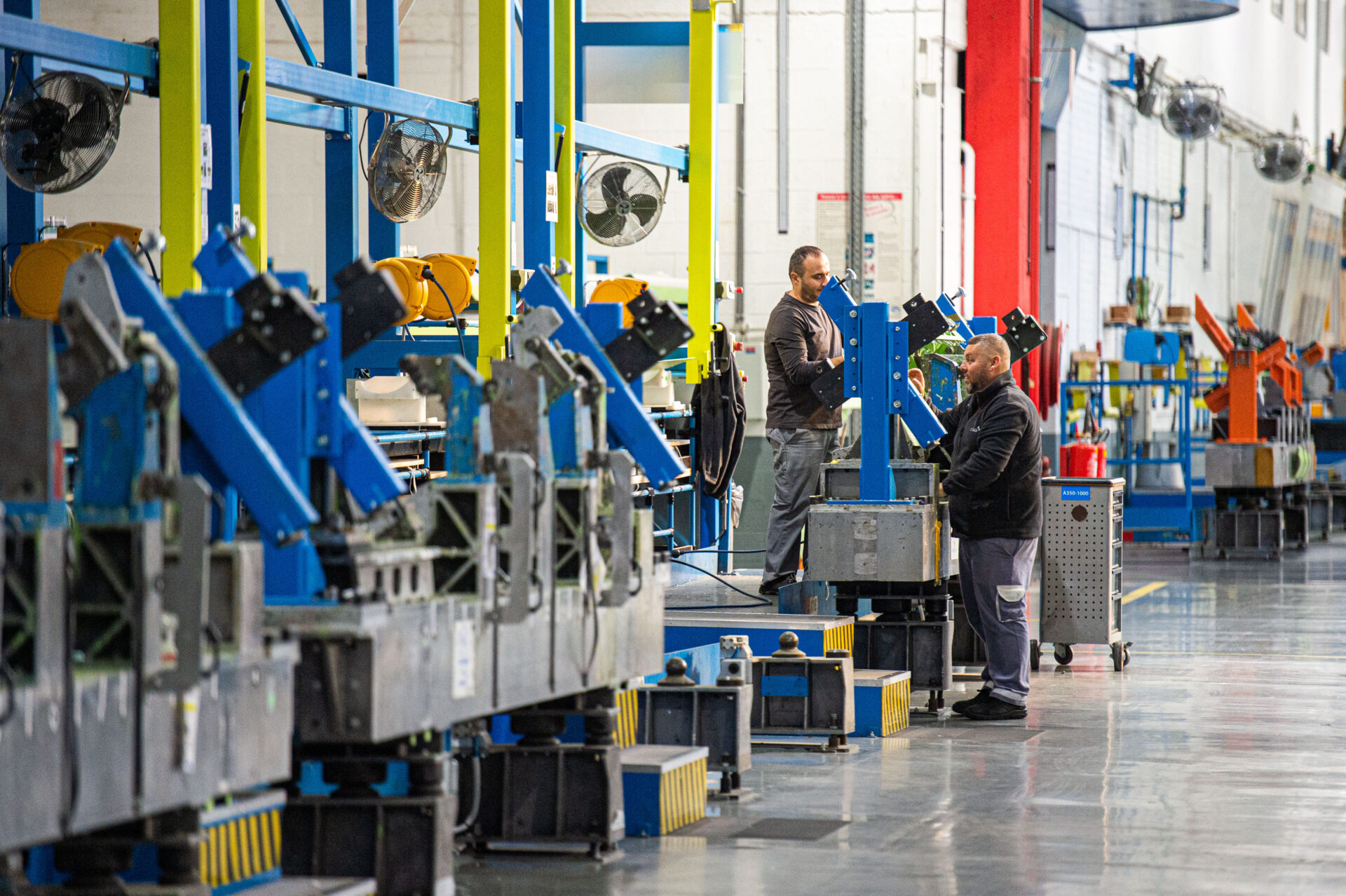
Inside a Sonaca factory. Credit: Belga / Jonas Roosens
“Belgium must continue to focus on this in order to achieve higher productivity. Getting more people into work is also possible, but in practice it is not easy,” he warned.
Despite these positive indicators, Voka expert Van Craeynest warns that renewed efforts must be made to boost productivity.
“Productivity growth in Belgium has been slowing down and even stagnating in recent decades. In the past, we were better at compensating for the lower number of workers with higher productivity. The main problem is the large group of people who are not working,” he lamented.
Related News
- Belgian GDP grew by 0.4% in the first quarter of 2025
- Record 1.3 million self-employed workers in Belgium
- Five years after Covid, 75% of employers see benefits of teleworking
The Voka expert advocates for people on long-term sick leave to switch to part-time work, as is the case in many Scandinavian countries. This too requires significant effort. “That is something the government can work on.”
Low working hours, matched with high productivity, are already placing strain on Belgian workers, who are caught between demands for increased output an inflexible working hours.
In Belgium, there has been an increase in the number of cases of burnout and depression, with the figure raisin 43% over the last five years, according to statistics published last year by the National Institute for Health and Disability Insurance (RIZIV).
“Making employees work longer hours will be difficult. Increasing the 38-hour week will not work… In some jobs, smartphones and the internet make it easier to be constantly busy, which can increase stress levels,” he explained. This pressure is even following Belgians outside the office, and into their private lives.
“We want to do more and more, even in our free time. Burnouts are often related to a combination of factors; they are not always linked to the job,” he concluded.
