
Archaeologists have uncovered the remains of a Maya city over 2,800 years old in northern Guatemala, near the border with Mexico, according to a statement released on 29 May by the Central American country’s Ministry of Culture.
The Maya civilisation, which dates back to at least 2000 BC, spanned an area corresponding to modern-day southern Mexico, Guatemala, Belize, El Salvador, and Honduras, reaching its peak during the Classic Period between AD 400 and 450.
The discovery was made 21 km from the Uaxactún archaeological site in Petén department, a key archaeological area and popular tourist destination in Guatemala.
Spanning approximately 16 square kilometres, the site dates back to the Middle Preclassic Period (800-500 BC) and has been identified as “one of the oldest and most important ceremonial centres” from this era of Maya civilisation in the forested region of Petén.
The site features “remarkable architectural planning” with pyramids, astronomical observatories, and monuments “engraved with unique regional iconography.”
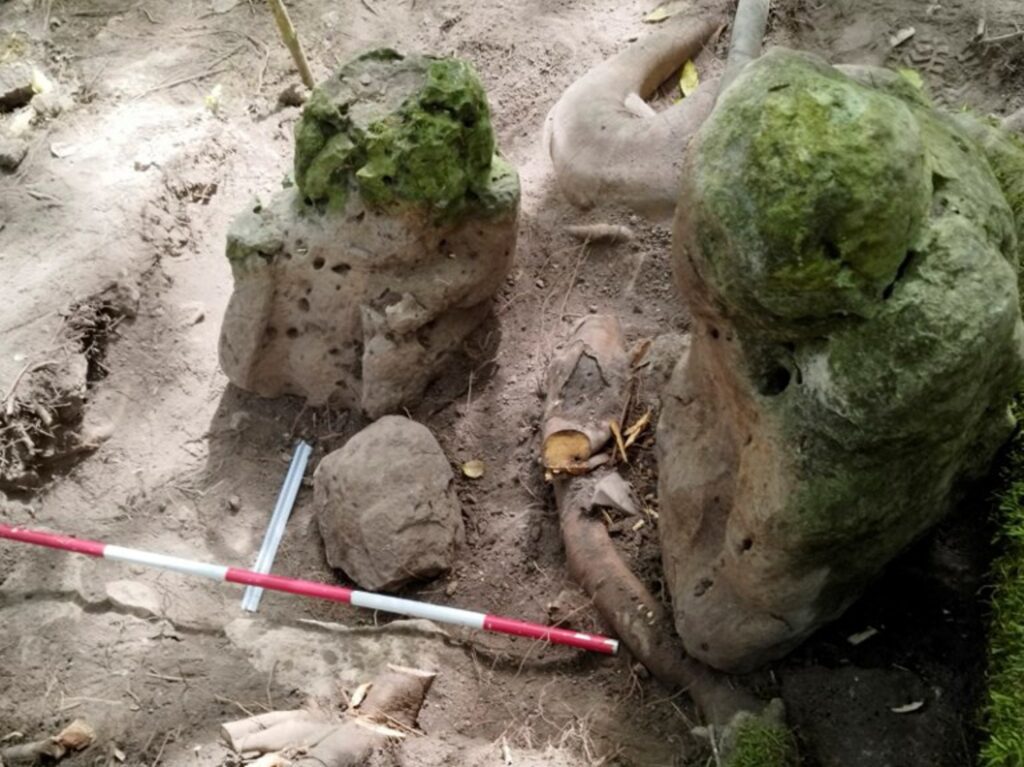
The city has been named “Los Abuelos” after the discovery of two anthropomorphic sculptures that “represent an ancestral couple.”
“These figures, dated between 500 and 300 BC, may be linked to ancient ritual practices of ancestor worship, highlighting their cultural and symbolic significance,” the Ministry of Culture stated.
In addition to the city, the archaeologists discovered another area called ‘Petnal’, featuring a 33-metre-high pyramid adorned with Preclassic frescoes, along with a site referred to as ‘Cambrayal’ that includes “a unique canal system” for water transportation.
“This set of three sites forms a previously unknown urban triangle, prompting a reevaluation of the ceremonial and sociopolitical organisation of pre-Hispanic Petén,” the Ministry emphasised in its statement.
