
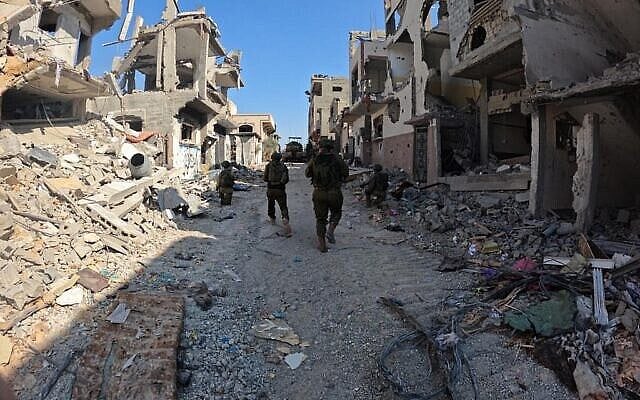
After a tense week with hopes for a breakthrough in the talks on a ceasefire-hostage deal in Gaza, the new US proposal has been accepted by Israel. Hamas is still reviewing the deal and announced on Sunday that it was prepared to continue to discuss it.
While the hostilities on the other fronts that Hamas’ attack on 7 October 2023 ignited have almost ended, the war in Gaza has dragged on for 20 months with no end in sight, increasing death toll among the civilian Palestinian population, insufficient entry of humanitarian aid to the starving population and time running out for the Israeli hostages still alive.
The new deal, proposed by US special envoy Steve Witkoff, was disclosed last week and consists of 13 points under the headline ‘Framework for Negotiating an Agreement to a Permanent Ceasefire’. 10 living hostages and 18 dead hostages out of the total 58 hostages will be released on day 1 and day 7 of a 60-day ceasefire.
In return, Israel will release simultaneously 125 “life sentence” prisoners and 1,111 Gazans who were detained after 7 October 2023. In exchange for the release of the remains of 18 Israeli hostages, Israel will release 180 deceased Gazans.
More aid will be sent into Gaza immediately once Hamas agrees to the ceasefire agreement. The aid will be distributed through agreed upon channels that will include the United Nations and Red Crescent and not only the private organisation which Israel had contracted and which did not meet international standards. All Israeli military activities in Gaza will cease upon the agreement entering into force.
However, the proposal leaves crucial issues open to the proximity negotiations (indirect talks via the mediators), such as the final redeployment of the Israeli troops and their withdrawal from the Gaza Strip. Arrangements relating to the “day after” in the Gaza Strip and the announcement of a permanent ceasefire are also left to be resolved during these negotiations.
Hamas is required to commit to ensuring the health, welfare and security of the remaining hostages during the ceasefire. All of them are supposed to be released upon agreement during the ceasefire but the families of the hostages are not sure that this will happen. They have been calling all the time on the Israeli government to end the war and to prioritize the release of all hostages in one go.
The proposal says that the temporary ceasefire may be extended under conditions and for a duration to be agreed upon by the parties so long as they are negotiating in good faith. To ensure that this will happen, the Witkoff proposal states that the mediators (US, Egypt, Qatar) will guarantee that the ceasefire will continue for the 60-day period and for any agreed upon extension.
More importantly, US President Donal Trump puts all his weight behind the proposal. “The President is serious about the parties’ adherence to the ceasefire agreement and insists that the negotiations during the temporary ceasefire period, if successfully concluded with an agreement between the parties, would lead to a permanent resolution of the conflict.”
Hamas wants binding guarantees. Although it in practice is militarily defeated and is under heavy pressure to accept the proposal, it refuses to surrender and still fights for its political survival in Gaza. Witkoff said that its position was “totally unacceptable and only takes us backward”.
Hamas insists on guarantees that the ceasefire will hold and, if not formally end the war, lead to a long-term truce (hudna). Although Israel’s Prime Minister Benjamin Netanyahu has admitted that Hamas does not pose any threat to Israel any longer, he has doubled down on his conditions to end the war.
This is the main sticking point in the talks on a new ceasefire. The Israeli government breached the previous ceasefire and imposed a blockade on humanitarian aid into Gaza in total disregard of both international humanitarian law and public opinion in Israel. A former Israeli Prime Minister, Ehud Olmert, wrote a week ago that Israel’s actions in Gaza amounted to war crimes.
Recent opinion polls show that a majority of Israelis want the war to end and to bring home all hostages now before it is too late. If there were elections now, Netanyahu's far-right coalition government would lose. Netanyahu still refuses for political reasons to commit to end the war although the opposition leader Yair Lapid has announced that the opposition would offer him a ‘security net’ so that he could stay in power.
Another opposition leader and former general, Yair Golan of the Democrats Party, has talked bluntly about Israel's atrocities in the war. At a conference last week, ’The Democratic Israel will win’, he stressed the duty to tell the truth in the current emergency situation. “Israel has no future under a far-right extremist government. There is no security without a true political horizon.”
Despite the vagueness in the Witkoff proposal, if the ceasefire is implemented in good faith, it will likely lead to a permanent cessation of hostilities under pressure by the US administration. Once sufficient humanitarian aid starts to enter the Gaza Strip to avert starvation and the first round of hostages release will take place, it will be difficult by either side to violate it and take the situation backwards.
From the outbreak of the war, it raised concerns about duration, the risk of escalation to a multifront war, the fate of the Israeli hostages, the humanitarian situation and if the Israeli public could trust a government, which was responsible for the biggest debacle in the country’s history, to wage the war against Hamas. What was supposed to end after some months, continued without any end in sight because of the lack of an exit strategy.
Anouar El Anouni, EU spokesperson for foreign affairs and security policy, said last week that the loss of life in Gaza is untenable and that Israel’s current military operation goes beyond proportionate self-defence. “Both Palestinians and Israelis have suffered way too long and too much and its time to break the cycle of violence and suffering.”
Asked about EU’s role, he replied that it takes time to influence the situation because its diplomacy is about dialogue and putting pressure on its partners and keeping channels open. “We have been vocal that Israel as the occupying power has the duty to ensure that humanitarian aid reaches people in need in Gaza. We call for full respect for international law and international humanitarian law.”
