
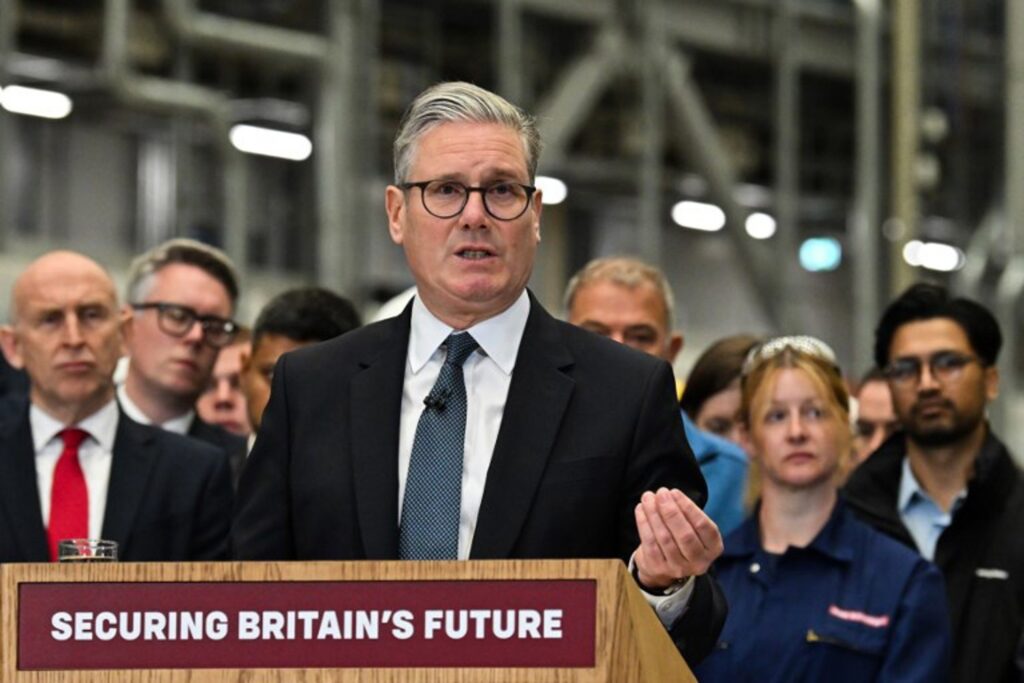
On Monday, the United Kingdom unveiled a new defence strategy aimed at making the country "ready for war", according to Prime Minister Keir Starmer.
The plan involves significant investment, including the purchase of new nuclear submarines and a £15 billion (approximately €17.7 billion) allocation for the nuclear defence programme.
The strategy is based on three main points. Firstly, the UK plans to increase salaries for defence personnel and aims to create a stronger, better-trained reserve force.
As a founding member of NATO, the UK also aims to provide its largest contribution to the Alliance since its inception. Currently, the UK allocates 2.33% of its GDP to Defence spending, falling short of the 5% target suggested by Donald Trump. While the UK has committed to reaching 2.5% of GDP by 2027, the Prime Minister did not specify when the 3% mark would be surpassed.
Innovation is the third pillar of the strategy. The government seeks to "accelerate innovation at a wartime pace," including plans to build at least six new ammunition factories across the country.
The Royal Navy is set to become "hybrid," integrating drones with existing equipment such as warships, submarines, and aircraft. Additionally, the UK plans to purchase twelve nuclear submarines under the AUKUS strategic cooperation agreement with Australia and the United States.
Another critical aspect is that the UK, the second-largest nuclear power in Europe by warhead count, will allocate £15 billion to its nuclear defence programme.
Prime Minister Starmer stated that the government’s plans reflect the "dangerous times" and emphasised that "nothing will work unless we all work together" on defence matters.
NATO Secretary-General Mark Rutte praised the UK’s NATO-first strategy, welcoming the focus on industrial capabilities and increased production, which he said are critical elements of NATO’s deterrence and defence.
