
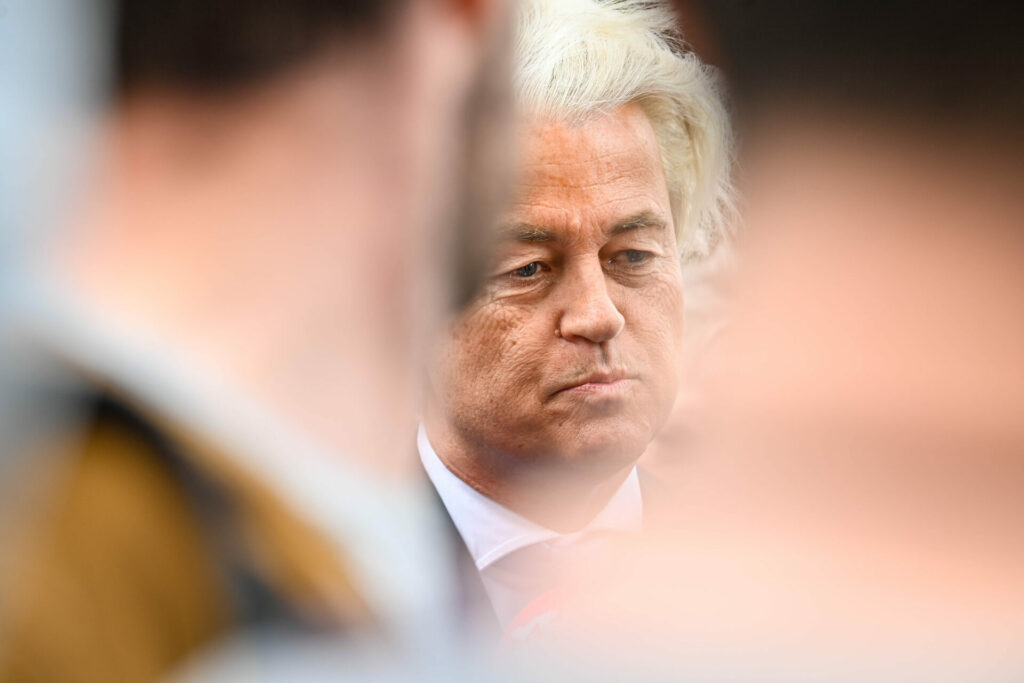
The Dutch government has collapsed after the far-right Party for Freedom (PVV), led by Geert Wilders, quit the coalition over the other parties' refusal to accept Wilders' strict asylum proposals, he announced on social media on Tuesday morning.
The Dutch parties had been meeting since 9:00 for crisis talks on Monday. Last weekend, Wilders reiterated that his far-right party wanted stricter asylum measures – including a complete halt to asylum, a construction freeze on building asylum centres and a stop to family reunification.
"No signatures for our asylum plans. No amendment to the Main Outline Agreement. PVV leaves the coalition," Wilders posted on Tuesday morning at 9:15.
Geen handtekening voor onze asielplannen.
Geen aanpassing Hoofdlijnenakkoord. PVV verlaat de coalitie. — Geert Wilders (@geertwilderspvv) June 3, 2025
On Tuesday morning, Dutch Prime Minister Dick Schoof still attempted to arrange a meeting with the four governing parties, but without success.
Wilders' party became the biggest in the country after the Dutch elections in November 2023. While the party initially had issues in finding negotiating partners, it eventually reached an agreement with the centre-right parties People's Party for Freedom and Democracy (VVD) and New Social Contract (NSC), and the rightwing Farmer–Citizen Movement (BBB) in May last year.
Meanwhile, the three party leaders of the VVD, NSC and BBB have reacted with disbelief to Wilders' decision to leave the coalition. "This is truly incomprehensible," said NSC leader Nicolien Van Vroonhoven on Dutch public broadcaster NOS. "He has all the cards in his hand but is knowingly pulling the plug," added BBB leader Caroline Van der Plas.
VVD leader Yesilgöz also reacted angrily: "Wilders is choosing his own ego and his own interests. I am stunned. He is throwing away the chance for right-wing policies. This is extremely irresponsible."
On social media, Wilders said that his party "had no choice" but to leave the government. "I promised voters the strictest asylum policy ever, but you were not granted that," he captioned a video in which he is interviewed. In that interview, he stated that he received no guarantees for the strict asylum policy he and his party wanted.
'Unfeasible' proposals
Last weekend, Wilders already stated that his party would leave the Dutch government if most of its ten new migration proposals were not added to the coalition agreement. Wilders had threatened to withdraw from the government if the demands were not met, although he did not specify a timeline for this.
"Let me be crystal clear," Wilders said on Sunday. "If the majority of our proposals from the asylum ten-point plan are not adopted by the coalition and implemented by the cabinet as soon as possible, the PVV will exit this coalition."
He was encouraged by an online poll that he said indicated that a large majority of voters from all coalition parties support nearly all points of the asylum plan.
However, experts have already described Wilders' proposals as "largely unfeasible" and "unlawful". Additionally, some proposals were contrary to the European Convention on Human Rights (ECHR) and other European legislation. For example, he wants the Netherlands to refuse asylum seekers at the border and halt family reunification, which is not permissible under international and national law.
This is not the first time that the PVV has brought down a Dutch government: in April 2012, Wilders also withdrew his party as a supporting partner of the Rutte I cabinet.
What's next?
The Dutch government will meet at 13:30 to discuss the situation now that the far-right PVV has left the coalition. The meeting will take place at the Catshuis in The Hague. Wilders said that he wants to immediately withdraw his ministers from the government. PVV ministers will still attend the extra cabinet meeting, sources confirmed to Dutch media.
In the meantime, the opposition parties are calling for new elections. According to former EU Commissioner Frans Timmermans, leader of the largest opposition party GroenLinks-PvdA, these elections should take place as soon as possible.
"The Netherlands deserves a government that brings people together and works shoulder to shoulder on real solutions," Timmermans said on social media. According to him, the Netherlands has been "at a standstill for a year."
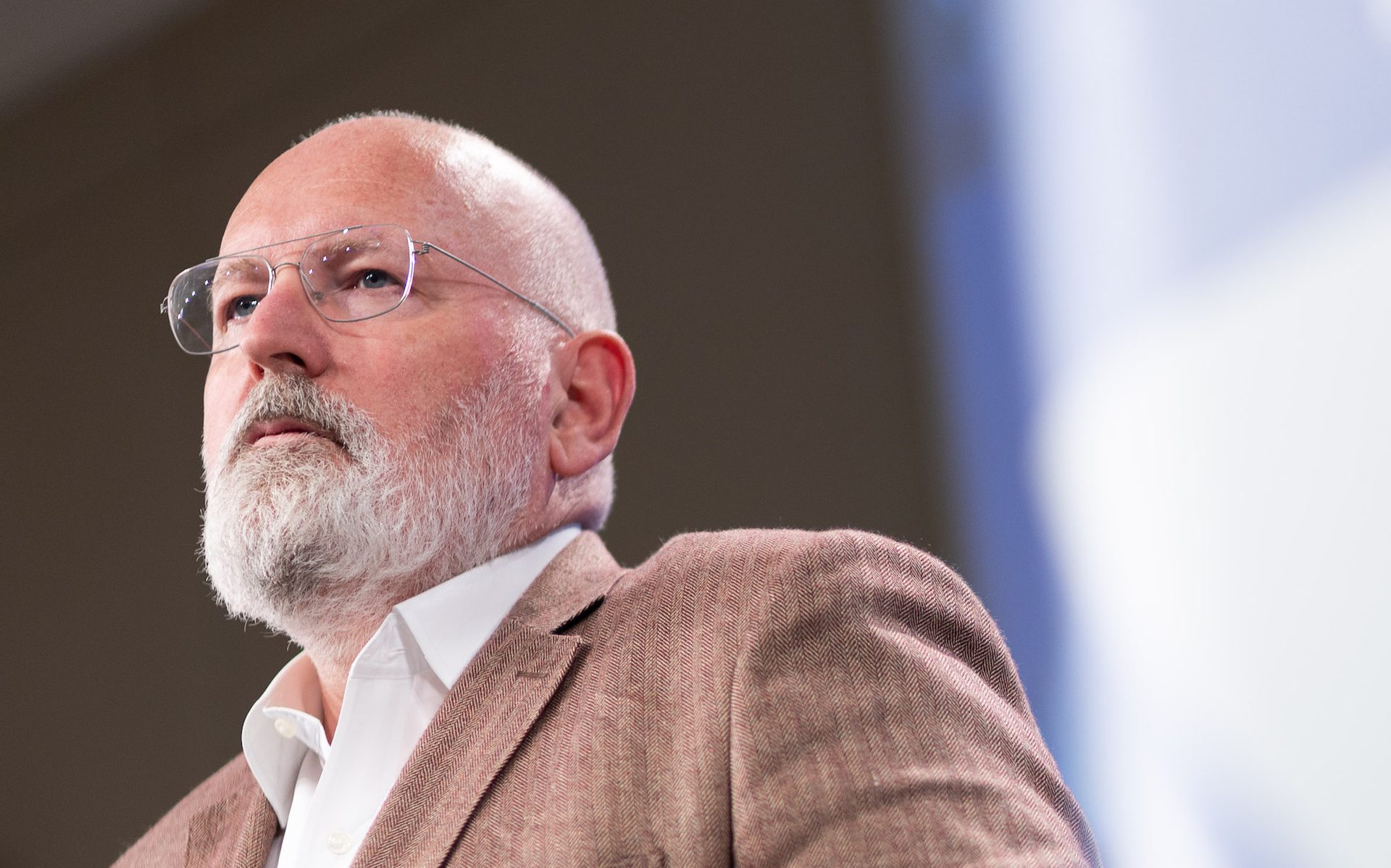
Frans Timmermans. Credit: Belga
Timmermans believes that more leadership and solidarity are needed, saying that "people are very concerned about their future." According to him, the "Wilders-Yeşilgöz cabinet" was characterised by "powerlessness, division and quarrels. This is what happens when you give power to extremists."
The leader of the Socialist Party (SP), Jimmy Dijk, believes it is "time for political change. So elections," he says on social media. "The Netherlands has been freed from political hostage-taking. From right-wing quarrelling parties that achieve nothing. Except cuts to healthcare, education and the elderly. Antisocial."
For Laurens Dassen, party leader of the progressive and pro-European Volt, the country should go to the polls again as soon as possible. He hopes that there will then be "parties that are willing to make choices, to break the deadlock."
"We have seen them fighting among themselves for a year and a half, so as far as I am concerned, now is the time to look to the future."
