
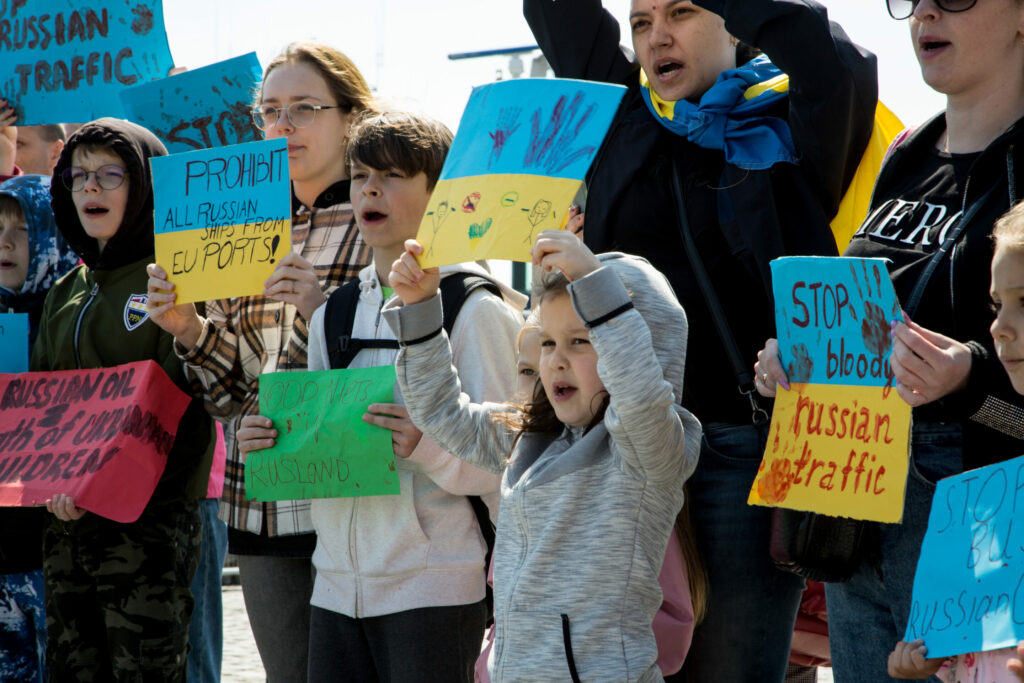
As the NATO allies prepare to outline new defence commitments ahead of the NATO summit in the Hague next week, Belgium’s own plans to rapidly expand defence spending have sparked domestic debate. NGO Promote Ukraine, the largest and most active pro-Ukrainian group in Belgium, has expressed its support for the Belgian government’s strategy in the face of Russian military aggression, criticising a call from Belgian civil society to put a stop to the country’s defence spending plans.
On 17 May, a group of over 20 Belgian civil society organisations, including trade unions (ABVV-FGTB, ACV-CSC), Greenpeace Belgium, and the youth wing of French-speaking party Ecolo, issued an appeal to the Belgian government to halt its plans for increased military build-up and redirect resources toward social security and public services.
The appeal notably argued that Belgium’s military spending plans were not framed within the context of genuine fears over increasing Russian military influence in Europe, and that increased military spending would not act as a deterrent. The 'anti-war' groups instead called for “diplomacy, disarmament, social justice, and environmental sustainability.”
Members of Belgium’s Ukrainian community, which has swelled significantly as a result of Russia’s full-scale invasion of Ukraine, have reacted sharply to these plans. Over 92,000 Ukrainians received temporary protection in Belgium since the start of the invasion, according to Director-General of the Belgian Immigration Office, Freddy Roosemont.
Spend for security
In a statement published by the Belgo-Ukrainian not-for-profit Marta Barandiy, Ukrainian activists, responsible for organising frequent mass rallies in the European capital since the start of Russia’s renewed aggression, labelled the “pro-peace” groups’ plans as reflecting “a dangerously flawed understanding of today’s global security environment.” Barandiy fears that, if enacted, this appeal would “undermine the very foundations of the peace it seeks to build.”
“The coalition argues that international security issues are primarily rooted in socioeconomic and ecological disruption,” the Ukrainian activist said in a statement. “While we share the urgency of addressing inequality, social justice, and climate change, these are not the driving forces behind military aggression and war.” The group placed the blame for the war squarely at the feet of Russia’s autocratic leader, Vladimir Putin.
“It is a dangerous illusion to believe that peace can be preserved by deprioritising defence, disarming, or trusting in the rationality of regimes that systematically crush dissent, violate borders, and openly reject basic human rights and democratic norms. These actors are not moved by dialogue or disarmament. They are deterred by strength.”
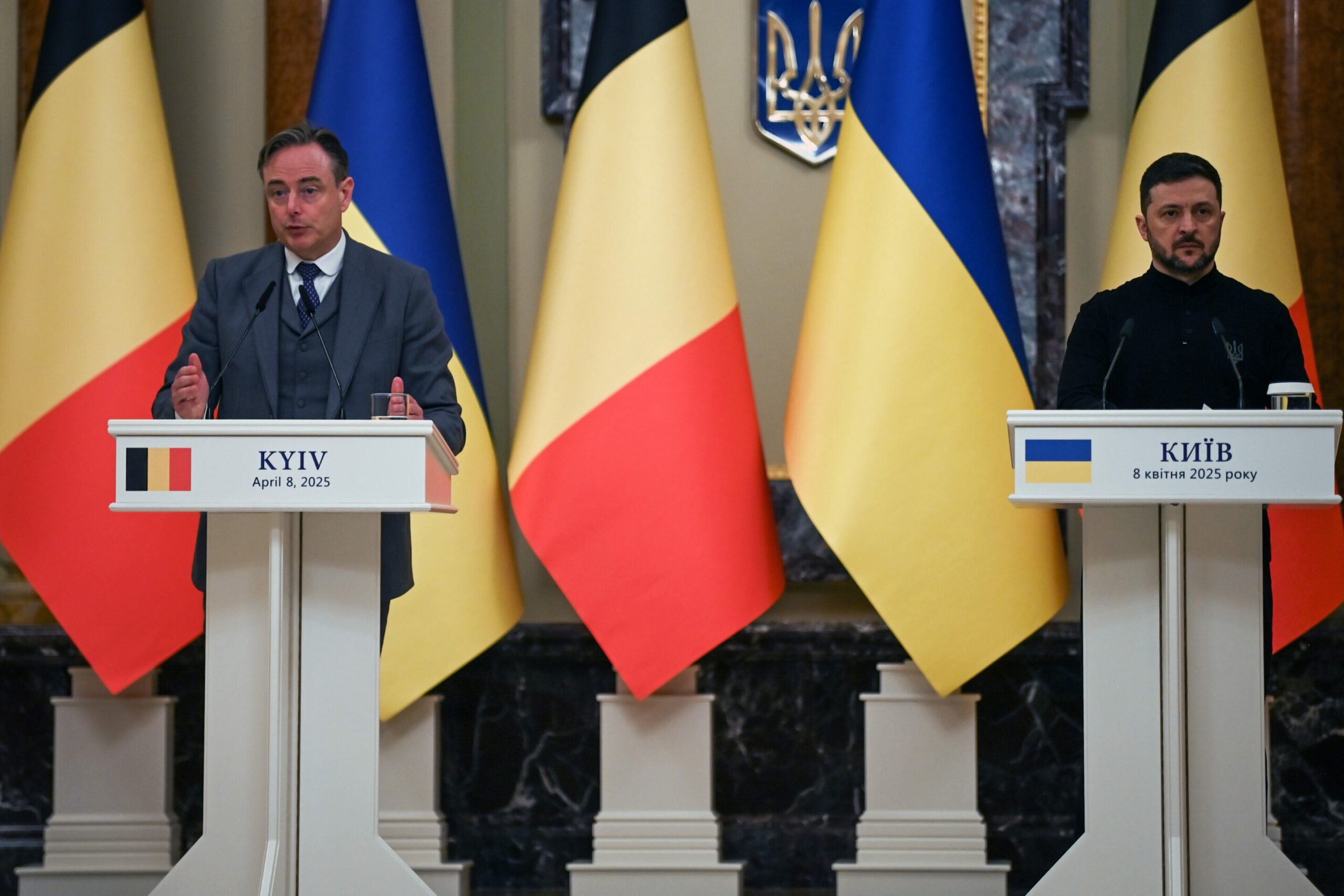
Prime Minister Bart De Wever and Ukraine president Volodymyr Zelensky hold a press conference during a diplomatic visit to Kyiv, Ukraine, on Tuesday 08 April 2025. Credit: Belga / Justin Yau
In a view that Promote Ukraine denounces as “short-sighted complacency”, the “Stop Militarisation coalition” argued that Russia’s war in Ukraine means that it is unlikely to seek further expansion or military aggression against other countries.
The Ukrainian group argues that European experts were fatally mistaken in February 2022 when Russia first launched its invasion and have been wrong several times since, notably underestimating Ukraine’s potential for military resistance to the invasion or even its capacity to launch offensive action.
By definition, Promote Ukraine argues, wars launched by authoritarian regimes are not simply dictated by logic, but by ambition and ideology, which could seek to expand further. NATO has notably rushed to protect the Baltic states, which are currently the most vulnerable section of NATO’s Eastern border.
“Assuming Russia won’t strike elsewhere simply because it hasn’t yet is not a strategy — it’s a gamble. Belgium and its allies must invest in credible defence, not because war is inevitable, but because deterrence is the most effective way to prevent it,” Barandiy argued. “No amount of disarmament, goodwill, or NGO appeals will prevent aggression from leaders who view such gestures as weakness.”
Defence of democracy
According to the text published by the “Stop Militarisation” coalition, Belgium’s military-spending plans, rather than promoting true security, would foster greater social ills, notably the “privatisation of collective resources for the military-industrial complex” and reduced allocation of resources for welfare or climate action.
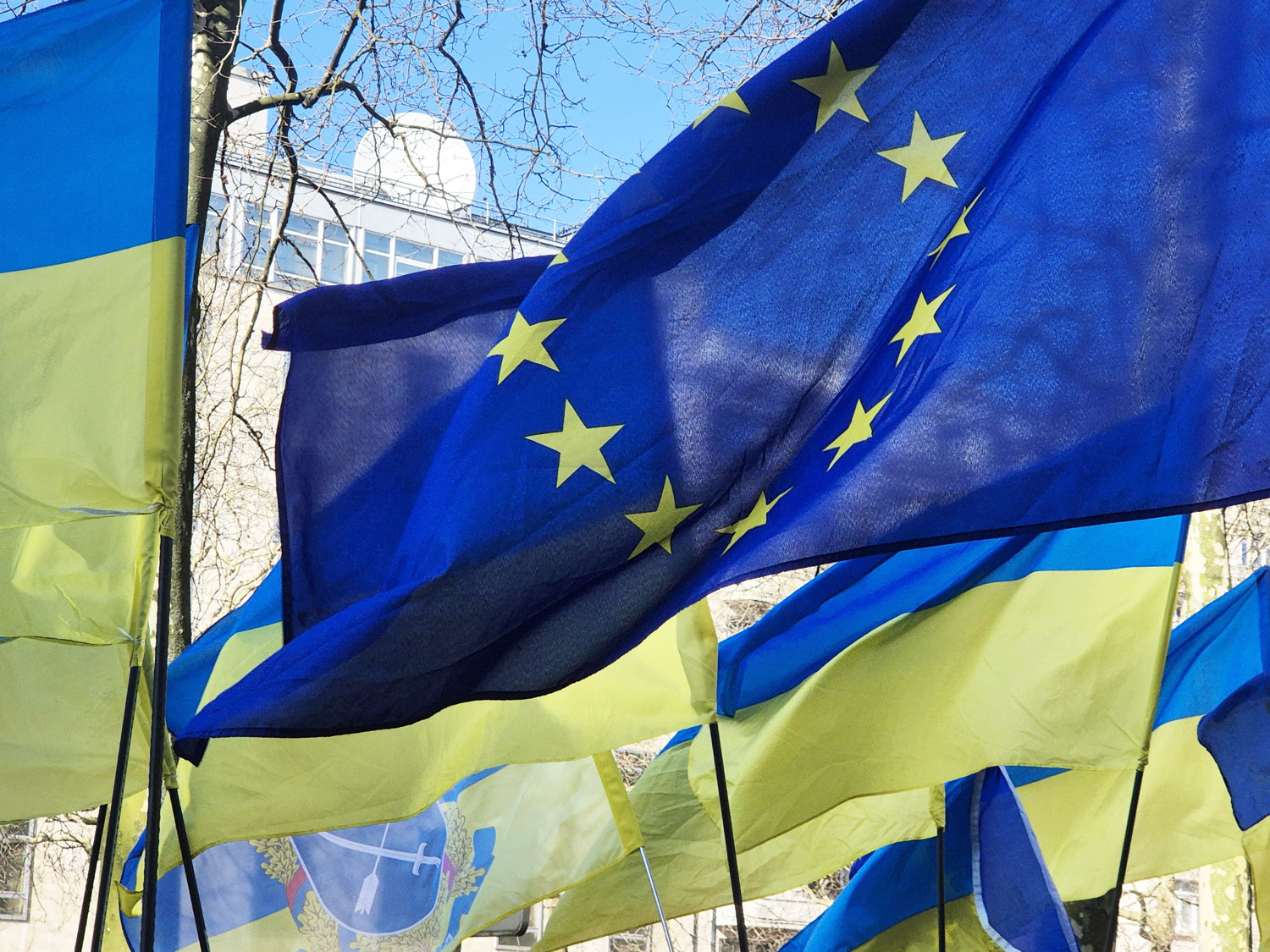
European and Ukraine flags pictured during a demonstration 'Stand Up for Freedom and Democracry: Support Ukraine, Defend the US', in front of the US embassy in Brussels, Sunday 02 March 2025. Credit: Belga/ Timon Ramboer
The Brussels-based Ukraine not-for-profit argues that without defence capabilities, Belgium cannot protect its democratic values from authoritarian threats and negotiate peace from a position of strength. “Calling it ‘militarisation’ is morally and factually wrong,” Barandiy said. “This is not an offensive approach directed at anyone, rather a long-term, pragmatic defence strategy aimed at protecting Belgium and the entire EU from the risk of war.”
The nearly two dozen civil society organisations opposing Belgium’s military spending invoked the fact that Belgian society was opposed to upgraded defence budgets, but this is far from the truth, the Promote Ukraine boss argued.
Related News
- Ukraine invited to NATO summit in The Hague at end of June
- 'Turn anger at Putin into action' - Macron tells Trump
She cited a recent 2025 Winter Eurobarometer survey, which showed that 39% of Belgians ranked defence and security as their number one priority, with higher than normal support compared to the EU average. This figure is up seven percentage points from the same period last year. Furthermore, most of the most electorally successful parties in the recent federal elections campaigned on a platform of increased support for Kyiv, they argue.
“The Stop Militarisation appeal, while vocal, does not represent the entire Belgian civil society landscape, but rather a small minority. Most NGOs, trade unions, and grassroots movements understand that peace and security are not mutually exclusive — they are interdependent.” The Ukrainian activist also pushed back against the idea that promoting military spending would degrade the peaceful values held by normal Belgians.
“Promoting peace and diplomacy does not prevent us from respecting democracy and upholding the rule of law. A strong Belgian military can uphold the very freedoms and democratic structures that allow for peace education, civil society, and justice,” Barandiy argued.
Promote Ukraine called on the coalition to instead advocate for greater inclusivity in the armed forces, promote anti-corruption reforms in the military, and make military spending more environmentally responsible.
