
A Japanese start-up plans to attempt a lunar landing on Thursday evening, two years after a previous attempt ended in a crash.
If successful, this would be the third moon landing by a private company and the first by a non-US enterprise.
The start-up, ispace, announced that the landing would be livestreamed on its website, scheduled for 9:17 p.m. Belgian time.
The lander, named 'Resilience,' is ready to attempt a historic lunar touchdown, and the company is confident in its preparations, ispace CEO Takeshi Hakamada said last week. “We have learned from the experience of Mission 1 and our current journey to the Moon,” he added in a statement.
To date, only the United States, the former Soviet Union, China, India, and Japan have successfully landed on the Moon. Private companies now aim to provide more frequent and cost-effective space exploration opportunities than those conducted by governments.
Last year, Houston-based Intuitive Machines became the first private company to achieve a lunar landing. Although its unmanned craft landed in a difficult position, it was able to conduct tests and send back photos.
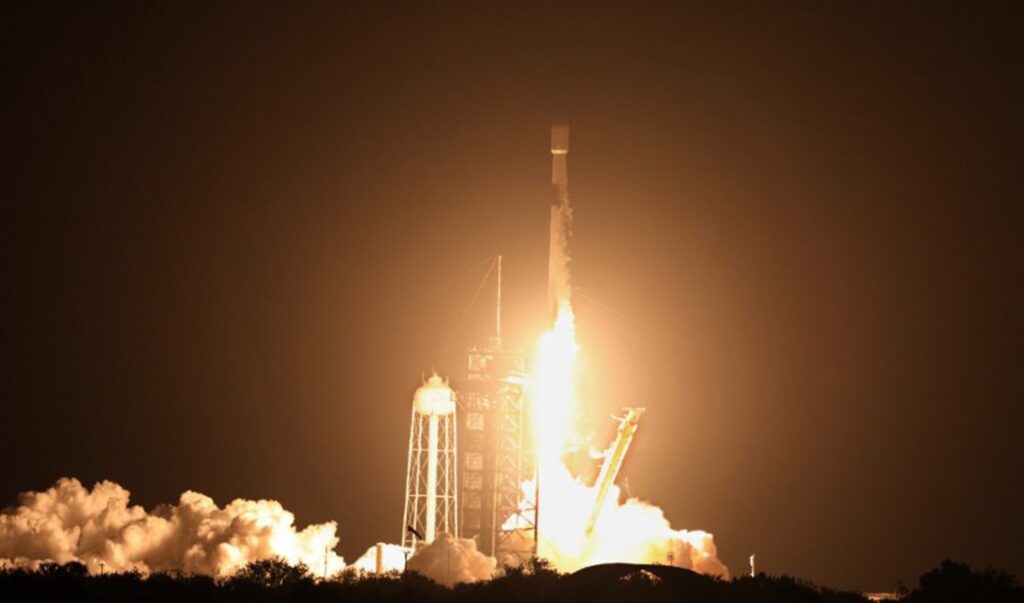
Then, in March this year, Firefly Aerospace’s Blue Ghost, launched on the same SpaceX rocket as Resilience, also successfully landed on the Moon. Despite being launched on the same rocket as Blue Ghost, Resilience took longer to reach Earth’s natural satellite.
Landing on the Moon is a significant technical challenge, as spacecraft must decelerate during descent with extremely precise controlled thrusters.
The second attempt by Intuitive Machines failed in March: their Athena craft, intended to land on the Mons Mouton plateau closer to the lunar south pole than any previous mission, toppled over, making it impossible to recharge its solar batteries.
