
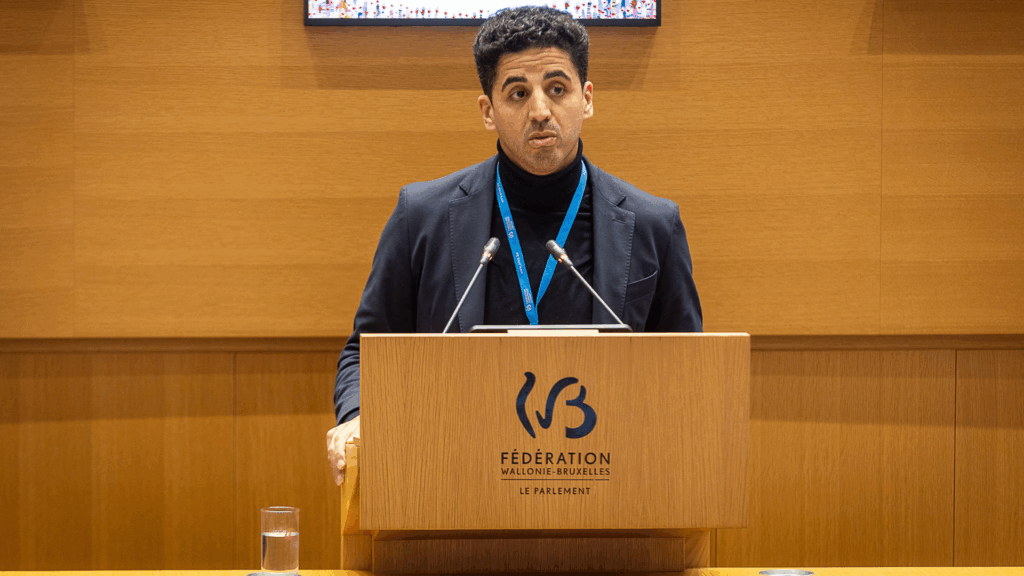
Seven recommendations for policymakers to prevent radicalism in schools were put forward on Friday by the Delegate General for Children’s Rights, Solayman Laqdim. The Delegate calls for a "broad and nuanced" approach.
In the wake of teacher assassinations in France and the presence of radical and intolerant expressions in schools, the Education Minister for the French-speaking community, Valérie Glatigny, has prioritised the issue of radicalism in schools since last year.
The parliament of the Wallonia-Brussels Federation (FWB), under the initiative of the MR-Engaged majority, is currently conducting a series of hearings on this topic, where Laqdim has been consulted.
Laqdim stressed that school radicalism should not be confined solely to religious or community expressions. "The phenomenon also includes emerging forms such as conspiracy theories, identity extremism, anti-LGBTQIA+ rhetoric, and masculinist ideologies, often fuelled by algorithmic logic on social media," he emphasised.
"Radicalism refers to a desire for change, often motivated by a desire for profound—and sometimes violent—transformation of the established order," he added. "Understanding radicalism requires analysing its psychological, social, cultural and media drivers, including feelings of exclusion, the quest for identity or recognition, but also the way in which digital algorithms can trap the minds of our young people in dangerous ideological bubbles."
To counter these radicalisms while respecting children’s rights, Laqdim proposed solutions like creating safe spaces in schools for discussing sensitive topics and involving young people more in educational policy creation as well as hate speech prevention efforts.
He suggested targeted actions for those most vulnerable to radicalisation and urged for the integration of prevention into school policies beyond just a security approach.
Finally, Laqdim argued for improved teacher training in managing ideological debates, more protection for educational staff from external threats, and enhanced media education and regulation of digital content accessible to children and young people.
