
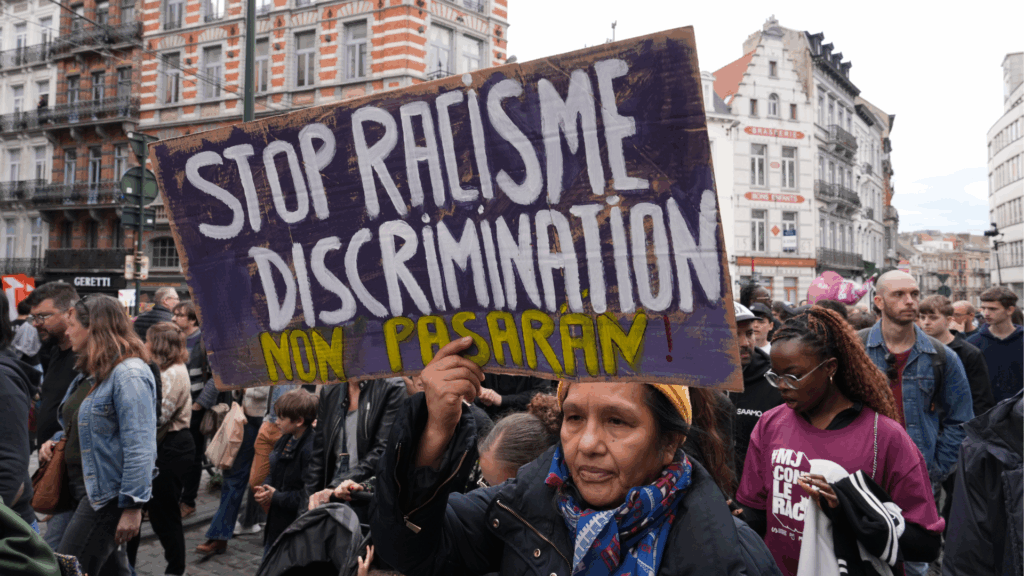
Belgium must take more concrete measures to combat "widespread and systemic racism" against people of African descent, according to the preliminary findings of a United Nations expert group.
The report also criticises the country's handling of its colonial past, the lack of a national action plan against racism and the functioning of the police.
The UN team of experts in the field of racism and equality arrived in Belgium on 2 June and visited Brussels, Antwerp, Charleroi, Namur and Mechelen. It held talks with representatives of the various governments, mayors, police officials and human rights institutions.
"Systemic racism is present in Belgium, as in other countries," concluded Victor Rodriguez, one of the UN experts, at the end of his visit to Belgium. "This requires structural responses."
The group took a particularly critical view of the way Belgium is dealing with its colonial legacy. Monuments, street names and other elements referring to the colonial period are already being examined more critically, but further efforts are needed to acknowledge the mistakes of the past. "Belgium must continue to take concrete steps towards reparation and justice, with the active involvement of the communities concerned," added UN expert Tracie Keesee.
The UN experts' recommendations call for the development of a national action plan against racism "as soon as possible." They also highlight prison overcrowding, where people of African descent are overrepresented.
The experts further underscored incidents of racial profiling and the sometimes excessive use of force by the police. They stress that these practices undermine trust in the police.
