
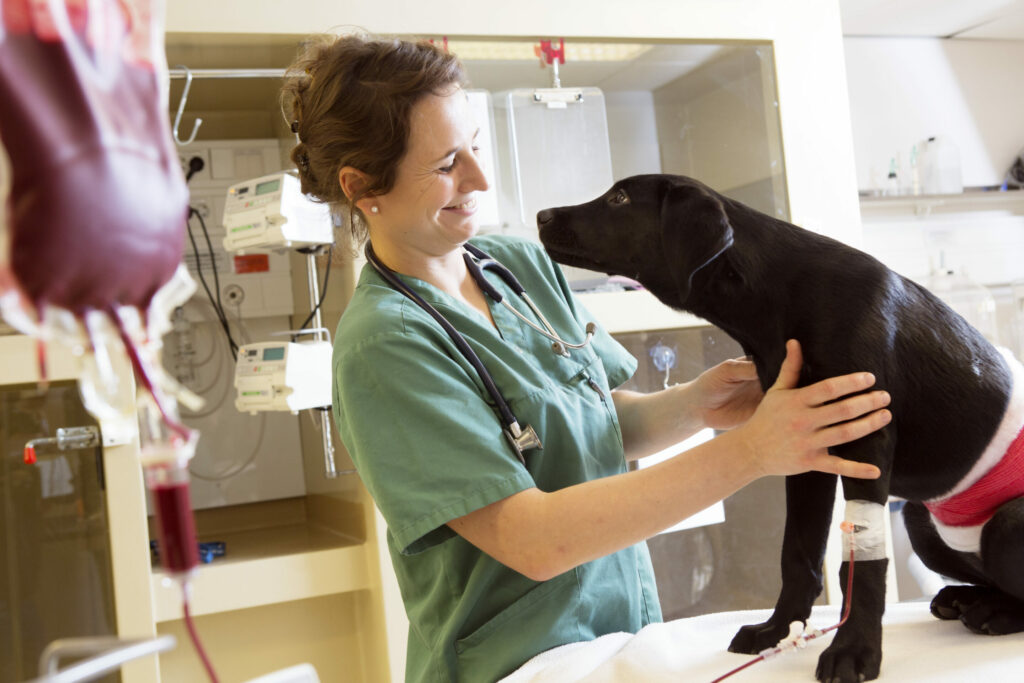
A veterinary care group is calling on pet owners to place their animals on the blood donation register to cope with the severe shortage of animal blood donors.
Animals, like people, need donated blood when they become ill. According to veterinary group AniCura, blood transfusions can facilitate an animal's recovery, help it withstand surgery and increase the effectiveness of medication.
Emmanuel Deswijsen, veterinarian and head of the AniCura veterinary clinic at Le Château, said: “Blood transfusions can often mean the difference between life and death. They are used in cases of anaemia due to autoimmune diseases, or bleeding during surgery or after an accident.
“They increase survival rates in animals that have eaten rat poison or rodenticide, and in dogs whose anaemia is due to their own immune system.”
He added: “We encourage owners to register their pets as potential blood donors. At the same time, we want to draw veterinarians' attention to the possibility of helping patients with a blood transfusion."
Cats hit particularly hard by blood shortage
The Animal Blood Bank Benelux (ABB) has observed a rapid increase in the use of blood products over the past year.
During this period, demand for donor blood has risen by 37% in the Benelux countries. In Belgium, the increase is 22%, following a 200% rise over the previous 12 months. Similar trends can also be observed in other countries.
To date, 480 pet blood donors in the Benelux countries have helped save around 2,000 animal lives.
The rapid increase in demand highlights the shortage of donors in the Benelux region. Last year, the ABB was only able to meet one in five blood requirements with donations from the region. The need is great and will only increase, not least because of improved treatments, growing awareness and the affordability of blood transfusions.
There is a severe shortage of cat blood throughout the Benelux countries. Additional donors are urgently needed to bridge the growing gap between supply and demand.
In response, AniCura is making its clinics in Antwerp-Berchem and Gembloux available as donation centers for the blood bank.
Kris Gommeren, co-founder of ABB Benelux said: “Our top priority is the safety and well-being of our donors, as well as the quality of our blood products. We are delighted to have the support of AniCura, which provides a professional and hygienic environment for blood donation”.
During the blood donation campaign, the network aims not only to recruit new donors, but also to raise awareness of the importance of voluntary blood donation in animals.
How many blood groups do animals have and can all of them donate?
In animals, as with humans, blood type plays a key role in transfusions. There are four blood types in humans, but the number varies among animals. Cats have three: A, B, and AB, with most cats being type A and AB being the least common.
Horses have eight blood types (A, C, D, K, P, Q, U, and T), and cattle have eleven (A, B, C, F, J, L, M, R, S, T, and Z). Dogs have at least 13 blood types.
Not all pets can donate blood. For dogs and cats, different factors come into play. Your dog or cat can donate blood if they are:
- in good health
- aged between one and eight years old
- weighs more than 25kg (dogs) or more than 4kg (cats)
- is fully vaccinated and treated for fleas and ticks
- is sterilised (cats)
- is calm and docile (dogs)
- doesn’t follow a raw meat-only diet
- has never had a blood transfusion; and has never lived abroad.
Before donating, your pet will undergo a free physical examination and blood test to determine their suitability, including their blood type.
For more information about registering your pet as a blood donor, contact your local AniCura veterinary clinic or register on the AniCura website.
