
The tourist office has a new plan. It wants to encourage people to explore the landscape around Ypres. Before the war, this was a hilly region of castles, woods and fruit farms. But the war destroyed everything.
‘The Westhoek is a silent witness to what happened there in the First World War,’ explained then Flemish tourism minister Zuhal Demir. She had commissioned 25 small projects to highlight the war landscape around Ypres.
Let’s take a look, I decided. I just had to rent a classic Belgian bike. And work out a route. The tourist office has mapped out several trails that roughly follow the front line. But you can easily create a customised route using the knooppunten network of numbered cycle points.
I set off down the Menin Road in the direction of knooppunt 32. It wasn’t long before I passed a war cemetery. Then another. And a third. There are more than 150 cemeteries around Ypres. Some are enormous, like Tyne Cot Cemetery, others are intimate burial grounds hidden in the woods. Each one a unique experience.
The landscape has largely recovered from the war. But not entirely. I sat down under a tree in Bellewaerde wood to eat a tuna sandwich. Then I noticed an enormous crater created in 1915 by an underground mine explosion. And then I heard a scream. It came from the Bellewaerde theme park, built nearby on the site of a lost country house. But the sound felt as if it came from deep below the ground.
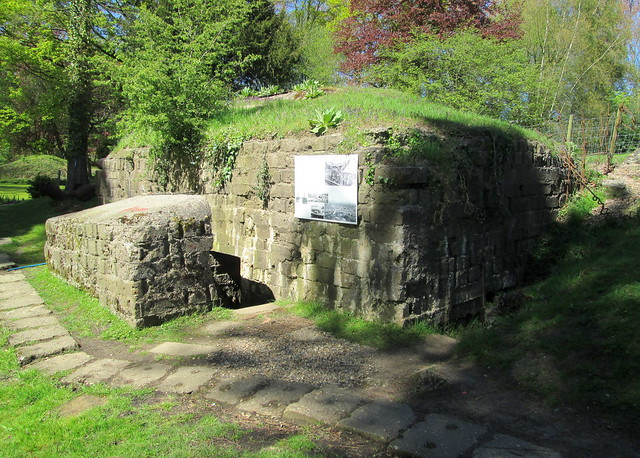
I had found the woods by following a trail that begins at the Hooge Crater Museum. The tourist office has created an information centre in a small building that was once the toilet block of the local school. It is one of three ‘entry points’ along the former front line that tell what happened during the war using photographs and film footage.
The trail led across the fields and around the woods. Along the way, I came across young trees that were recently planted at intervals along the former line of trenches. I slowly got to understand the landscape that shaped the course of the war. I saw the ridges that had to be captured. The gentle slopes where so many died for so little gain. The distant spires of Ypres that were slowly destroyed by shellfire.
