

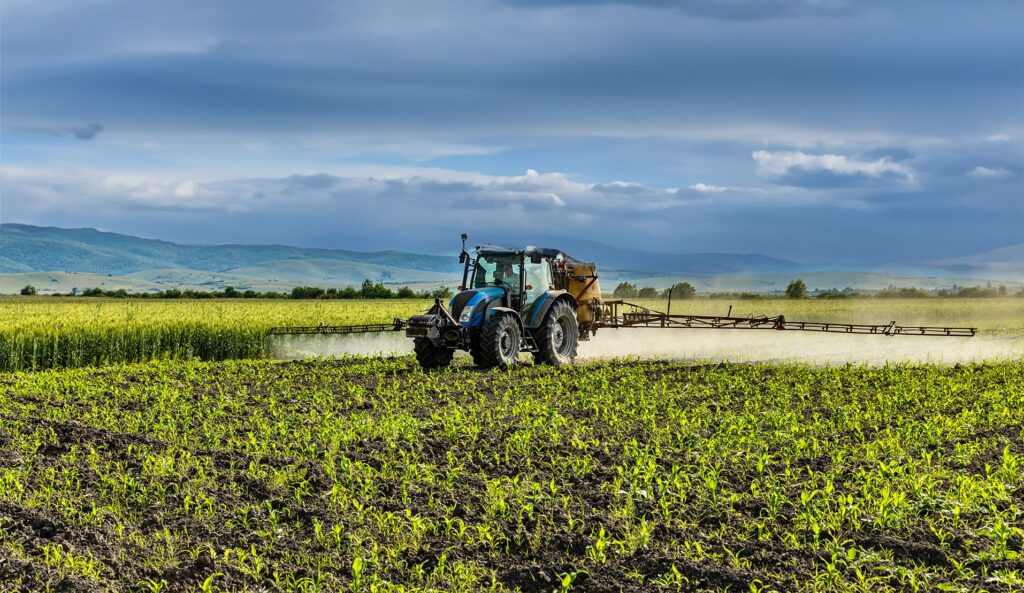
Europe’s farmers are now staring down a crisis that threatens the backbone of our food system: skyrocketing fertilizer prices.
Since early 2025, the cost of these critical inputs has surged, driven by global market shifts, fragile supply chains, and Brussels’ own policy choices. If the European Commission doesn’t deliver on its promised relief measures - and fast - our fields, the families who tend them, and our food security will pay a steep price.
The numbers are stark. Globally, fertilizer prices rose 11% in the first quarter of 2025 compared to last year, per World Bank data. Nitrogen fertilizers like urea, essential for crops, jumped over 20%, with potash and phosphate up 18% and 20%, respectively.
In Europe, the squeeze is even tighter. By June, wholesale urea prices hit €397.50 per ton - 15% above 2024 and well over the global benchmark of €350. For a typical grain farmer, that’s an extra €25-30 per hectare in costs, eating into already razor-thin margins.
Why is Europe hit so hard? Look no further than Brussels’ new duties on fertilizer imports from Russia and Belarus, effective July 1, 2025. These tariffs - starting at €40 per ton and set to climb to over €300 by 2028 - target suppliers that provided up to a quarter of the EU’s nitrogen fertilizers worth around €2 billion. The aim is to reduce EU dependence on those imports as well as to reduce Russian export revenues, thereby limiting its ability to finance its war of aggression against Ukraine.
The result? A “tariff tax” estimated at €400-500 million annually, with European farmers footing the bill. Next year’s planned hike to €60 per ton will only worsen the pain, pushing prices further €50-70 above global levels as importers scramble for pricier North African or Middle Eastern alternatives.
Europe's fertilizer supply crunch
The European Commission saw this coming. When approving the duties, it pledged “compensation mechanisms” for farmers if prices spiked. With urea costs already soaring, that moment is now. Yet, there’s no sign of relief.
Geopolitical shocks are piling on. Middle East tensions have driven oil prices up over 10% just in just a few days, and European gas futures 6.6% higher, threatening Qatari supply disruptions. Since natural gas accounts for up to 80% of nitrogen fertilizer production costs, this spells trouble. If gas prices climb further, fertilizer costs — and eventually food prices — will follow.
Brussels’ policies are exacerbating the problem. An impending carbon tax will add another layer of costs, while the EU’s shift to renewables—vital but slow—leaves farmers vulnerable to energy price swings. Supply chains are stretched thin, with key producers in Egypt, Qatar, and Saudi Arabia unable to offset lost Russian volumes, especially if Iranian exports falter amid military tensions.
This perfect storm demands bold action. First, the EU must immediately activate and streamline the compensation mechanisms it promised, ensuring farmers get relief before planting season.
Second, Brussels should fast-track investments in domestic fertilizer production—green ammonia, bio-based nutrients, or organic waste recycling—to reduce reliance on volatile imports.
Third, a coordinated energy strategy is critical to secure affordable gas for farmers and industry while accelerating the renewable transition to shield against future shocks. Finally, the EU should create a strategic agricultural buffer, akin to its food and energy reserves, to manage shortages and curb price spikes.
Europe’s farmers can’t shoulder trade barriers, carbon levies, energy costs, and geopolitical fallout alone. Brussels must deliver a coherent strategy to protect our food security, strengthen supply chains, and ease the burden on those who feed us. The Commission’s promises must become reality—now. Our farms, and the dinner tables of 450 million Europeans, depend on it.
