
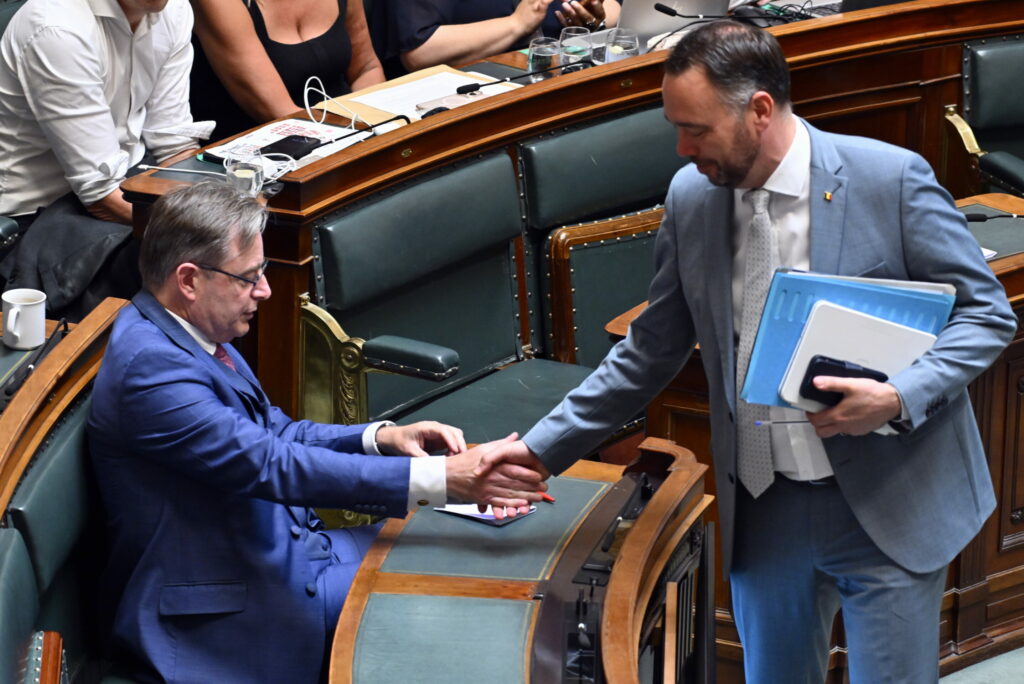
At around 04:00 on Friday morning, a majority of Belgian MPs approved the 2025 revenue budget after a long and tense parliamentary session. The amended expenditure budget will be voted on next week.
The 2025 budget is set to come into effect on 1 July, following the end of the provisional twelfths mechanism in place since the start of the year, with a budget review already scheduled for July.
The Arizona coalition’s first budget was passed after two days of heated debate.
This year, the government will not be able to start reducing the deficit, as certain decisions from the Easter agreement will only take effect in 2026, leading Finance Minister Vincent Van Peteghem to describe this as a "transitory" budget.
The deficit stood at 2.8% of GDP in 2024. This year, for entity 1—which includes federal authority and social security—it will reach 4% of GDP, amounting to €25.5 billion, with nominal expenditure growth of 3.6%.
This figure includes additional defence spending outlined in the Easter agreement to meet NATO’s standard of 2% of GDP dedicated to military expenses.
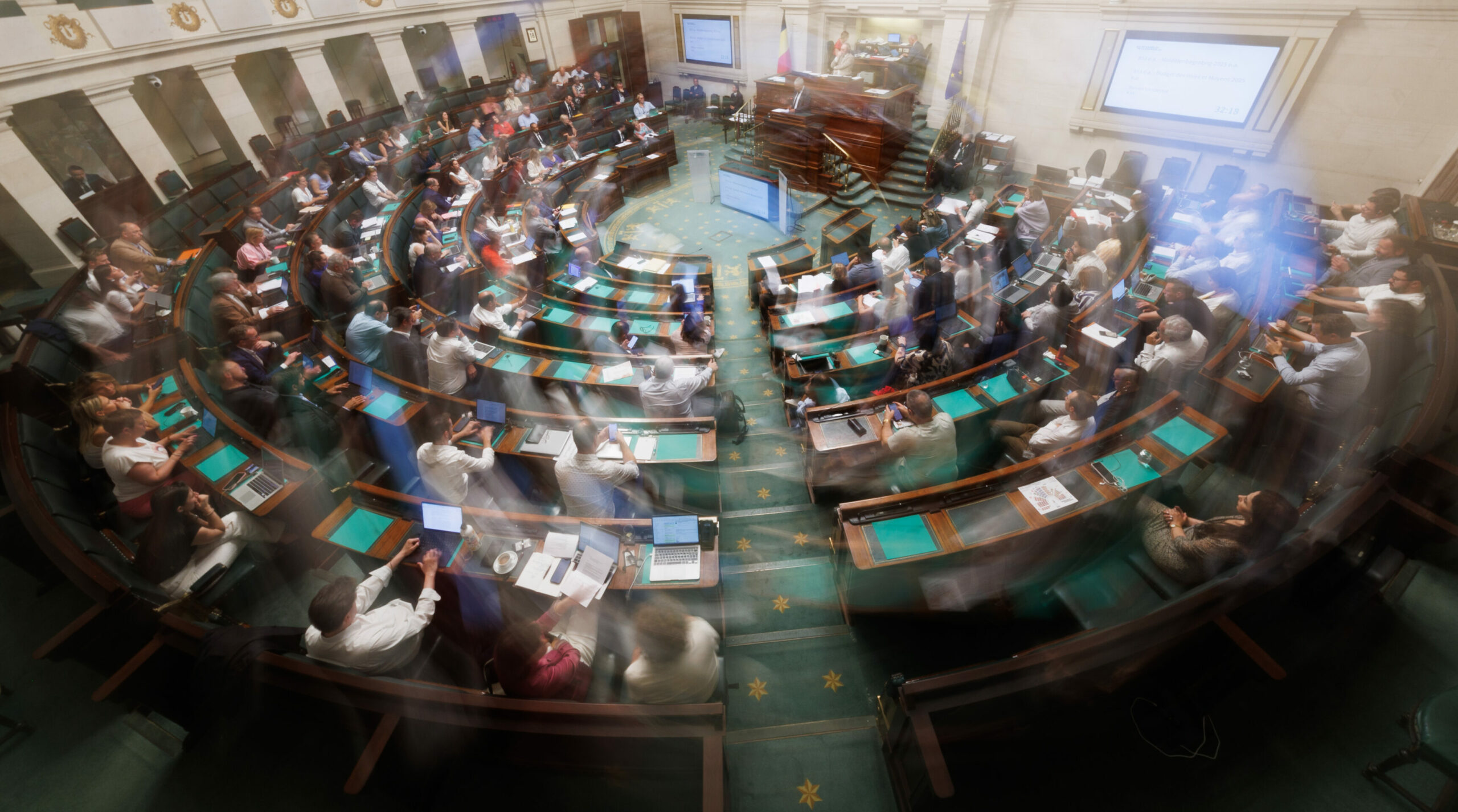
Picture taken during a plenary session of the Chamber at the Federal Parliament in Brussels, Wednesday 18 June 2025. Credit: Belga / Benoit Doppagne
In 2025, the debt ratio is expected to increase by 1.5 percentage points of GDP. It would then stand at 84.2% of GDP.
However, the government has presented a roadmap for the coming years. In 2026 and 2027, the Federal Government plans to limit nominal expenditure growth to 2.5%, then to 2.1% in 2028 and 2029.
At the end of May, the European Commission gave the green light to Belgium's multi-year budget plan. The kingdom will have seven years to consolidate its public finances.
However, the Court of Auditors warned against overestimating the effects of the reforms implemented by the Arizona coalition.
As part of the budget adoption process, the House also approved an amendment by Energy Minister Mathieu Bihet (MR).
It was the vote on this amendment that caused the approval of the general expenditure budget to be postponed by one week.
The amendment in question concerns a sum of €380 million. It relates to the implementation of the agreement reached during the previous legislative term with Engie to extend the life of the Doel 4 and Tihange 3 nuclear reactors.
The future NATO spending standard dominated much of the debate on the 2025 budget in the Chamber. The left-wing opposition pressed the Arizona coalition representatives with questions just days before the summit in The Hague, which is expected to approve it. Defence Minister Theo Francken (N-VA) finally provided clarification at the very end of the discussion. In particular, he expects Belgium to have ten years to bring its defence spending to 5% of GDP.
The debate also focused on unemployment reform, included in the programme law to be discussed next week, and on capital gains tax, currently under discussion within the government.
The 2025 budget is only the first in a multi-year plan, Prime Minister Bart De Wever (N-VA) pointed out. He believes that the government is getting the country back on track.
The new government's welfare cuts and pension reforms have been met with huge cross-sector protests, including from military and justice system officials. There are have been monthly joint trade union mobilisations, with the next one planned for Wednesday 25 June.
