
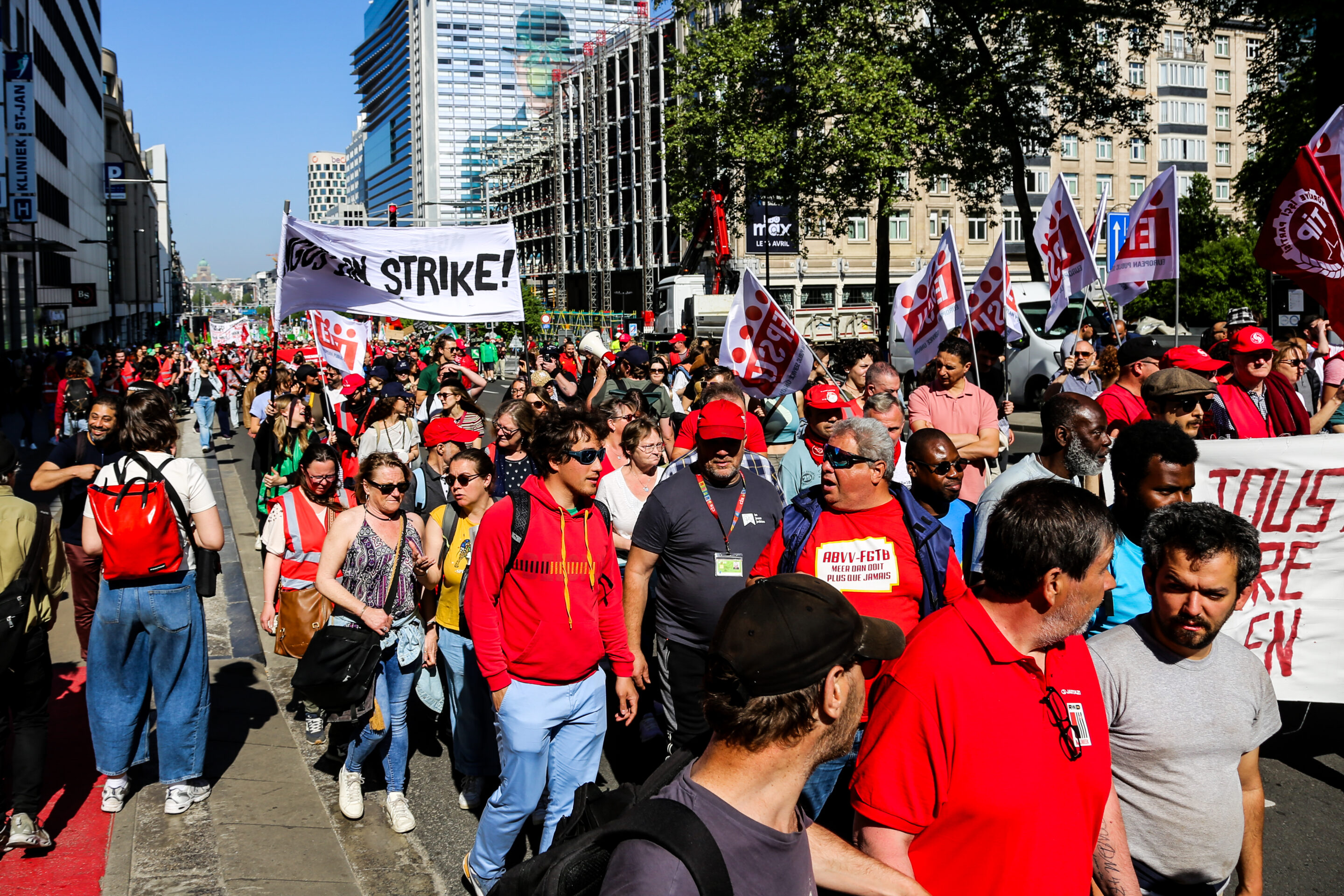
With summer upon us, Europe is once again faced with the realities of a continent unprepared for the scale of challenges it faces, from climate disasters to widening inequality. United Nations Public Service Day on 23 June offered a timely opportunity to reflect on the essential role public services play in addressing these crises - and the urgent need to strengthen them.
These crises fall under what is now recognised as preparedness. At their core lie questions of social cohesion, fairness, and democracy.
We celebrate the vital work of public service workers who keep our communities running, often in dangerous conditions. Their dedication fills the gaps where private companies or investors walk away – when there’s no profit to be made.
But this year, it’s more than a celebration. It’s a call for action: Europe cannot hope to face the future and the crises it may bring if public services continue to be weakened and undermined.
Facing the crisis: The real preparedness gap
According to the EU’s Copernicus Climate Change Service, last summer was the hottest on record, with temperatures in Europe 1.54°C above the 1991-2020 average, breaking the previous record from 2022 (1.34°C).
Such extreme heat significantly increases the risk and severity of wildfires, devastating European countries like Greece, Italy and Cyprus in recent summers. Even historically less-affected areas in Northern and Central Europe are now at risk.
And yet the countries facing increased risk created by climate change are among a dozen EU member states which made cuts to the number of firefighters. Since 2021, Sweden has reduced its firefighters by 28%, Romania by 24%, Hungary by 23%, and Germany by 7% - to give just a few examples.
And it’s only one of a number of clear cut examples. In the final year of the Covid-19 pandemic, the European Union had a health workforce shortage of 1.2 million doctors, nurses and midwives. The result: one in three health workers, the most of whom are women, regularly work overtime due to structural staff shortages. That is not to mention the staff shortages in the less visible, but just as essential non-frontline support services.
That does not point to a Europe which is serious about preparedness, but rather a Europe which is recklessly pushing ahead with ideological austerity measures despite the very practical need to invest in our public services.
Recent proposals and reports from policymakers show that Europe’s understanding of ‘preparedness’ is beginning to move beyond military security: they now include health crises, climate emergencies, energy shocks, and cyberattacks. The European Commission even recognises that growing inequality is problematic as it undermines social cohesion. Like Enrico Letta acknowledges in his report, there is an understanding that closing schools, hospitals, elderly homes, childcare and local administrations leaves entire regions without any collective services and protection.
But this recognition is not accompanied by concrete proposals or investments in the public services that will defend Europe against future crises.

Preparedness starts with people
Governments across Europe are ramping up defence budgets. But without staff in hospitals, care homes, emergency services and local authorities, we lose social cohesion, weaken regional stability, and erode the democratic foundations that uphold our human rights to care, education, health, and good governance.
A resilient and secure Europe requires access to affordable energy, effective climate adaptation, strong welfare systems, and inclusive public services. Rising inequality and climate disruption are already destabilising societies. Abandoning regions and neighbourhoods fuels anger of working people. In this vacuum, the far right grows stronger — not by offering solutions, but by spreading fear.
That’s why Europe needs to put public services front and centre – it’s not just a moral imperative, it’s a deeply practical strategy for building a safer, fairer, and more resilient Europe.
The future starts with a Public Services Agenda
The idea that there's simply not enough money for public services is misleading. The resources exist - fairer taxation is one possible solution to bring in more funding to finance social security and public services. Take health care: addressing Europe's health staffing crisis alone would require investing roughly €60 billion annually. A progressive wealth tax of up to 5% on Europe's multimillionaires and billionaires could generate about €286.5 billion each year. Even a modest 1% tax on extreme wealth could more than cover the healthcare staffing gap, providing millions of doctors, nurses, and midwives.
We need an urgent change. The European trade union movement is calling for the suspension of the Stability and Growth Pact, another avenue that would allow investment in public services. Europe’s public service trade unions are calling for a Public Services Agenda, a vision for a Europe that invests in health, social care, housing, emergency response, utilities, education, public transport, local administrations and all public services — not just to keep them barely functioning, but to rebuild them as the backbone of society. They are key to a future for all, not just for the few.
There is no true preparedness without public services. No resilient Europe without enough staffing. No just and green transition without robust public investment. On Public Service Day, we call on Europe’s leaders to shift course: stop the cuts, fund the future, and put people and the planet before profit.
