
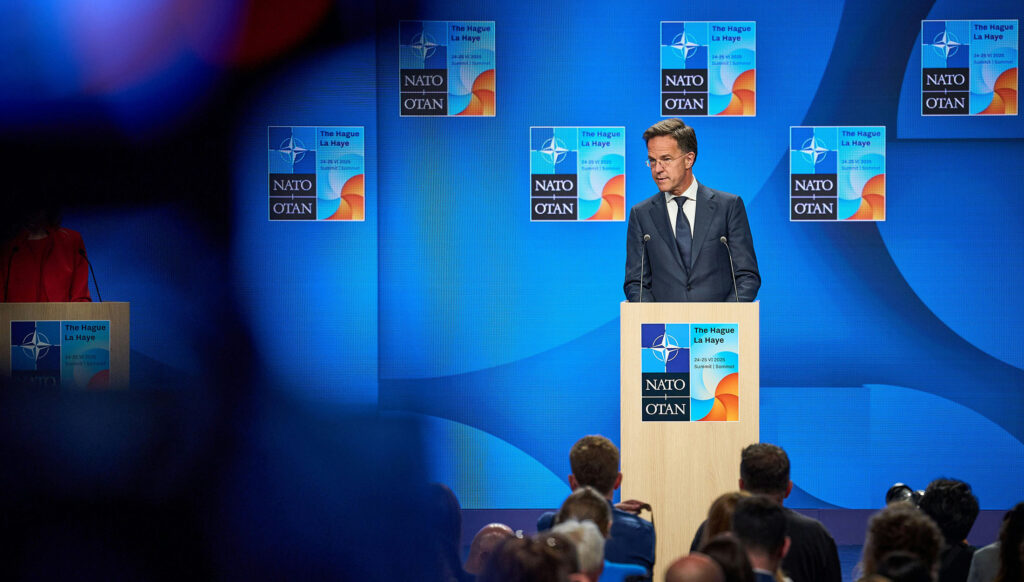
Ahead of US President Donald Trump’s appearance at his first NATO summit of his second term, Secretary-General Mark Rutte has announced that all EU member countries will agree on raising defence investments to 5% of GDP.
On Tuesday and Wednesday, NATO defence ministers, government officials and industry executives are meeting for the much-anticipated summit in The Hague. Allies are hoping for a new defence agreement while also looking for solutions to scale up and reinforce the defence industry on both sides of the Atlantic.
Trump's appearance on Tuesday is expected to underscore his achievement in jogging the military alliance's European members into spending more on defence, after accusing Europe of freeloading on Washington.
Indeed, with confirmation that the new target is being raised from 2 to 5%, NATO’s European allies appear to have caved to Trump’s pressure – boosted by fears over the Kremlin's subversive acts against European countries and the war in Ukraine.
No opt-out
However, dissent has also manifested in the ranks, with Spain’s reported 'opt-out' dominating discussions. Spanish Prime Minister Pedro Sanchez deemed the 5% target "unreasonable", contending that 2.1% of GDP is adequate for Madrid to meet NATO’s military capability goals.
Belgium too, has doubted its ability to meet the new target, but given its high level of debt, and historic low contributions, the country has decided to save diplomatic face and publicly support the target.
On social media on Sunday, Sanchez claimed that Spain had reached an "historic agreement" with NATO, allowing it to remain a key member without increasing defence spending to 5% of GDP.
The Spanish leader shared a letter from Rutte, stating that the Secretary General understood Spain’s conviction that it can meet the new capability goals at less than 5% of GDP, but the letter does not grant Spain an exemption.
It highlights that the agreement will provide Spain with the flexibility to chart its path to meet capability goals and allocate annual resources based on its GDP, allowing the country to present its own annual plans.
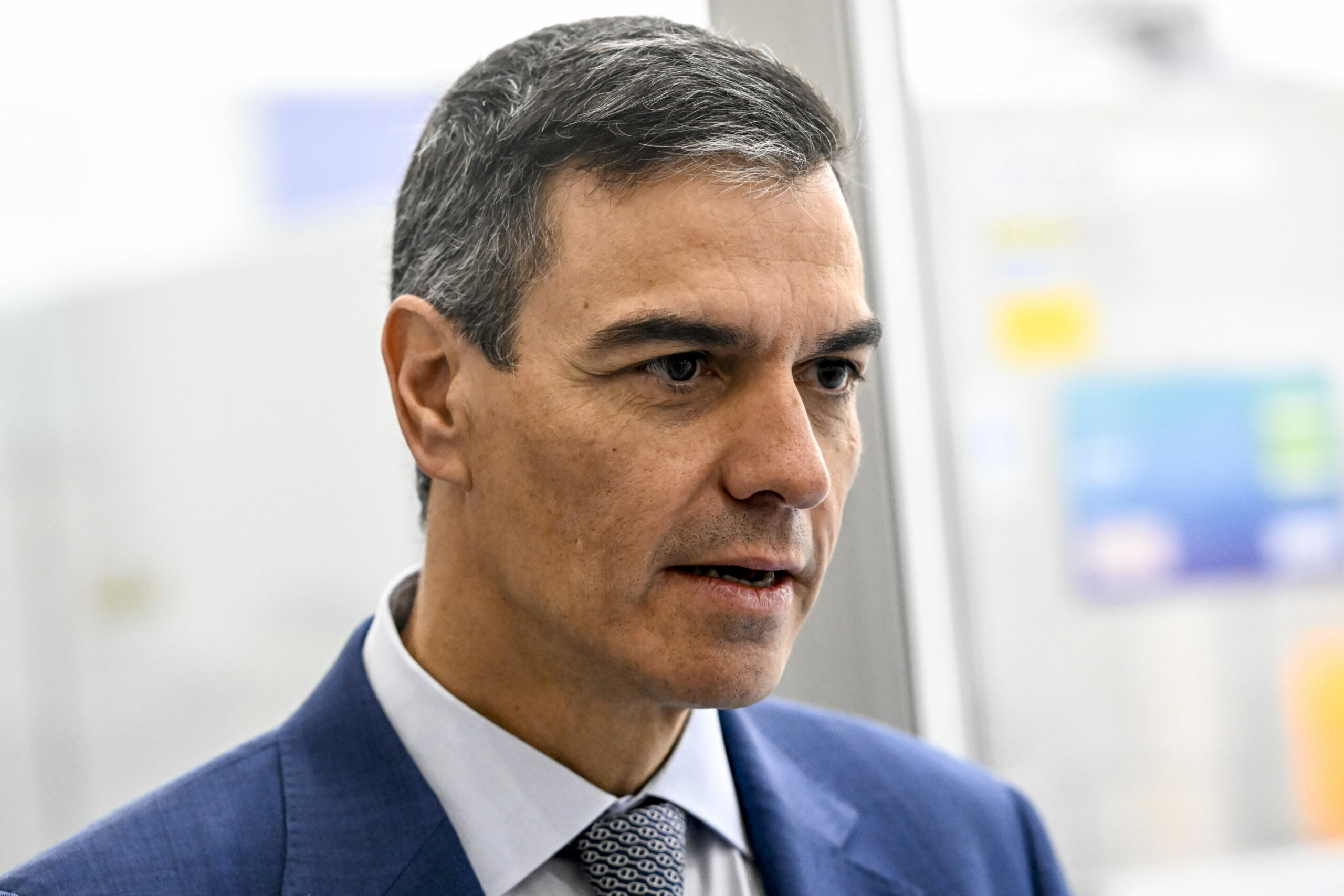
Prime Minister of Spain Pedro Sanchez pictured during a visit to the Imec research center for nano-electronics and digital technologies, in Leuven, Friday 18 October 2024. Credit: Belga
However, Rutte underlined that "Spain has no NATO opt-out", but that Madrid was instead being given some leeway in how to reach NATO's spending standard, which it agrees with in principle.
"The fact is that Spain thinks they can achieve those targets on a percentage of 2.1%. NATO is absolutely convinced Spain will have to spend 3.5%, to get there," Rutte said on Monday. "So each country will now regularly report on what they are doing in terms of spending and reaching the targets. So we will see, and there will be a review in 2029."
'World becomes dangerous'
After years of struggling to reach the required 2% of GDP agreed in 2014, there are concerns that the new target will become another empty promise.
"The big difference from the Wales pledge in 2014, is this, that there will be annual reports on what nations are spending, there will be regular reviews on what is what is happening," Rutte told journalists on Monday.
If everything goes smoothly, NATO allies are expected to approve the major new defence investment plan – the benchmark for defence investment to 5% of GDP. This will be agreed together with a concerted effort to ramp up defence industry across NATO, in a bid to increase security and create jobs.
"We meet at a truly historic moment, with significant and growing challenges to our security," Rutte stated. "As the world becomes more dangerous, Allied leaders will take bold decisions to strengthen our collective defence, making NATO a stronger, a fairer and a more lethal Alliance."
The summit is also being overshadowed by events in the Middle East, particularly the US' entry into the Israel-Iran war. Rutte denied that Washington had broken international law and pushed back on other NATO countries being dragged into the conflict.
"This summit is really about making sure that the whole of NATO, one billion people will be safe, not only today, but also in 3, 5, 7, years from now,' Rutte said. "There is also a close connection between Iran, of course, North Korea, China, Belarus, but also, Iran with Russia when it comes to the war in Ukraine. So, no doubt it will emerge in the discussions."
