
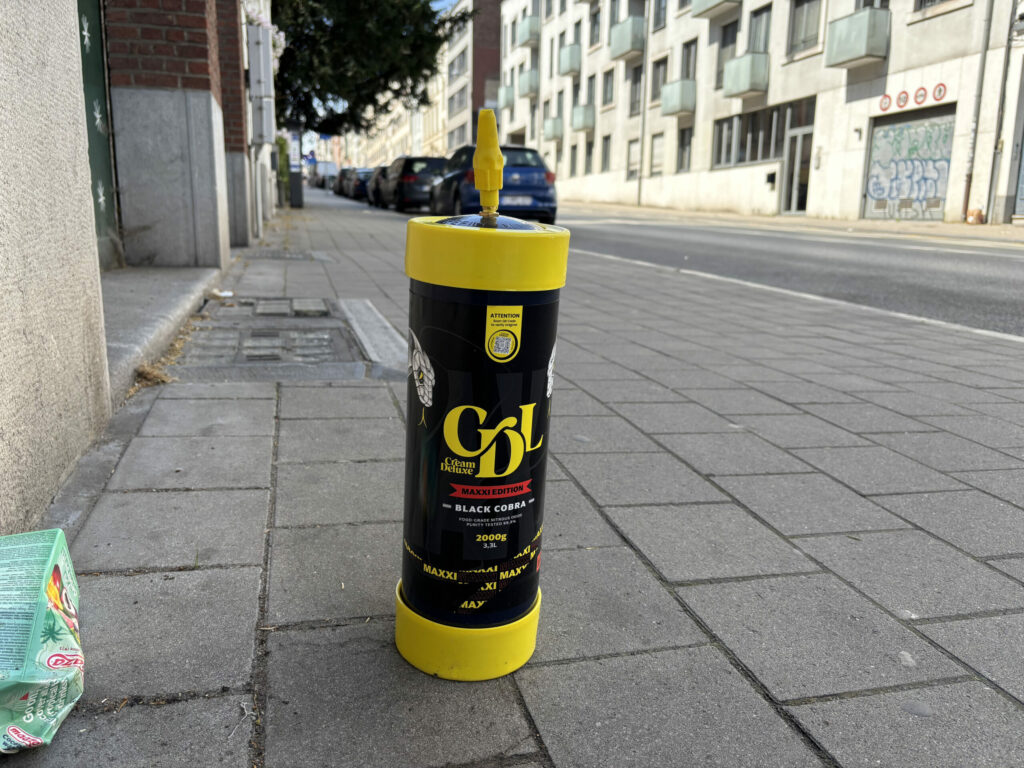
Once a cheeky party trick, nitrous oxide – known on the streets as "proto" – has spiralled into a full-blown public health, legal and environmental crisis in Belgium.
An investigation by Le Soir lays bare a black market that stretches from late-night convenience shops to posh nightclubs.
If you've walked the streets of Brussels or any major Walloon city lately, you've likely stumbled across them: 40-centimetre-long metallic canisters discarded in gutters and parks. Branded names like "Fastgas" and "Cream Deluxe" hint at their original culinary purpose. Originally used in whipped cream dispensers and medical anaesthesia, nitrous oxide has become the go-to high for Belgian youth seeking cheap and quick euphoria.
As one former user told Le Soir: "One balloon, two, three... It kicks off the night. But it can also make you vomit, black out, or worse."
The scale of use has skyrocketed. Gone are the tiny whipped cream cartridges. In their place are disposable metal cylinders capable of filling 400 balloons. Their residue now litters public spaces across Brussels. In March 2024, the Belgian government banned the recreational use of nitrous oxide.
The law is strict on paper: up to five years in prison for importing, storing, or selling the gas outside of medical or food-related contexts. But there's a catch – a giant legal loophole. The sale is technically legal if a buyer tells a vendor they're using the gas for making whipped cream. No proof required. As one senior prosecutor said (under anonymity), “You're only guilty if you confess.”
This legal grey zone has turned enforcement into an interpretive dance. A night-shop owner selling dozens of canisters and balloons to four teenagers on a Saturday night? Illegal. A polite man in a chef's apron is buying the same? Legal.
The absurdity of the absurdity came to light on a freezing night in January 2024. Police officers patrolling central Brussels spotted a van outside the legendary You nightclub. Inside: 350 nitrous oxide bottles. A sweep of the club uncovered 550 more.
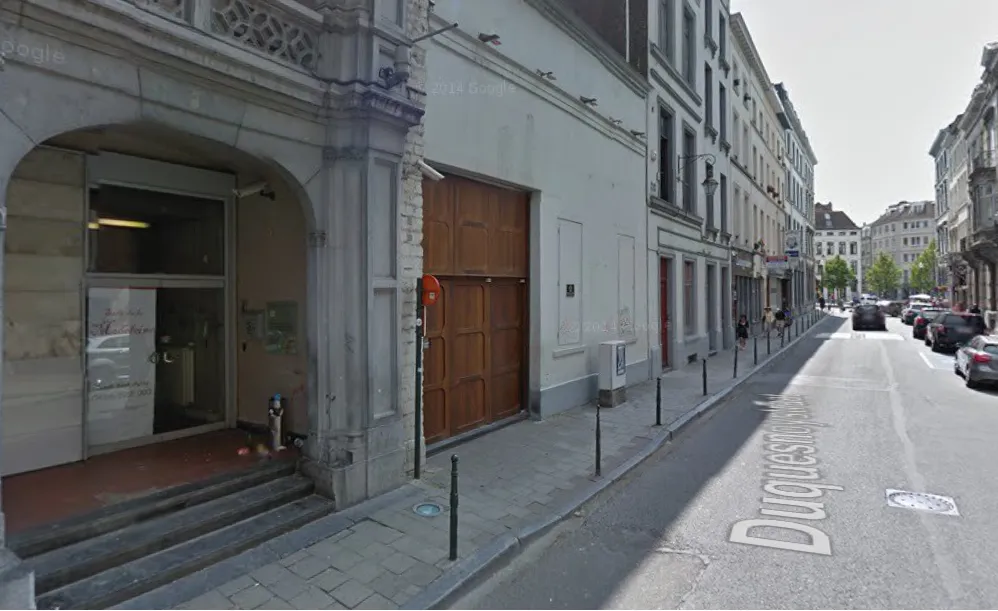
The You Night Club in Duquesnoystraat, next to La Madeleine. Credit : Google
This wasn't an isolated case. In February, police found 35 canisters in a Rue de la Loi nightclub. In April, more turned up in a high-end restaurant on Avenue Louise, bookshops in Schaerbeek and night shops across the capital. All part of a booming backdoor business. In one bust alone, police seized 132 canisters from a bookshop where customers walked out with white bags full of gas.
Yet prosecution remains rare. In the last five months of 2024, just 10 cases of illegal transport or sale of nitrous oxide reached Belgium’s correctional courts.
The incinerator
Meanwhile, the environmental toll is literal. At Brussels' waste incinerator in Neder-Over-Heembeek, explosions have become routine. Jérémy Hellemans, head of the city’s waste-to-energy facility, now keeps a separate container for nitrous canisters. In just ten days, nearly 5,000 were collected.
"We used to shut down the furnaces a dozen times a year. Now it's 35 to 40," he told Le Soir. "It’s the worst strain on our equipment since 1985."
The heat causes residual gas to expand. Canisters explode. Heavy iron bars that move rubbish through the furnace shatter. Workers in heat-resistant suits are deployed to rebuild shattered interiors. Hellemans holds up one broken bar: "Fifteen like this last week alone."
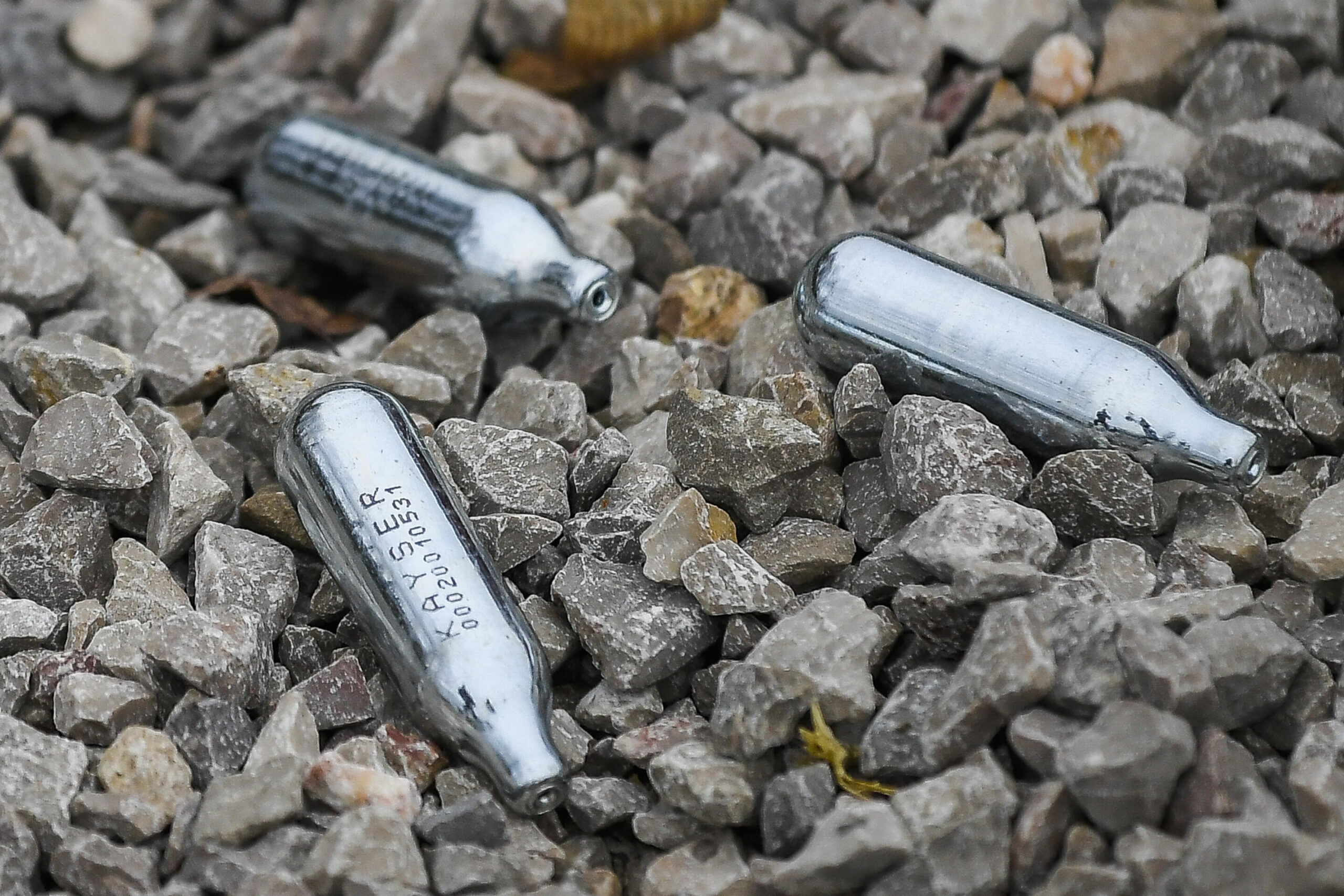
Nitrous oxide capsules at a sidewalk downtown Brussels, Sunday 17 January 2021. Credit : Belga/ Laurie DIEFFEMBACQ
Safety measures now include reinforced furnace walls and sealed observation ports to protect staff. But the cost is staggering: every shutdown means €150,000 to €250,000 in repairs and lost energy production. In 2024, the crisis cost the Brussels Region €8.8 million. By April 2025, the tally was already at €2.5 million.
Efforts to adapt are underway. Risk zones like nightclubs and train stations are being monitored. Public awareness campaigns are running. But as long as nitrous oxide remains legally available through a verbal declaration of culinary intent, the system remains porous. Even proposals to pre-shred rubbish bags before incineration face logistical challenges. Until then, the giggle gas keeps bursting into flames not in the streets, but inside the machines meant to clean them.
Fastgas
The story begins with a group of Dutch students moonlighting as club promoters in Lloret de Mar. One of them, Luciano De Vries, saw potential in the tiny cream charger canisters used in kitchens — and began selling them to fellow partygoers for their euphoric effects. By 2018, what started in the boot of a Hyundai had evolved into an industrial-scale operation with warehouses, online stores, and massive profits.
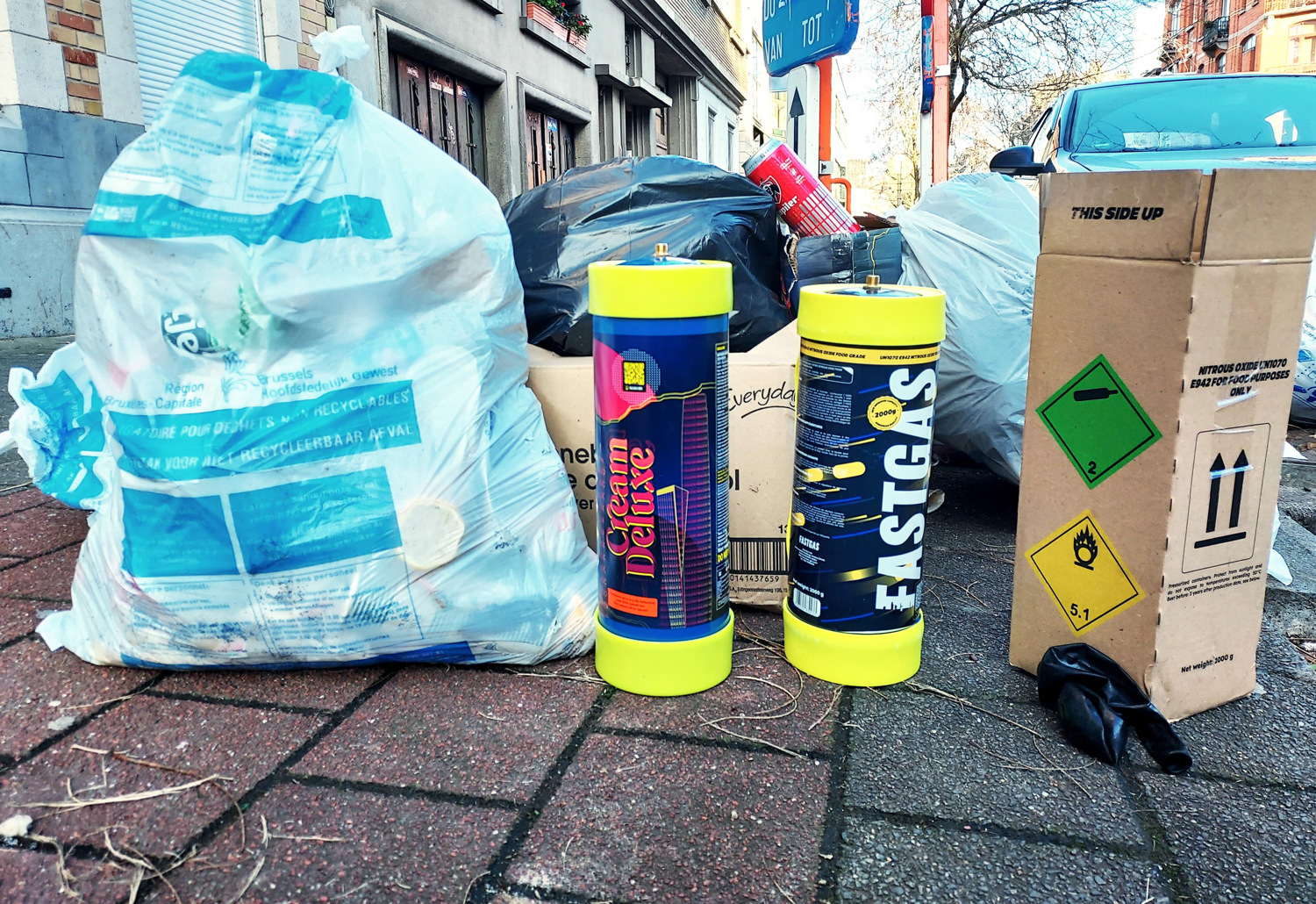
Fastgas is one of the companies selling laughing gas. Credit : Belga
Fast-forward to 2025, and their empire spans the globe. Fastgas cylinders – flashy, oversized and unambiguously intended for inhalation – are now found in street corners and waste centres across Europe. But while Belgium and the Netherlands have outlawed recreational use, enforcement has proved patchy.
Behind this chaos sits a corporate labyrinth: shell companies in Malta, Mauritius, and Poland now manage production and distribution, allowing the original founders – De Vries, Nick Houwen, and Jesse Van der Heide – to deny operational involvement. Marketing has been equally audacious: former reality stars, luxury parties, and a now-defunct agency called Not That Agency helped polish Fastgas’s image as a lifestyle brand.

The website of Luciano De Vries's holding company presents him as an “entrepreneur and philanthropist based in the enchanting setting of Lisbon, Portugal.” – Screenshot
Despite mounting legal pressure, the business remains lucrative. Global Catering Supplies, one of the key firms linked to the operation, reported €1.7 million in retained profits in 2022. And while the Fastgas website claims the gas is for culinary use, industry experts scoff: "One bottle would last ten years in a kitchen," says Wolfgang Ettenauer of iSi, a reputable Austrian supplier.
The founders now live in rural Portugal, far from the debris-strewn streets of Brussels or the courts of Antwerp, where they were convicted in 2021. Their version of events? That the law is being misinterpreted, and they’ve done nothing wrong. "It’s wonderful here," De Vries recently told NRC. "We left all that behind."
But Fastgas hasn’t gone anywhere. Not from the streets. Not from the emergency rooms. And certainly not from the headlines.
What started as a party trick has become a regulatory farce and an industrial nightmare. Belgium’s battle with laughing gas is no longer about teenagers getting high on a Saturday night. It’s about broken furnaces, legal gymnastics, and a trail of silver canisters that lead from street corners to courtrooms to the heart of the city’s waste infrastructure.
And in all of this, the question remains in almost every other issue related to Brussels : how long until the silence around this explosive issue finally blows up for good?
