
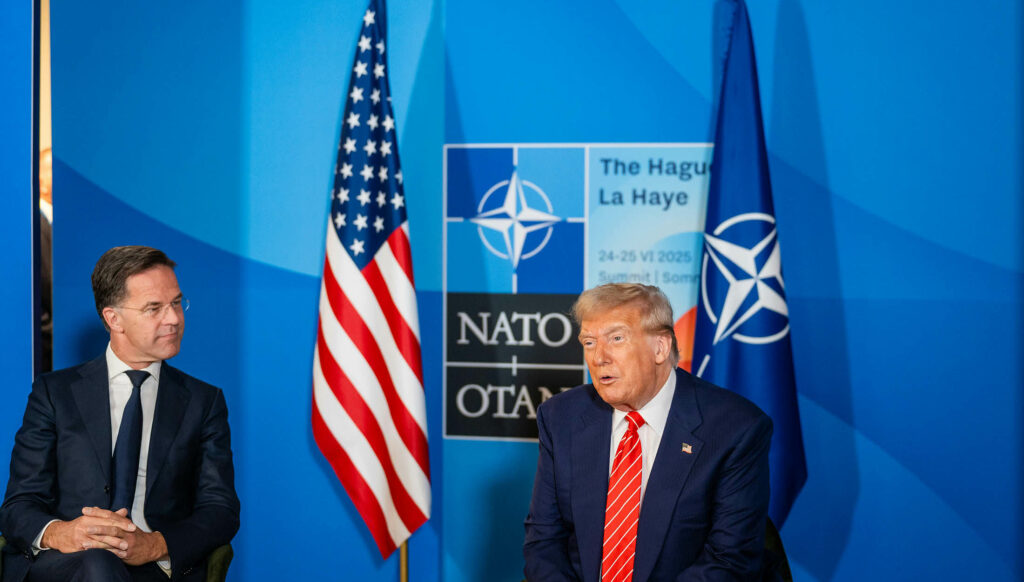
NATO Member States officially pledged to spend 5% of their GDP by 2035 at Wednesday's summit in The Hague, with Secretary-General Mark Rutte hailing the "significant commitment" made by Europe and Canada.
US President Donald Trump praised the summit where "tremendous things have been accomplished", after achieving a dramatic increase in defence spending.
He called it a "monumental win" for the US, who had been paying more into the military alliance than other European allies. He did, however, say that he was leaving the summit with "a little bit different" view of NATO.
On Wednesday, NATO allies accepted Rutte's proposal to split this 5% of GDP into two pillars.
In concrete terms, the 32 Member States have committed to spending 3.5% of their GDP on pure defence spending and 1.5% on critical infrastructure and the protection of their communication networks in particular.
"We laid the foundations for a stronger, fairer and more lethal NATO," Rutte told reporters, hailing the "profound impact" on ability for NATO to "deter and defend", which he said was the alliance's main raison d'etre.
Security challenges such as "the long-term threat posed by Russia to Euro-Atlantic security and the persistent threat of terrorism" were cited as the alliance’s reasoning for the spending boost, which came after months of pressure from US President Trump.
"Doesn’t he deserve this praise?" Rutte said when answering a question about his text messages to Trump, which the US President shared them on social media ahead of the summit.
He refused to agree that it was demeaning for Europe, calling it a "question of taste" and that he "trusted his good friend" Trump. Earlier, Rutte had referred to him as "daddy", after the US leader had compared the Iran-Israel conflict to two children fighting.
'Credible path to goal'
The investments must ensure that NATO countries have the armed forces, capabilities, stocks, infrastructure, readiness and resilience necessary for the "core tasks of the alliance", it says. These include deterrence and defence, crisis prevention and management, and security.
According to the agreement, NATO allies will also submit annual plans showing a "credible, step-by-step path to achieve this goal." In 2029, there will be an evaluation of the progress and spending balance in this plan.
Member States also reaffirmed their commitment to the alliance's collective defence, as set out in Article 5 of the NATO Treaty. It counteracts the uncertainty created by Trump on Tuesday after he refused to commit to implementing Article 5 if a European ally was attacked.
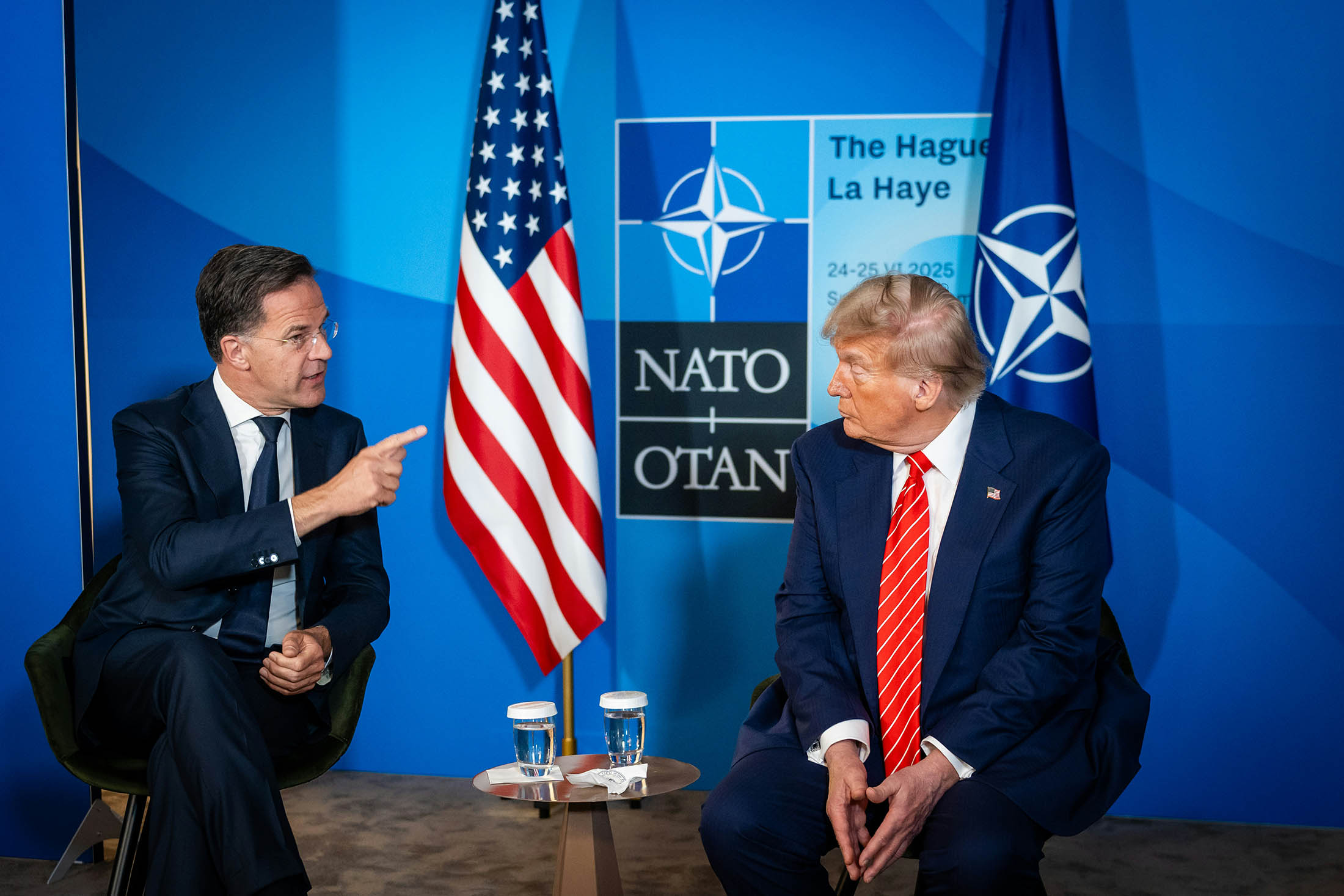
NATO Secretary General Mark Rutte and Donald Trump (President, United States) Photo: Martijn Beekman. Credit: NATO
"Article 5 is absolutely clear – but we will never go into details about when Article 5 would be triggered,” Rutte said, adding that this would be against the alliance’s interests. "The United States is totally committed to NATO," Rutte stressed.
The text of the summit declaration establishes the commitment to shoot military spending to 5% with the generic expression "allies", which for the Spanish government, who has led the opposition to spending targets, opens the door for leeway on spending less.
However, Trump called out Spain in a press conference on Wednesday after the summit, saying they were "really bad" for being the only country refusing to pay, saying he would make them "pay twice" in the form of a new trade deal.
In the text, there was also no mention of Ukraine’s irreversible path to NATO, to which Rutte underline this was not a reversal of policy. He said this was because this meeting was "different", with a focus on the defence spending, with statements on Iran and China were also omitted.
Rutte rejected that the language on Russia was softened, calling them a "long-term" threat (rather than immediate), but did not answer questions about Trump’s relationship with Russian President Vladimir Putin.
