
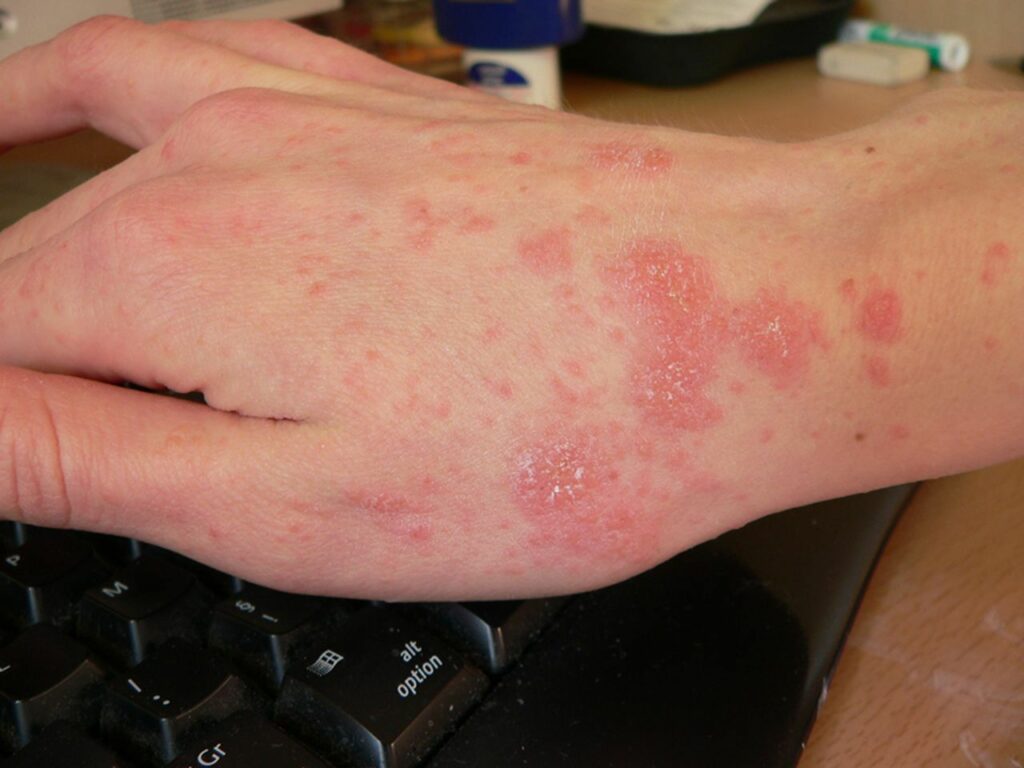
The number of scabies cases in Belgium is on the rise, according to the Outbreak Research Team of the Institute of Tropical Medicine and the health institute, Sciensano.
The scabies mite (Sarcoptes scabiei) burrows into the outer skin to mate, with the male dying soon after, while the female continues to lay two to three eggs daily. The larvae develop within the skin’s surface, causing severe itching.
Researchers noted a 15% annual increase in scabies cases between 2011 and 2023, based on data from the GP registration network Intego.
From 2000 to 2011, the incidence was more stable. Other sources confirm this rise, including a 15% increase in scabies medication sales and a 16% in occupational health statistics.
In asylum centres, scabies cases surged by 41% annually between 2016 and 2022, reflecting a similar trend among people in vulnerable housing conditions.
Treating scabies can be relatively challenging, according to the science magazine Eos: Creams are often applied incorrectly and require prolonged use, while pills only kill adult mites, requiring a repeat treatment after seven days.
Additionally, many doctors mistakenly diagnose scabies as eczema initially, allowing the problem to persist.
While the exact annual number of scabies cases is unknown, estimates suggest that in 2021, 2.18 out of every thousand doctor visits were scabies-related, compared to 1.04 visits in 2015. Current systems only allow for trend analysis and cannot show the total number of cases.
Starting this year, the epidemiological situation will be systematically monitored through GP networks and the national institute's (RIZIV) medication data, according to Sciensano's Valeska Laisnez.
