

Belgium's Federal Government loses out on €3 billion to €6 billion due to its favourable tax scheme for company cars, according to an analysis by the Federal Planning Bureau.
In Belgium, almost 60% of new passenger cars sold are company cars. Many of those are considered a 'benefit in kind' (BIK) for the user – meaning that the car is provided by the employer, but the employee can use it for private purposes. As a result, they are taxed differently from private cars.
"If an employee were to pay for the full cost of their private travel with the company car, we calculated that this would generate an additional €3 billion to €6 billion in revenue for the government," Laurent Franckx, an expert at the Federal Planning Bureau, told The Brussels Times.
The explanation for the wide margin in the calculation is that a number of data points that are required for the estimate are currently unavailable, such as the value of the car after depreciation on the second-hand market, and the number of kilometres a person drives for private purposes.
"If you talk about any reforms of company cars, the eventual effects will be very uncertain – partly because there are some secondary effects that we are not even capable of calculating due to missing data," he said.
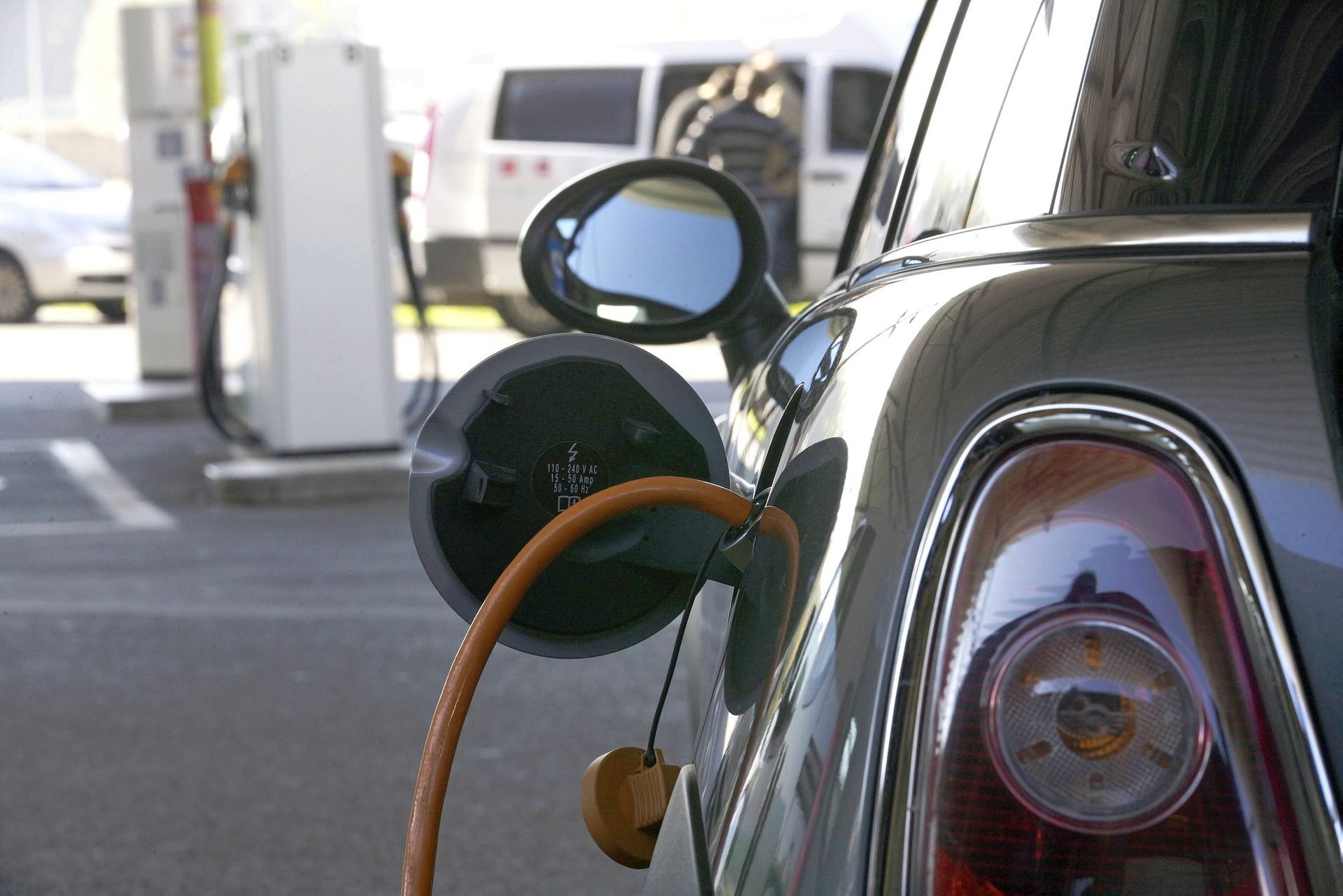
Credit: Belga / Nicolas Maeterlinck
Should the Federal Government decide to decrease the tax benefit linked to company cars, it is to be expected that some companies will stop offering these cars to their employees, or will offer them under different circumstances.
"This will be a sort of adjustment that we cannot directly anticipate. There might also be labour market effects, such as the employee and the employer wanting to renegotiate wages, for example," Franckx said.
The analysis was drawn up as the debate on the cost of company cars on the federal budget in Belgium pops up every once in a while, Franckx explained. "Some existing studies also estimate this cost, but the most recent one was in 2019. And things have changed quite fundamentally since then."
Rapid electrification
In the past few years, the composition of the company car stock has changed completely. While it was first completely dominated by diesel cars, their share started decreasing in favour of petrol ones. Moreover, the law organising the fiscal and social greening of mobility of November 2021 put an end to the deductibility of car-related costs in corporate taxation as from 2026, except for fully electric cars.
The law also foresees an important increase in the "solidarity contribution to social security" that is due on company cars. "Since then, there has been a very rapid electrification of the supply and the composition of company cars."
As a result, abolishing the favourable tax treatment of company cars now would also lead to a shift in the composition of the car fleet; many people driving – often more expensive – hybrids and electric cars might trade their greener vehicles back in for cheaper petrol ones.
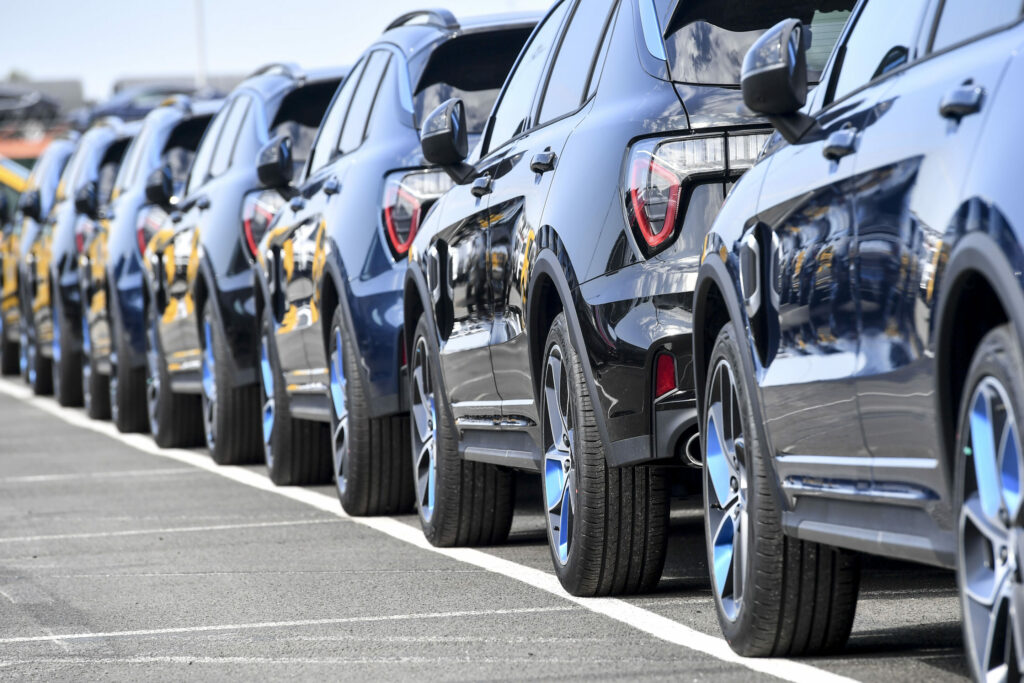
Credit: Belga/ Dirk Waem
For personal income tax purposes, the benefit in kind (BIK) is calculated on the basis of the catalogue price and age of the car, the powertrain and the difference between the car's CO2 emissions and the average emissions of cars sold in Belgium the previous year.
Company cars are completely exempt from employee social security contributions. Employer contributions for company cars made available to employees depend solely on the fuel and CO2 emissions of the car – meaning that plug-in hybrids and electric cars get more benefits.
"That was the objective of the legislation. By making them more attractive, the aim was to promote the use of electric cars," Franckx said. "So we can say that there's a policy rationale for doing it, but so these incentives are in themselves, a major source of budgetary shortfall."
'Affordable and feasible'
Meanwhile, Finance Minister Jan Jambon (N-VA) announced on Friday that the Federal Government is limiting the scope of the temporary extension of a tax deduction for plug-in hybrid cars. The scheme will only apply to self-employed sole traders, but not to companies.
Jambon had been working on a new favourable tax regime for plug-in hybrid company cars for some time. However, it became clear in April that the European Commission would not accept the scheme because it was not in line with the climate agenda.
Jambon's cabinet negotiated with the European Commission for months – even proposing that hybrids should only be deductible for the electric part – but to no avail. There was also €282 million in European recovery funds at stake.
Ultimately, a compromise was reached to still let the hybrid scheme go ahead, but only applicable to self-employed sole traders. Companies are excluded. This limits the scope of the measure, but is still in line with the original intention of the tax relaxation – which is encouraging self-employed people with old vehicles to take the inevitable step towards electric via the hybrid interim solution. After all, there are still more than 380,000 old petrol and diesel commercial vehicles on the road in Belgium.
"The new tax scheme for hybrid cars has finally been given the green light after consultation with the EU," Jambon said. "With this scheme, the greening of the vehicle fleet remains affordable and feasible for everyone."
