
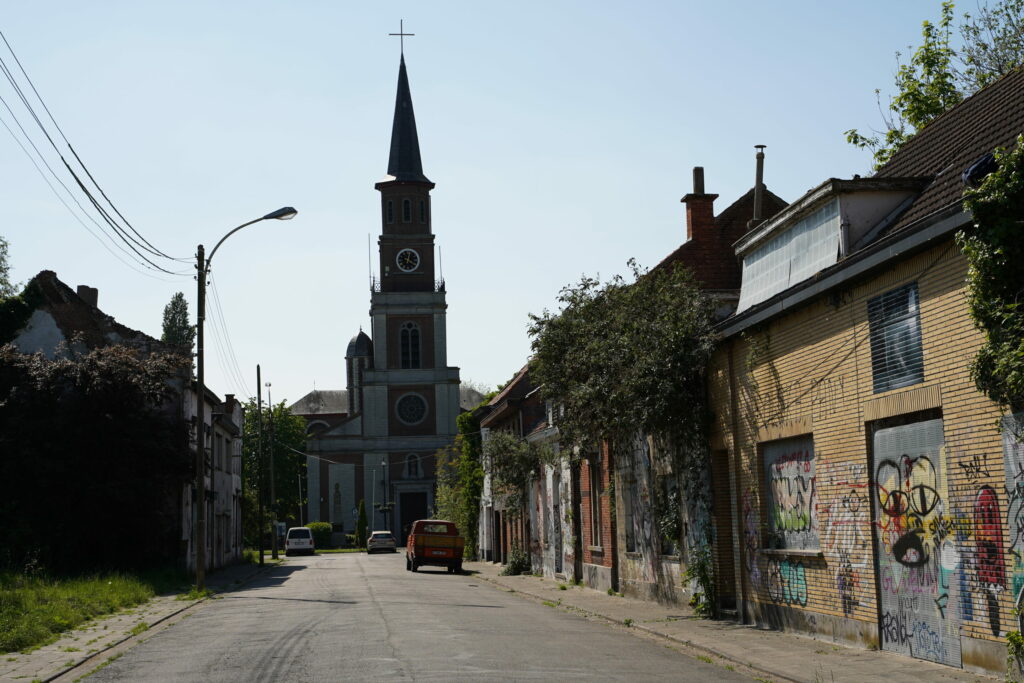
Doel is a historic village located northeast of Antwerp, on the bank of the river Scheldt. For decades, it was known in Belgium and beyond as a ghost town, thought to be on the brink of disappearance, swallowed by port expansion. But against all odds, Doel endured, emerging as a rare success story of communal resilience, grassroots activism, and quiet revival.
Reaching Doel without a car is a mission in itself. Public transport is virtually non-existent, something many residents suspect is intentional. A bike ride from Antwerp takes about an hour on paper, but the route cuts through forbidding stretches of industrial port zones.
Belgium has no shortage of abandoned places, but arriving in Doel still feels different. Residents have long pushed back against its ghost town image, yet it’s easy to see how the label stuck.
Many buildings are visibly crumbling, their facades thick with graffiti. Once hailed as a hub for street artists, the village gradually spiralled into a contested space between creativity and vandalism. Nature has also crept in, with plants overtaking structures left to decay.
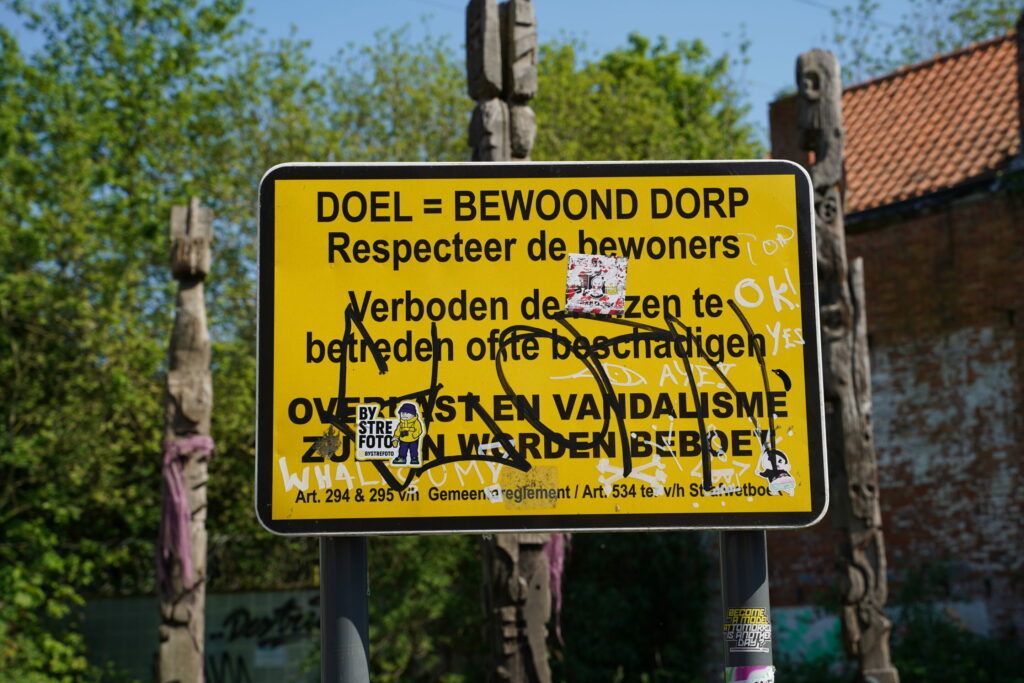
A sign written in Dutch against vandals, saying that Doel is an inhabited village and its residents must be respected. Credit: The Brussels Times/ Vicente Torre
Still, amid the decay, efforts to preserve the village are visible, made possible only by the determination of its remaining community. Doel’s original residents organised and fought a lopsided battle against the state for more than 60 years. Only recently has the village’s future been officially secured. Structural rebuilding may now be on the horizon, but getting to this point was anything but easy.
400 years of Doel and 60 years of struggles
First mentioned in the 13th century as De Doolen, the modern village of Doel took shape in the 17th century, when the Republic of the United Netherlands ordered a new dyke across these marshlands. This transformed the area into a polder that remained, for centuries, a de facto island.
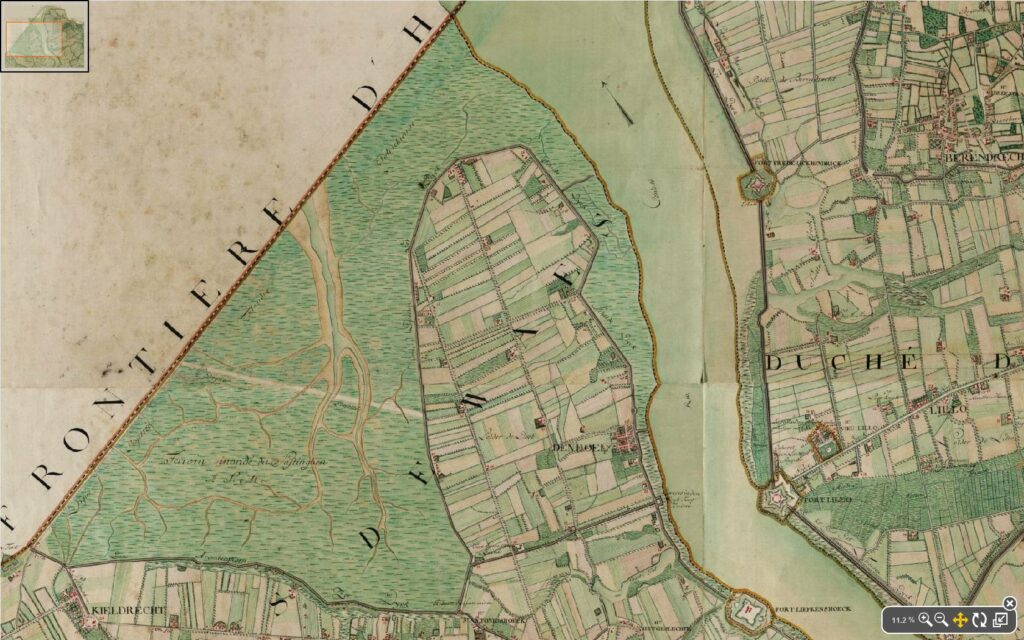
Historic map of Doel from the 18th century showing its location on a peninsula. Credit: Wikimedia Commons
Laid out in a distinctive checkerboard grid, Doel thrived as a modest rural village. Its economy revolved around agriculture, fishing, local crafts, and port labour. In the 19th century, it even served as a quarantine station for ships arriving in Antwerp.
Though never a major hub, Doel had its own unique charm and close-knit community. It boasted notable landmarks too. Most famously, it is home to Belgium’s oldest stone windmill and the Baroque Hooghuis, which is linked to the family of the painter Peter Paul Rubens.
Doel’s long struggle began in the 1960s, when Antwerp port authorities, backed by the Belgian government and Flemish business elites, set their sights on the Scheldt’s left bank for expansion.
The state expropriated a polder north of the village to build a nuclear power plant. In 1968, a construction ban was imposed on Doel itself. As fears mounted, residents began moving out, and newcomers stopped arriving. By the late 1970s, the damage was done. A glimmer of hope came when then-State Secretary for the Economy, Mark Eyskens, said the village could stand “forever.”
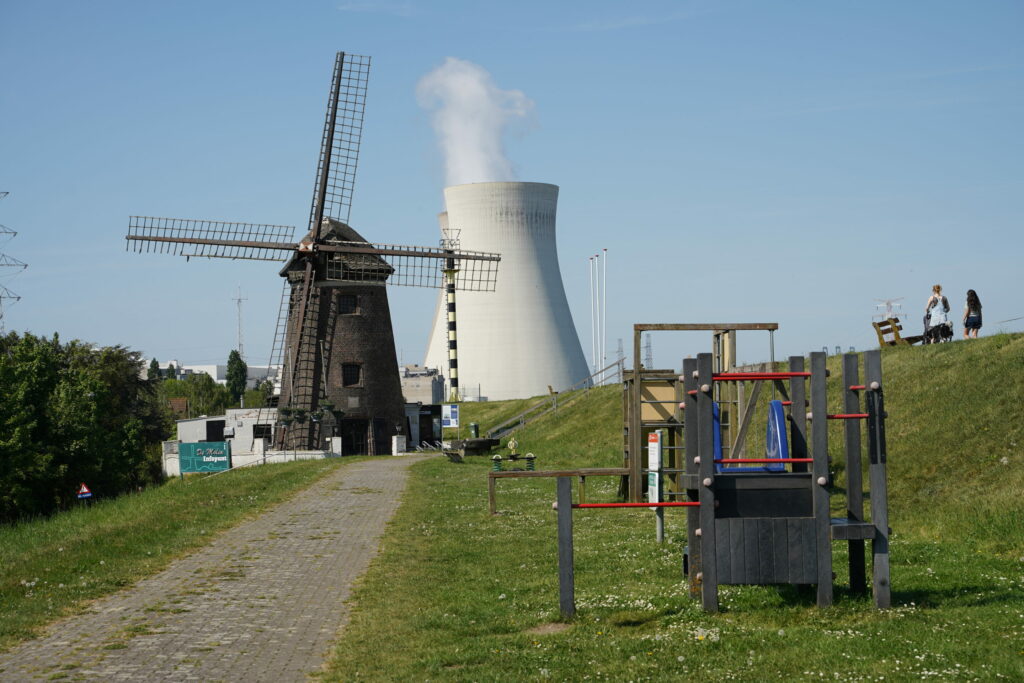
Iconic windmill in front of the Doel Nuclear Power Plant. Credit: The Brussels Times/ Vicente Torre
After a relatively calm 1980s, with unfulfilled promises of investment from the municipality of Beveren, a second wave of pressure hit in 1995. Doel was rezoned from residential to industrial, with a planned container dock to be built directly on top of the village. Another dock was slated for just south of Doel.
In response, residents formed the activist group Doel 2020, with a clear aim: to preserve the village, symbolically carrying it to the year 2020. It began as a small but vocal movement and evolved into a civic platform that attracted architects, artists, and urbanists.
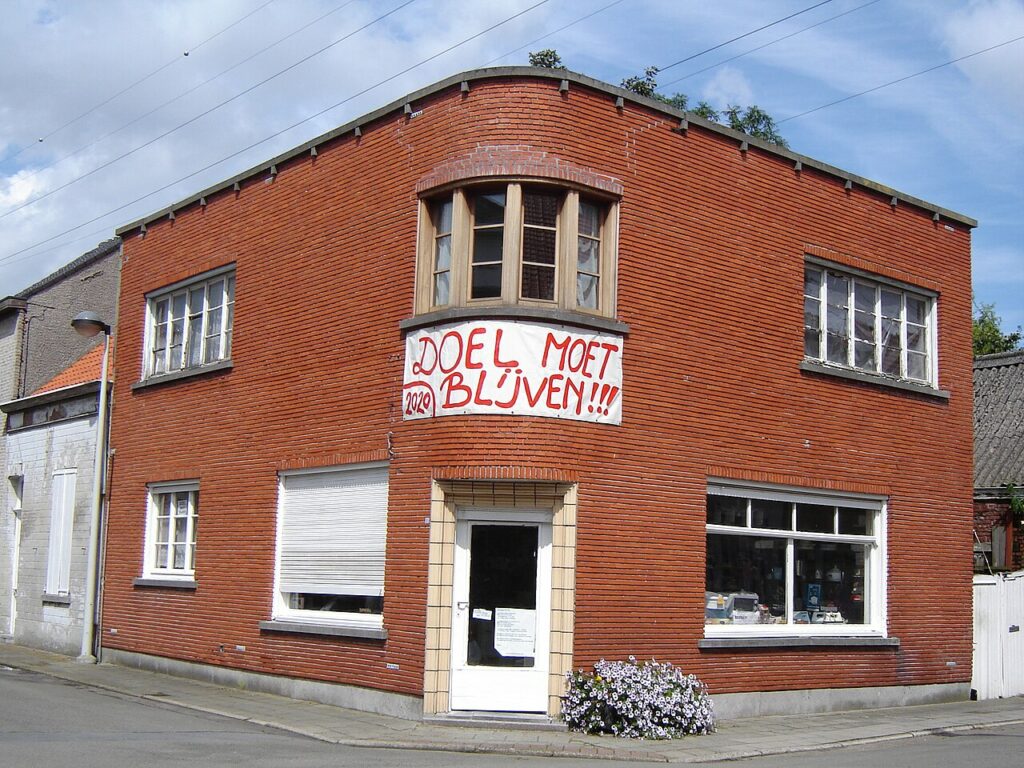
House from Doel pictured in 2008 with a sign reading "2022, Doel has to stay". Credit: Wikimedia Commons
The next 25 years were marked by protests, court battles, and inconsistent media coverage. Although the zoning was officially reverted to residential in 2008, demolition by the port operator continued until a 2009 court order halted it. Media reports often focused on squatting, vandalism, and decay, fueling Doel’s reputation as a “spookdorp” (ghost village), sometimes exaggerating the reality on the ground.
In 2018, a new port plan left space for the village. And in 2022, after more than 60 years of uncertainty, Doel was officially allowed to remain, unlike other villages erased by development around Antwerp and Rotterdam. It was a hard-won victory for its last residents and their allies.
From a community of 1,300, fewer than 20 people now remain, living among decaying homes and neglected roads. The fight for survival is over. The struggle for restoration has just begun.
The youthful reconstruction
To understand Doel’s new chapter, The Brussels Times spoke with Jan Creve, a co-founder of Doel 2020. He directed us to the Architecture Faculty of KU Leuven in Ghent, which has worked closely with villagers since 2015, when Studio Doelland was established.
Students contribute to hands-on renovations, project planning, and immersive design, often living on-site. In 2019, KU Leuven published the Doelland Plan, a “spatial framework” built in consultation with residents and regional authorities, after four years of work.
At the Ghent campus, architecture students present renovation plans in groups, down to details like material choice and budgeting. Faculty assessments are rigorous: both practicality and community needs are taken into account.
There, we met architect and KU Leuven lecturer Joris Van Reusel, who is a passionate advocate for Doel. A co-founder and curator of the Doelland project, Van Reusel recalls that the collaboration started with simple sketches.
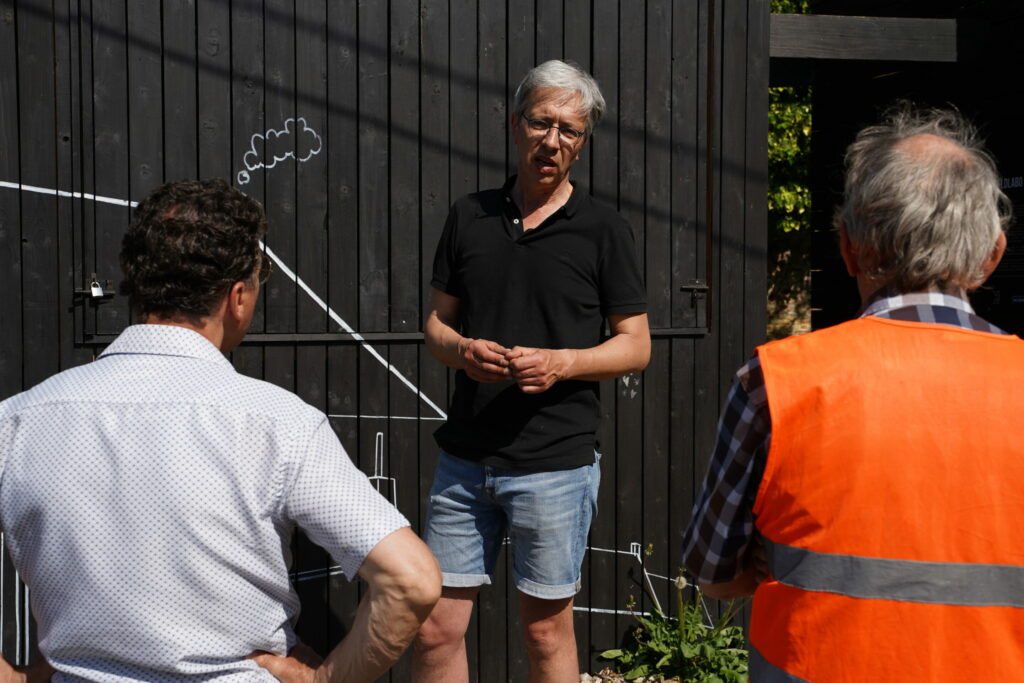
Joris Van Reusel. Credit: The Brussels Times / Vicente Torre
“Students came here with their teachers to sketch the landscape and capture the situation of this village within the context of the harbour, the river, the dikes, and the agricultural surroundings.
But in 2015, we were asked to do another exercise here, and we were in doubt. Everyone told us Doel’s story was over, it was going to be demolished, and a big dock would be built there. So why still do a design exercise about the village's future?”
However, Van Reusel had the opportunity to speak with the remaining Doel residents, who had been actively involved in preserving Doel for the last 15 to 20 years. They told him what really happened, how residents were pushed out and how they kept trying to preserve the village.
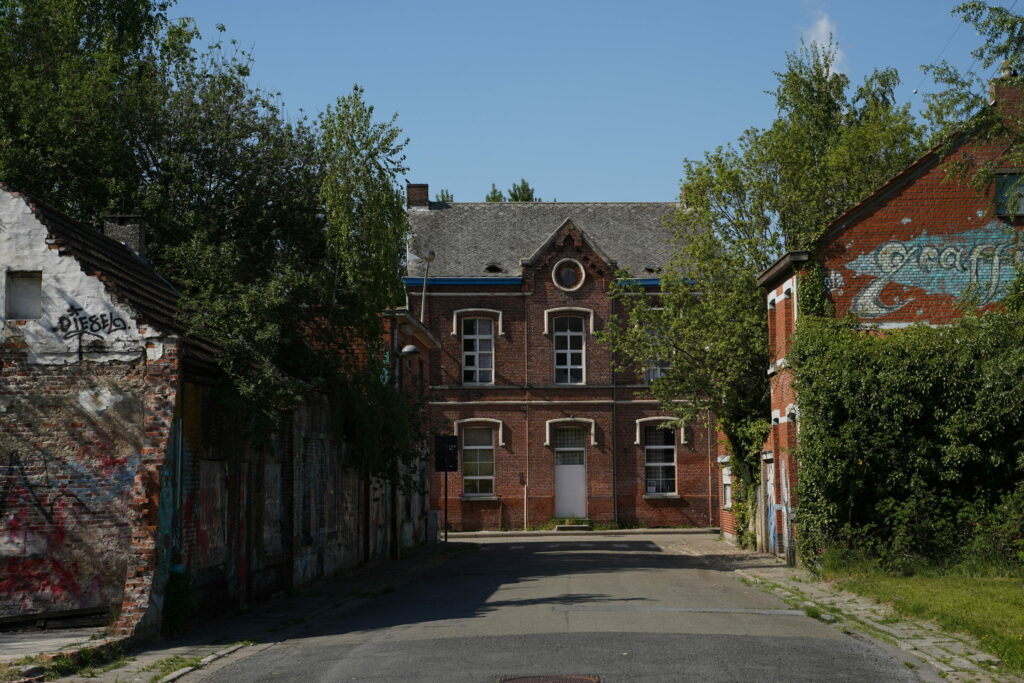
The vacated school building of Doel. Credit: The Brussels Times / Vicente Torre
“It was so moving that I proposed to my colleagues: let’s go there and try to support them through design exercises that open up new perspectives. Is it really too late for the village? Everyone says it’s a ghost town—but is there still a future, and what could that future be? From that point, we started working with students to imagine this new future.”
Van Reusel and his team began filing building permit applications in 2015, a signal that the village was not abandoned, and that students had ideas worth pursuing.
The initiative benefits both students and the village. Doel offers hands-on experience beyond what the university’s excellent workshops can provide. As one student, Boris, told us while working on a gate:
“We’ve been designing this project throughout the year, and now we’re here—it’s a nice day, so we just try to make the most of it. I really enjoy working in Doel. It’s different. It gives you the opportunity to make something one-on-one, get creative with your hands, not just draw. I like it very much.”
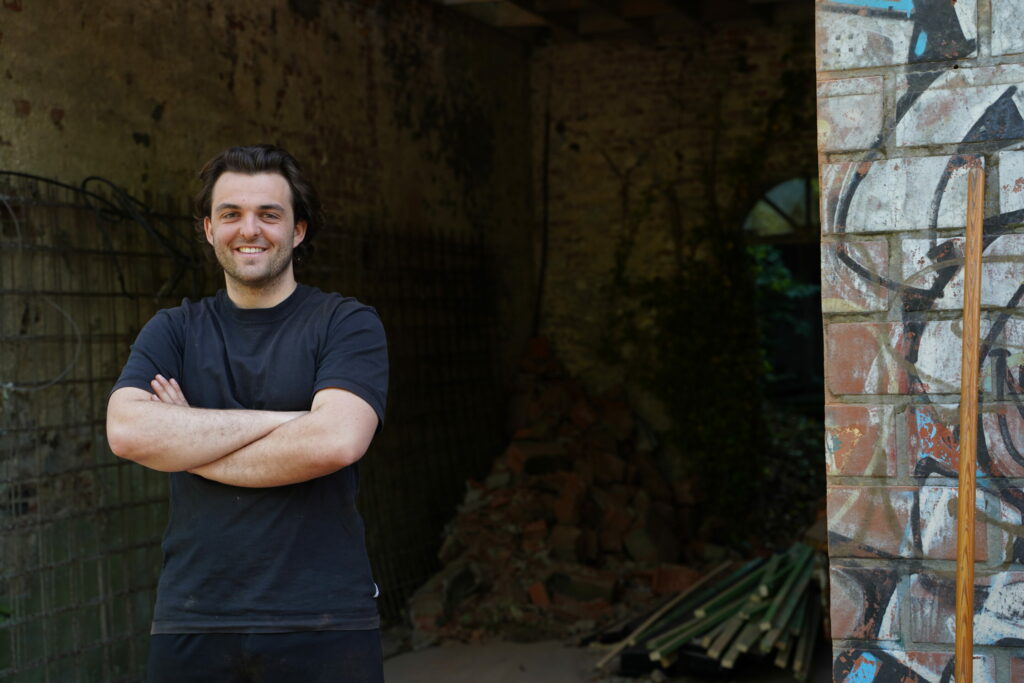
Boris, one of the KU Leuven architecture students, pictured at a renovation site in Doel. Credit: The Brussels Times / Vicente Torre
Can Doel really recover?
Van Reusel says the optimistic timeline is five to ten years of sustained renovation. Quick change may be desirable, but legal and structural realities slow the pace of development.
Moreover, Van Reusel says he believes in slow growth. “We hope it doesn’t go too fast. It took time to bring the village to its current state, and it’ll take time to bring it back.”
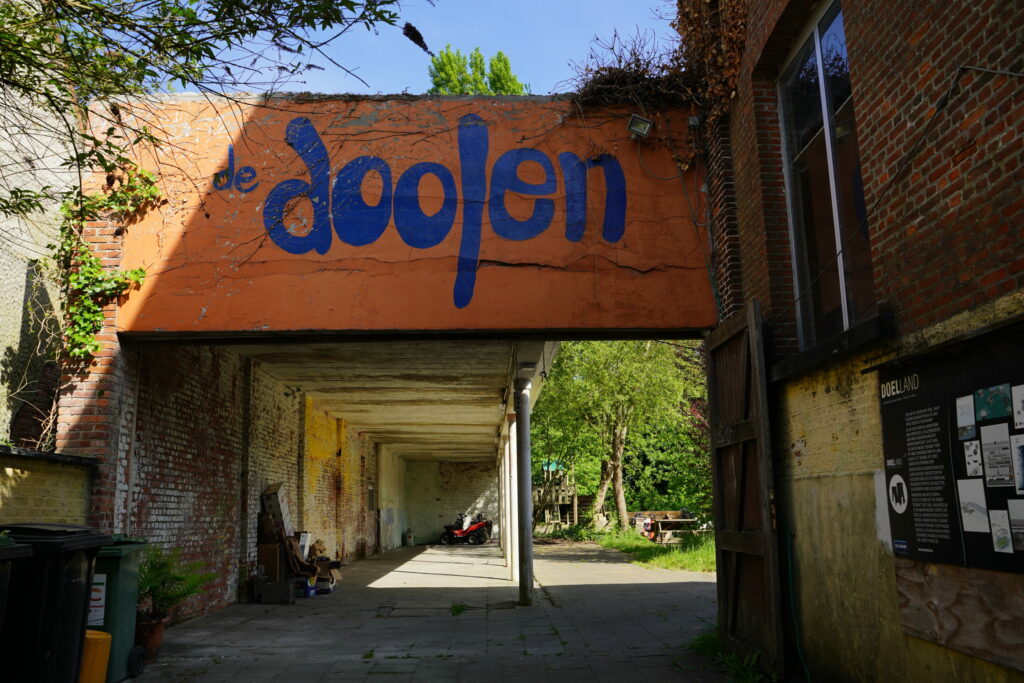
De Doolen acts as the new heart of Doel, an operational base, where community events are also held. The canopy on the photo is among the renovation projects discussed on campus in Ghent. Credit: The Brussels Times / Vicente Torre
Yet many visitors remain unaware of the progress. Dutch tourists walking through the village often don’t realise Doel has been saved. Some still leave, assuming demolition is inevitable.
That’s why one of Doelland’s main objectives remains to change the village's image and demonstrate that the village wants to shed its ghost town status. For this reason, Van Reusel is more hands-on with his students. They’re not aiming to restore the village or even a few houses, but rather to set an example.
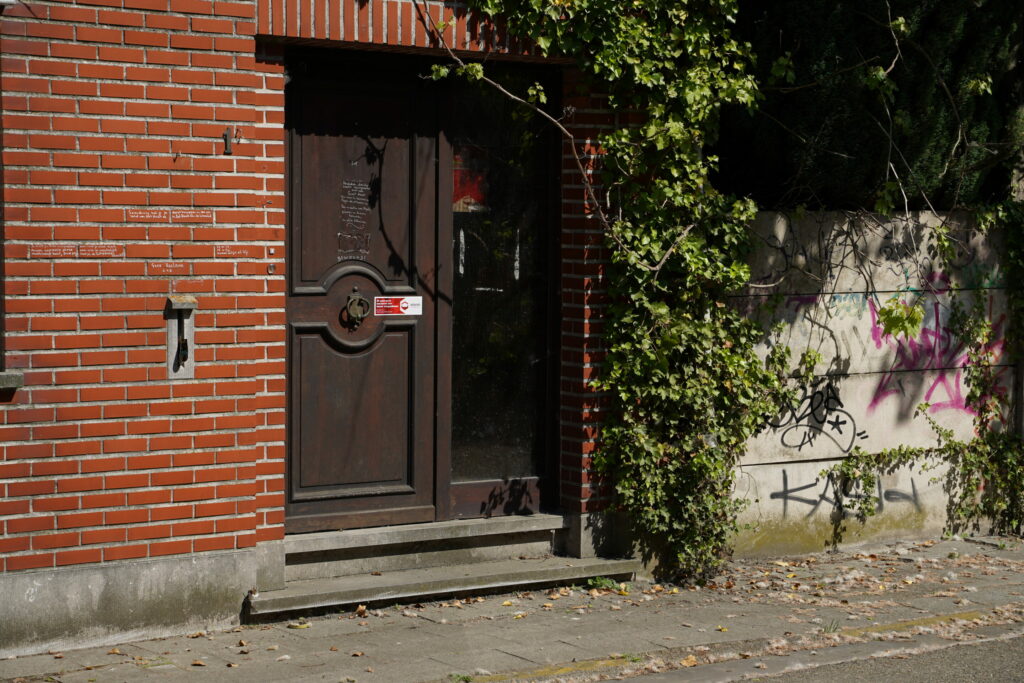
A door to a marked occupied house with little notes written all over it. Credit: The Brussels Times / Vicente Torre
As the architect professor puts it, “We take small steps—renovating a facade, a gate, a single house. These small things shift the general perception of visitors and the media. It’s important to change the image of the village from a ghost town to a positive story.”
Despite Doel’s complex history, Joris Van Reusel remains optimistic. “I’m sure some former residents or their families will come back, and new people will come who are curious to discover what the village has to offer. It’s a unique place—near the river, close to both huge industrial plants and nature reserves, near the Dutch border. It has a special energy and vibe, and I believe that will support its recovery.”
