

Patrice Lumumba was born on 2 July 1925. 100 years later, the ephemeral Congolese leader's legacy is a mainstay of decolonial resistance and a harsh reminder of Belgium's bloody hand in its former colony.
Patrice Emery Lumumba was elected as the first-ever Prime Minister of the Democratic Republic of Congo (DRC) in 1960. Just days later, the newly-independent state sank into chaos, eventually leading to Lumumba's assassination in a CIA-backed operation and in the presence of Belgian officials.
Lumumba was not a perfect politician, and views of him in Congo are nuanced, but one thing is certain: his tireless advocacy for an Africa free from European imperialism have guaranteed his place as an icon of the decolonial struggle.
Young man in Congo
Lumumba was born as Elias Okit'Asombo in Onalua, a village in the central province of Sankuru on 2 July 1925.
His early career featured stints as an office worker in mining company Symétain, further studies at the colonial school of posts, telephones and telecommunications, a flirtation with journalism and leadership roles in various civic groups in the city of Stanleyville (now Kisangani). He was also arrested for embezzling money while working in a post office and spent 14 months in prison.
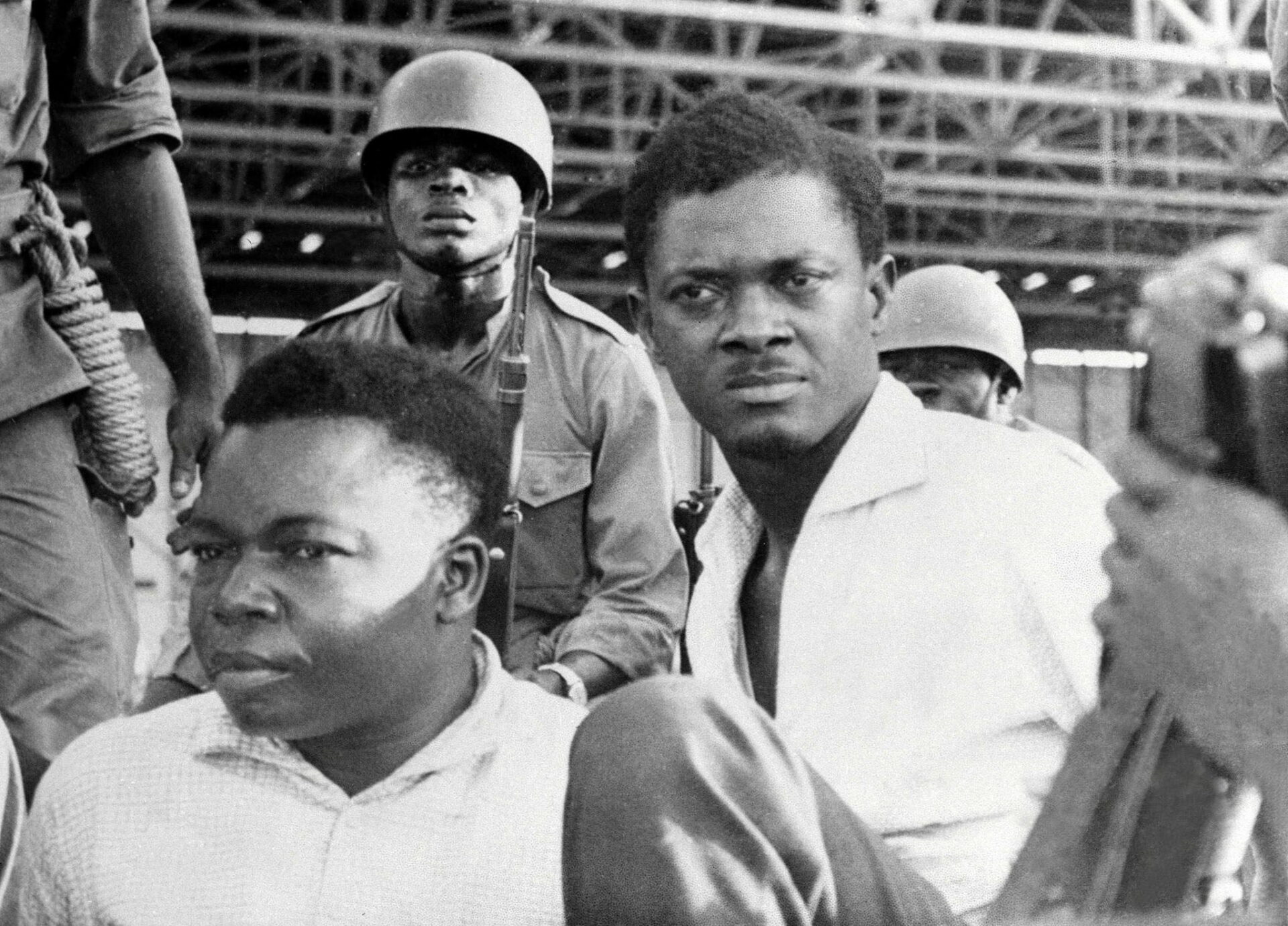
Credit: Belga
In the beginning, Lumumba's decolonial spirit was less pronounced. He considered himself an évolué – an African who had adopted European values – and broke with norms to receive a carte d'immatriculation granting him equal legal status to white people.
In August 1958, Lumumba traveled to Belgium to attend the Brussels World's Fair. Upon his return, he founded the Congolese National Movement (MNC), the first and only political party of national scope that advocated for a unified, secular and independent Congolese state.
Lumumba was arrested again in 1958 amid clashes with the colonial authorities in Stanleyville during an MNC congress, where 20 people died. He was released to attend the Brussels Round Table, where his Congolese compatriots refused to negotiate their country's future in his absence.
Colonial rule ends
Here, it was decided that Congo would gain independence on 30 June 1960, ending 75 years of brutal colonial rule. Lumumba was designated Prime Minister in elections in May and took up the role on 23 June.
30 June came, and Congo would never be the same again. The Oscar-nominated documentary Soundtrack to a Coup d’Etat (2024) captures the moment in all of its chaotic brilliance: at the ceremony that severed Congo from Belgium, Lumumba delivered a virulent speech that denounced the horrific nature of Belgian colonialism. In the presence of King Baudouin of Belgium, Lumumba said, "We who suffered in our bodies and hearts from colonialist oppression, we say to you out loud: from now on, all that is over."
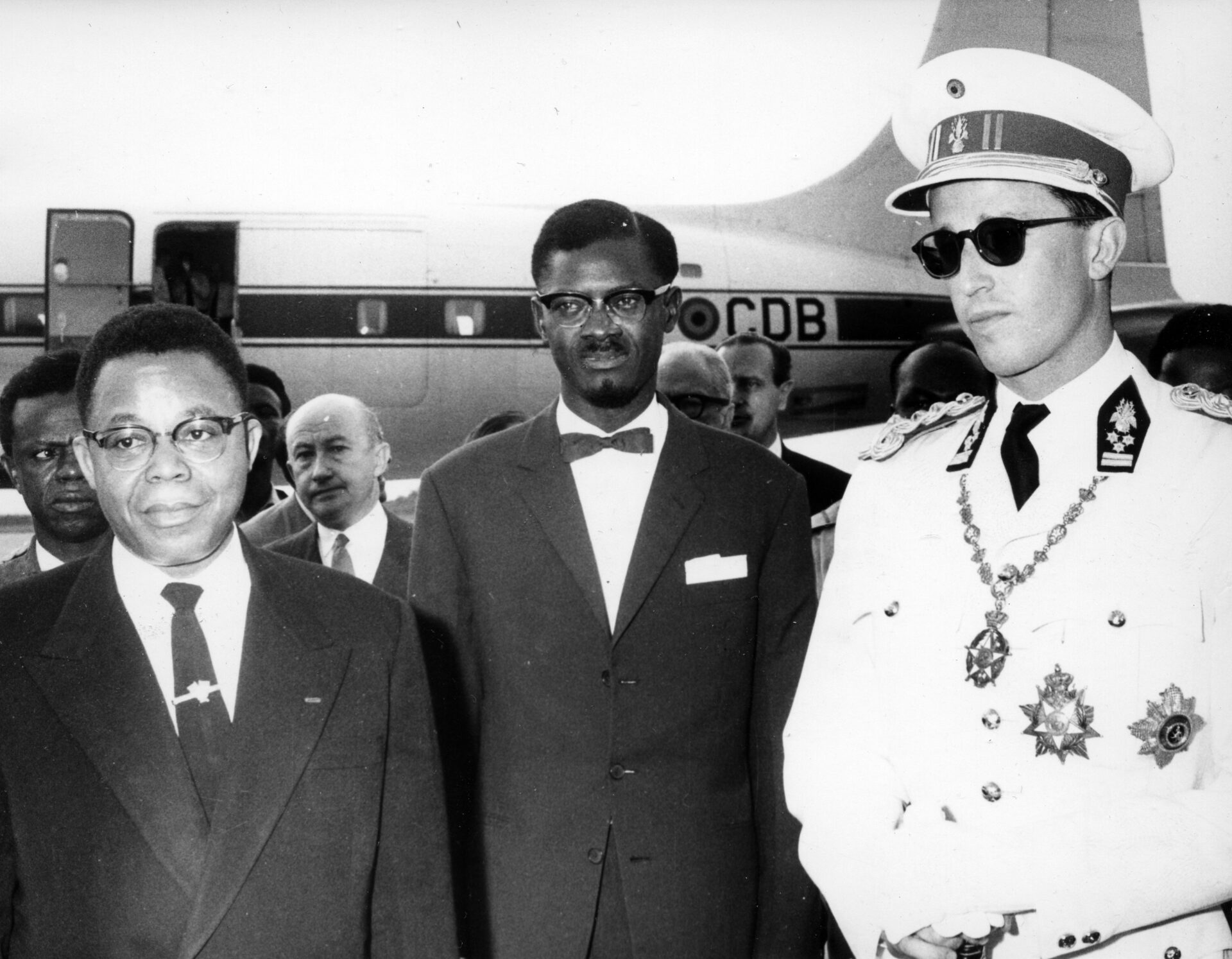
Congolese President Kasa-Vubu (left), Congolese Prime Minister Patrice Lumumba (middle) and King Baudouin of Belgium in Leopoldville in 1960. Credit: Belga Archives
The glory of independence was short-lived. A mutiny was repressed, more than 10,000 UN peacekeepers arrived to the country, the mineral-rich province of Katanga declared its secession with the backing of Belgium and Lumumba was ousted in a coup just months after taking office.
On 19 September, he was caught by soldiers as he attempted to flee Stanleyville. The CIA – who claimed Lumumba had come under Soviet influence in the context of the Cold War – backed the mission to take the leader down. He was transported to Elisabethville (now Lubumbashi), beaten and shot by a CIA-backed firing squad in the presence of Belgian officials on 17 January 1961. His body was dissolved in acid, with only a tooth remaining.
Legacy and justice
Belgium's complicity in his death is well charted and former Prime Minister Alexander De Croo said the state was "morally responsible" for his demise in 2022.
In 2011, Lumumba's children filed a 136-page complaint that ten Belgian officials had participated in a war crime, namely the torture and assassination of their father.
After years of investigation, the Brussels Public Prosecutor called for Etienne Davignon – the last surviving of the ten accused – to be referred to the criminal court and go on trial for "participation in war crimes: unlawful detention and transfer of a civilian/prisoner of war; depriving a prisoner of war of the right to a fair and impartial trial; humiliating and degrading treatment".
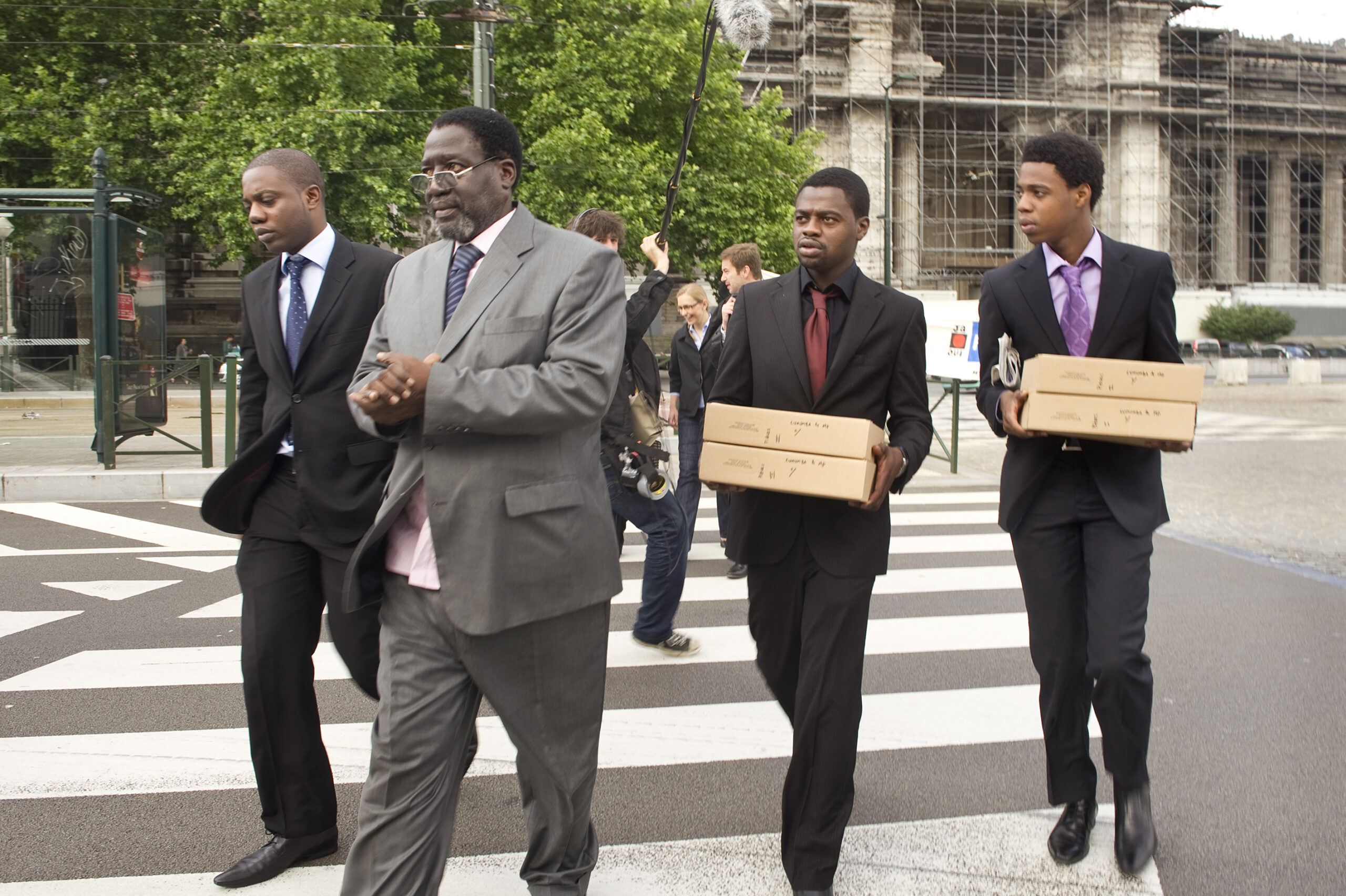
Patrice Lumumba's son François filing a complaint against the Belgian State and ten Belgian figures in 2011. Credit: Belga
A decision on the matter has been postponed until 20 January 2026. Given that Davignon is 92, Lumumba's son Roland has questioned the motives of such a delay.
"This gentleman is already of a certain age [...] There is a form of injustice: Belgium has given those responsible time to disappear," he told Le Soir.
However, he still believes that justice for his slain father and the country he represented is within reach.
"Despite the slow pace of justice, many positive things have happened in recent years. Now, some Belgians are also demanding justice for my father and for Congo," he said. "They are eager to know the truth about the shared history of our two countries, and that gives me hope."
'A shining light'
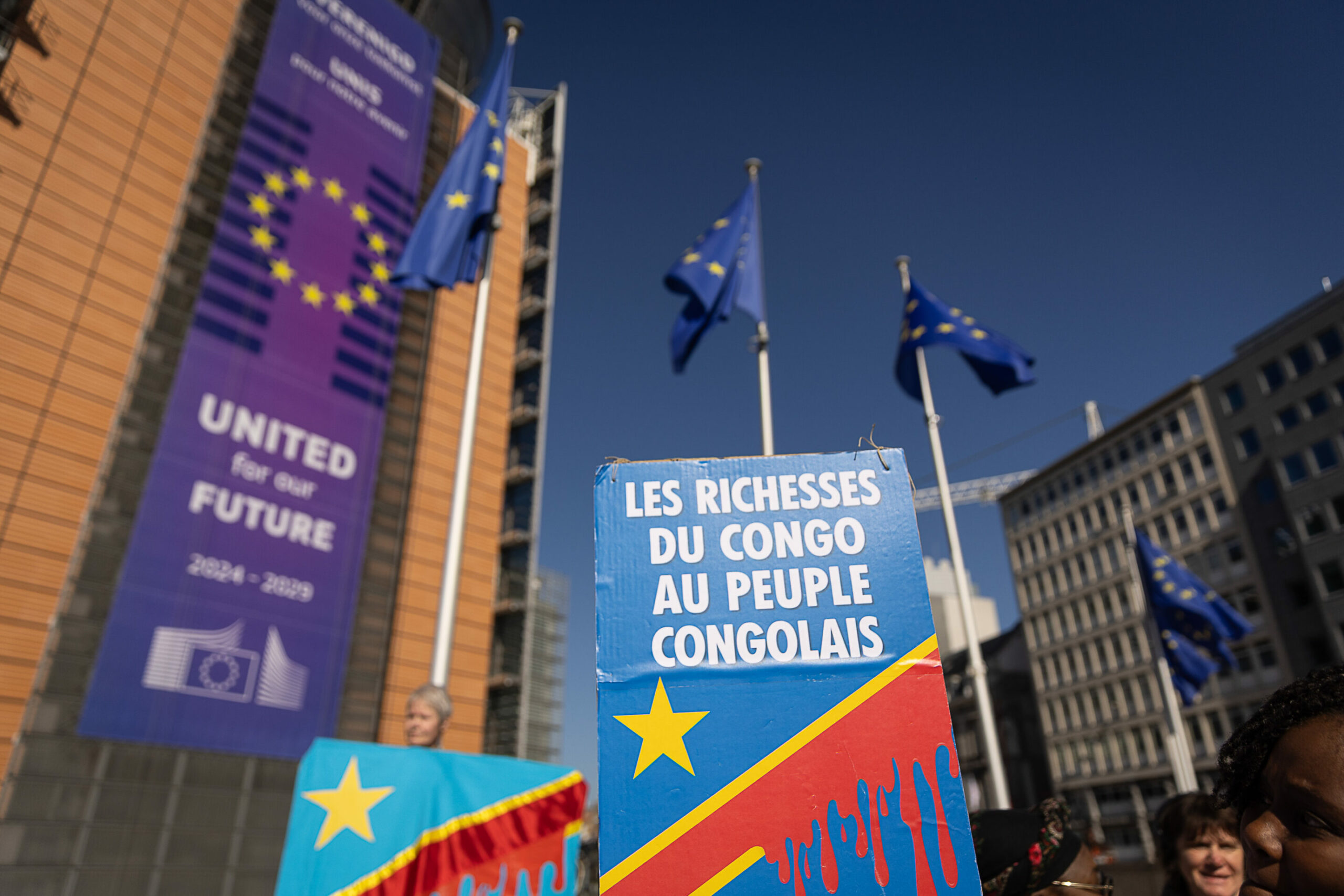
People hold a demonstration to denounce Rwanda's aggression in eastern of the Democratic Republic of Congo, at the European Commission headquarters in Brussels on 3 March 2025. Credit: Belga / James Arthur Gekiere
Belgium's Congolese community and decolonial movements are not letting this significant date pass unnoticed.
From 2 until 30 July, the Congolese Cultural Center in Brussels will host the exhibition 'Lumumba: 100 years' with the support of the City of Brussels, the non-profit organisation Cause and the Lumumba Library.
The exhibition will highlight the works of five young Congolese artists from the Academy of Fine Arts in Kinshasa, who explore contemporary Congolese society through the lens of Lumumba's legacy.
Related News
- How jazz played out over Congo’s chaotic coup
- Decision on whether former Belgian diplomat should stand trial for war crimes postponed until 2026
- The men who exposed the horrors of Leopold’s Congo
- 'The complicity needs to end': The EU's hand in violence in DR Congo
The Cultural Center will also offer a workshop 'Lumumba explained to children' on Wednesday 2 July at 15:30. A conference on the theme of 'legacy' will also take place on Saturday 5 July at 14:30.
The Free Congo collective will hold a vigil for Lumumba on Wednesday evening from 20:00 to 22:00 at Patrice Lumumba Square in Brussels.
Participants are encouraged to show up with candles, white roses and messages.
Lumumba "remains a shining light in the hearts of Africans," the collective stated. "A hero of independence and a giant of Pan-Africanism, his dream of justice continues to inspire an entire continent."
