
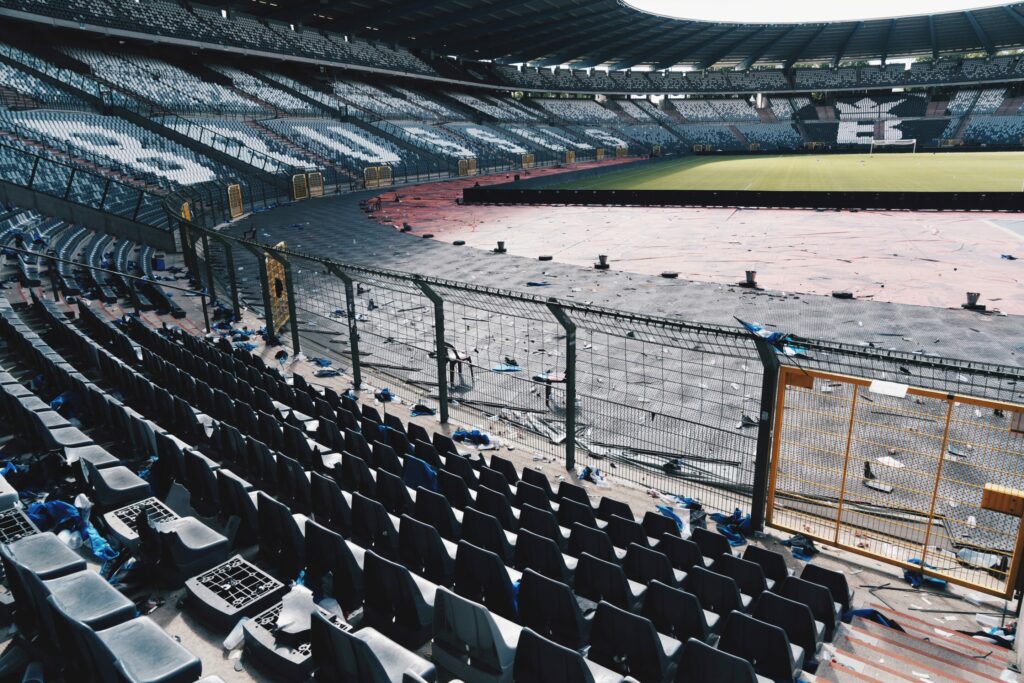
Belgium’s dilapidated national football stadium in Heysel, home of the Red Devils, is in desperate need of “emergency renovation” and may ultimately have to be demolished, the Chair of the City of Brussels Council, Alain Courtois, exclusively told The Brussels Times.
Speaking in a personal capacity, the former Secretary General of the Royal Belgian Football Association (RBFA/KBVB) warns that the King Baudouin Stadium’s days are numbered because of its poor condition, the huge costs entailed in any major reconstruction on or near its current site, as well as constraints due to other projects and buildings in the vicinity.
“The only realistic conclusion is to find another location for the national stadium,” says Courtois, a former public prosecutor and ex-member of the Chamber of Representatives and Belgian Senate who was tournament director for the 2000 UEFA European Championship.
The City of Brussels, which both owns and manages the stadium, is discussing different options with the Belgian FA and potential partners from the private sector. The most urgent work will cost around €15 million.
“We absolutely need to carry out an emergency renovation due to major security issues with the stability of the stands and because of the state of the roof and floodlights,” says Courtois, a leading figure for the French-speaking centre-right party MR (Mouvement Réformateur).
Renovate or demolish
Given the uncertainty, the Belgian FA has decided that the Red Devils will play their upcoming World Cup qualifier against Kazakhstan on 7 September at Anderlecht’s Lotto Park ground instead.
In a statement published on the Belgian FA website, CEO Peter Willems makes no mention of the crisis facing the national stadium. He writes: “The match is part of our ambition to have the Red Devils play in different regions of the country in order to involve fans as much as possible in the team's performances."
The team’s following home match, a World Cup qualifier against North Macedonia on 10 October, will also most likely be played at another ground to allow the emergency repairs to take place. How long this will take is not confirmed.
[caption id="attachment_682465" align="alignnone" width="1920"]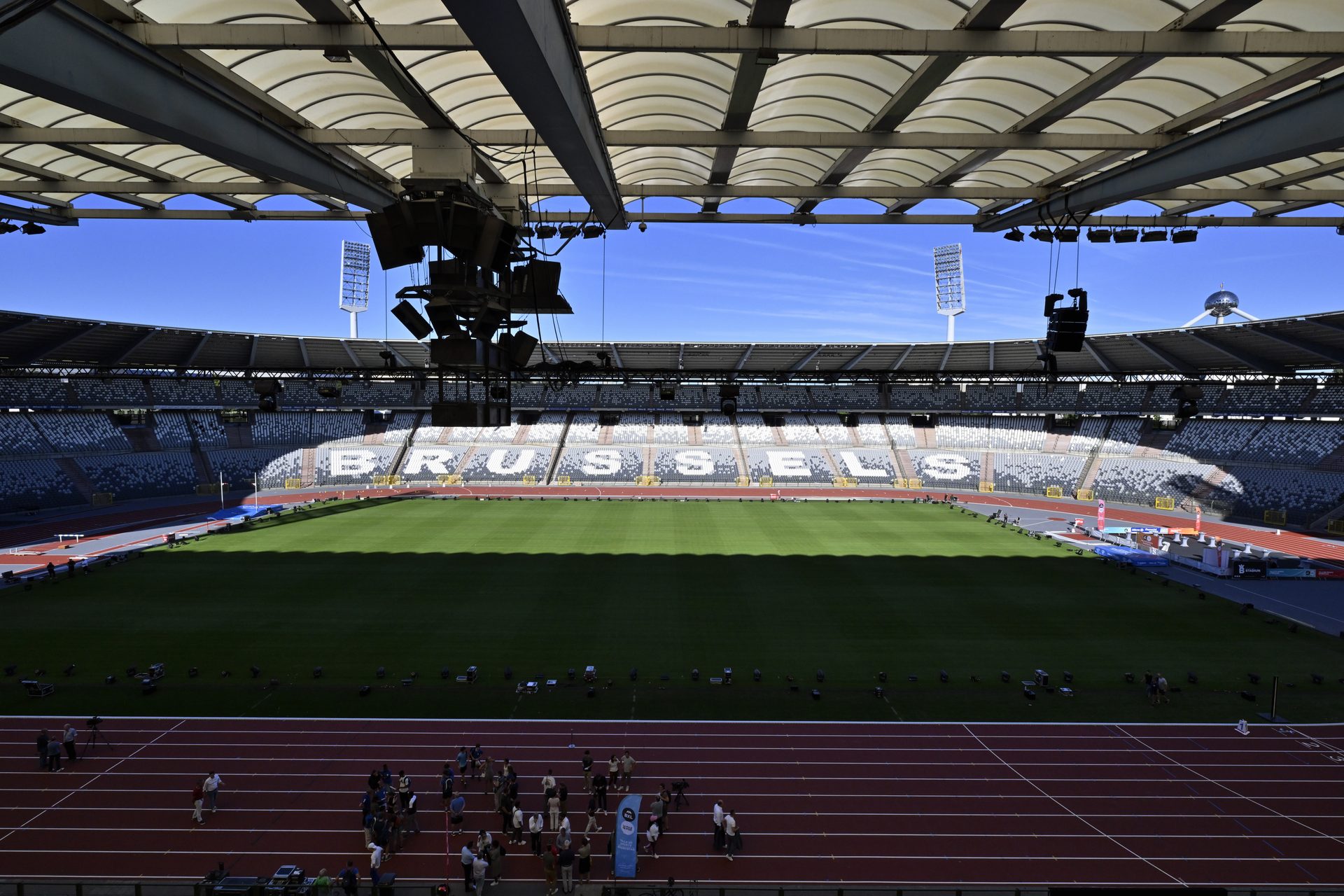 Inauguration of the new track at the King Baudouin Stadium.
Credit: Belga / Eric Lalmand[/caption]
Inauguration of the new track at the King Baudouin Stadium.
Credit: Belga / Eric Lalmand[/caption]
Florence Frelinx, the City of Brussels First Councillor for heritage and sports, insists that there are no current plans for a new stadium – but did not rule it out if outside financing could be found.
“The city's finances do not allow for the reconstruction of a completely new stadium,” says Frelinx, who is also from MR. “All options are being explored, but we are moving towards a renovation to bring the stadium up to standard. We are currently studying the various options for financing this renovation and are counting on the support of all levels of government.”
Live shows
However, Courtois says it is likely the end of the line for King Baudouin. Asked if some of the older players in the current Red Devils squad, captained by 34-year-old Kevin De Bruyne, might have played their last game in the stadium, Courtois replies: “For sure.”
He says that severe local constraints mean a reconstruction of the 50,000-capacity ground close to the Atomium is difficult to imagine, despite the significant revenues the city earns from matches and big-name concerts staged at the stadium by Live Nation Belgium.
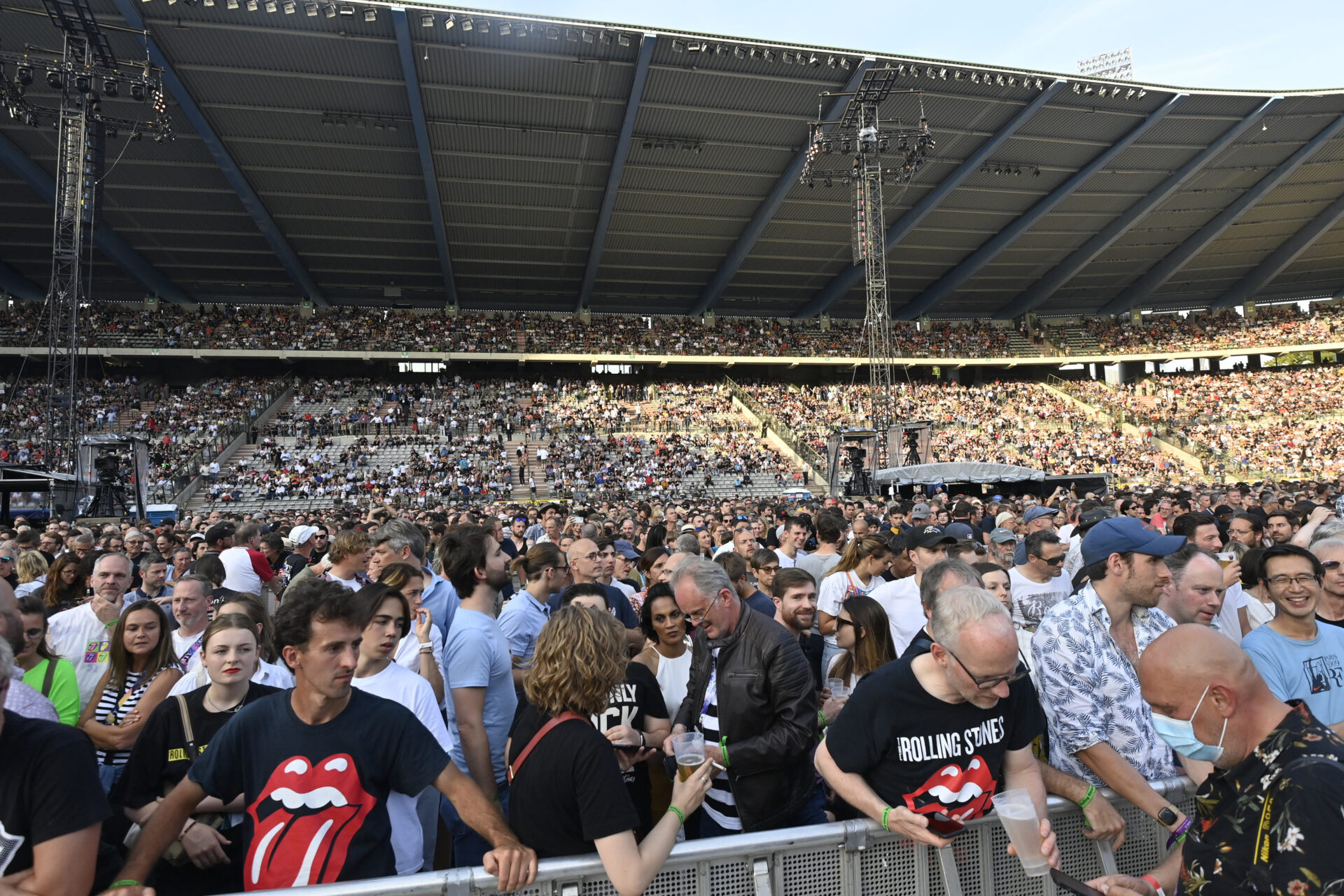
The public waiting for the start of a concert of British band The Rolling Stones at Stade Roi Baudouin on 11 July 2022. Credit: Belga
In recent years, the stadium has hosted concerts by the likes of Ed Sheeran, Coldplay, the Rolling Stones, Madonna and U2 – when the capacity can be extended to 65,000 – as well as other events, like Monster Truck spectacles. The stadium’s website only lists two scheduled events: the Memorial Van Damme athletics meet on 22 August, and a concert by hip-hop artist Bad Bunny on 22 July, 2026.
A project envisaged with Ypres-based real estate developer Ghelamco to build a new stadium on the nearby ‘Parking C’ site, currently used by visitors to the exhibitions park, concerts and matches, was killed off due to a tsunami of objections from neighbours. It was envisaged that RSC Anderlecht would have shared the ground, but Mauves club President Wouter Vandenhaute confirmed in May that he is now looking at alternatives, including the site of Anderlecht’s Cora superstore, which is set to close next year.
Separately, the newly-crowned league champions, Union Saint-Gilloise, are also looking for a new home in Brussels as their current 106-year-old Joseph Marien Stadium, with a capacity of 9,400, does not meet UEFA standards. The club is set to play its Champions League games next season at Anderlecht’s Lotto Park. Union Saint-Gilloise is hoping to move to a purpose-built site at Bempt in Forest, along the Boulevard de la Deuxième Armée Britannique.
Meanwhile, NEO Brussels, a project backed by Franco-Dutch retail giant Unibail, is already planning to transform 68 hectares of the Heysel plateau into a new city district with around 700 new homes, and another large part of the area is already occupied by the Kinepolis cinema multiplex.
If the King Baudouin is eventually demolished, the site could be sold to developers to offset the cost of a new stadium, but it is clear that the cash-strapped City of Brussels would require significant private investment.
Courtois believes that realistic locations for a new national stadium will include the Cora site – which could be shared with RSC Anderlecht – as well as a 75-hectare plot of land in Schaerbeek belonging to national railway operator SNCB/NMBS, which benefits from good links to the Brussels ring road and airport.
“The Schaerbeek site was first considered 15 years ago and it remains feasible,” adds 74-year-old Courtois.
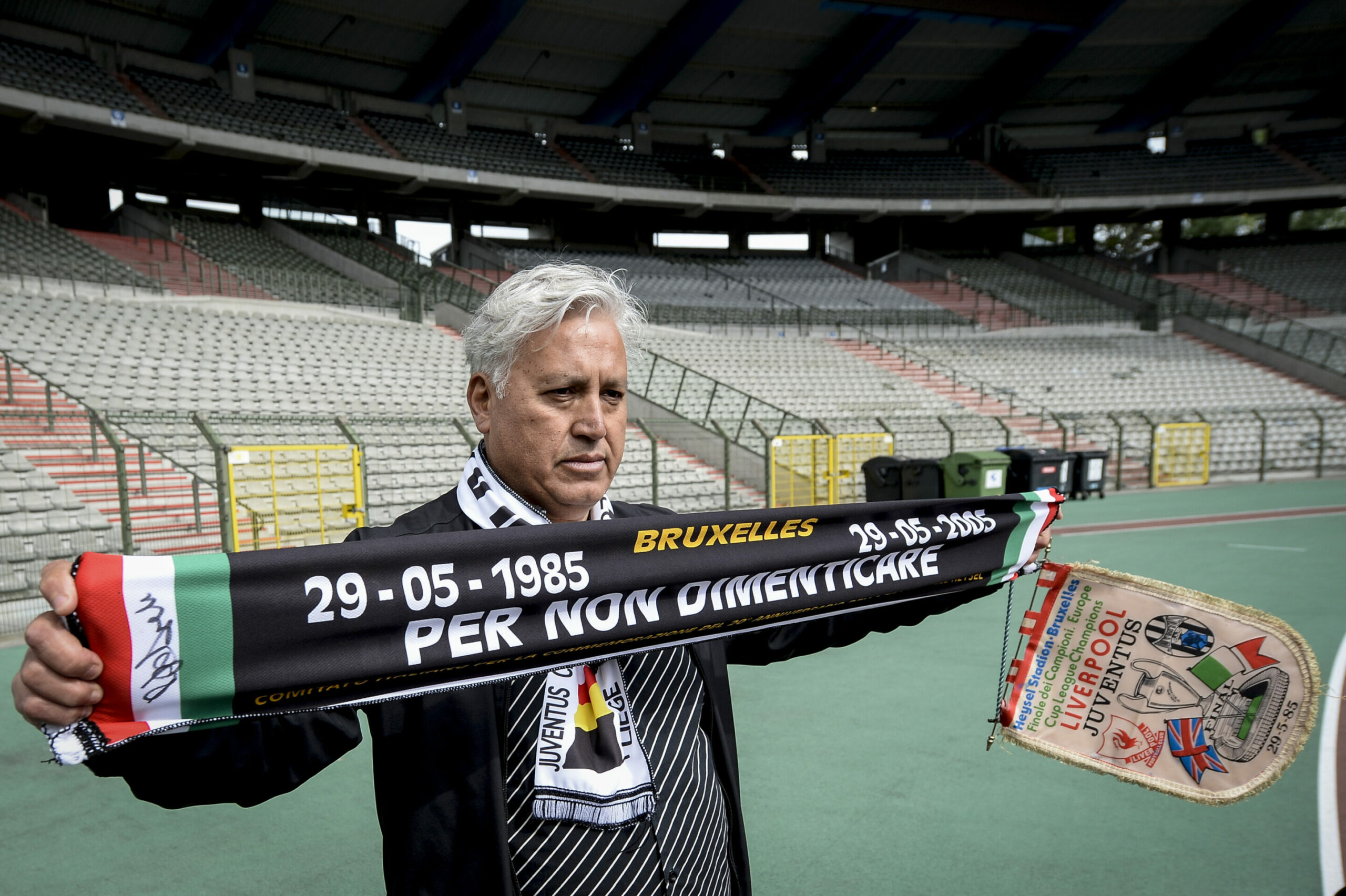
Juventus supporter pictured during a tribute ceremony for the 30th anniversary of the Heysel stadium disaster. Credit: Dirk Waem, Belga
Concerns about the safety of Belgium’s national stadium, originally erected in 1929-30, are, sadly, nothing new.
On 29 May, 1985, 39 mostly Italian spectators were killed when a wall in Section Z collapsed ahead of the European Cup final between Juventus and Liverpool. Liverpool fans were initially solely blamed for the attack that forced rival supporters against the side wall, which had not undergone any renovation since its original construction.
Examining the stands after the match, Belgian architect Joseph Ange said parts of the stadium were in an “advanced state of decay”. It also emerged it that Liverpool club secretary Peter Robinson had asked UEFA, European football’s governing body, to move the tie to a safer venue.
After the tragedy, Belgium was banned from hosting any European finals for 10 years, although the ground continued to be used for Belgian Cup finals and Red Devils matches. The Heysel stadium was largely rebuilt in 1995, with only a small part of the original stadium remaining, and renamed the King Baudouin Stadium (Stade Roi Baudouin/Koning Boudewijnstadion) after Belgium’s fifth king, who had died two years previously.
