
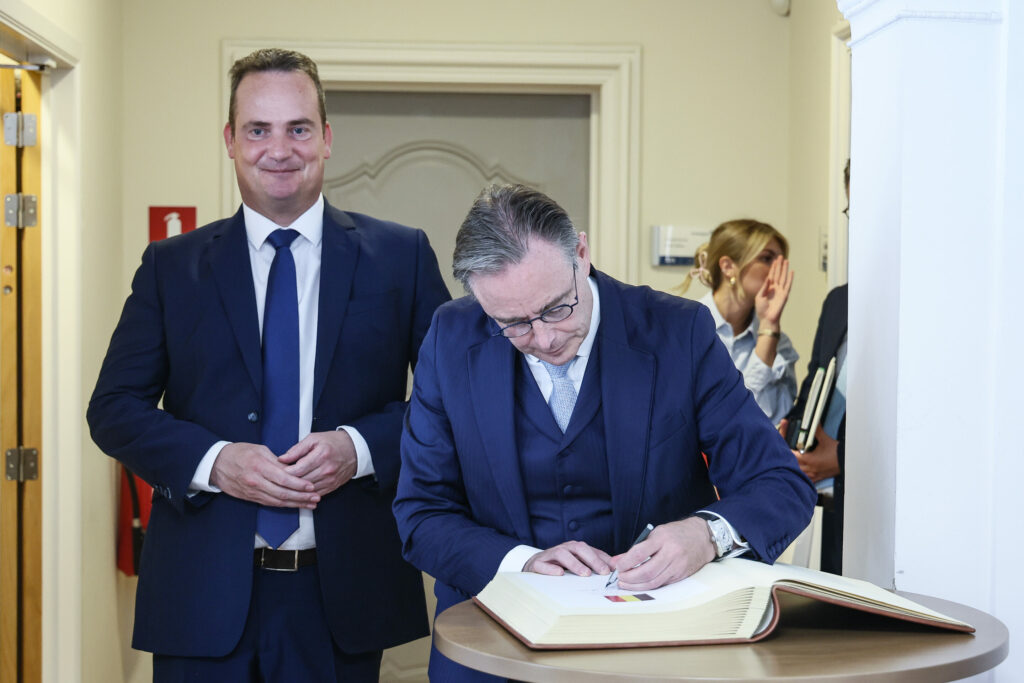
Belgium's German-speaking Community, better known as Ostbelgien, has been calling for guaranteed representation at the federal level for some time. Now, Prime Minister Bart De Wever (N-VA), a well-known Flemish nationalist, is committed to giving it to them.
While the German-speaking Community already has guaranteed representation in the Senate, the European Parliament and the Provincial Council of Liège (where it is located), this is not the case in the Chamber of Representatives or the Walloon Parliament.
And with the Senate set to be abolished, Belgium's 80,000 German speakers are now at risk of losing their voice.
"Guaranteed representation is symbolically very important. We are a complicated country, a mini-Europe. In federalism, it is important that everyone has a voice. Not just theoretically, but a real voice. That means that German should also be spoken in the Chamber," De Wever said during a press conference on Wednesday.
Symbolically equally important is perhaps the fact that the press conference was not held in Brussels, as is usually the case when institutional reforms are announced, but in Eupen – the "capital" of the German-speaking Community, just 15 km from the German border in the Walloon province of Liège.
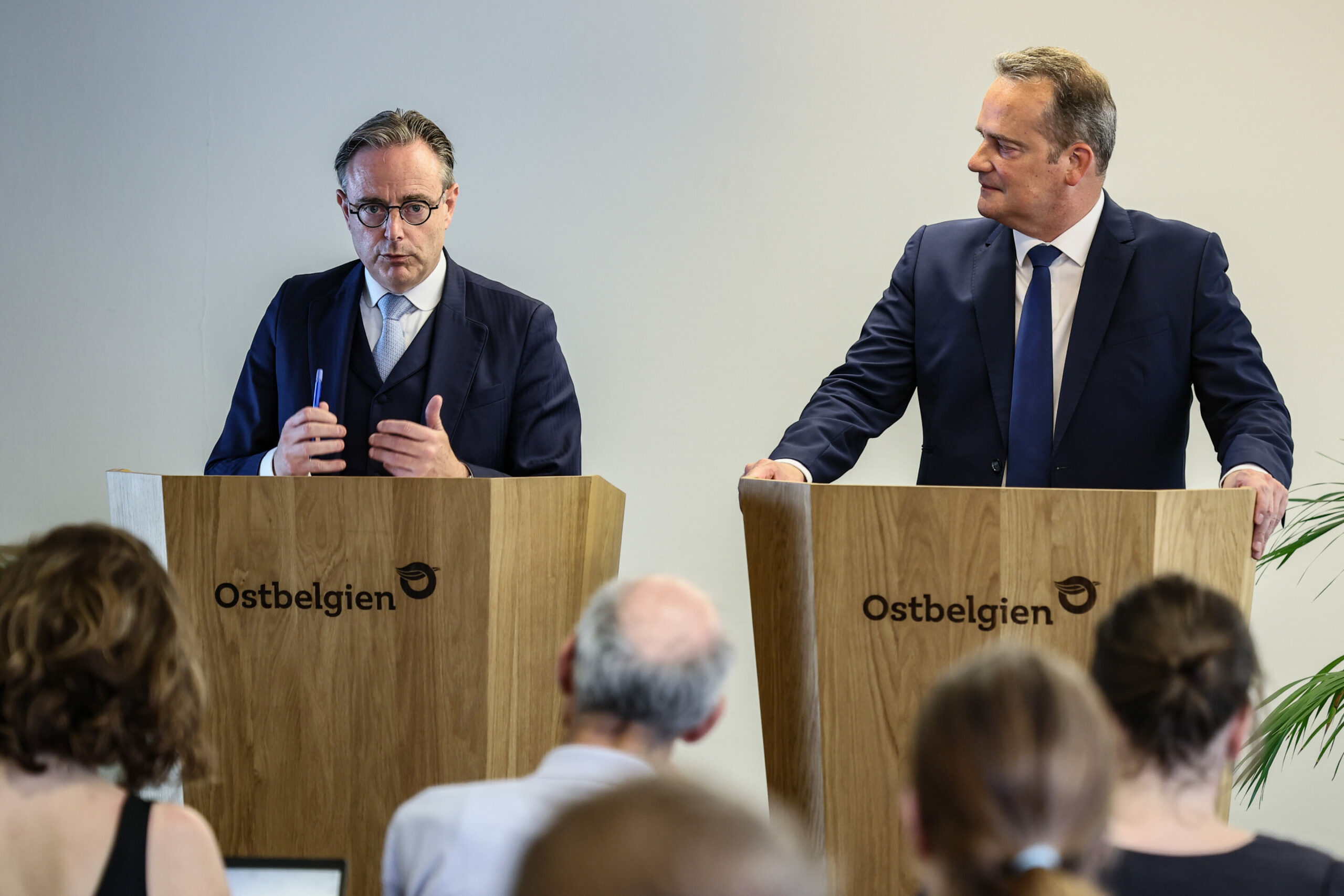
Belgian Prime Minister Bart De Wever (left) and German Community Minister-President Oliver Paasch pictured during a visit to the German-speaking Community, in Eupen, on Wednesday 2 July 2025. Credit: Belga/Bruno Fahy
And as if to make his point extra clear, De Wever spoke only German for the entirety of the conference. While his speech was prepared in advance, he clearly had no issues answering journalists' questions in German or having several asides with the community's Minister-President Oliver Paasch (ProDG).
Paasch, in turn, praised De Wever's language skills and stressed that this was the first time he had been able to conduct an entire meeting with his federal counterpart in his mother tongue. He also spoke about how it was "a historic first" when De Wever held part of his first speech as Prime Minister in German in the Chamber at the start of the year.
"We can, of course, take the interests of German speakers into account by talking to each other and negotiating in any language. But the Chamber is the house of our democracy, and we must also speak German there. It is one of our official languages," De Wever stressed. "It is important to me that we are very serious about this."
'Deciding for themselves'
As a federal nation, Belgium is divided into different smaller federated states (called regions and communities). As such, power is not centralised in one overarching government but shared between the central level and these semi-autonomous regions.
For years, De Wever and his party have been advocating for confederalism, which would mean giving more powers and competencies to these regions, making them independent and autonomous sovereign states (voluntarily) deciding to cooperate.
While De Wever has not given up on his confederalist dream, as Prime Minister, he now feels that the "complicated structure of our country" must be dealt with differently. "For me, it is clear that the German-speaking community is fully part of this. Minister-President Paasch sent me a letter about the institutional ambitions of his community. I will take them to heart."
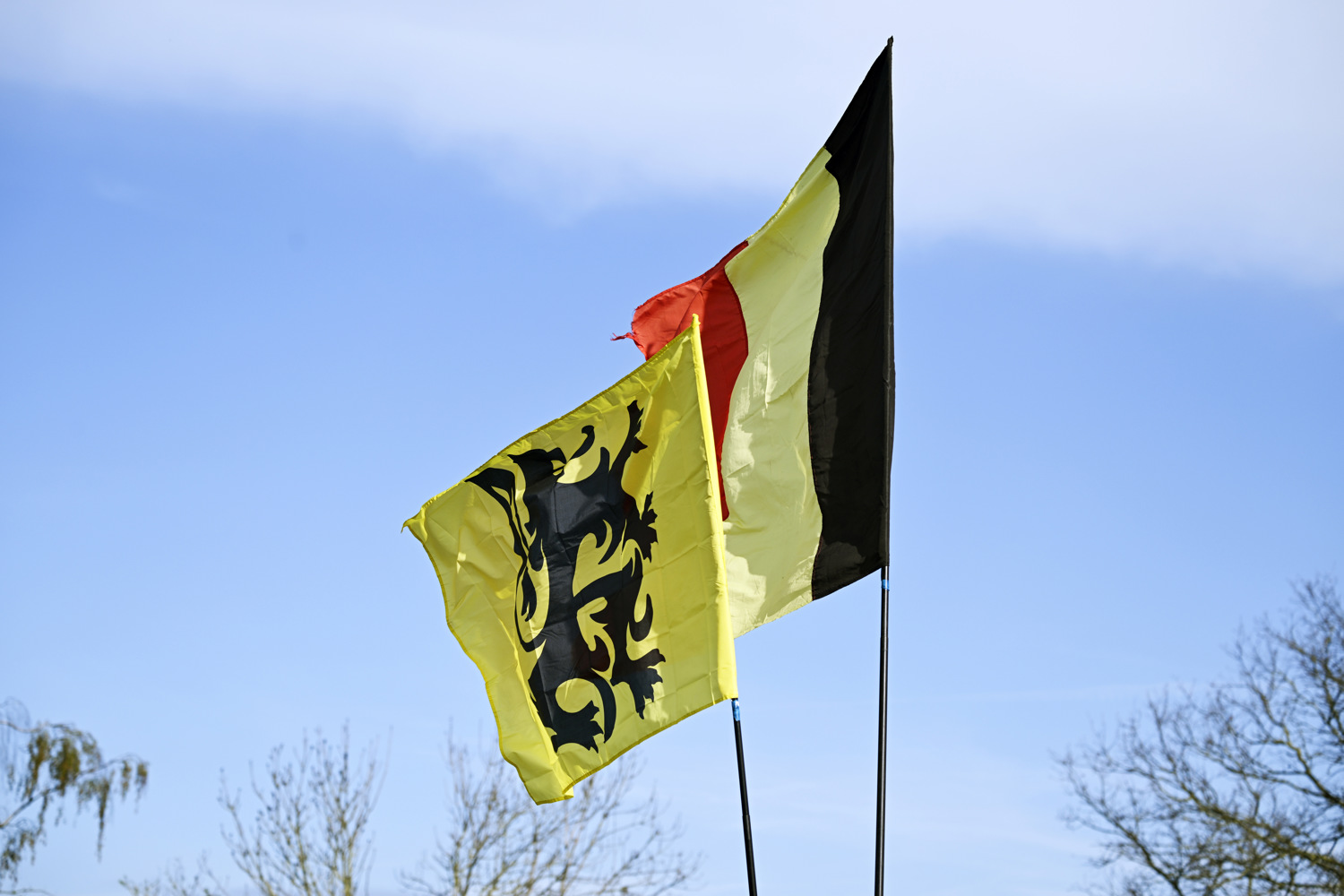
The Belgian and Flemish flags. Credit: Belga/Tom Goyvaerts
He stressed that the Federal Government's plan is "certainly not" to take away any responsibilities from the Regions and Communities – on the contrary, they should be involved in important decisions. "The regions can decide for themselves."
Giving more autonomy to German speakers might seem counterintuitive for a Flemish nationalist, but it is perfectly in line with De Wever's confederalism aspirations: more responsibility for the regions also opens the door to a more independent Flanders.
"For me, the regions are not opponents. They are not a tiresome duty at the end of a decision-making process," De Wever said. "Together with my colleagues, I want to be a true partner for regions and communities that take responsibility for their own finances."
'We are not Walloons'
Up until now, German speakers have only had guaranteed representation in Belgium's Federal Parliament through their delegate in the Senate. While they often also had representation in the Chamber, that is not legally guaranteed.
In fact, it depends solely on the goodwill of Walloon parties – as there is no separate electoral constituency for the German-speaking Community: in recent years, it frequently occurred that a German-speaking Belgian became a member of the Chamber by being given an electable position on a list of a Walloon party.
"If the Senate is abolished, our only guaranteed representation in the Federal Parliament disappears. But we need to have certainty about this. And it can be organised through our own actions," Paasch said.
Therefore, the future state reforms that De Wever has been calling for must take Ostbelgien's "demand for equality" into account, Paasch said. "This reform is not on the agenda today, but it likely will be at some point in the future."
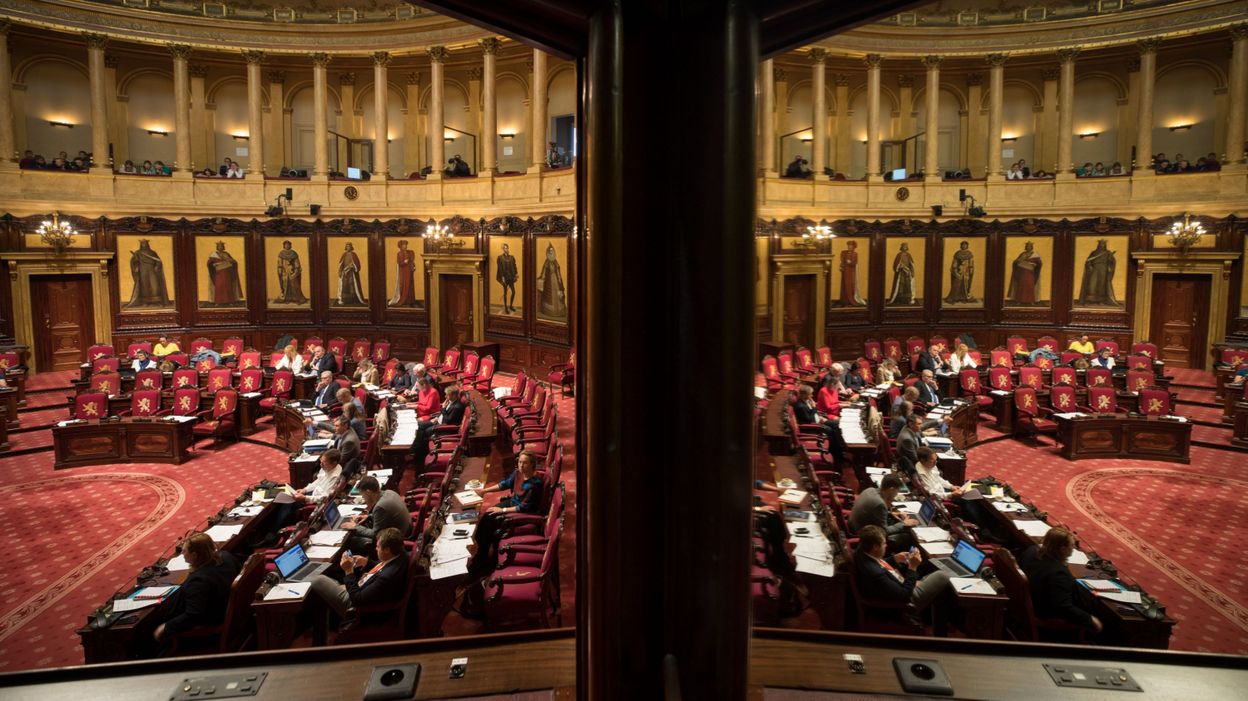
The Senate is set to be abolished. Credit: Belga
In June, the German-speaking Parliament overwhelmingly approved a resolution calling for "adequate, guaranteed" representation in the Chamber, Paasch said. "We aspire to always be an equal partner, an equal member state in Belgium. We do not see ourselves as a subordinate authority of the Walloon Region. As I have said to the Prime Minister today and on many previous occasions: we are not Walloons."
Like Belgium's Flemish and Francophone residents, the country's German speakers need a point of contact in the Federal Parliament. "They contact their MPs in German, sometimes with very specific concerns and problems," De Wever said.
"That is what representatives of the people are there for. This must continue to be possible in German, and that is only possible through a German-speaking representative. There are various ways to achieve this goal. Some of them are very technical," De Wever stressed, adding that they are "working on it."
