
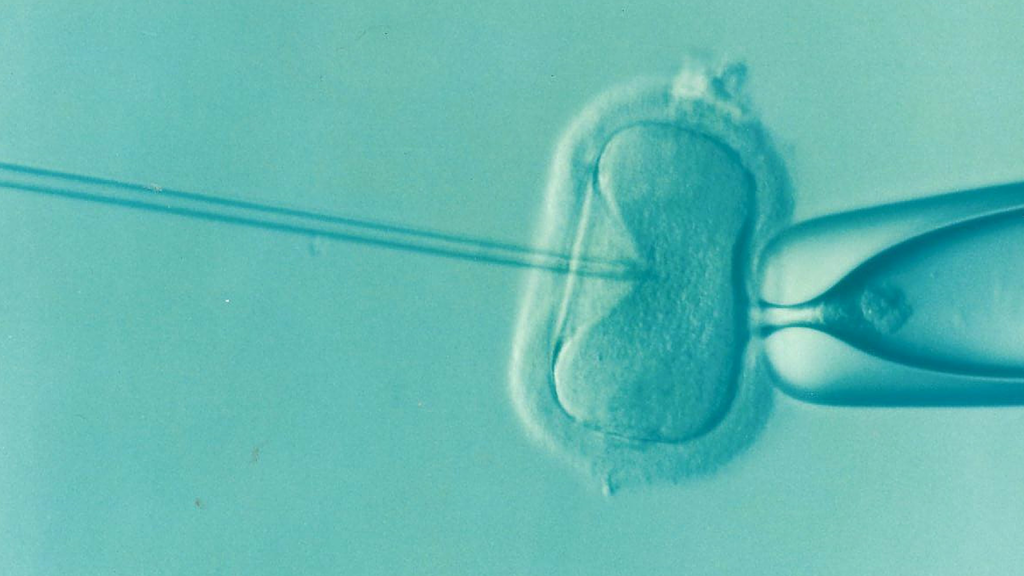
In South Africa, two babies have been born for the first time after being conceived through a simplified and inexpensive IVF treatment in a mobile IVF laboratory, announced the Belgian UHasselt university, which set up the pilot project together with the University of Pretoria.
Thanks to the mobile IVF laboratories and the simplified treatment, artificial insemination is now affordable and accessible to people in low- and middle-income countries who do not have access to expensive fertility care. The news was also reported in De Standaard and Het Belang van Limburg.
"With our mobile lab, we can help couples struggling with infertility worldwide in an accessible way," said fertility experts Prof. Dr Willem Ombelet and Dr Gerhard Boshoff.
The pilot project near Johannesburg builds on years of research by The Walking Egg vzw, the Limburg Clinical Research Centre (LCRC) at Hasselt University, the University of Pretoria and East Limburg Hospital. This research led to the development of a cost-effective IVF system.
'Inexpensive, simplified system'
In the mobile laboratory, eggs from the local IVF clinic were fertilised and cultured. The embryos were then implanted in ten couples participating in the project. Five couples became pregnant. Four pregnancies progressed normally, while one ended in miscarriage.
On 18 June 2025, a girl named Milayah (2.7 kg) was born in Rustenburg. She was followed a day later by a boy named Rossouw (3.1 kg). The other two pregnancies are still ongoing. Additionally, four patients have surplus embryos available for cryopreservation, or freezing.
"This study shows that this inexpensive, simplified IVF system, applied in a mobile laboratory, achieves success rates comparable to those of traditional IVF in expensive centres," said Boshoff. "The development offers hope to millions of couples worldwide who struggle with infertility and do not have access to expensive care."
"With our mobile lab, we can make an even bigger difference in countries where fertility centres are located far apart," he said.
The research project is now being continued with new studies in Egypt, India and Indonesia.
