
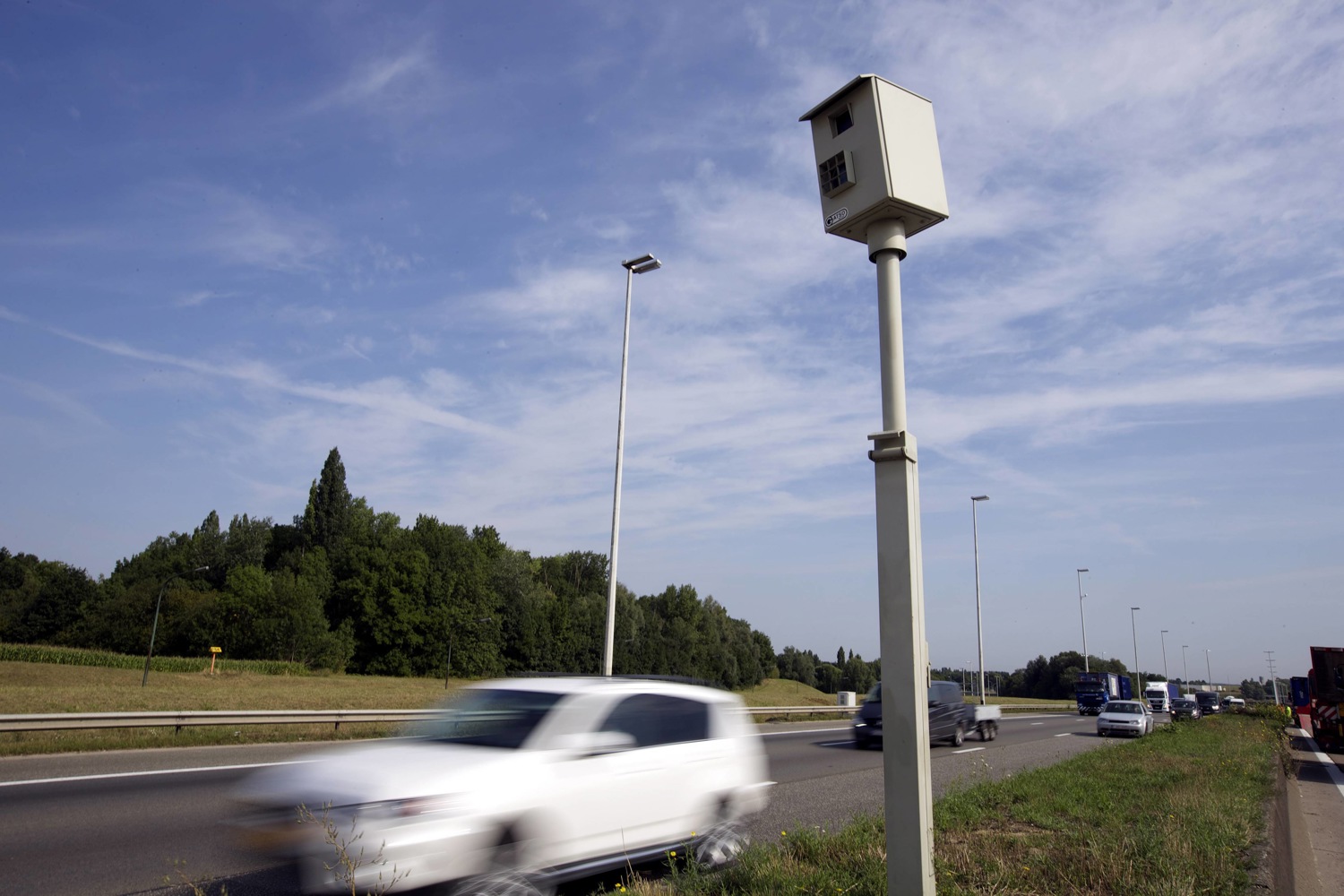
Belgium has more than 1,200 average speed checks. Far too many, according to critics. They are intended to improve road safety, but mainly line the pockets of private companies and local authorities, they contend. An upcoming investigation commissioned by the Flemish Minister for Mobility is expected to provide clarity.
When traffic expert Johan De Mol from Ghent University received a letter in May last year demanding payment of a €53 speeding fine, he was surprised. The fine alleged that he had driven at an average speed of 31 km/h on a stretch of road in Meise, where the speed limit is 30 km/h.
“I do everything I can to respect the speed limit. When I enter a 30 km/h zone, I immediately switch on my cruise control,” he told The Brussels Times. He did not understand what had happened.
He investigated and asked the municipality of Meise how many fines had been issued on that stretch of road. “I discovered that in April, 1,277 offences were recorded on this one stretch of road. In 48% of those offences, the corrected speed was 31 or 32 km/h.” Too many to be a coincidence, according to De Mol.
“The stretch of road where these checks are carried out seems designed to make people drive too fast. It is a very short stretch of 339 metres, which coincides with the start of the 30 km/h zone, indicated only by a sign 20 metres earlier. If you enter the zone at 40 km/h, you have to drive very slowly to reach an average speed of 30 km/h over such a short distance. Car drivers are being lured into a trap here.”
Overzealous speed traps
Dirk Lauwers, another traffic expert at Ghent University, is a strong supporter of speed checks but acknowledges that there are also some downsides.
“Local authorities are teaming up with private companies or sometimes intermunicipal companies to install camera systems and enforce speeding offences because they don't have the resources to do so themselves,” the expert alleged.
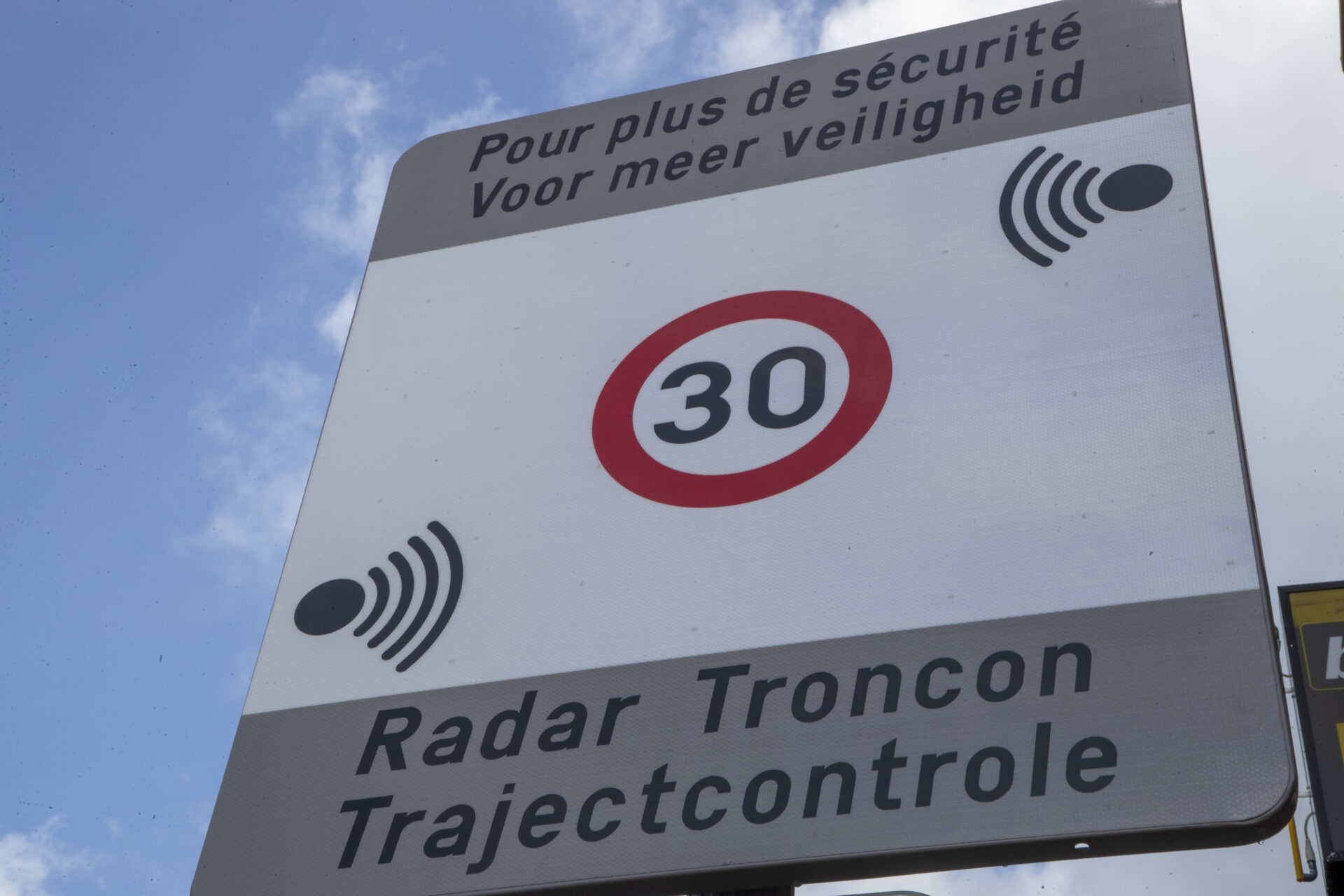
Credit: Nicolas Maeterlinck/Belga.
According to Lauwers, these companies pocket part of the fines. In the case of TaaS, one of the major speeding camera operators, this amounts to €29 for a €53 fine. To increase their profits, roads are sometimes set up as traps, he said.
The nature of the contracts also raises questions. Private companies sometimes request that municipalities remove traffic-calming measures so that they can issue more fines. This leads to a situation where fines become a source of income for them.
“It should never be the case that a private company makes more profit if it can issue more fines,” De Mol insisted. “In Meise, the private company TaaS earns good money from average speed checks. Under the new concession, Meise must detect 225,060 speeding offences over a period of 91 months to meet its financial obligations on behalf of MacTaaS. The concession conditions also stipulate that road works on the route may not last longer than five consecutive days. This is aimed at increasing the company's profits.”
In response to The Brussels Times, the TaaS defended the average speed camera, citing several press articles that highlighted the positive impact of average speed checks on road safety. "“Our vision is to contribute to a safer living environment for vulnerable road users through speed enforcement. As a company, we offer governments technology that enables them to create a safer environment for vulnerable road users. The local authorities themselves have complete autonomy over the choice of locations for average speed checks,” the company said in a statement.
Gerda Van den Brande (N-VA), mayor of Meise, told The Brussels Times that the average speed checks aimed to" improve traffic flow in the village centre." According to him, the cameras have already yielded positive results. "The speed camera that Johan De Mol is referring to is short but complies with the minimum distance.”
De Mol also points out that municipalities and cities do not earn much money from route checks themselves. To begin with, municipalities and cities must hand over a large portion of the fines to private companies or intermunicipal companies, pay an official to handle the fines, and contribute to the road safety fund. This does not leave much left over.
Speed cameras still effective
Belgium has a lot of speed cameras, relative to its size; more than 1,200, according to the most recent figures from the European Transport Safety Council. This is not a problem in and of itself, Lauwers insists.
Speed cameras are located in areas where there are a high number of accidents or in vulnerable locations, such as schools or residential care centres.
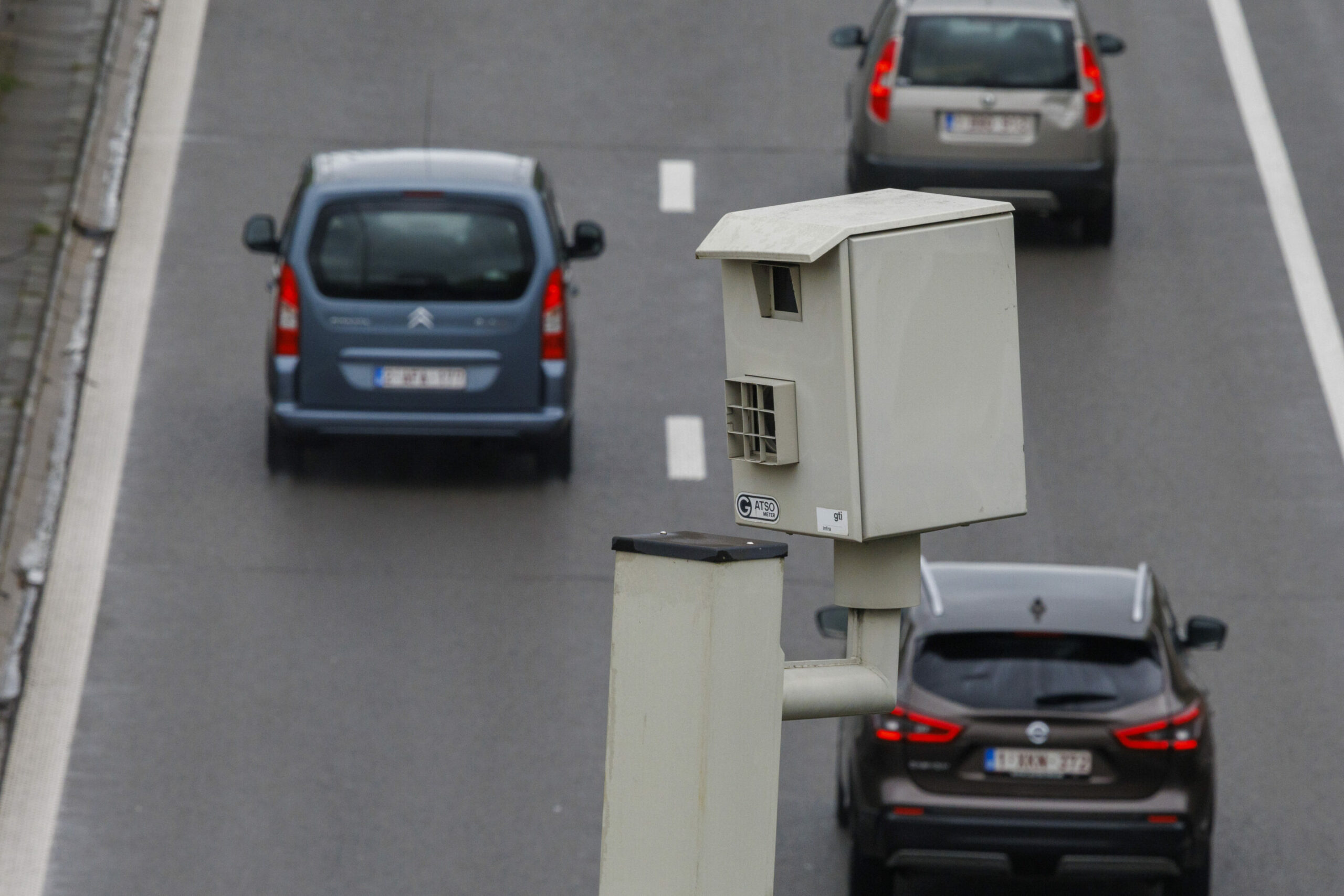
A speed control camera pictured on the Carrefour Leonard. Credit: Belga / Nicolas Maeterlinck
The high number is due to legislation that, since February 2021, gives local authorities the power to punish minor traffic offences, including speeding offences of up to 20 km/h above the speed limit, with a fine. These speed cameras are in addition to those on motorways, which fall under a different administrative level.
“In other countries, local authorities do not usually have this option. Belgium has a lot of speed cameras and some people criticise them, but they are also an effective means of improving road safety,’ Lauwers affirmed.
“The number of road deaths in Belgium has fallen by about a quarter since 2019. The biggest gains have been made on motorways, where we have seen a third fewer deaths since 2019.”
The Ghent professor links to average speed checks. A study conducted at Hasselt University also shows that average speed checks on motorways reduce the number of serious accidents by 55%. Flemish Minister of Mobility Annick De Ridder (N-VA) has now promised to look into the privatisation of speeding fines. She has instructed her administration to launch an investigation to determine whether there has been an increase in such checks.
“They are an important tool for improving road safety, but the way they are applied must be fair and clear. Enforcement is a means to an end, not an end in itself. Fines are not intended to be a source of income,” said De Ridder. The investigation is due to be completed next year.
Related News
- The most dangerous communes in Brussels for driving
- Half a million more traffic offences - increase only in Wallonia and Brussels
The minister did not wait for the results before reducing the planned deployment of average speed checks on Flemish regional roads. She recently announced that 72 of the 80 new checks will be scrapped.
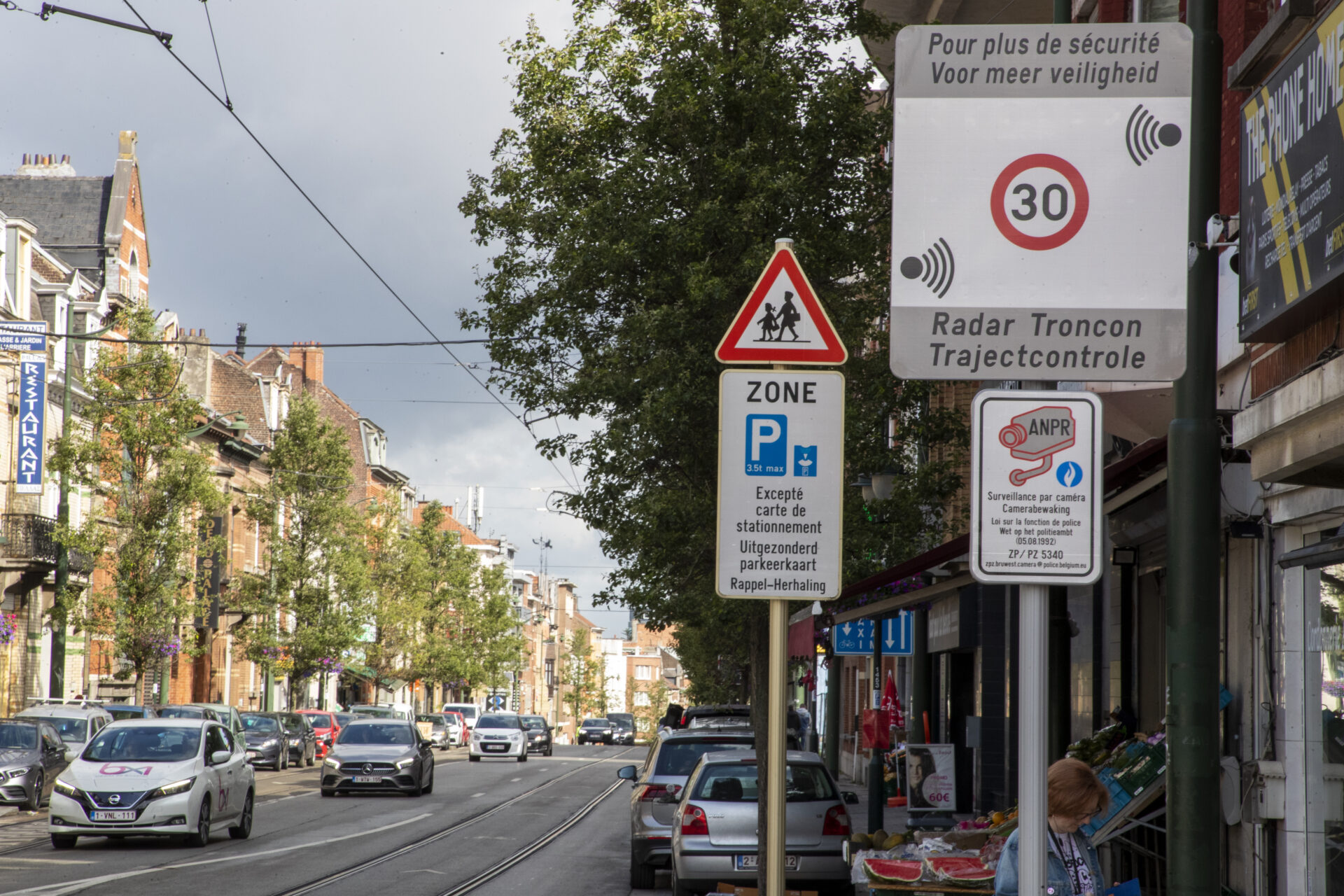
A traffic sign announces a new section of the speed camera control system in Brussels, May 2022. Credit: Belga
Despite that decision, it’s doubtful whether the number of speed cameras will be significantly reduced soon. In a survey conducted by the newspaper Het Laatste Nieuws in the run-up to last October's elections, 10 out of 13 mayors of the largest Flemish cities stated that they were in favour of installing additional speed cameras. For local roads, this means that cameras could still appear in the future.
“That frustrates a lot of people, but you can see that the number of fines drops very quickly after they are introduced,” says Lauwers. “After a year, it's often only one in a thousand who get a fine. But it's often those people who make themselves heard on social media and in motoring magazines and get a lot of attention.”
“In Belgium, we have a long tradition of driving faster than the speed limit. Many motorists are tolerant of this: they don't mind if others or they themselves do not respect the speed limit. It doesn't help that in modern cars, you often hardly notice when you are driving too fast. Belgian motorists need to develop a greater reflex to adapt to speed limits. We need to learn to drive more slowly.”
