
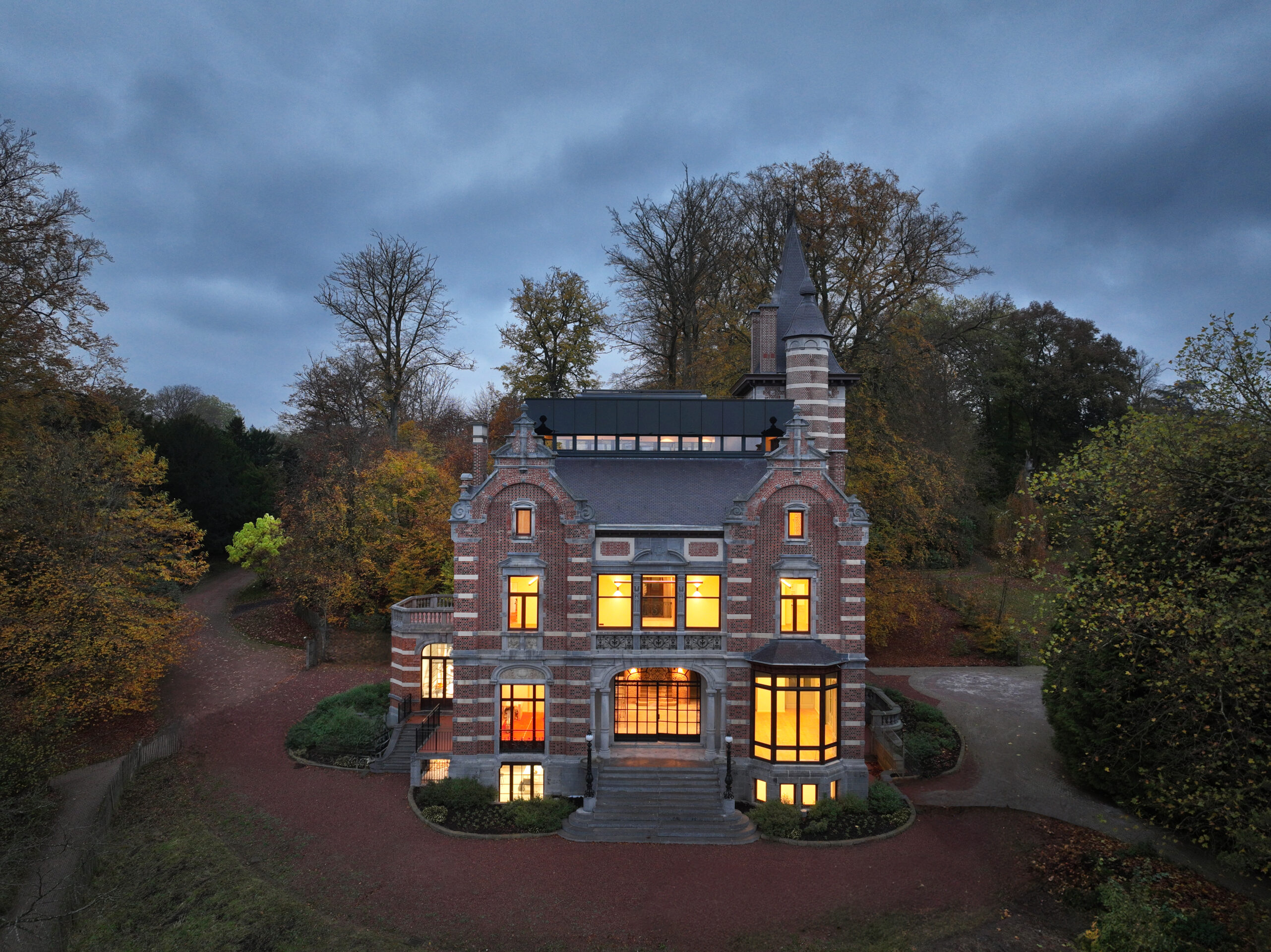
“The castle had burned twice, and all that remained were ruins,” recalls Francis Metzger, a self-proclaimed “greedy architect” responsible for a smorgasbord of spectacular projects in Brussels. And indeed, the shell of the Château Tournay-Solvay – in Brussels’ otherwise paradisiacal Tournay-Solvay Park – used to cut quite a creepy figure. Some said it was haunted. Others pointed out an uncanny resemblance to the Bates’ house in the movie Psycho.
But last year all phantoms were banished, as the château was inaugurated in a resplendent new guise – as an international physics research centre. This transformation was realised by Metzger’s practice, ma2 (Metzger et Associés Architecture). In their sleek Saint-Gilles offices on Rue de la Glacière, the architect explains how he transformed the château.
Three studies are required when approaching such a project, Metzger says. First is the “historical study.” What was the building’s past – its original purpose – and how has that evolved over time? “Even the château itself was a ruin that we had to reinvent,” he reflects.
Second comes the “archaeology of the built environment.” This is about investigating “the soul of the walls, allowing them to testify to their original identity.”
And finally, a “pathological study”: “Just as a doctor would scan your body, we do the same with a building,” says Metzger. “We make a diagnosis, determine what’s wrong, and propose a solution.”
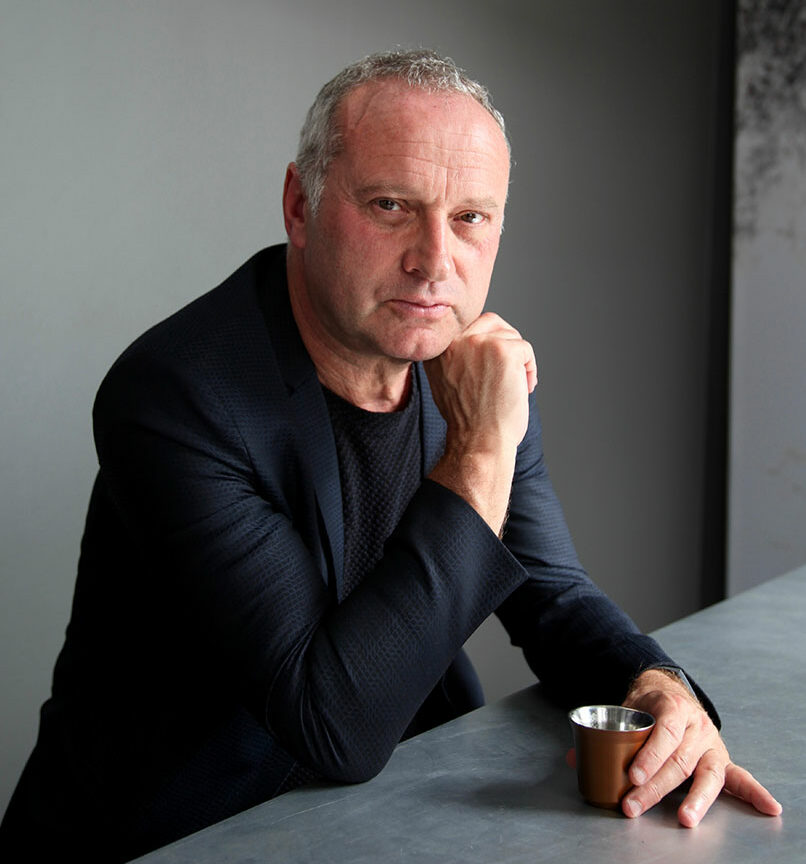
Architect Francis Metzger, behind the renovation of Château Tournay-Solvay
When it comes to history, the team went deep. The surrounding estate was bought in 1878 by Alfred Solvay, a leading chemist who developed a patented process for producing soda ash. The grounds were lovingly redesigned with a rose garden, lake, walking paths – all the trimmings. But the centrepiece was the castle – designed in the Flemish neo-Renaissance style, with an eclectic, whimsical flair. Plans were published in a magazine of the time describing a spacious country house, with a grand staircase, vestibule, and rooms including a dining room, salon and smoking room. It even incorporated early central heating.
Since then, the château has had its ups and downs. In 1905 a tower and turret were added, dividing opinion. When the last owner Thérèse Tournay, Alfred’s daughter, passed away in 1972, the estate passed to her heirs, eventually leading to its sale. Abandoned, it faced development proposals – including as offices for the Union Chimique Belge – all rejected by the local community. The Belgian government bought up the estate in 1981, and the grounds were opened to the public. Parc Tournay-Solvay was later given special ecological status and high protection as part of Brussels’ green belt.
But the château did not flourish as its surroundings. The early 1980s saw it devastated by fire. The Brussels-Capital Region took ownership in 1989 but restoration efforts didn’t kick in until 2013 when a call for tenders was won by Metzger’s firm. The challenge? To preserve the château’s historical integrity, while recasting it for the needs of today.
Change is the constant
“The city of today is built from elements that have already existed. The environment is already there for the most part. Vacant land is nearly non-existent,” Metzger muses. “Cities are built through addition and subtraction over centuries. The key is to understand this evolution and work with it, not against it.”
As well as practising architect, Metzger was also a full-time professor until last year and remains highly involved in the architectural firmament. He is president of the francophone and German-speaking part of the Belgian Architects’ Order, and a member of the Royal Commission for Monuments and Sites. He talks warmly about how these “sources” all come together. When working with associates, you don’t have to explain the “why” – but with students you do, he says. Hence his developed reflections that nourish the château’s story.
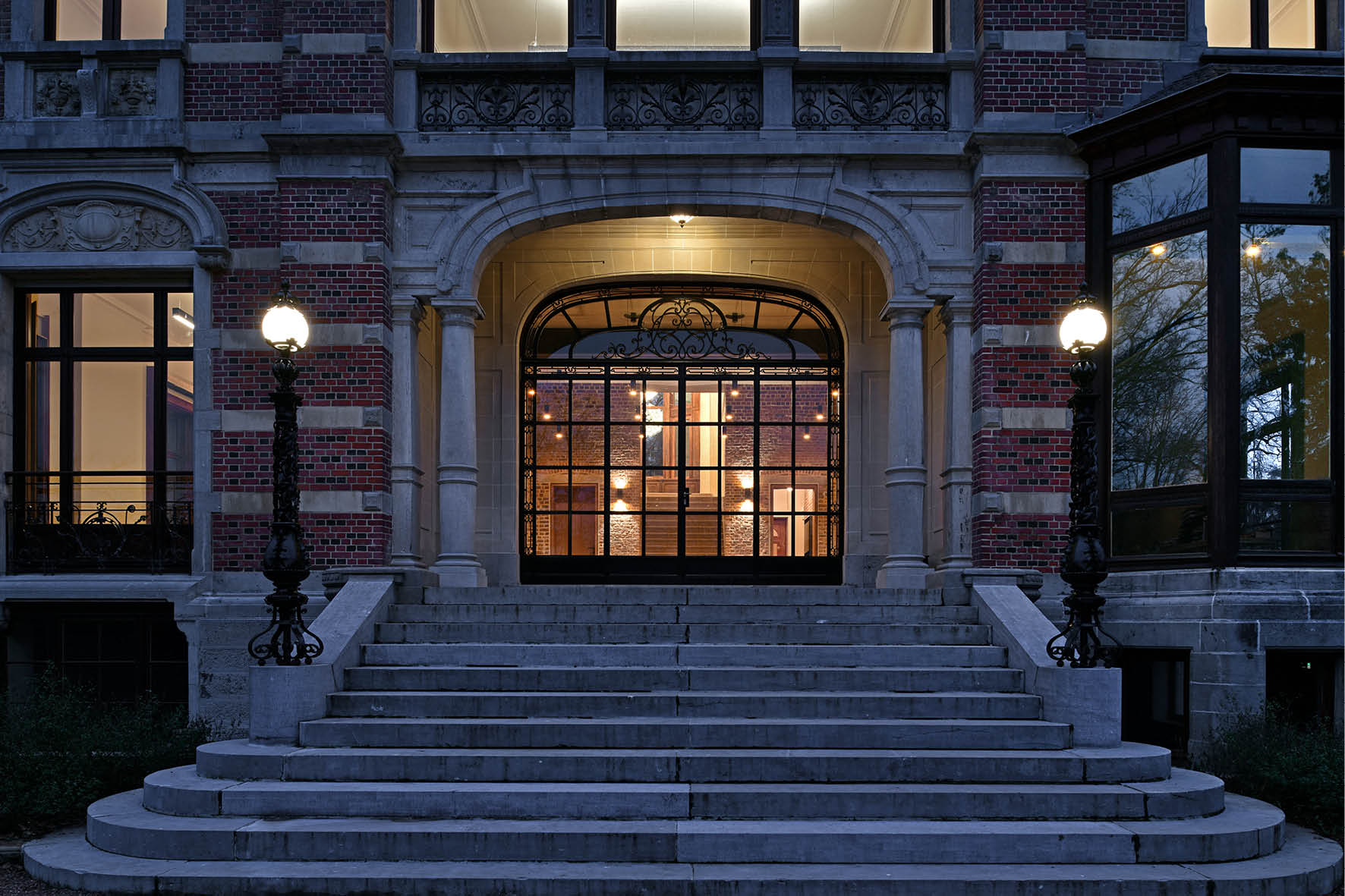
Entrance to the Château Tournay-Solvay
“Today, the life of architects is about recycling the city,” he continues, referring to a 1999 book he co-wrote with Luc Deleuze, La Ville Recyclée. “It’s about rethinking and reusing, not destroying.”
He continues: “Cities should be built from what already exists, respecting their historical memory while simultaneously pushing them forward into the future.” He points out that more than 60% of waste in Brussels comes from construction. “We don’t demolish buildings anymore,” he says, “we recycle and reinvent them. It’s an ecological responsibility.”
Modernist architects, by contrast, were intent on destroying the old, to create something completely new. “They hated Florence,” says Metzger. Le Corbusier bulldozed swathes of Paris to build his towers. “If the modernist had to build 1000 homes, they would all look identical,” he says. “Same orientation, same view for each.”
Things have changed. “Now we consider we can build 1,000 different homes, each pleasant to live in, and fit them into the old city with a sort of urban continuity,” he says. For the modernists, the emphasis was on the “programme”, whereas Metzger defines himself differently. “I am an architect of context,” he says. “I always consider the relationship between a place, a programme, and a specific moment in time.”
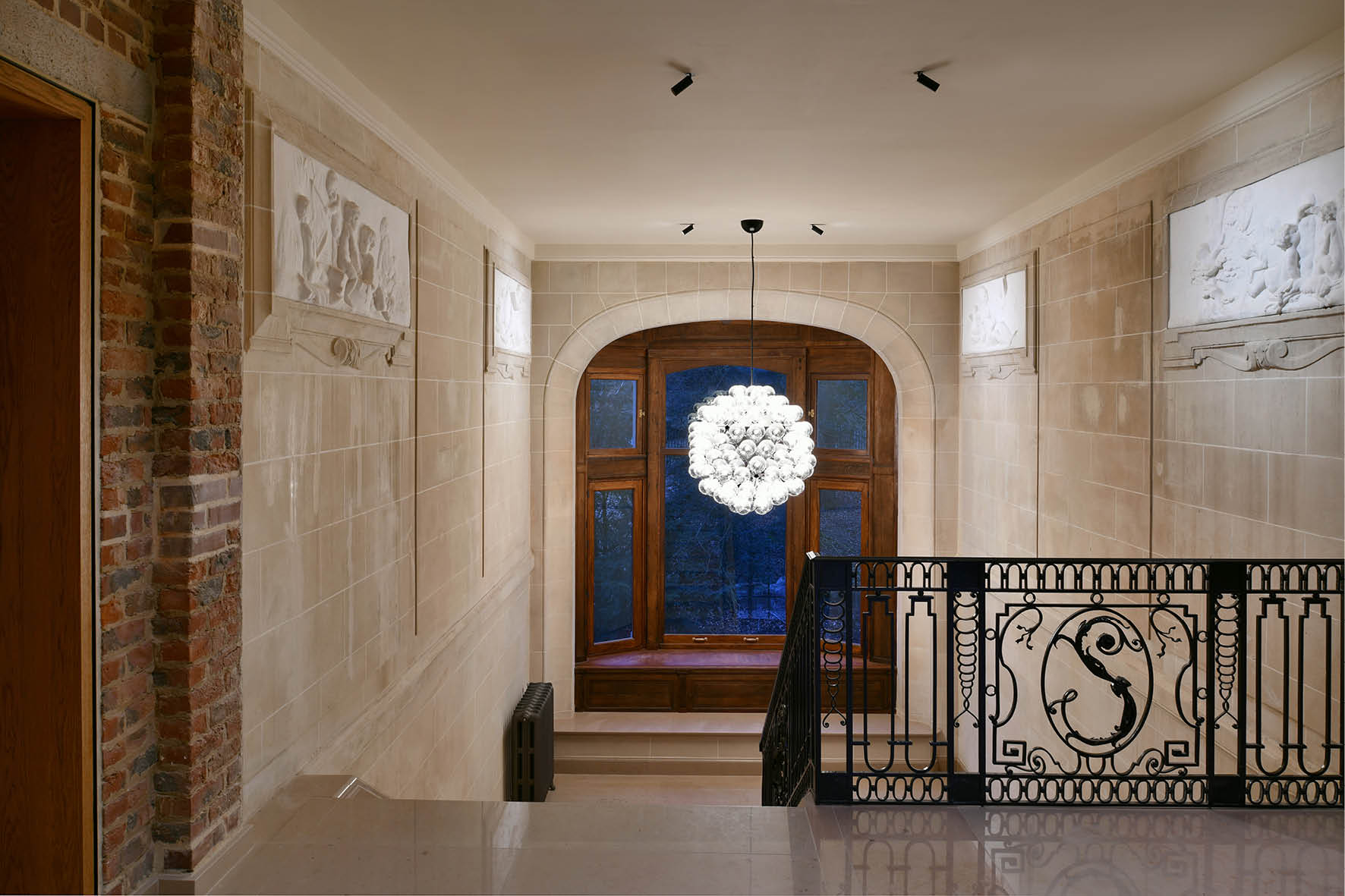
Suite inside the Château Tournay-Solvay
Yet this is not at the expense of modernity. Metzger insists upon a “resolutely contemporary approach.” To illustrate he refers to another project, the Corinthia Grand Hotel Astoria Brussels. Though a listed building, he estimates the new work amounts to 80%, with 20% representing the traditional elements. “The 19th century had needs that have changed,” he says. “Far removed from those of the 1910 clientele. And today’s clientele in 2025 has other demands, which is why we completely reinvented the hotel.” Yet something ineffable remains: “When you enter, however, you have the strange feeling that everything has always been this way.”
Metzger’s work thus represents an effort to bring out an identity that lives in the site like the ghosts once suspected to frequent the château’s ruins. “The tragedy of the architect is that architecture, unlike music or literature, is never preserved in its original form,” he says. “You can listen to Bach in its original version, you can read the works of Victor Hugo or Maupassant as written. But architecture is different. It’s constantly transforming, and the identity of a building can be lost over time.”
The answer is to understand the architect’s original intentions, while pushing for contextual evolution. “All our work is a dialogue with an architect who is no longer here,” he reflects. “It’s about bringing back the essence of the building and reinterpreting it for the present, creating a link between what it was and what it is becoming.”
To that end, their work on the Château Tournay-Solvay saw the architects as investigators in the past – archaeologists of memory working to unearth the building’s true identity.
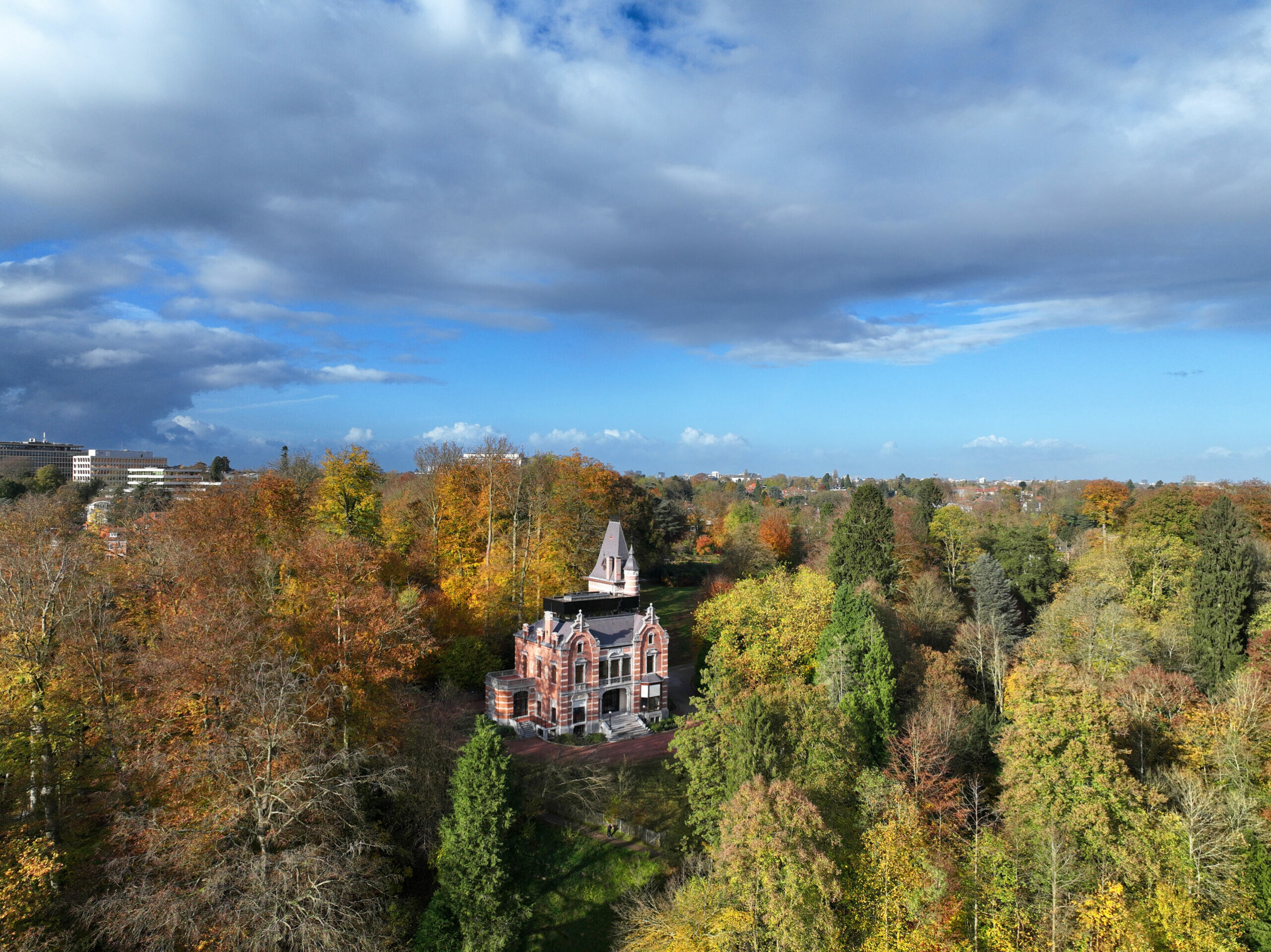
Château Tournay-Solvay
Sizeable challenges were faced, as attested by Pierre-Yves Villette, who ran the project for the firm. It took double the time expected, four years instead of two – because of the terrible state of the château. “The building had been for so long without a roof or flooring. Bats had roosted inside,” explains Villette. But perhaps the hardest was negotiating the high level of environmental protection afforded to the park. “We weren’t even allowed to bring trucks on-site,” he says. Installing the crane was a mission in itself. But he stresses that their construction partners did a fantastic job. “Go see the building,” he says, “and you’ll notice every detail is realised to a very high standard.”
Vibrations of Life
The Château Tournay-Solvay is now an international centre for physics research. The initiative was originally spearheaded by Belgian Nobel Prize-winning physicist Francois Englert, who helped discover the Higgs boson, or “God particle.” But to turn this old, ruined castle into a practical site for a modern research facility, one element was essential – the roof.
Since the building was listed when the roof had already been destroyed by fire, the architects had wiggle room to reinvent a large section of the complex. “If we had been restricted to simply restoring as it was,” says Metzger, “it would have been impossible to transform this historic building into a state-of-the-art facility for modern physics.”
But the roof redesign meant they could create an essential and usable space for conferences, projections and physics seminars. This contemporary functionality speaks to the modernity Metzger believes should coexist with the past: “We’re creating a space that’s very much alive today, tied to modern physics and research, but built on the history of the site.” Such a reinterpretation goes far beyond the concept of restoration. “We’re not just preserving ruins; we’re reinvigorating them with a new purpose," says Metzger.
Bruxelles, ma belle
Metzger’s canvas spreads across the Belgian capital. What does he think of his hometown? “Brussels is the most beautiful city in the world,” he says without a hint of irony. Working on heritage here requires “a balance of respecting the past while shaping a future that lives and grows.” He expands: “We are architects of a city that has a rich, complex history. But we are also architects of a city that will evolve and thrive in the future.”
And Metzger should know – he’s worked on iconic sites across the Belgian capital. At the Palace of Justice, his team was charged with ensuring the behemoth’s safety and accessibility. “We worked to unlock the project, secure the Palais, and ensure justice could continue to operate there. We also made the courtrooms secure,” he says. “We implemented the famous courtrooms that allowed the criminal court to stay in the building, where prisoners are on one side, magistrates on another, and the public is on the third.” They also reformed the entranceways to enable airport-style security checks.
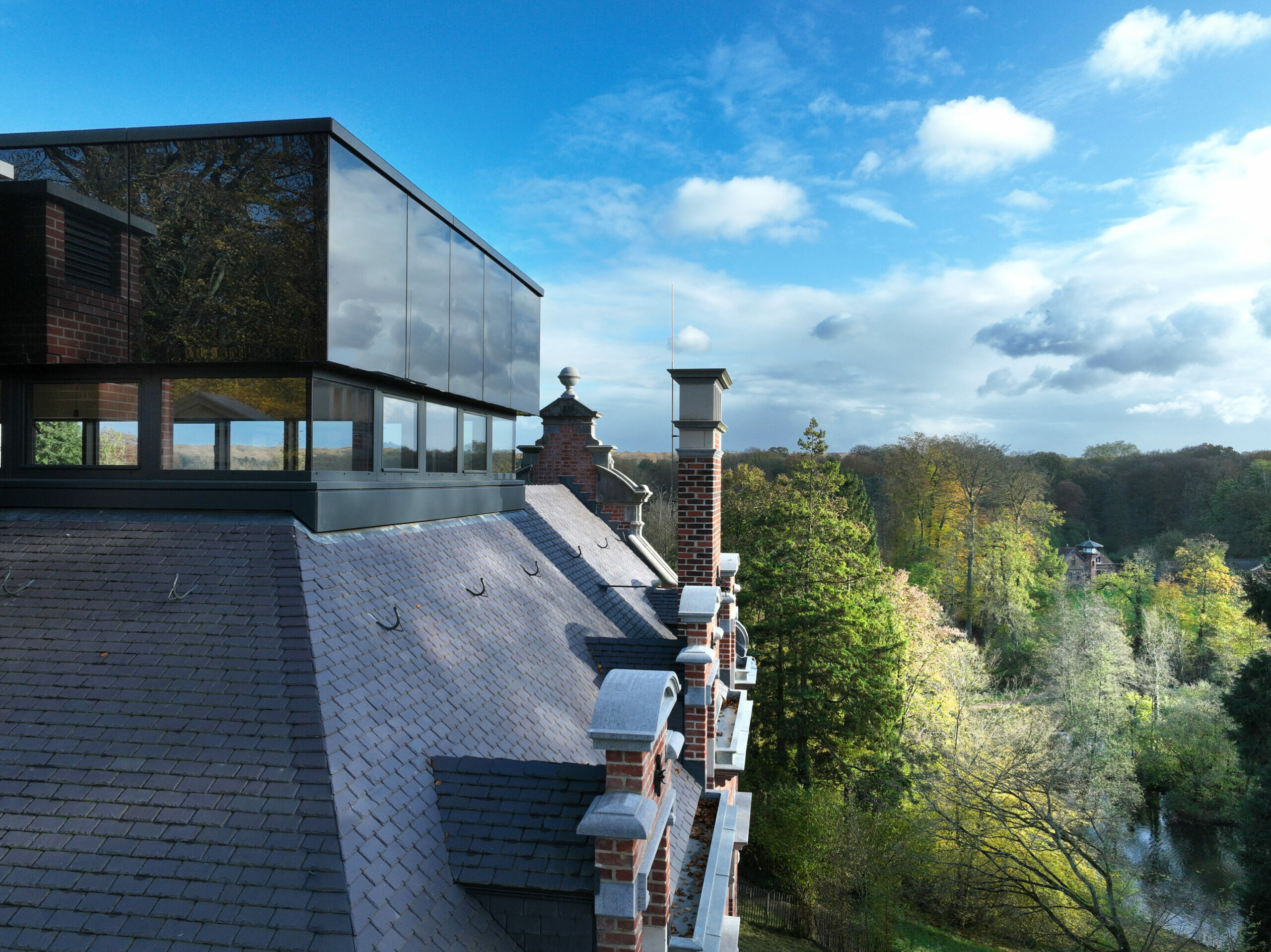
Restored roof at the Château Tournay-Solvay
As well as the aforementioned Astoria Hotel, his firm has also worked on Brussels Central Station; Laeken Church; and the stunning 1934-built Villa Empain, a treasure of Brussels’ Art Deco heritage; to name a few. Meanwhile, they’ve won the continent’s prestigious prize for heritage restoration – Europa Nostra – four times.
“You can’t approach heritage with nostalgia. We have to consider how we can make the old city serve the needs of the future,” Metzger says. And what is the future for Brussels? “I believe in Brussels as a city that can evolve, but evolve thoughtfully,” he replies. “It’s not about erasing what’s there. It’s about integrating the old with the new and ensuring we don’t lose what makes this city unique.”
The Château Tournay-Solvay embodies this concept, as a cutting-edge physics institute built within a historical shell. Its essence has been identified and re-expressed, and a new life inaugurated, showing how city and architecture can evolve in harmony. “Our job,” says Metzger, “is to ensure that both histories — the past and the future — can exist side by side.”
