
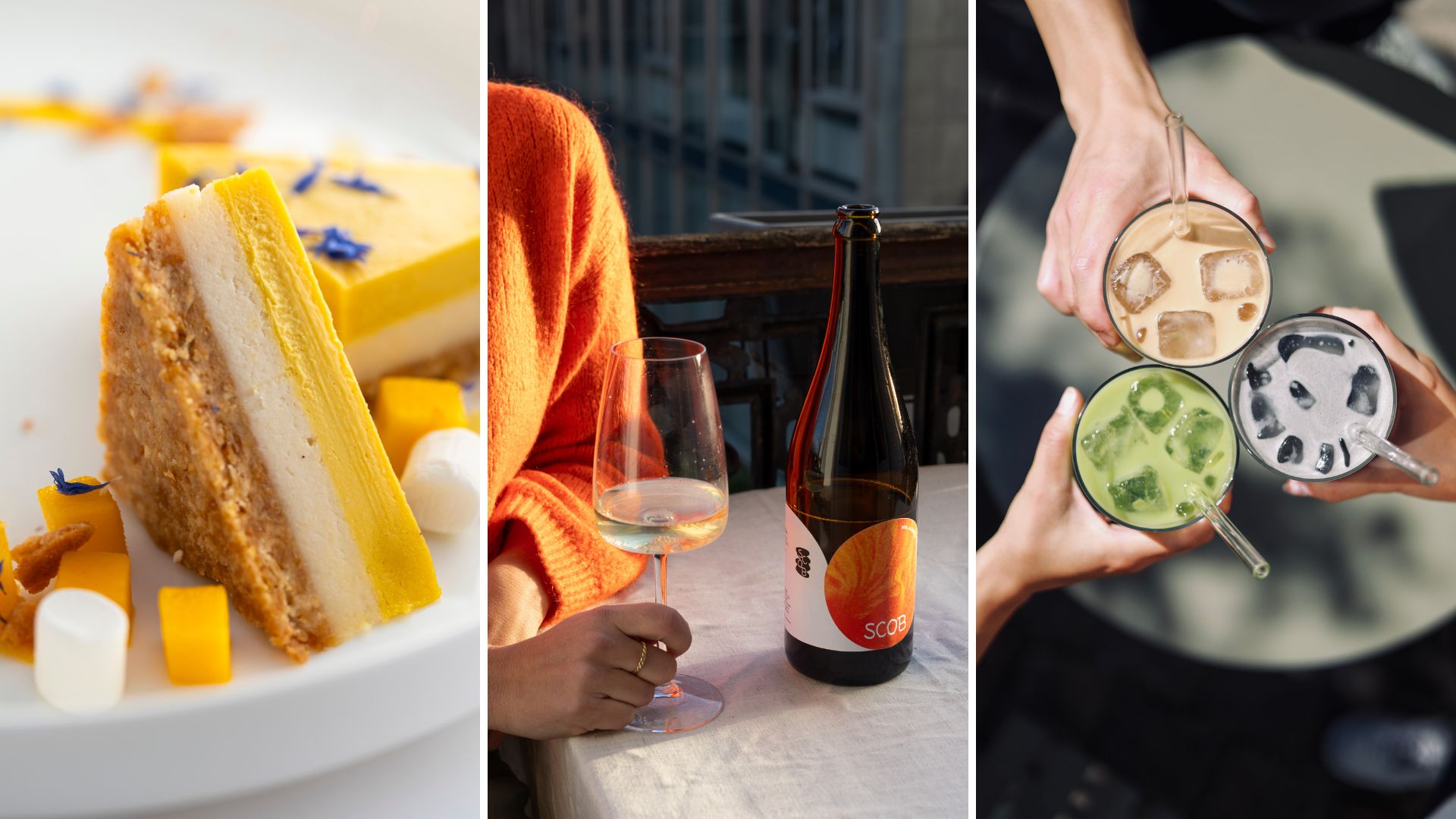
What are the most delicious foods, refreshing drinks, coolest cafés and intriguing restaurants in Brussels now? Here are some that recently caught the eye of our food and drink expert.
Restaurant
Frank
Frank Coffee
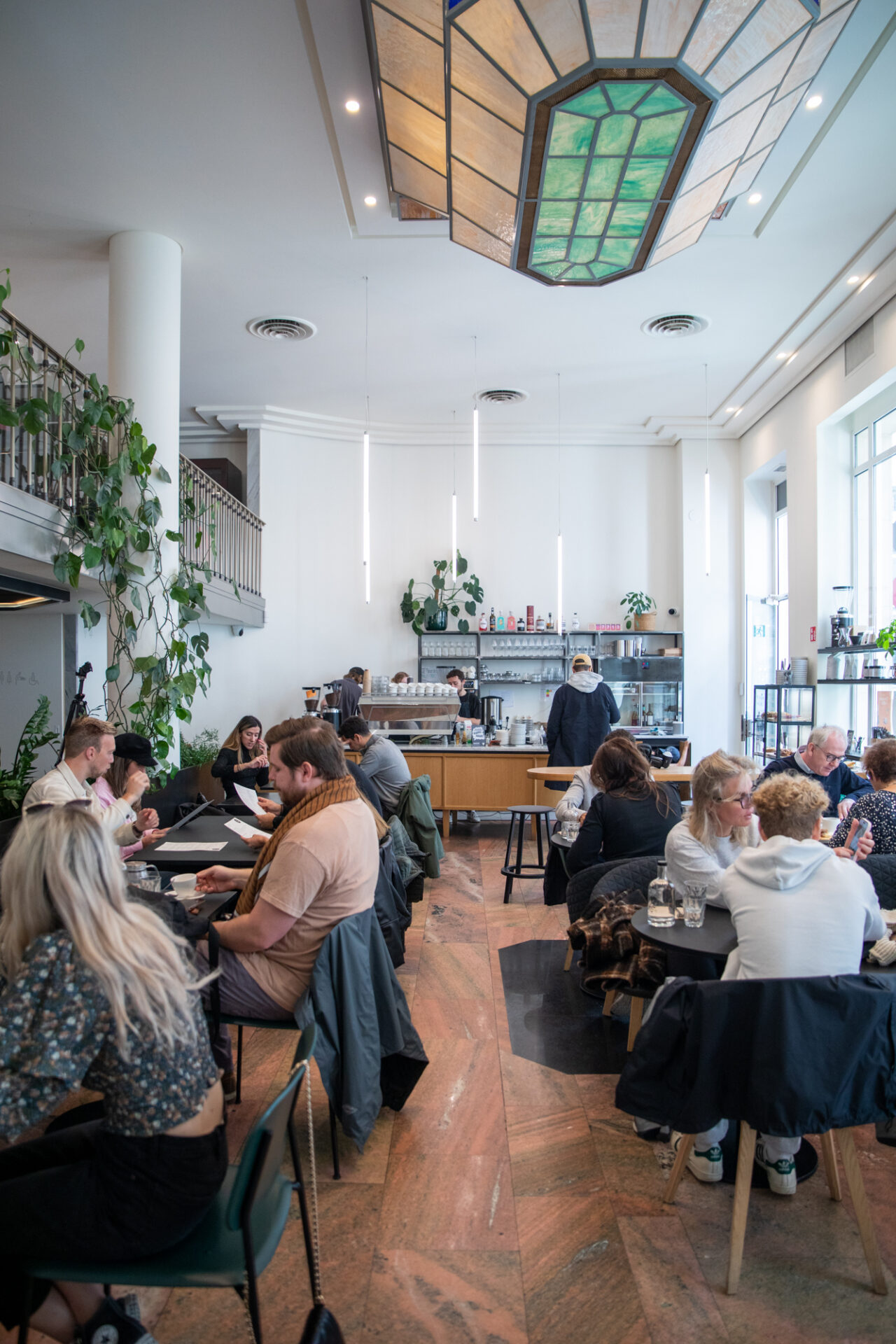
Frank is something of a gastronomic UFO. It doesn’t quite fit the mould of a traditional restaurant, yet it offers more than your average café. Yes, you can order brunch any day of the week, and yes, the bar – with its gleaming La Marzocco KB90 espresso machine – plays a central role. But what truly sets Frank apart is the culinary ambition behind its dishes: not defined by elaborate flourishes, but by quality ingredients, technical precision, and a generous dose of creativity – both sweet and savoury.
Frank champions local sourcing at its core, working directly with nearby farmers and artisans to maintain a short, sustainable supply chain. Everything is made from scratch – including the bread. This ethos is the work of chef Mathias Smet and head barista/maître d’ Marianne Renders. Mathias, a self-taught chef, pivoted from photography and architecture before learning his craft at the inventive vegetarian restaurant Hummus & Hortense. Marianne honed her coffee skills in Australia at Seven Seeds before the duo launched a branch of OR Coffee on Place Jourdan in 2015 – cutting their teeth on the mechanics of café life.
Frank Coffee
The sweet menu is addictive, with offerings that shine alongside coffee classics brewed from beans roasted by Brussels-based MOK and seasonal guest roasters. Take the yoghurt and granola, for example: it comes layered with hazelnut spread, citrus, four-seed granola, and a red fruit coulis. It may sound counter-intuitive, but the dish sings – especially when paired with a pour-over filter coffee whose bright acidity and vegetal notes bring the flavours into sharp relief. Frank’s pastries, too, are destined to become benchmarks. Try the ‘Billionaire’ – a decadent union of shortbread, caramel, and dark chocolate.
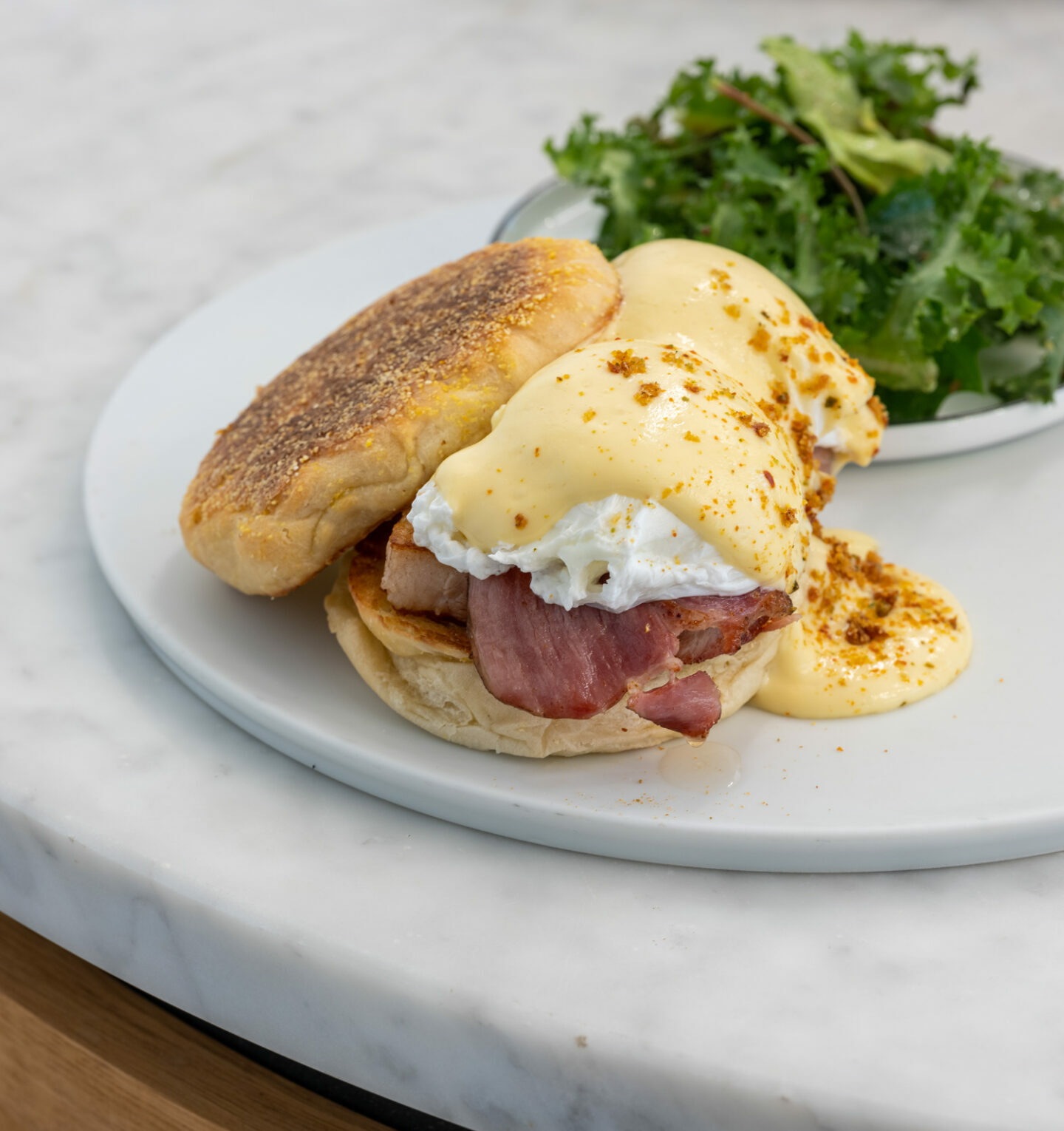
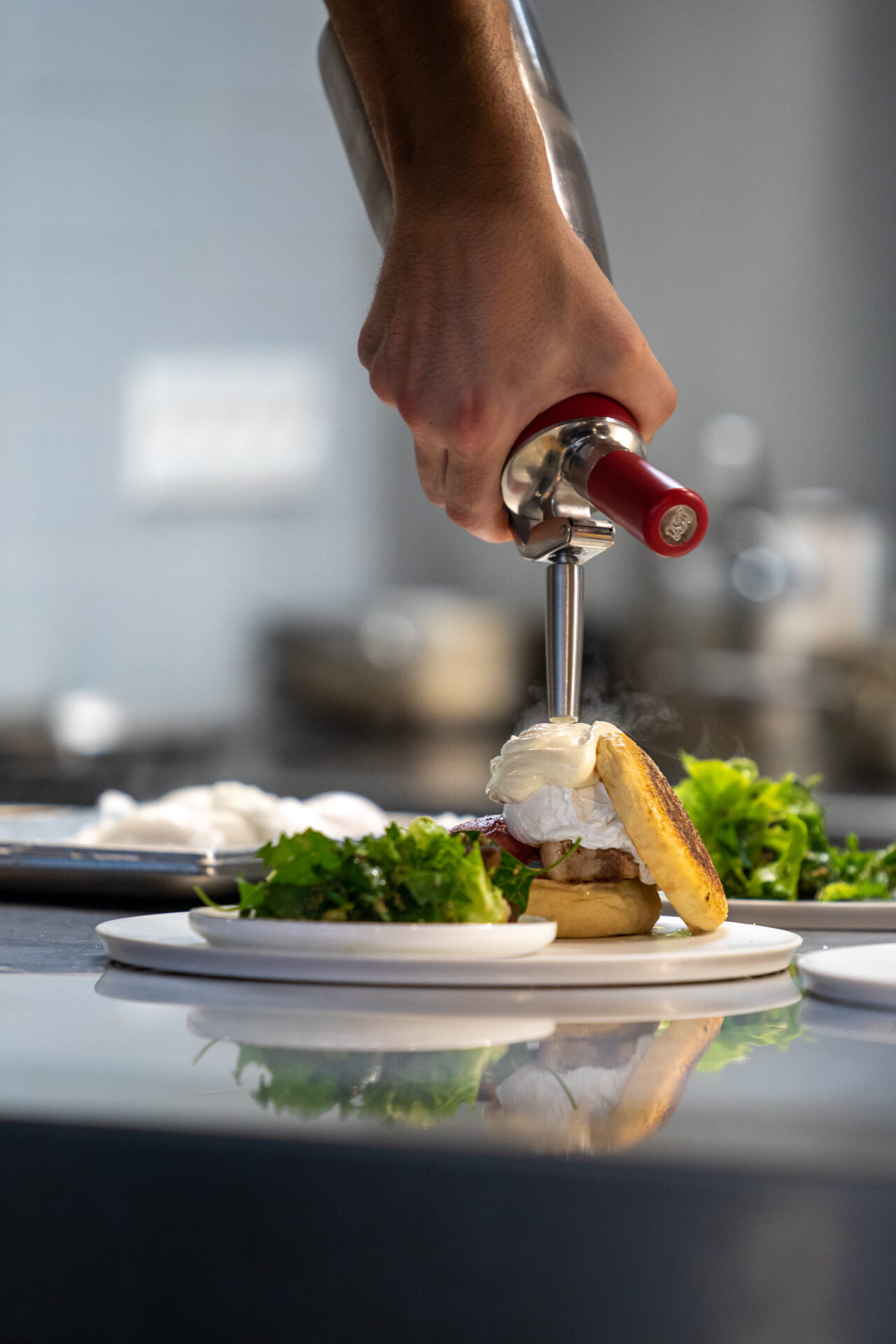
Yet it’s in the savoury offerings that the kitchen’s talent truly reveals itself. Frank is, above all, a brunch destination. The standout choice is the ‘Brunch Combo for Two’ (€32 pp): a generous spread that includes a sweet or savoury pastry, a yogurt and granola bowl (also available in a vegan version), fluffy pancakes with fruit coulis, and a side salad with house pickles. Each guest receives two poached eggs atop English muffins with a true hollandaise sauce – silky, butter-based, never mayonnaise. These come with your choice of topping: pork loin and bacon (‘Benedict’), roasted vegetables and labneh (‘Francine’), or smoked salmon on seaweed sour cream (‘La Monnaie’). Add a local organic apple juice and a speciality coffee of your choice, and you have a brunch that could well replace dinner.
Frank Coffee
Those opting for à la carte selections will find a tight, seasonal menu of three inventive savoury dishes, where vegetables often play the starring role. For drinks beyond coffee, Frank offers homemade shrubs, Brussels craft beers, unfiltered cava, and even a standout Belgian white from Vin de Liège.
Frank isn’t just a café. It’s a culinary experience with the polish and imagination of a modern restaurant, rooted in craft, community, and a certain quiet brilliance.
Frank Rue des Princes 14, 1000 Brussels; and Chaussée de Charleroi 17, 1060 Saint-Gilles
Drink
SCOB
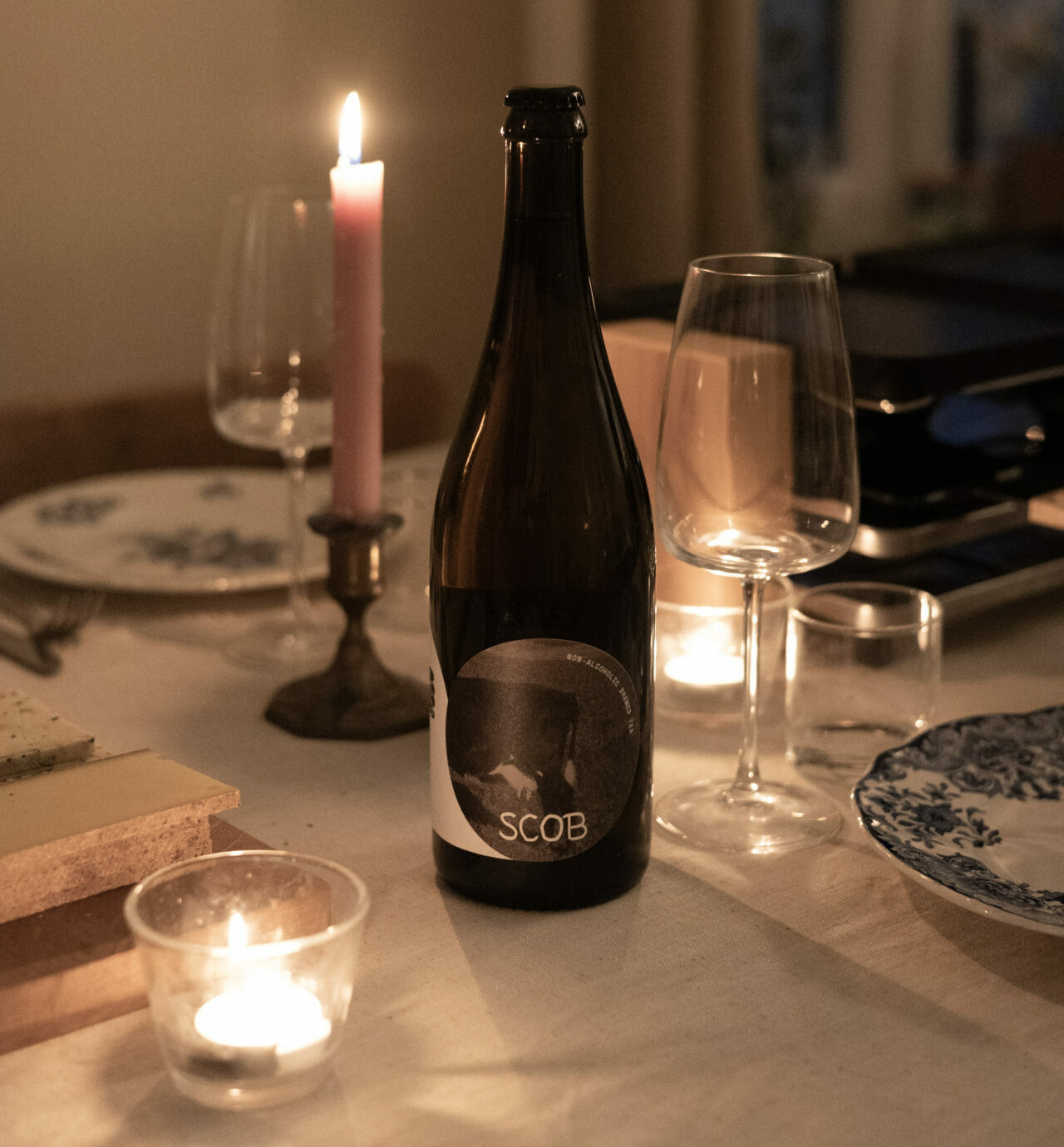
SCOB restaurant in Brussels
Think the non-alcoholic beverage market is saturated? Think again. There’s still ample room for innovation – especially in Belgium, where new creators are flourishing with bold ideas and refined palates. The latest contender on the premium shelf is SCOB, a non-aromatised, fermented tea drink that promises to challenge expectations and delight the discerning.
Like many culinary start-ups, SCOB was born in a kitchen. Long-time friends Céline Cogniaux and Guillaume Berlemont were unimpressed by the uninspired selection of alcohol-free options in Brussels bars. Passionate about flavour and frustrated by compromise, they left their jobs to create a sophisticated alternative. One year of intensive product development and six months of business groundwork later, SCOB launched with a trio of zero-alcohol beverages that aim to appeal as much to wine lovers as to teetotalers.
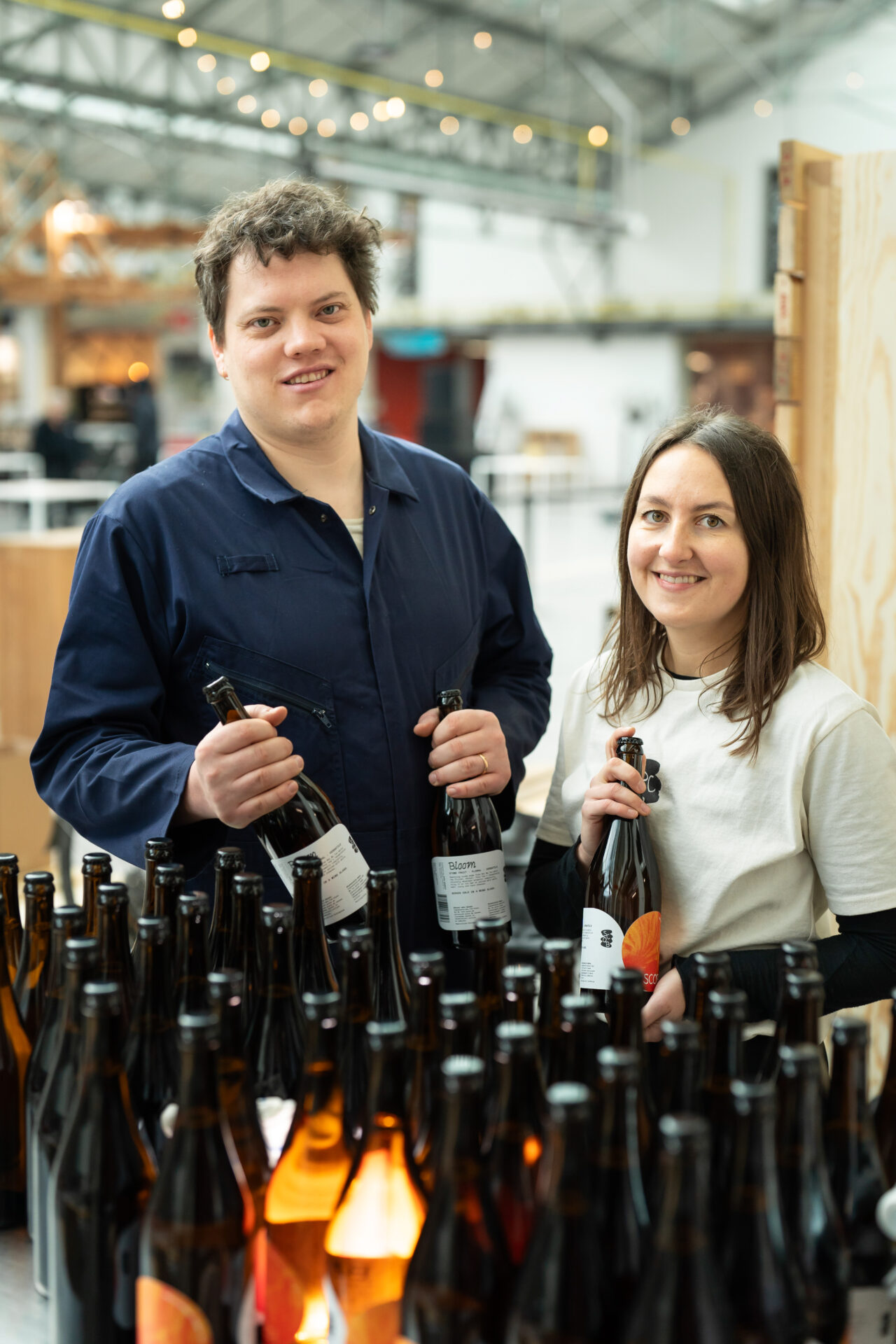
SCOB owners Guillaume Berlemont and Céline Cogniaux
Their starting point: tea – ancient, aromatic, and endlessly versatile. Working alongside Olivier Nuttens of L’Heure Bleue, a specialist tea shop on the edge of the European Quarter, the pair explored a multitude of infusions and fermentation methods. Their final recipes are united by three elements: a base of non-aromatised tea, fermentation using a SCOBY (Symbiotic Culture Of Bacteria and Yeast), and a dash of CO₂ for sparkle. Crucially, unlike kombucha, SCOB drinks contain no residual probiotics or alcohol, thanks to the absence of secondary fermentation in the bottle.
The result is a line of drinks as nuanced as wine, with flavour profiles designed for pairing. Bloom is made from Chinese white tea fermented on a kombucha SCOBY fed with cane sugar. The result is soft, floral, and rounded, with notes of yellow fruit – ideal with cold starters or fruit-based desserts. Blade uses a green ‘twig’ tea (leaf and stem), fermented with beet sugar. Bright and aromatic, it evokes sauvignon blanc, with raw elderflower notes that make it a perfect match for fish, goat cheese, or Asian dishes. Butter, the boldest of the trio, is crafted from Jin Xuan ‘milky oolong’ fermented on a jun SCOBY fed with acacia honey. Its rich, brioche-like texture and peachy depth make it a natural companion for cheese boards or sauced dishes.
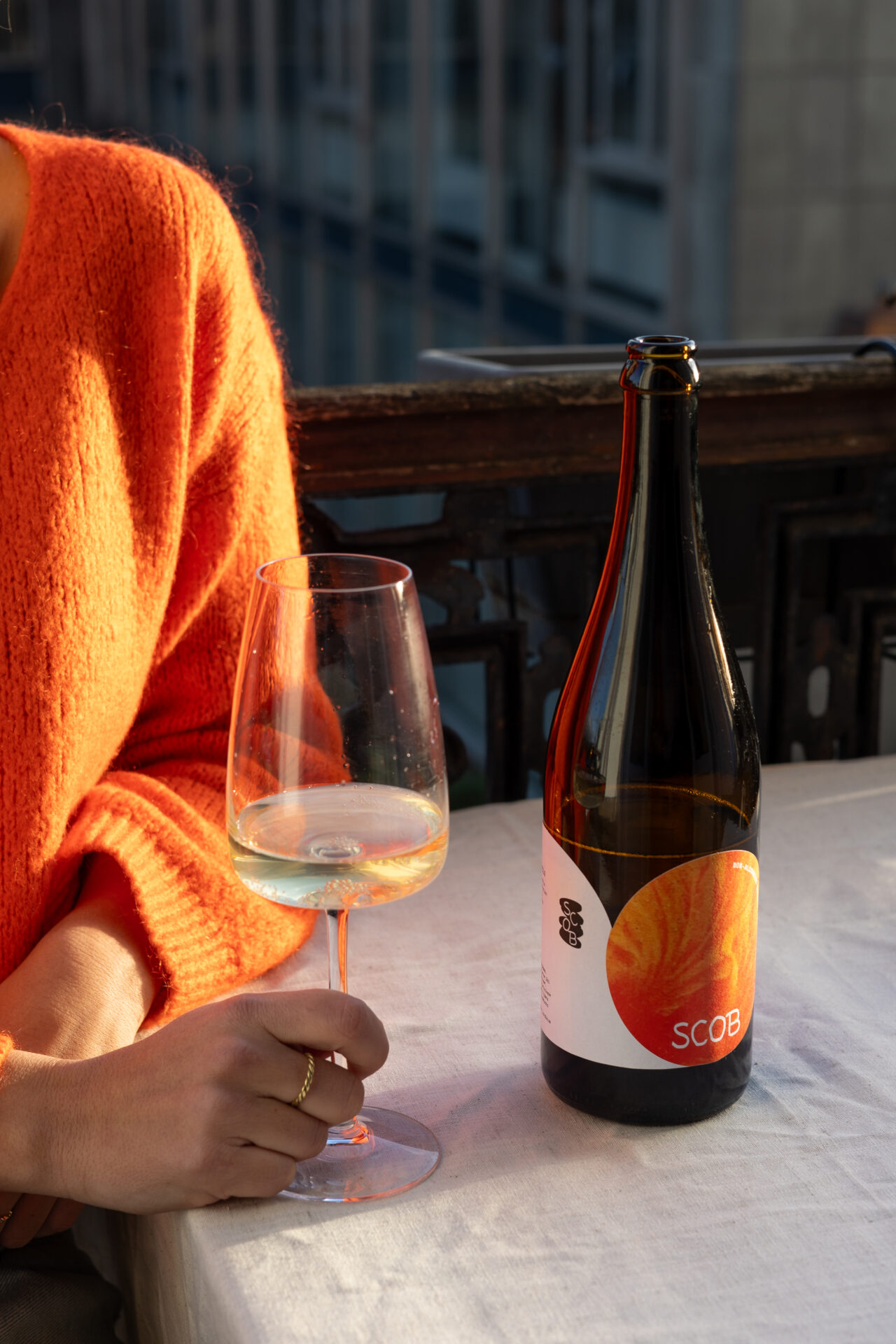
Bloom bottle at SCOB restaurant in Brussels
All three are remarkably low in sugar – just 1.1, 1.7, and 0.7 grams per 100ml respectively – making them ideal for thoughtful food pairings without the cloying sweetness common to many soft drinks.
Packaged in elegant 37.5cl (€7) and 75cl (€13) glass bottles, SCOB is already stocked in a carefully curated list of delicatessens, wine merchants, and cheesemongers across Brussels: Rob, Hop!, Titulus, Cave Coop, Jane, Bulbe, L’Épicier, Le Plateau du Berger, La Fruitière, and L’Estive. You’ll also find it on the menus of select gastronomic restaurants, including Le Chalet de la Forêt.
For now, production is modest, run out of Fermenthings, a food start-up incubator at Be-Here in Laeken. But if early signs are anything to go by, SCOB may soon need to scale up. Its creators – and their exceptional drinks – certainly deserve the spotlight.
Food
Nats Rawline
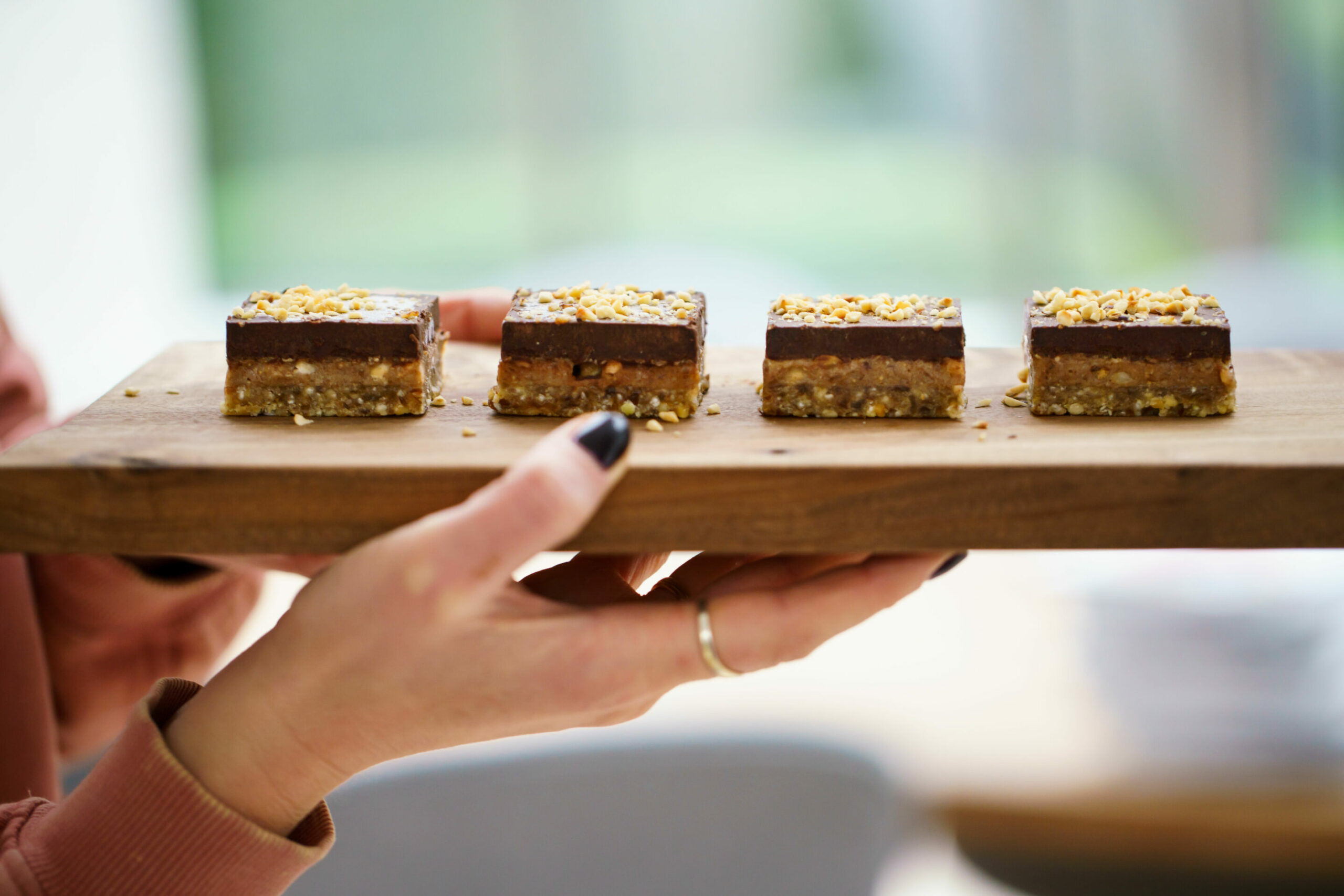
Nats Rawline
Raw food enthusiasts know that when food is cooked above 47.7°C, the natural enzymes that aid digestion and cell regeneration are lost. Keeping food raw, then, can offer the body a helping hand – especially the pancreas – by preserving those precious enzymes. But how do you square that with indulgence? With desserts and chocolate bars?
Enter Nats Rawline, a brand that proves health-conscious confections can still satisfy. Most of its creations are raw, vegan, and gluten-free (with one delicious exception: a baked vegan brownie that includes gluten). There’s even a certified organic range. But founder Nathalie d’Harveng’s journey from health-curious teenager to global food entrepreneur was anything but smooth.
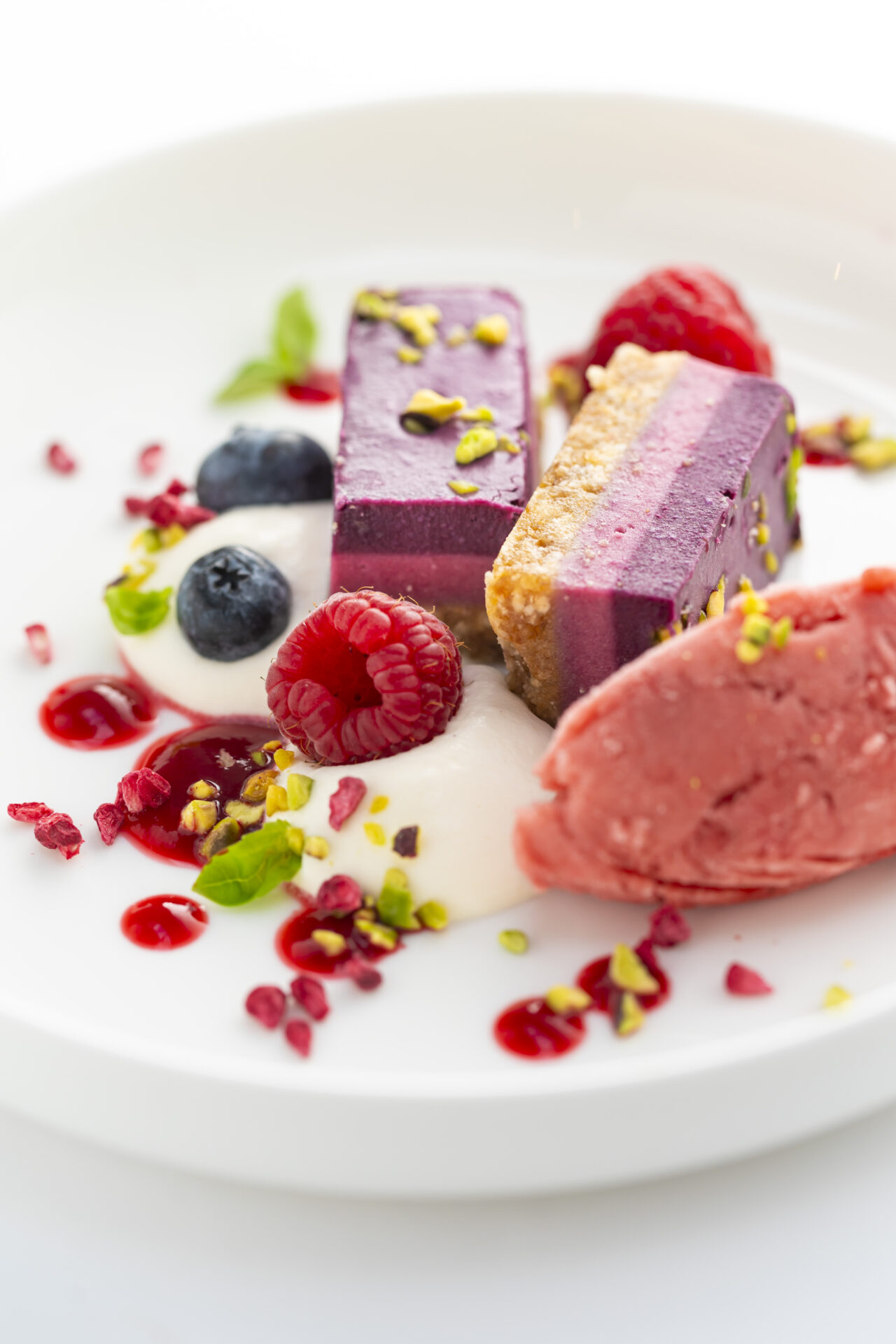
Raspberry and blueberry cake at Nats Rawline
Her vision? To craft “a delightful and nourishing alternative to the sugary, preservative-packed desserts on store shelves.” Making that dream real was, as she puts it, “hardcore” – but transformative. “No is not an answer,” she now says. And her values remain non-negotiable: “My business partners must share my values. It’s not just about money.”
She launched Nats Rawline in 2017 with the backing of PMSweet CEO Michael Labro, who offered her use of his gluten-free production facility near Liège, where she learned not just the business but the science: industrial machines, ingredient behaviour, shelf life, and the fine art of mimicking pastry without flour, eggs, butter, or cream.
Is it high-tech like many processed vegan alternatives? Not quite. Nats Rawline relies exclusively on natural ingredients, yet the results are astonishing. “My learning process felt like a chemistry course,” she recalls. “I don’t even know how to bake pastry in an oven.” What she does know is how to balance temperature, acidity, taste, texture, and appearance to create raw treats that taste deceptively rich.
Take the chocolate and hazelnut raw cake: made from coconut milk, dates, dark chocolate, coconut oil, almonds, buckwheat, hazelnuts, and a pinch of salt. The result is so creamy and satisfying that it’s hard to believe it hasn’t seen heat. Or the caramel and chocolate raw bar – an elegant answer to the classic billionaire shortbread – crafted from date paste, gluten-free oat flour, maple syrup, cocoa butter, tahini, dark chocolate, and hazelnuts.
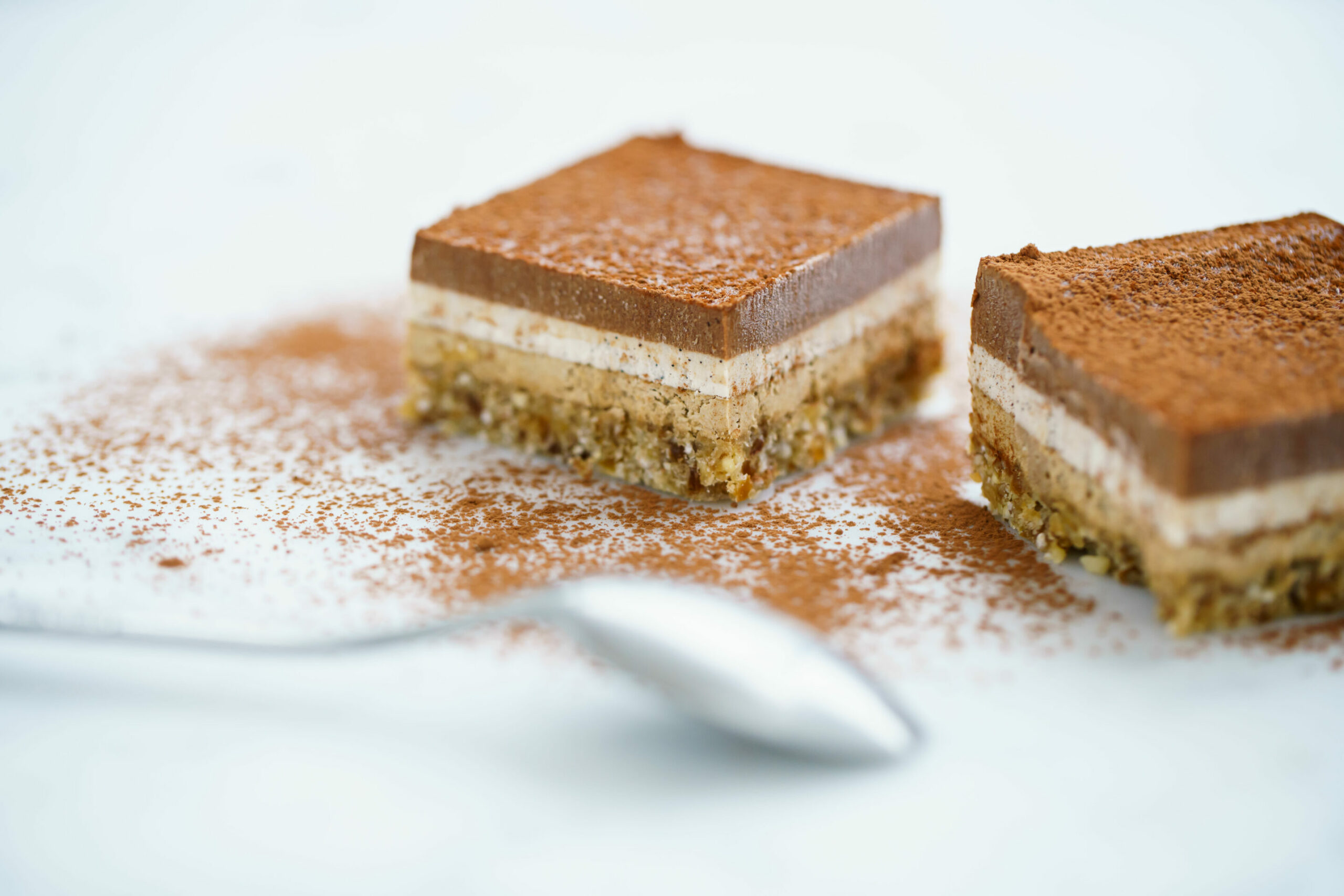
Tiramisu at Nats Rawline
A key secret? The desserts are delivered deeply frozen to stores, allowing for a refrigerated shelf life of up to a week with no preservatives. D’Harveng sources ingredients from across the globe – Italian hazelnuts and pistachios, Spanish almonds, Californian cashews, Turkish (and Brazilian) Brazil nuts – always favouring high-quality producers.
The range includes vibrant fruit-based raw cakes (raspberry, passionfruit, mango, lime, strawberry, blueberry), four energy balls, and two rich plant-based mousses in exotic and chocolate flavours. Seasonal launches add to the mix, such as this year’s pistachio-vanilla cake – a standout treat now available in supermarkets.
Nats Rawline is not just a healthy dessert brand – it’s a lesson in how conviction, precision, and creativity can change the way we eat sweet.
Café
Kafei
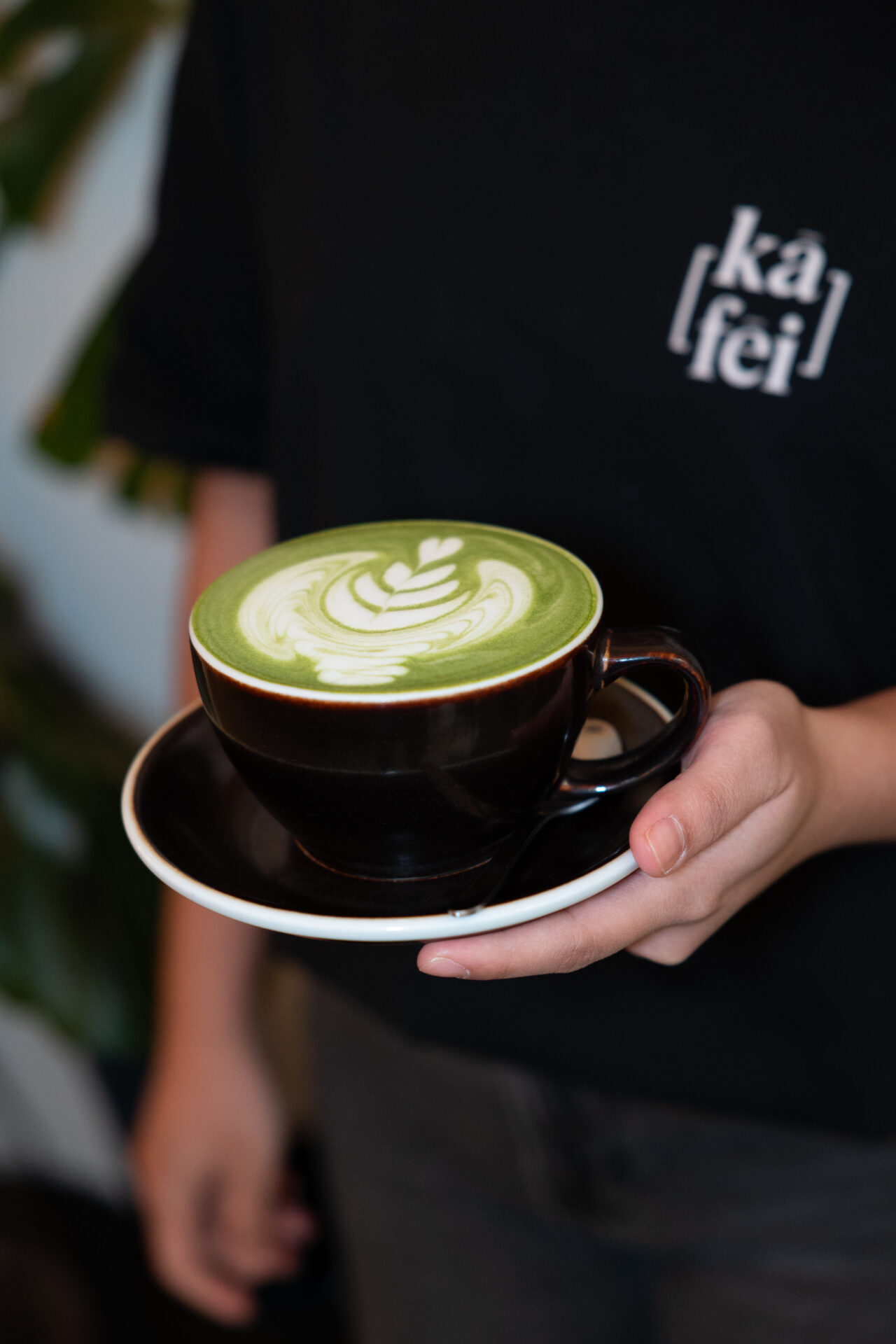
Created by three siblings – Mickael, Stephen, and Ping Wang – Kafei is Brussels’ first Asian-inspired coffee shop, serving up traditional brunch fare with an inventive East Asian twist. At the heart of their concept lies the now-iconic fluffy pancake: a thick, cloud-like round that’s as airy as a mousse yet rich and satisfying.
We first encountered Kafei’s signature dish at StrEat Fest, the city’s street food celebration held each May at Tour & Taxis, where the team drew crowds with two sensational creations. The first was a Tiramisu Fluffy Pancake, topped with coffee-flavoured mascarpone, speculoos, and cocoa powder – a double twist on the Italian classic, with unmistakable Belgian accents. The second: an Ube Fluffy Pancake, served with ube coconut cream and purple crumble, inspired by the vibrant Filipino yam.
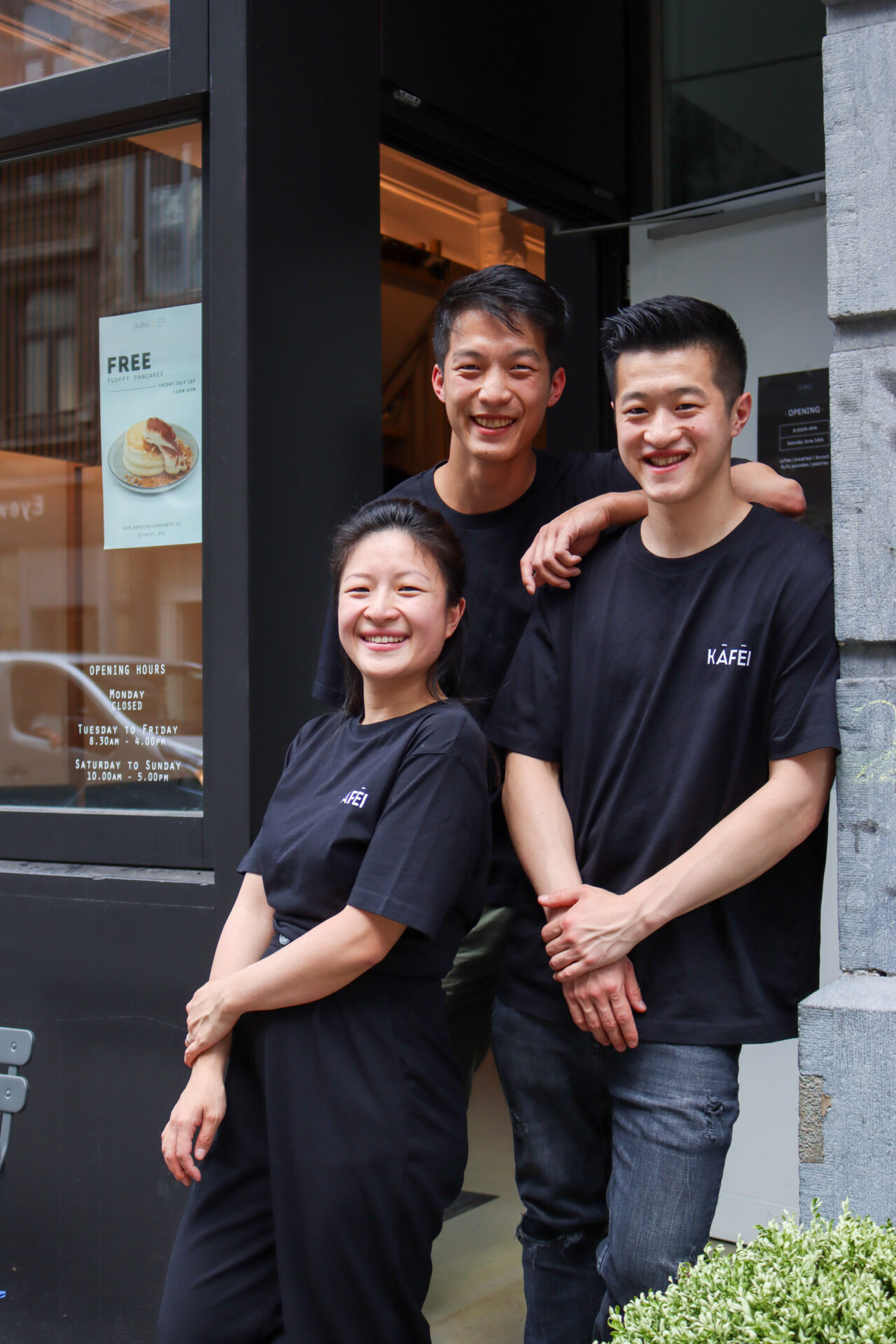
Mickael, Stephen, and Ping Wang of Kafei, Brussels.
At their three Brussels locations, the pancakes come in several variations, including one with fresh mango and a toasted rice-infused coconut cream – a subtle homage to the Thai dessert of sticky rice and mango. Other versions include matcha and strawberry, or hojicha (Japanese roasted tea) paired with a cocoa cream. The combination of pillowy pancake and indulgent cream is, quite simply, genius.
The Wang siblings grew up in the restaurant world, learning the trade from their parents, who ran eateries in Tournai, Nivelles, and Tubize. Nine years ago, they brought their passion to Brussels, opening Cup28 on Rue du Bailli, which still thrives today. Their roles are clearly defined: Ping dreams it, Stephen develops it and Mickael delivers it – a dream team with family synergy.
The first Kafei opened in 2018 on Chaussée de Vleurgat, complete with a quiet terrace just off Ave Louise. The concept was already fully formed: coffee from Brussels’ Wide Awake roasters, a curated tea selection including matcha, and reimagined brunch classics like eggs Benedict with miso-infused hollandaise. Poached eggs are served with a variety of toppings – marinated chicken, crispy pork belly, smoked salmon, mushrooms, or sesame-yuzu guacamole – all ideally paired with a pancake and a hot drink.
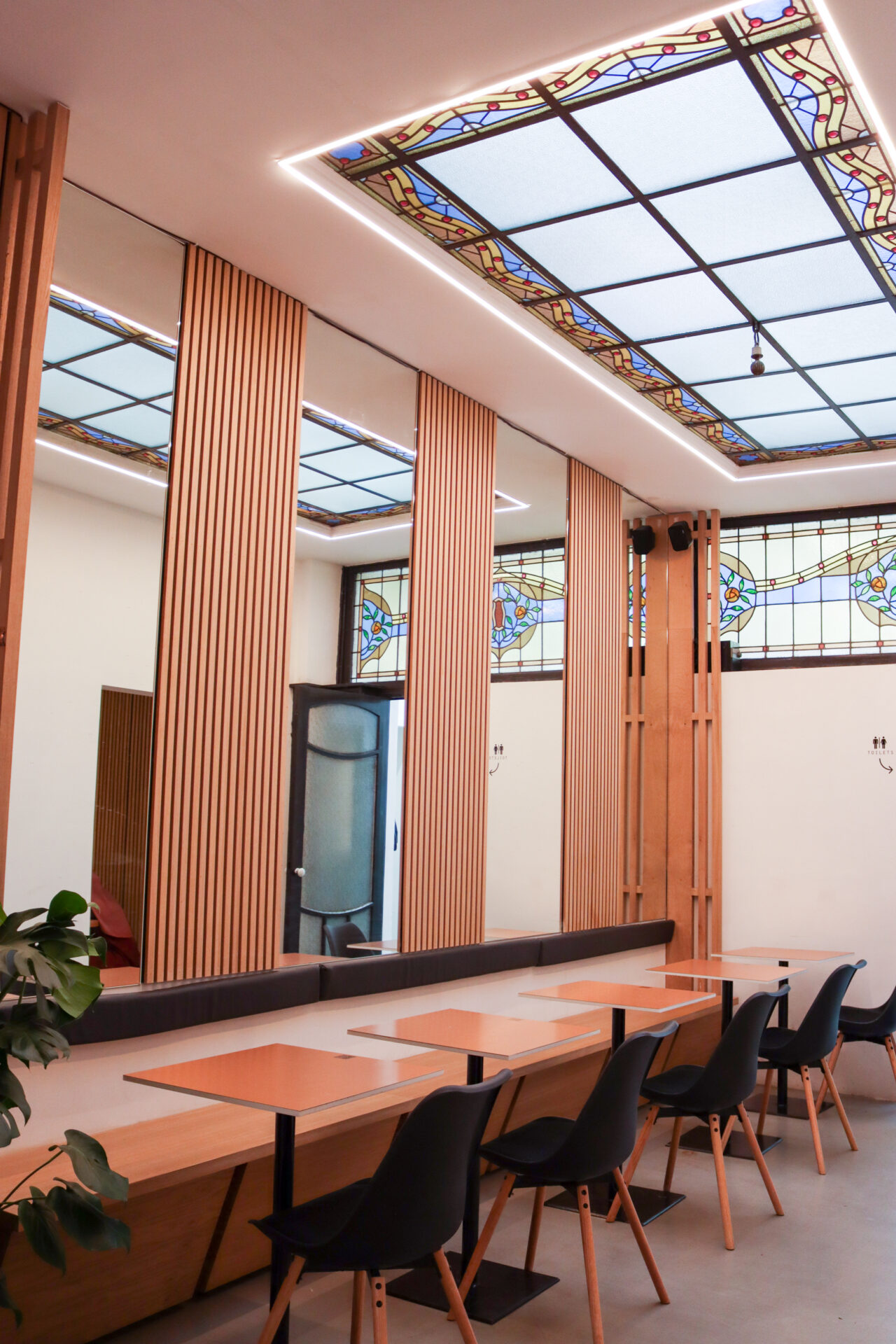
Kafei, an Asian themed coffee shop in Brussels
In 2022, the team expanded to Rue Dansaert, in the heart of Brussels’ fashion district. This outlet is compact and minimalist, with Japanese-inspired décor. That same year saw the opening of a third location in Sablon, dedicated exclusively to sweet offerings, with an expanded menu of artisanal coffee and tea options aimed at connoisseurs.
Most recently, the family launched Kage, a refined tearoom just a few doors from Kafei Dansaert. There, guests can explore rare matchas and tea-based cocktails served three evenings a week by Boupinh, the brother-in-law. It’s a family affair, driven by culinary curiosity and a refusal to stand still.
Kafei 147, Chaussée de Vleurgat, 1050 Ixelles 57, Rue Antoine Dansaert, 1000 Brussels 2, Rue Joseph Stevens, 1000 Brussels
