
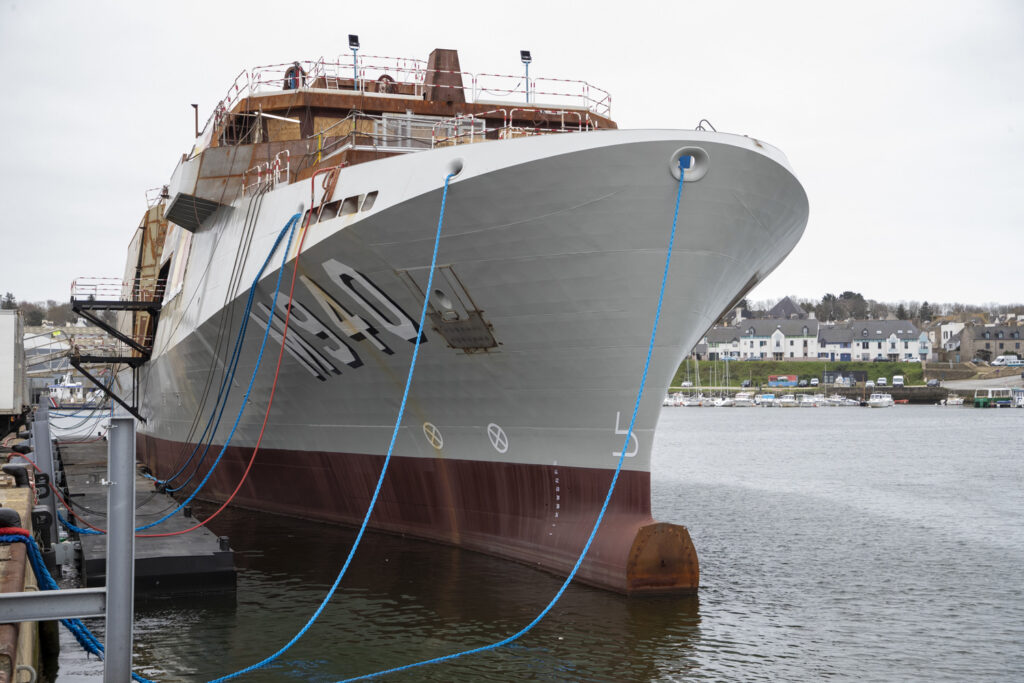
The first Belgian replacement Mine Countermeasure (rMCM) vessel named Oostende is set to be delivered to Belgium at the end of October, as announced by the Defence Department on Tuesday.
A slight delay in the delivery schedule occurred due to the exceptionally complex new mine warfare concept. Known as the “Mine Countermeasure Stand-off,” this approach keeps the mother ship out of danger zones while unmanned systems detect and neutralise mines. High cybersecurity requirements have also contributed to prolonged development times, according to the Defence Department.
When operational, Oostende will be able to perform current mine countermeasure missions. Continuous upgrades are planned to adjust operational capabilities for future needs.
In late May, an incident happened in the port of Lorient, France, during an integration test. The ship suffered damage but no crew members were injured. While undocking, it collided with a floating pontoon and an Unmanned Surface Vehicle (USV) docked nearby, resulting in visible damage to the ship’s bow and harm to the USV.
The new rMCM capability is being built in France as part of a Belgian-Dutch cooperative programme to replace the outdated Tripartite-class minehunters.
The second ship, intended for the Netherlands, is scheduled for delivery in December 2025, and the third by September 2026. Subsequent ships will be delivered every six months until 2030.
