

This week marks Belgium’s National Day - a moment to celebrate, reflect and dive into the soul of a country, often defined by its complexity. Beyond the parades and patriotic symbols lies a deeper question: what is Belgian nationalism really made of?
In a nation divided by language, history, and identity, why do so many Belgians seem distant from their own national story? And finally, what, if anything, still unites them? To explore these questions, we spoke with Olivier Luminet, professor of psychology at UCLouvain.
Belgium and its complexity
Nationalism can be defined as “the feeling of belonging to the same community,” explains Professor Luminet. And in that sense, Belgium’s sense of identity is a delicate one. Much like Canada or Switzerland, the country has been shaped by deep linguistic divisions. Within a single nation, there are three official languages, three regions, and six governments. At the heart of it all lies Brussels, simultaneously the capital of Belgium, an autonomous region, and the de facto capital of the European Union.
That complexity is also political. Belgium is often seen as a country where consensus is hard to reach; yet, rather than collapsing into conflict, it has developed a culture of constant negotiation. The result is what many call the “compromis à la belge”: not unity through sharp decision, but through subtle, often fragile, compromise.
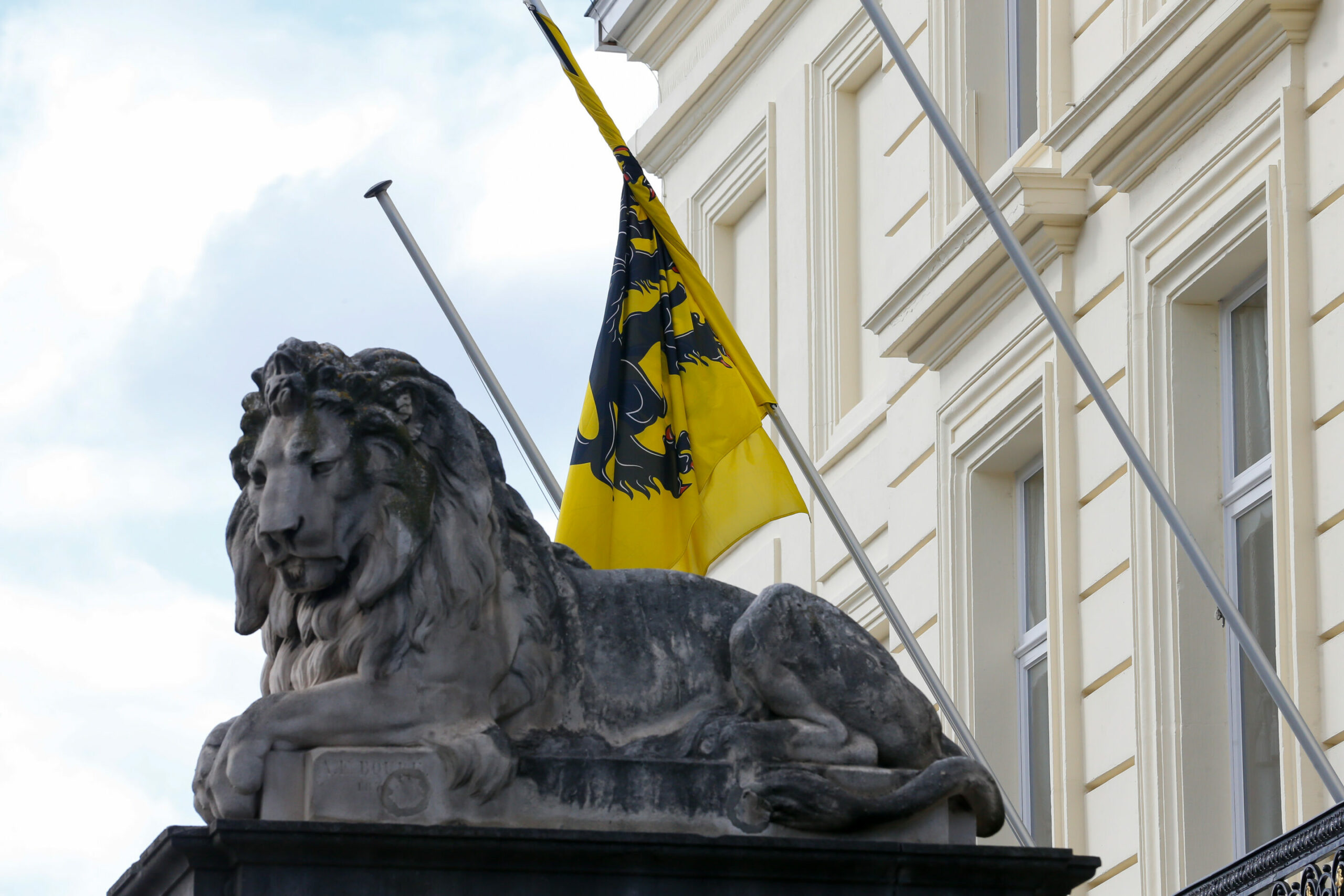
A lion statue and a Flemish flag. Credit: Belga/Nicolas Maeterlinck
The most relevant examples include a 2010 trauma, where the country remained unstable with no government for over 541 days due to prolonged negotiations.
Another example is the 2020 judiciary reform, which was carefully negotiated to reflect the linguistic and regional sensitivities of the country, ensuring that no single community felt sidelined.
Belgium is also a nation divided over competing visions for its future. Over the last decade, the Flemish nationalist party N-VA has flirted with support for an independent Flanders, or even Dutch rattachism. On 24 June, Bart De Wever, current Prime Minister of Flanders and leader of the N-VA, told a Dutch media outlet that “the division of the Netherlands was the greatest catastrophe that ever happened.” This was a difficult message for many Belgians to hear.
Emotional reactions
But nationalism isn’t built on laws and institutions alone; it’s also powered by emotion.
According to Luminet, nationalism is reinforced through emotional triggers. Positive emotions, such as joy and pride, like those sparked by the Belgian Cats' victory over Spain in the European Cup final, strengthen national feeling. Individual athletic achievements, such as the remarkable careers of tennis stars Justine Henin and Kim Clijsters, have also contributed to a shared sense of pride.
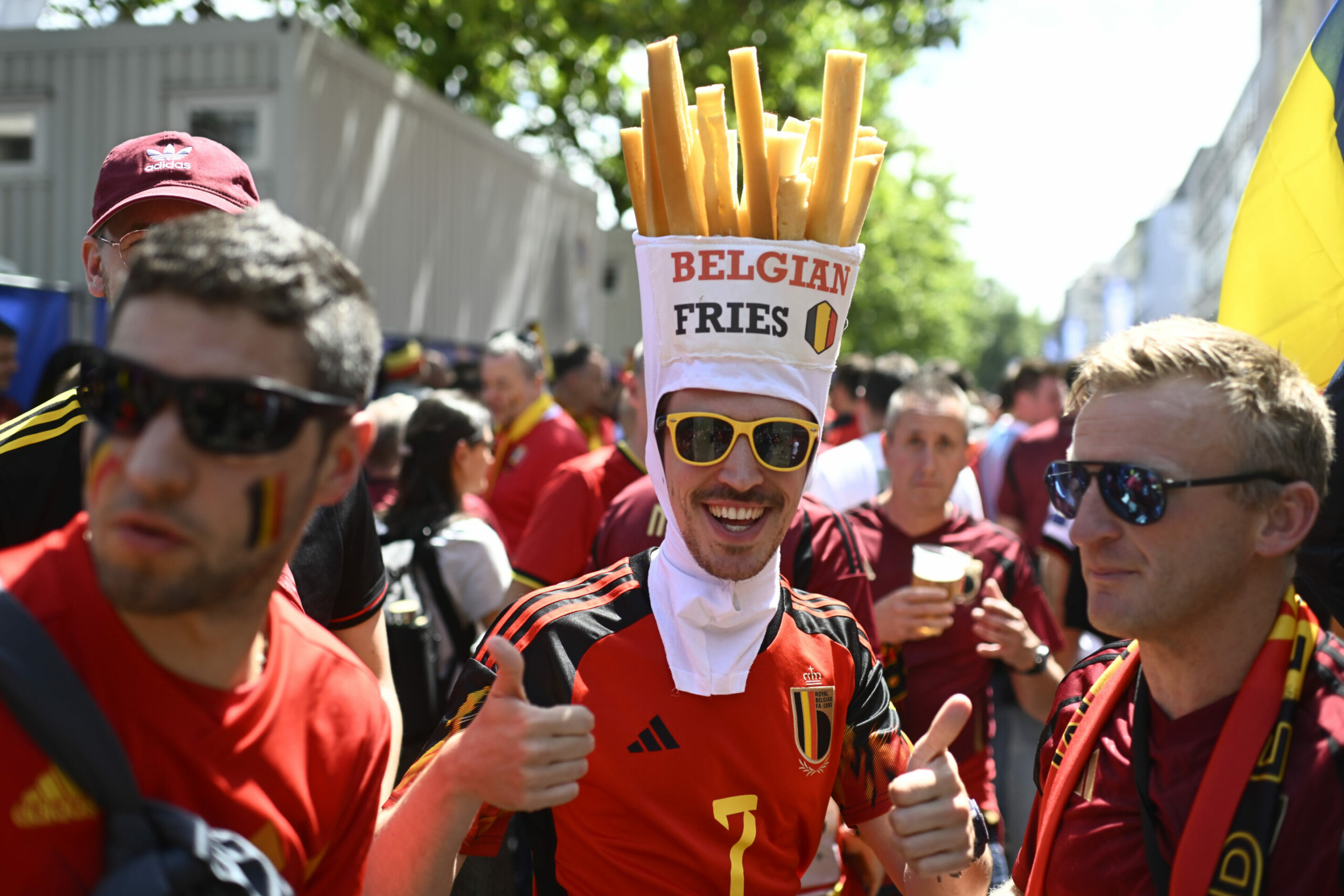
Picture of a Belgian football supporter at the Euro 2024 championship. Credit: Belga/Dirk Waem
Conversely, national traumas, from the Dutroux affair to the devastating floods in Wallonia, can stir emotions such as shame or anger. Even in sports, moments like the Red Devils’ painful defeats against France in the 2018 World Cup and the Euro round of 16 left a mark on the collective psyche. These moments spark a mix of frustration, pride, and a quiet desire to recover. These highs and lows play a major role in shaping our sense of nationalism.
A Lukewarm relationship with nationalism
Even though the so-called flat country is known for its humour, warmth, and festive spirit, Belgium appears to have a more reserved relationship with nationalism. In fact, the country seems more comfortable laughing at itself than celebrating itself.
In contrast, France openly celebrates its sense of national pride, which is reflected in both public discourse and education. In France, a dominant national narrative tends to prevail; there is space for opposing opinions, but fewer competing perspectives coexist simultaneously.
Belgium, on the other hand, is built on plurality. A defining trait of Belgian identity lies in its refusal to impose a single way of seeing things, instead welcoming the coexistence of multiple viewpoints. This philosophy is reaffirmed every year in the Belgian King's national address, which emphasises that Belgium is a nation made up of many stories, not just one.
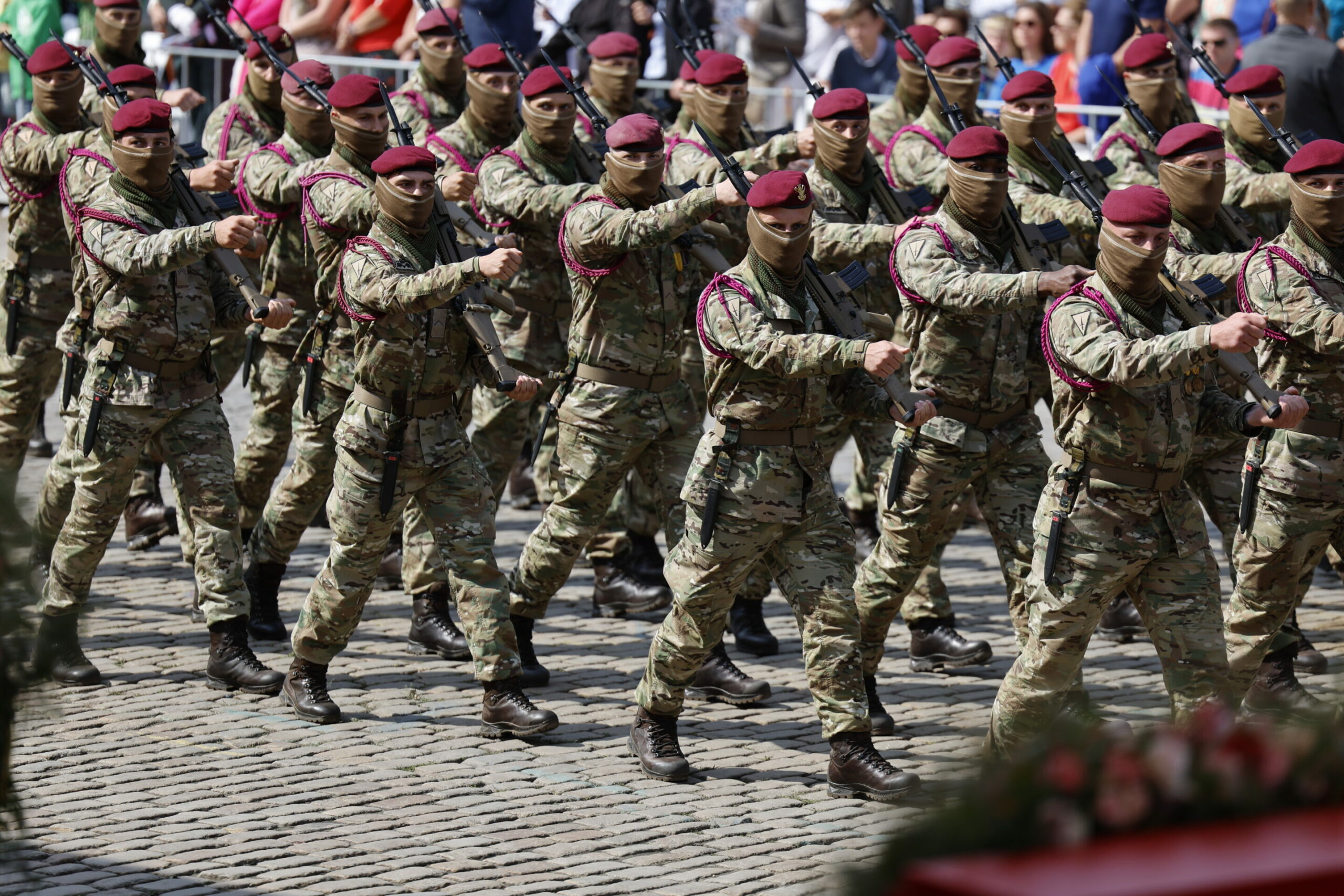
Military personnel take part in the military and civilian parade on the Belgian National Day, in Brussels, Friday 21 July 2023. This parade pays tribute to our country's security and emergency services, such as the army, police, fire brigade or civil protection. Credit: Belga/ Jan De Meuleneir
According to Olivier Luminet, this difference is also reflected in education: “Belgian history plays a minimal role in the history curriculum compared to French history in a French curriculum.”
This, he explains, is partly because Belgium's national history is less extensive, but also because the country tends to avoid grand unifying historical narratives altogether. That’s not to say Belgians don’t care about their country; they just express it differently. With irony, humility, and an enduring ability to not take themselves too seriously.
What still unites Belgians?
Despite linguistic barriers and a relatively young history of less than 200 years, Belgian nationalism is very much alive. Whether it's a love for fries on the Grand Place, a pint of Jupiler while watching the red devil, or beloved comic figures, Belgians do come together, often through food, humour, and art.
Related News
- 'I forgot it was happening': How do Belgians feel about National Day?
- How Brussels has changed since I arrived here on a rainy November holiday in 1989
Even the upcoming 2025 reboot of The Smurfs reflects a quiet pride in Belgium’s global pop culture footprint. The country’s comic book heritage remains powerful, to the extent that it can even be found on the Belgian passport. The illustrated pages featuring Tintin and other cartoons celebrate national identity, albeit quietly.
If Belgian nationalism is lukewarm, it is also unmistakably Belgian: understated, layered, and deeply aware of its contradictions. As actor François Damiens once quipped, “French people are always afraid to look stupid. Belgians just don’t realise when they do.”
That, perhaps, is the secret, a national identity built not on certainty, but on self-deprecation, resilience, and a kind of joyful ambiguity.
