
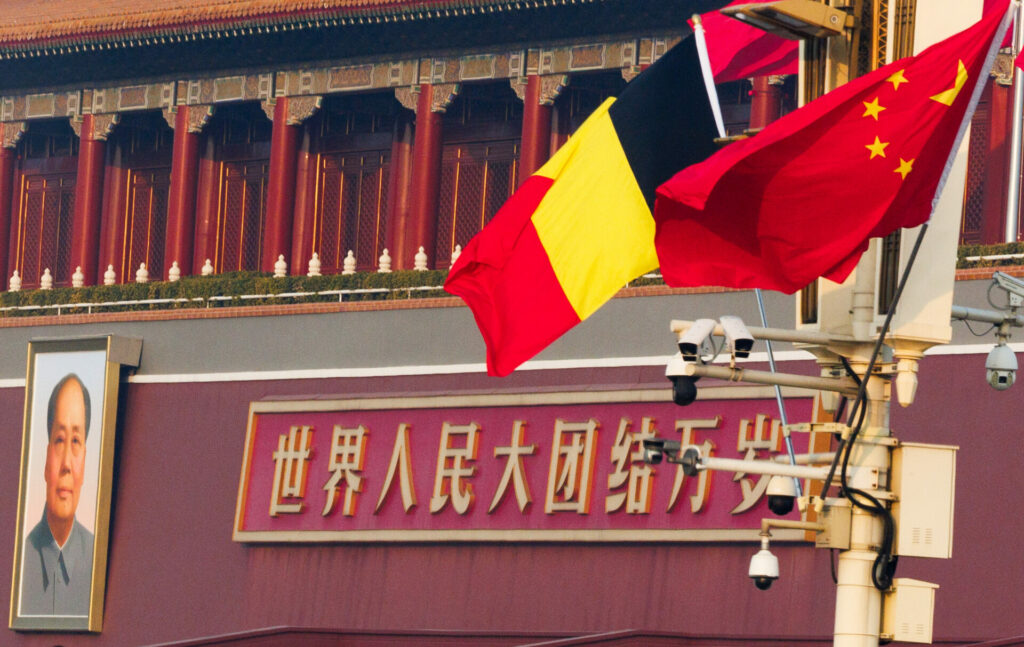
As Belgium marks its National Day on 21 July, the mood is one of celebration and reflection. It is also a time to take stock of the country’s identity at home and abroad. But for Belgium’s international partners, it is also a moment to reflect on the role this small but influential country plays on the world stage.
Among Belgium’s many global relationships, its longstanding partnership with China, the world’s foremost industrial economy, stands out for its blend of economic ties, cultural bridges, and diplomatic continuity. Despite differences in political systems and history, China views Belgium as a trusted partner and a bridge to the wider European Union.
This year’s National Day celebrations also coincide with two important milestones in China-EU relations: the 50th anniversary of China-EU diplomatic ties and the upcoming China-EU summit in Beijing. China's Foreign Ministry recently announced the normalisation of relations with the EU and intends to "strengthen dialogue and cooperation."
Brussels and Beijing have also secured agreements to lift restrictions on legislative exchange and explore cooperation on environmental issues, with a relationship based on “fewer accusations and more open, balanced communication." In this spirit of cooperation, The Brussels Times spoke with Chinese Ambassador to Belgium Fei Shengchao about what Belgium means for China, and how its diplomatic presence is advancing friendly relations between the two countries.
Small country, big impact
“Chinese people regard Belgium as a beautiful and unique country located in the ‘heart of Europe’,” Fei told our journalist. He described a deep admiration for Belgium’s “free and open trade environment, vibrant and diverse culture, as well as its advanced industrial and technological sectors.”
Chinese recognition of Belgium’s global contribution goes well beyond politics and economics. According to Fei, cultural icons such as Tintin, Magritte and the saxophone all enjoy strong followings in China. Belgian beer, chocolate, fries and mussels have also “won the hearts and palates of many food lovers in China,” while sports figures like Kevin De Bruyne and former table tennis world No.1 Jean-Michel Saive are “widely popular” among Chinese fans.
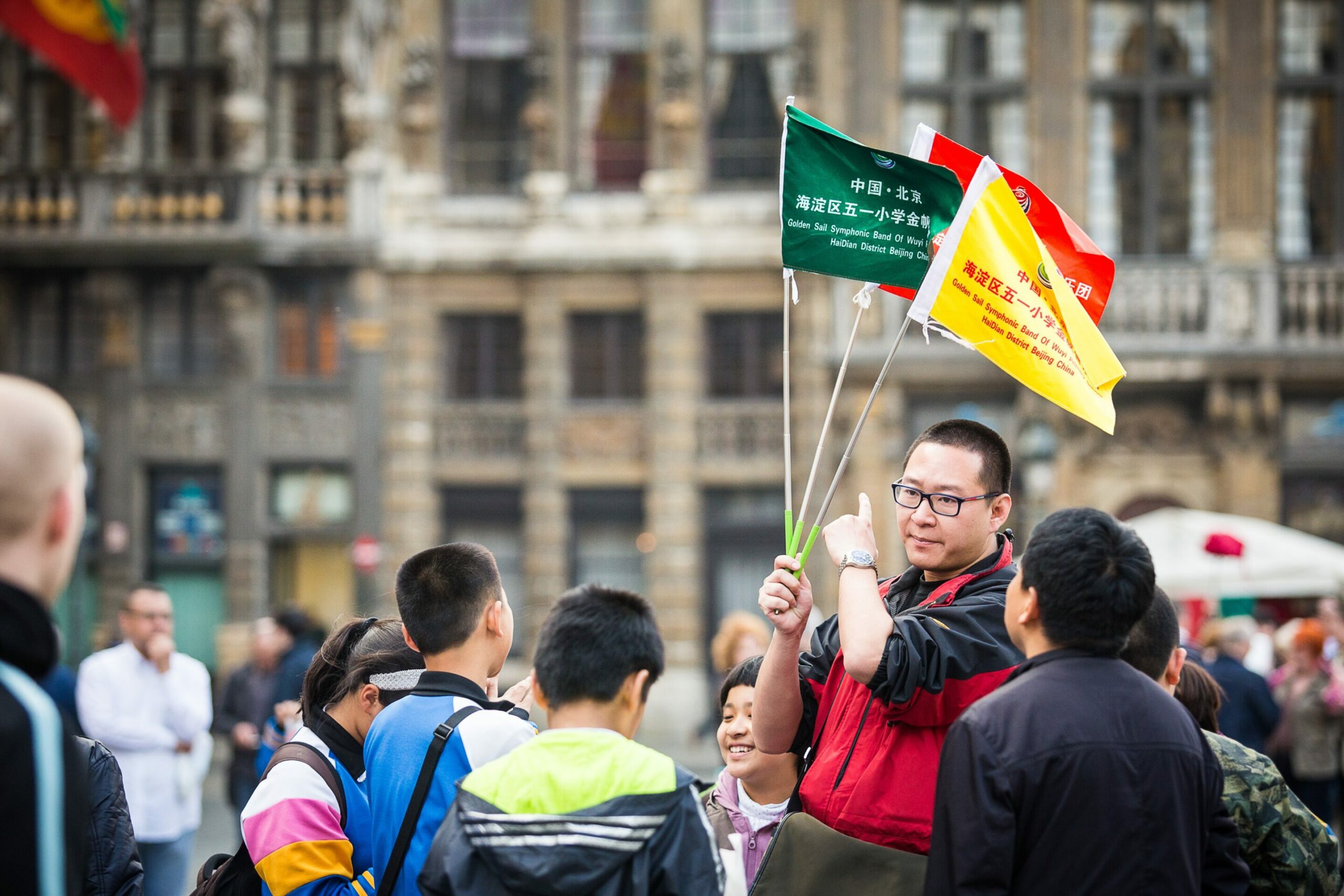
Illustration picture shows a Chinese guide holding flags as tourists visit the Brussels Grand Place on Thursday 02 May 2013. Credit: Belga/ Siska Gremmelprez
Belgian landmarks remain a highly popular tourist destination for Chinese travellers. “At some Belgian landmarks, as many as one in five international tourists are from China,” Fei noted, citing places like the Grand-Place, the Atomium, Bruges and Dinant.
These cultural and tourism ties are underpinned by a growing trade relationship. With investments such as the logistics hub at Liège airport, the Thunder Power EV production line in Gosselies, and the Zhengzhou‑Liège rail link, part of China’s Belt and Road Initiative, these economic ties are leading to job creation across the country.
“China and Belgium are important economic and trade partners to each other,” said Fei. China is Belgium’s third-largest trading partner outside the EU, while Belgium ranks as China’s seventh-largest partner within it. Since the establishment of diplomatic relations in 1971, trade volumes have grown from just $20 million to $39.2 billion in 2024, representing a nearly 2,000-fold increase.
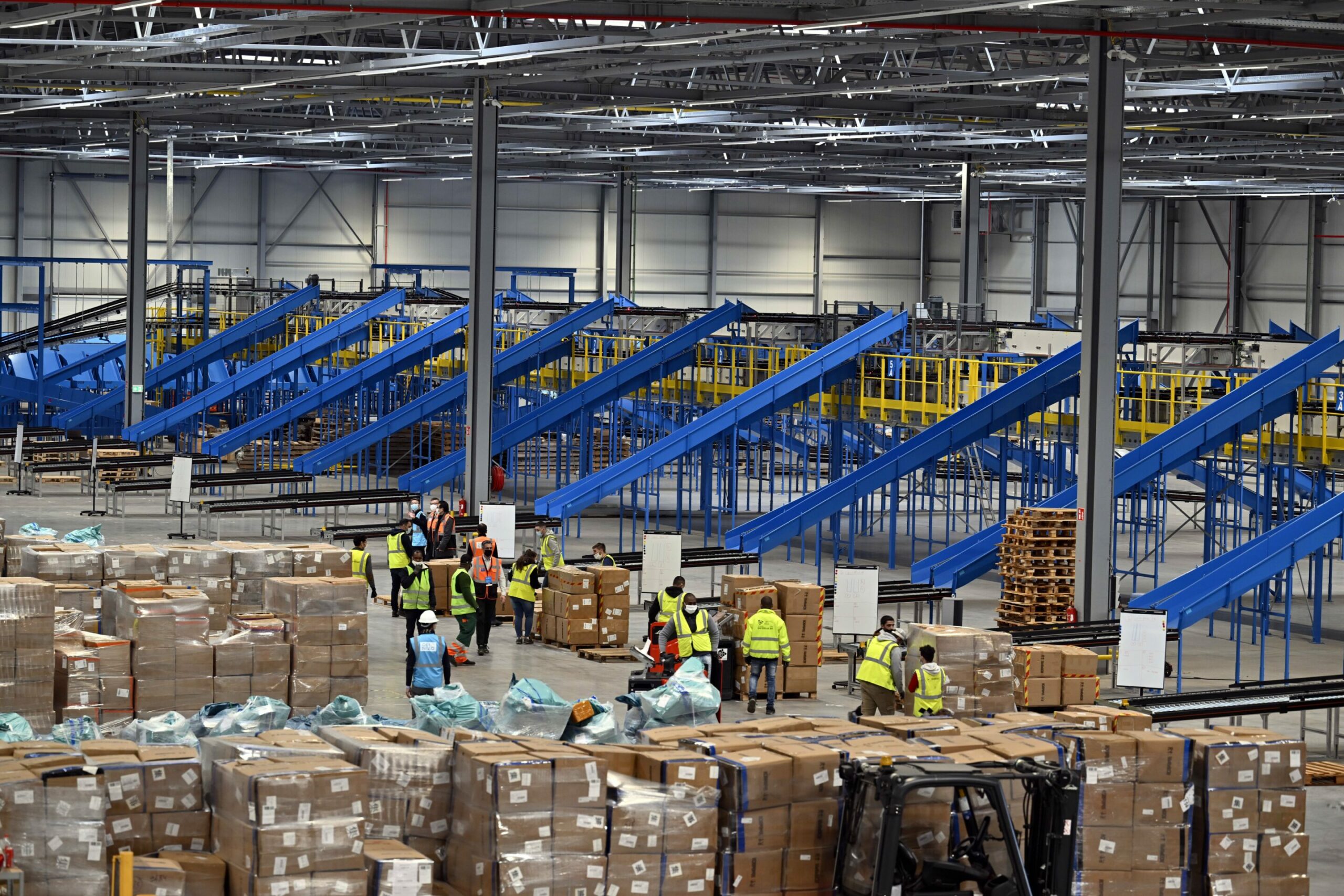
Illustration picture shows the inauguration of the logistics platform of Cainiao, the logistics branch of Alibaba, Monday 08 November 2021 at Liege airport in Grace-Hollogne. Credit: Belga/ Eric Lalmand
Fei said the strength of the economic relationship lies in its complementarity: “Belgium was among the first Western developed countries to actively welcome and participate in China’s reform and opening-up by investing in joint ventures.” Belgian multinationals such as Solvay, Bekaert, Barco, and Janssen Pharmaceuticals were among the early players, while more recent projects include COSCO’s Zeebrugge Terminal and Cainiao’s smart logistics hub in Liège.
These investments, Fei said, are not one-sided: “They have contributed to the great success of China and themselves with enormous economic and social benefits,” and have created “thousands of jobs for local communities while strengthening Belgium’s competitiveness.”
Looking ahead, he sees broad prospects for cooperation in agriculture, green development, pharmaceuticals, and multi-modal logistics. Despite global trade tensions, Fei is optimistic: “Despite the bad weather in international trade, China-Belgium economic and trade ties have proven to be quite resilient and productive.”
Towards a more productive relationship
However, Fei did not shy away from noting recent challenges. “Some media have been hyping up China-related economic and trade topics such as ‘overcapacity’ and ‘industrial subsidies’,” he said. These narratives, he argued, “oversimplify and attribute one party’s own economic difficulties solely to another party’s economic policies.”
While acknowledging that differences exist, Fei maintained that the relationship is built on mutual benefit. “Unlike some in other quarters, many in China and Europe still believe in the value of free and fair trade. Trade benefits families, businesses and nations alike, which is a blessing, not a burden.”
In his view, China’s continued opening-up offers substantial opportunities for Belgian companies. “With a population of 1.4 billion... and over 400 million middle-income earners, China imports over $3.2 trillion worth of goods and services every year.” As China advances reforms, it hopes to offer “ideal and abundant application scenarios for Belgian technologies.”
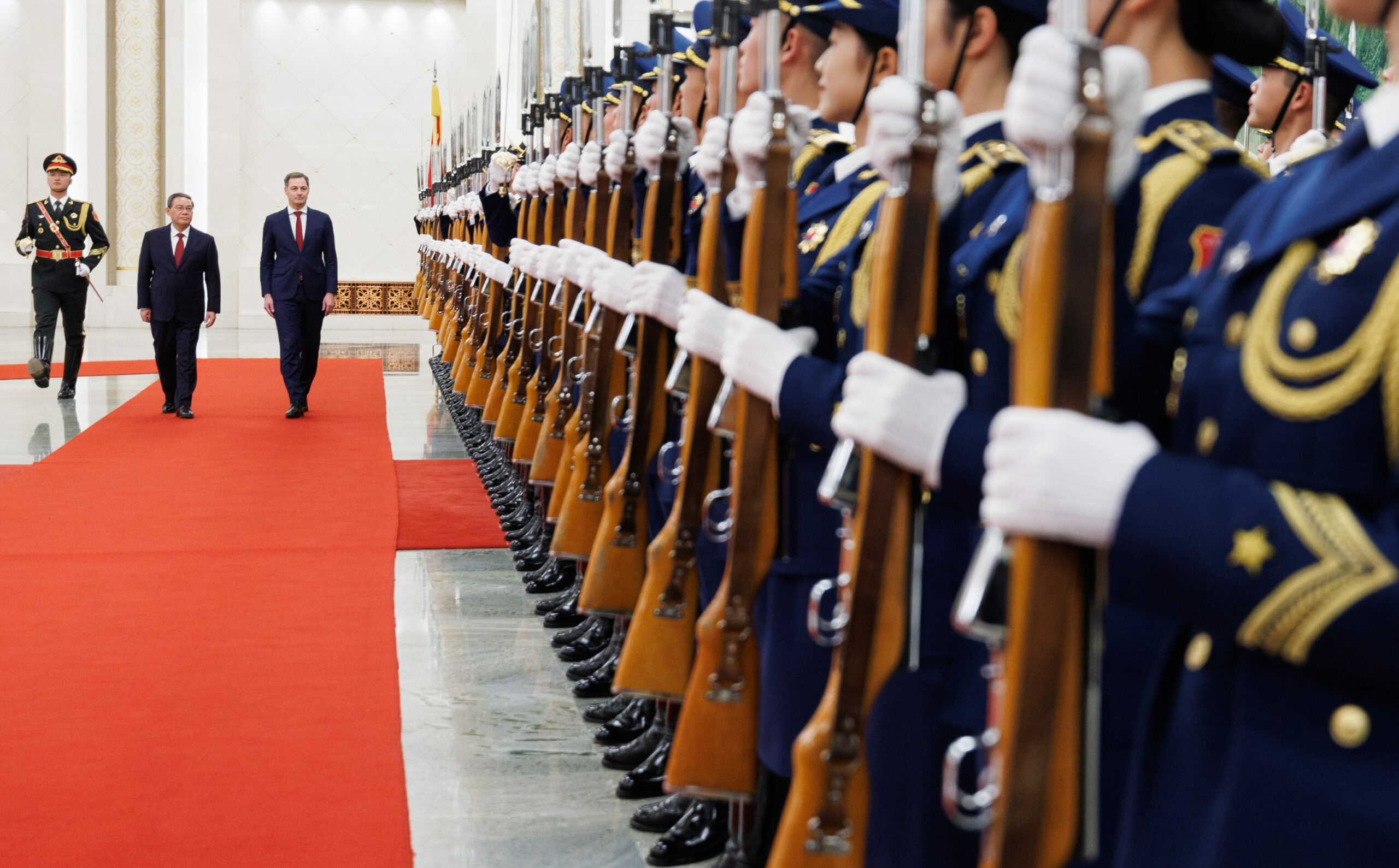
Chinese Premier Li Qiang and former Belgian Prime Minister Alexander De Croo inspect the troops ahead of one of several high level meetings in Beijing, China, Friday 12 January 2024. Credit: Belga / Benoit Doppagne
Beyond trade and diplomacy, Belgium has long formed interpersonal ties with the people of China. Fei recounted the 1961 visit of Belgian Queen Mother Elizabeth to China, ten years before official diplomatic relations began. Despite the political sensitivities of the time, she visited Beijing, attended National Day celebrations at Tiananmen Square, and met with Chairman Mao Zedong and Premier Zhou Enlai.
“After returning to Belgium, the Queen Mother described her trip to China as the best she had ever had,” Fei said, calling the visit a “treasured moment” in the shared history of the two nations.
In more recent years, high-level visits by President Xi Jinping in 2014 and King Philippe in 2015 have helped elevate the relationship to an “all-round partnership of friendship and cooperation.” According to Fei, these exchanges “have brought China-Belgium relations to new highs and offered strategic guidance for the growth of our relations.”
“Over the past half-century... all-round cooperation and friendship have always been the main theme of our relations,” he said. “When differences and frictions arise, they have more often than not been properly managed and addressed.”
Forging new ties
Fei praised the maturity of the bilateral relationship in the face of today’s turbulent geopolitical context. “Together, our two countries are exploring a path of mutual respect, peaceful coexistence and win-win cooperation,” he said, adding that Belgium and China should “make good use of the certainty and stability in our all-round partnership” to promote global peace and prosperity.
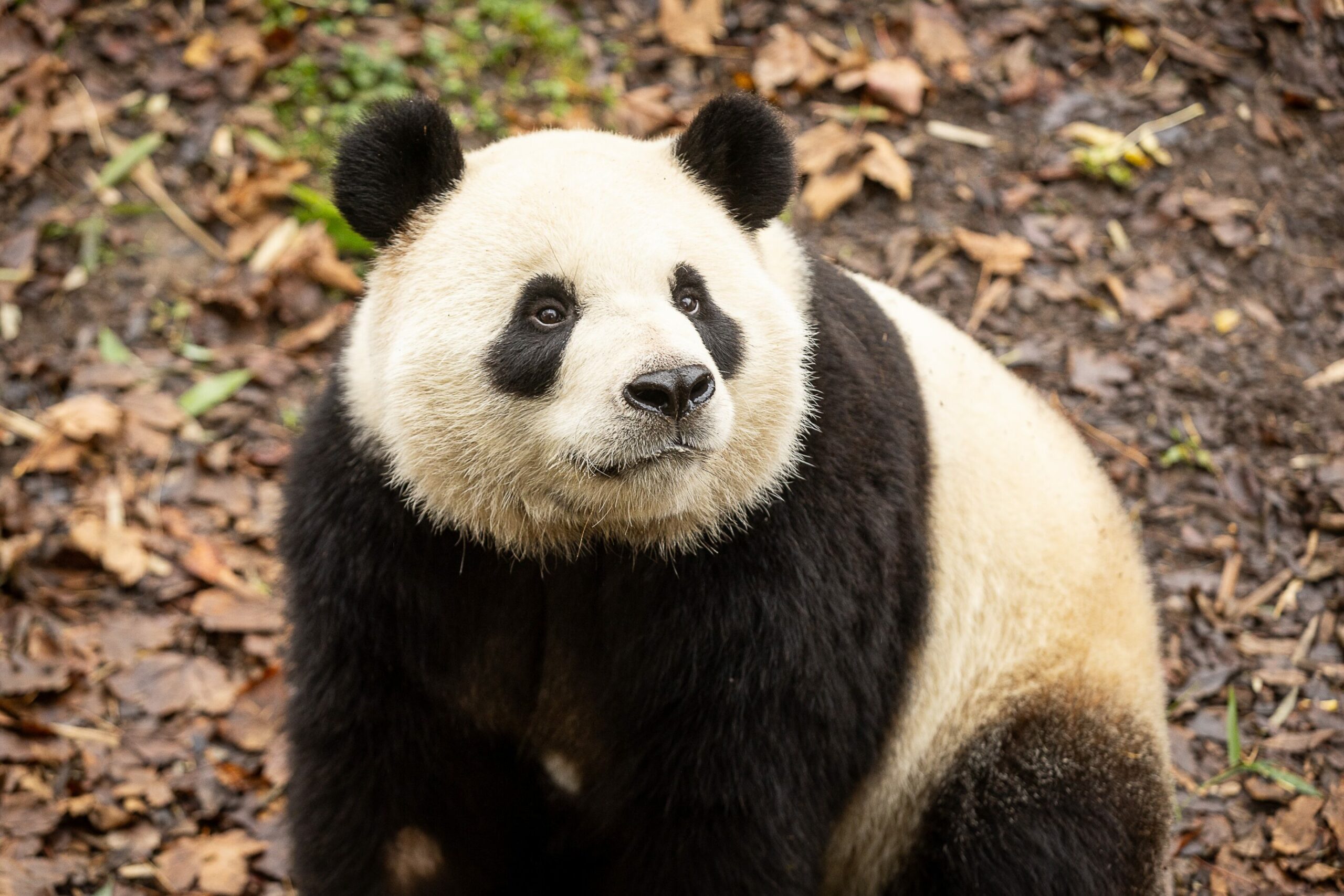
The last public feeding with the young pandas Bao Di and Bao Mei (2019) at the Pairi Daiza animal park, in Brugelette, Sunday 10 November 2024. The twins Belgian-born pandas left in December 2024 for the Giant Panda Base in Bifengxia, a research center in the Sichuan province in China. Credit: Belga/ James Arthur Gekiere
The ambassador also offered more personal reflections about his experience working as ambassador to Belgium. The first involves the famous panda exchange between the countries. Since 2014, Pairi Daiza zoo has hosted several giant pandas, including three cubs: Tian Bao, Bao Di and Bao Mei. “These adorable pandas brought our people closer and made important contributions to global efforts in panda conservation,” Fei said. Although the pandas returned to China in December, he said, “the friendship they have helped to build lives on.”
Related News
- EU-China summit expected to take place in July
- A world first in China: a half-marathon run by humanoid robots
- Multinational firms hold key to a third of Belgian jobs
Another story features Claude Brouir, a Belgian cyclist who embarked on a solar-powered journey from Brussels to Shanghai. Fei saw him off in April and described the journey as “a bridge-building ride... that helps to lend fresh impetus to people-to-people and cultural exchanges.”
Bilateral travel is growing again post-COVID, with 17 direct flights operating weekly and 30-day visa-free access available to Belgian passport holders. “Our Belgian friends are most welcome to visit China... and see and experience a China very much different from what’s often portrayed in a distorted light by some media.”
As for the role of the Chinese embassy in Brussels, Fei said the mission is clear: “to deepen China-Belgium relations and promote cooperation and exchanges across the sectors.” In his view, that means opening “more windows and doors for Belgian friends to gain a full, objective and accurate understanding of China,” while continuing to “build bridges and break barriers.”
