
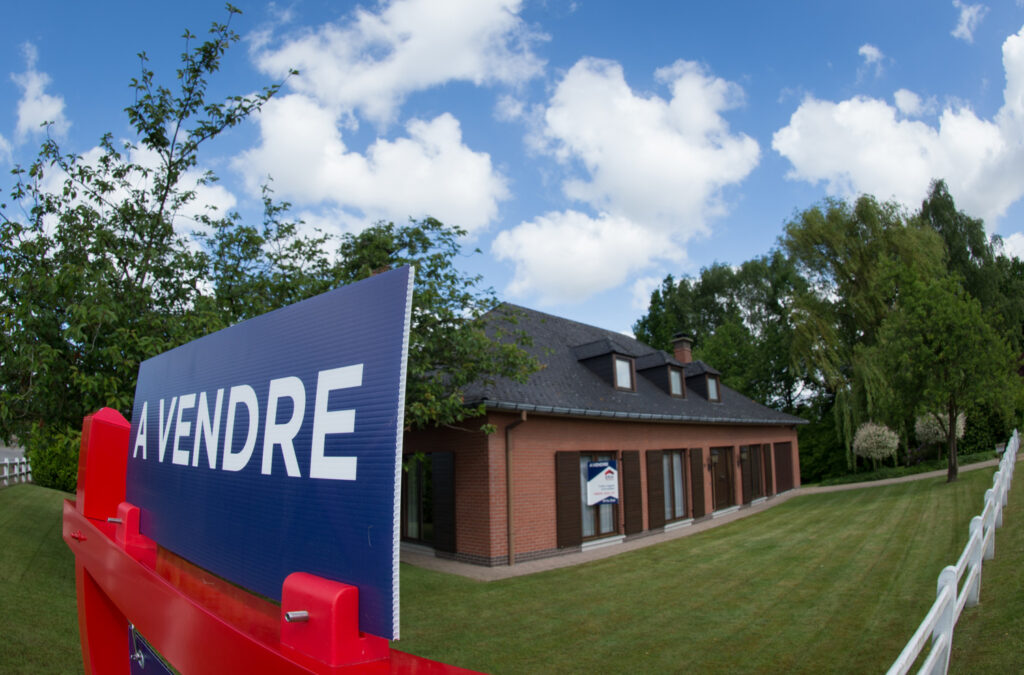
"À vendre." In Halle, real estate signs in French are not acceptable in the eyes of the municipal authorities. The mayor of the Flemish city, just outside the Brussels-Capital Region, is speaking out to denounce the fact that some agencies use French instead of Dutch.
The controversy escalated in recent days following the installation of "for sale" signs in French in the city. On behalf of a project developer, real estate agency Estate Immo – based in the Walloon municipality of Nivelles – is selling five new-build homes, but is not doing so in Dutch.
"We are seeing that real estate developers are increasingly using Walloon real estate agencies. As a result, they are installing signs only in French; which is unacceptable for us as a Dutch-speaking city," Halle mayor Eva Demesmaeker (N-VA) told VRT several days ago.
Demesmaeker, who said she receives complaints from "worried" residents, stressed that posting signs in French is not prohibited, but insisted that she wants to exert pressure to promote Dutch.
'Must remain a Flemish city'
"This is in direct conflict with the city's language policy," said Wim Demuylder (N-VA), Halle councillor for Flemish Policy.
"I have repeatedly requested Dutch-language signs, but the real estate agency has not responded. We demand that the French-language signs be removed immediately," said Demuylder. "At the same time, we urge project developers to collaborate with Dutch-speaking agencies. Real estate in Halle must be promoted in Dutch."
Demesmaeker, in turn, stressed that "Francophones will always be welcome in Halle," but added that "Halle must remain a Flemish city."
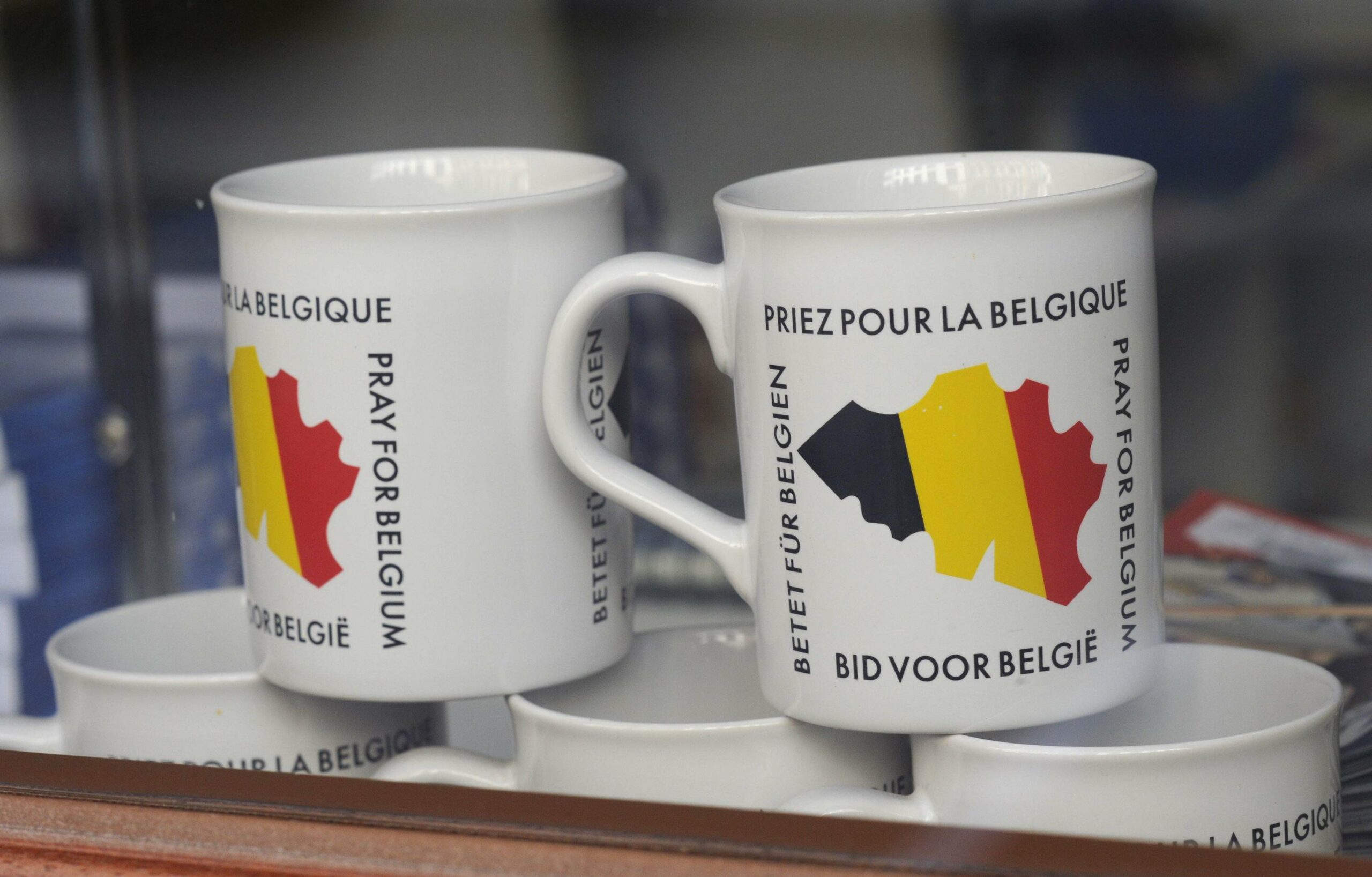
Mugs with the map of Belgium in the colours of the Belgian flag, and 'Pray for Belgium' in German, Dutch, French and English. Credit: Belga/Eric Lalmand
"That is why we are making extra efforts to teach Dutch. At home, everyone speaks the language they want. But ultimately, the language that unites all the inhabitants of Halle, regardless of their origin, must be Dutch," she said. "It is only natural that we expect those who come to settle here to be interested in our culture and our language."
According to her, Halle's "Dutch-speaking character must not be jeopardised. We will continue to actively protect and promote the Dutch language. We do this in accordance with language legislation and our vision for a Flemish city."
Contacted by La Dernière Heure, the Nivelles real estate agency that had posted the infamous French signs now confirmed that they had corrected the signs this Thursday. "Of course, this is no problem for us," said the agency, citing delays in the delivery of signs with Flemish inscriptions.
Why is this an issue?
While language is generally a delicate topic in Belgium, the use of French in Halle is particularly sensitive.
The municipality was part of the Brussels-Halle-Vilvoorde (BHV) electoral district from 1963 to 2012. However, as soon as the constituency was created, it became part of a Flemish-Walloon issue as a result of the establishment of the language border.
The constituency covered the administrative districts of the Brussels-Capital Region and Halle-Vilvoorde (35 municipalities of the Flemish Region, located around Brussels).
When the electoral districts for the Federal elections were legally changed from district to provincial in 2002, the BHV issue acquired a binding legal character which would dominate Belgian politics until 2012 – when a political agreement was finally reached on splitting the district.
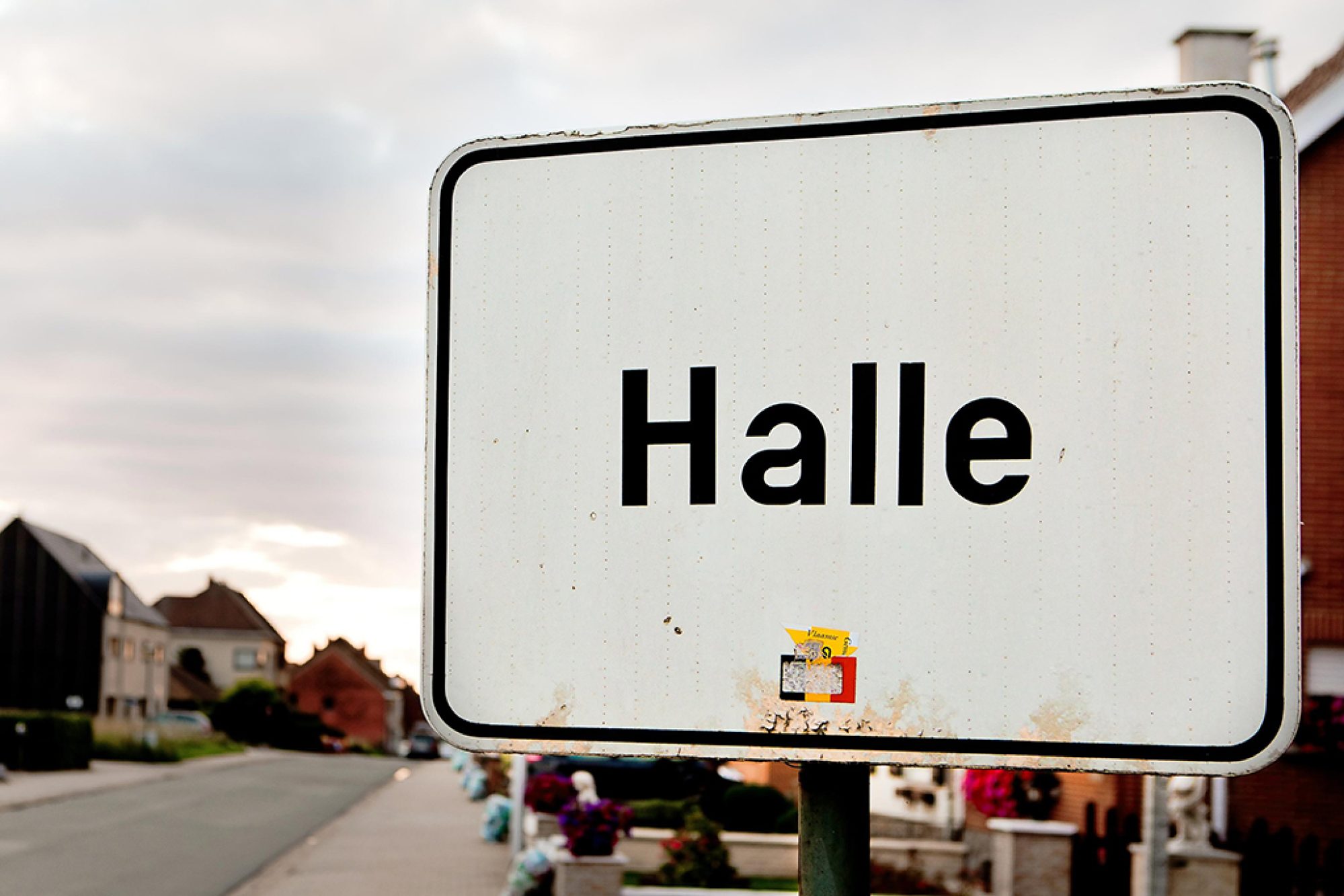
A sign for the municipality of Halle. Credit: Belga/Siska Gremmelprez
The split was originally a Flemish demand prompted by fears that the BHV constituency would contribute to the further "Frenchification" of the Flemish municipalities around Brussels. In their view, this would have a detrimental effect on the distribution of seats within this district.
After the introduction of provincial constituencies, the Flemish parties stressed the fact that this electoral district was unconstitutional – making an adjustment inevitable.
As a compromise solution between Dutch-speakers and French-speakers could not be reached, the issue dragged on for years. The main stumbling block was the demand put forward by Francophone political parties that French-speakers in these Flemish municipalities would still be allowed to vote for French-speaking candidates from Brussels.
In the final solution, this demand was partially met. Since its abolition in 2012, the Brussels portion has formed its own constituency, and the Flemish portion belongs to the Flemish Brabant electoral district.
