
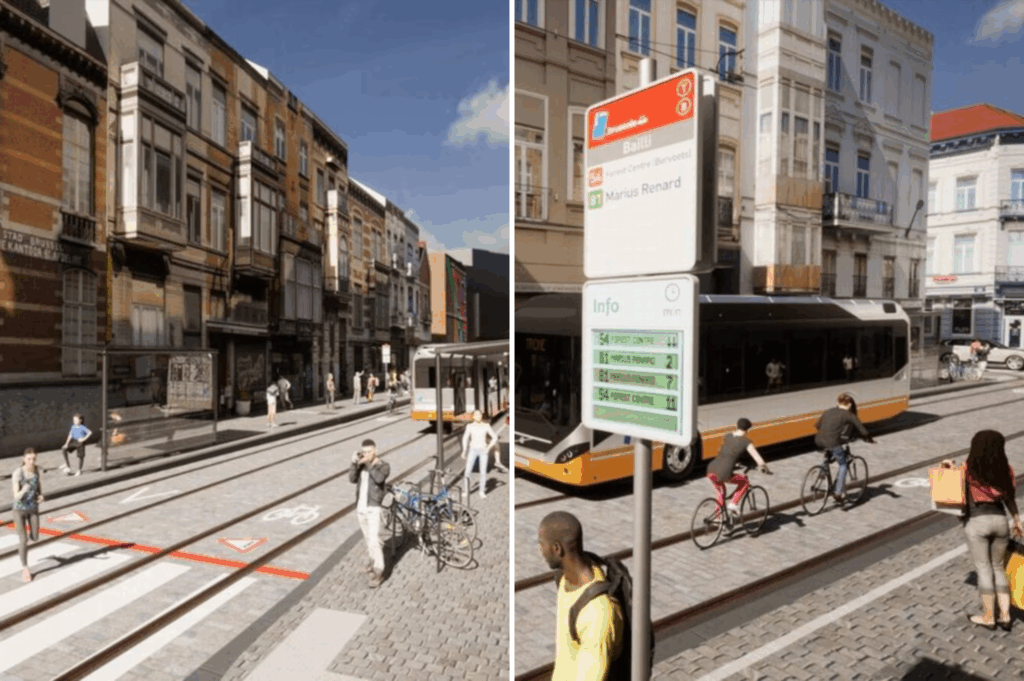
A major redevelopment of a key shopping street in the Châtelain district is causing tensions between two Brussels municipalities over plans to partially pedestrianise it.
Back in 2023, the Brussels-Capital Region announced plans to create a semi-pedestrianised Rue de Bailli, in the section between Avenue Louise and Rue de Livourne. The area is known for its boutique shops, restaurants and art galleries. Place du Châtelain was also recently renovated into a greener space.
With its plans for Bailli, Brussels aims to prioritise walking, cycling and public transport access to this shopping street, while also updating the tram infrastructure (e.g. rails) and replace the underground sewer pipes. The work will be carried out by the Brussels public transport and water operators, STIB-MVIB and Vivaqua.
The original plans had foreseen the full pedestrianisation of Rue de Bailli, but these were later shelved for a partial redevelopment. The works are due to begin on 4 August and will continue until, at least, the end of 2026.
Major disruptions to both public transport and car traffic are expected during to the nine-month redevelopment. Car traffic will be banned between Rue de Bailli and Avenue Louise, with access reserved for public transport and taxis.
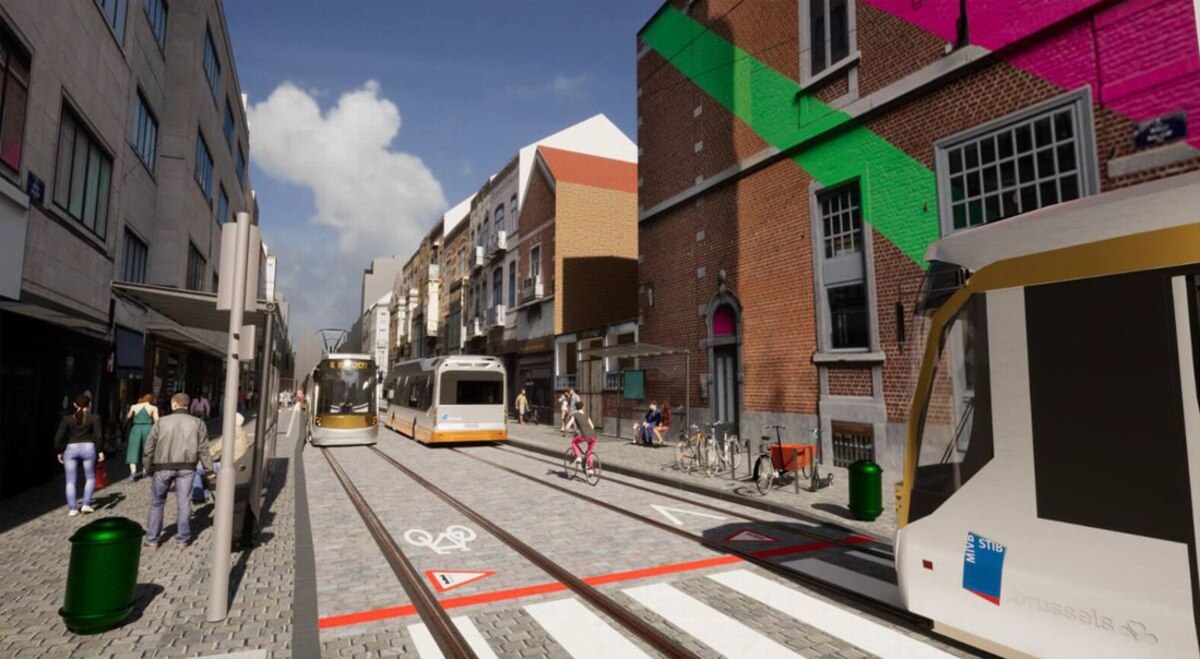
Computer-generated plans for semi-pedestrianisation of Rue de Bailli in Châtelain. Credit: STIB
Tram route 81 will be suspended between Flagey and Barriere for the duration of the works, and will be replaced by temporary bus 96. Buses 54 and 96 will be diverted between the Ma Campagne and Bailli stops via Place Janson and Rue Defacqz.
As part of the renovation plans, the tram tracks will be replaced and the pedestrian access will be improved. "We are going to widen the pavements, particularly at tram stops where public spaces are being developed," explains Camille Thiry, spokesperson for Brussels Mobility, to L’Avenir.
Ixelles v City of Brussels
Yet tensions have been rising between Ixelles and City of Brussels municipalities, with both having installed new ruling majorities since the local elections last October.
The "gerrymandered" municipal borders in Brussels are part of the issue: the key section to be redeveloped lies within the City of Brussels’ borders, but is surrounded on either side by Ixelles. The border splits also half way down Rue de Bailli, coming from the Avenue Louise side.
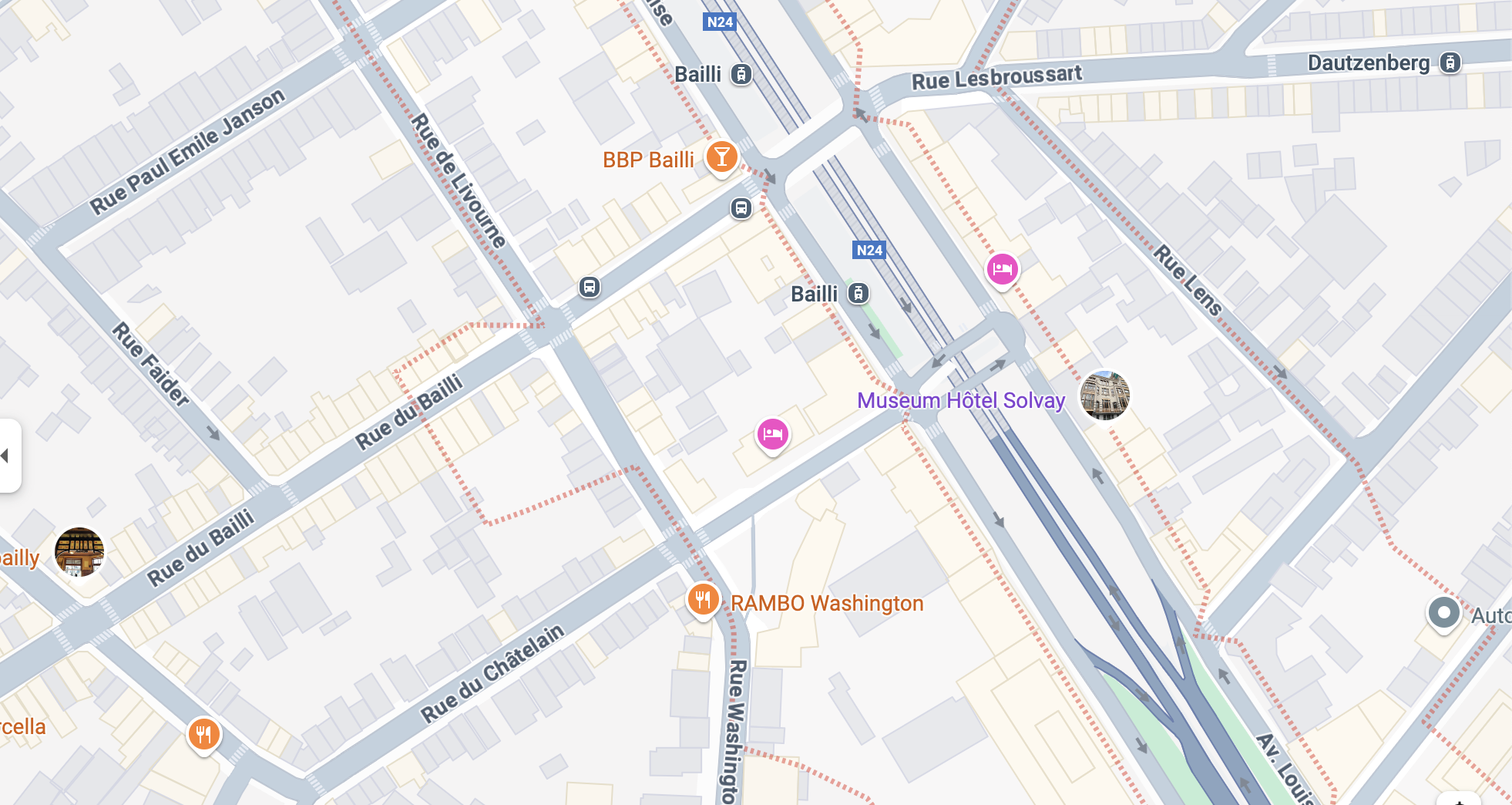
Red lines are the borders of the City of Brussels on Rue Bailli, with Ixelles on either side.
The anger is coming from Ixelles' new ruling coalition, comprised of MR, PS and Les Engagés. They are not opposed to the road renewal works but are calling for modifying the semi-pedestrianisation project.
"The commercial fabric of Rue du Bailli is under threat," said Gautier Calomne (MR), Ixelles’ Deputy Mayor in charge of Economy and Trade. "This creates an additional obstacle for Ixelles. A pedestrian zone in this location is disproportionate."
Ixelles Mayor Romain De Reusme (PS) told La Libre that he fears that traffic will be diverted to the small streets, an argument often made by critics of Brussels' mobility plan, Good Move.
"The closure of a lane in the tunnels on Avenue Louise and the renovation of Place du Châtelain have changed the situation. The project needs to be reconsidered," De Reusme said.

Computer-generated plans for semi-pedestrianisation of Rue de Bailli in Châtelain. Credit: STIB
Yet the City of Brussels is not backing down. Mayor Philippe Close (PS) responded that Ixelles’ previous coalition had voted in favour of the project. As the project involves regional money, they should refer any disapproval to the outgoing Brussels Mobility Minister Elke Van den Brandt (Groen),
Even within the City of Brussels side, there is not unanimity. MR, who joined PS’ ruling coalition after the last elections, have also spoken against the "legacy of the former municipal coalition".
"The permit was issued in 2023 and we are not in favour of it," said David Weytsman, MR councillor and president of the municipality’s CPAS.
"On the one hand, it risks simply shifting traffic to neighbouring streets, to the detriment of local residents. And on the other hand, within the council, we are working primarily to improve the flow and accessibility of our shopping centres," Weytsman continued.
Despite the protests, STIB says the development will be a "big boost" for the neighbourhood, and plans to go ahead with the work from Monday 4 August.
Divided shopkeepers
Shopkeepers too, see the long-term benefit but regret the lengthy disruptions caused by the works.
Certain business owners wish that they'd been informed earlier so they could have been better prepared. One biscuit shopkeeper is worried about a new bus stop right being installed just outside their premises, while others may be able to actually extend their outside seating areas.
"We're quite divided," Yota, manager of the Bon fast food chain told SudInfo. "The semi-pedestrianisation could have some advantages: greater visibility, the possibility of extending my terrace... In the long-term, it could be positive."
"But if there is the slightest delay, it could really hurt us. And the timing is bad: August and September are two big months for us," she concluded.
