
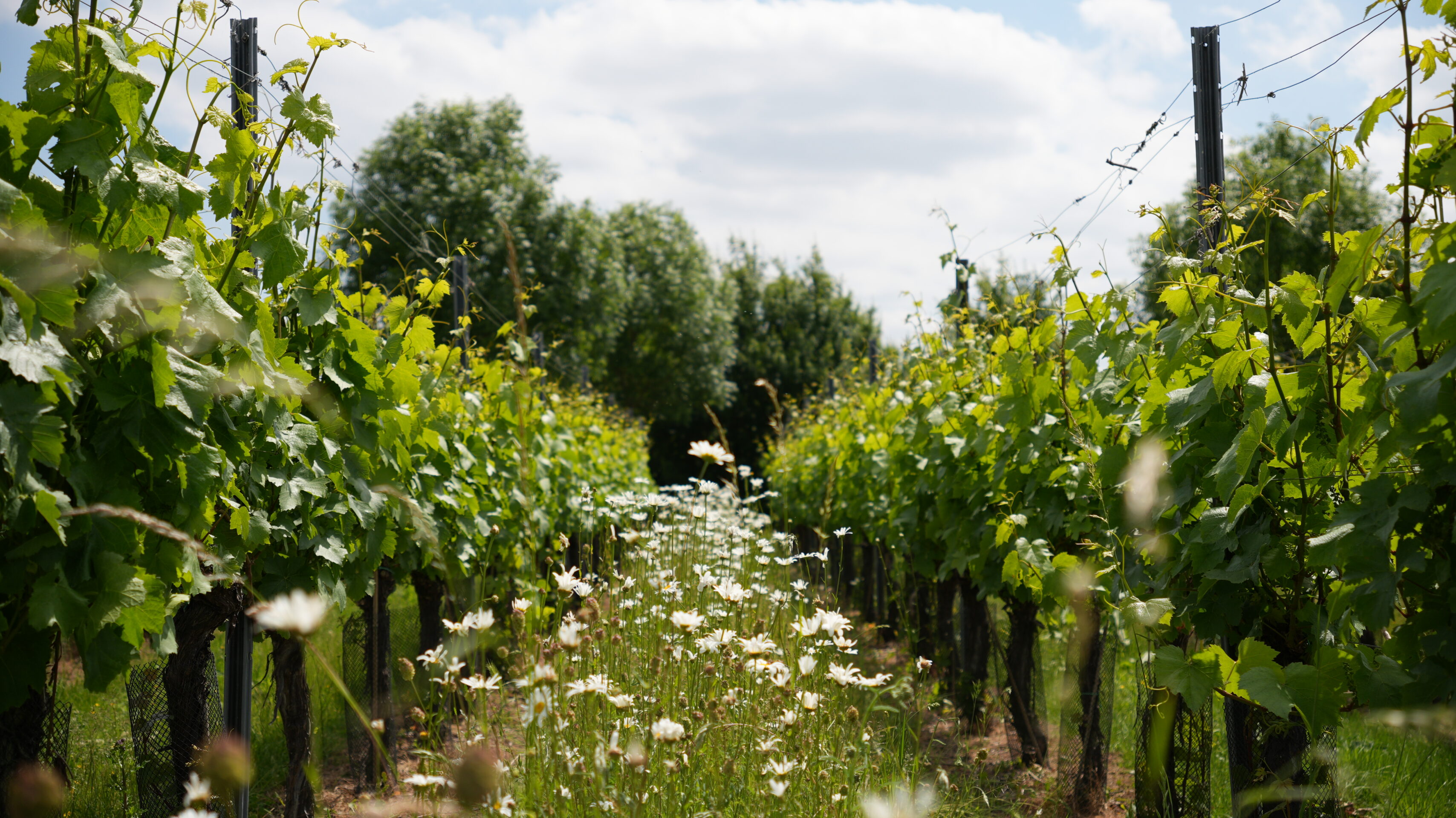
When people think about vineyards, they think about rolling plains in the south of France or rows of vines against Italian hills, but Belgium – not exactly known for its warm and sunny weather – has also been making a name for itself in the world of red, whites and rosés.
Belgian wine has been up and coming for a few years, but 2025 might be the year that the tiny country's winegrowers start feeling confident enough to hold their ground against wine giants such as France and Germany – despite 2024's difficult harvest.
"15 years ago, people came here to discover Belgian wine. But now, people come here to discover the newest vintage. That has been an unimaginable game changer," Karel Henckens tells The Brussels Times.
Henckens is the owner of the Aldeneyck wine domain in Aldeneik, a small town in the Flemish municipality of Maaseik (Limburg province), where he grew up. For over 20 years now, his wines have been winning dozens of medals and awards, both in Belgium and abroad.
Wet feet
Just two months ago, he and his wife Tine took home the Gault&Millau Belgian Wine Award for their Aldeneyck Riesling Purnot 2023. On top of that, five of their wines were featured in this year's edition of the prestigious wine guide.
Safe to say: Aldeneyck did not suffer too much from last year's bad weather. According to the latest figures by the Federal Economy Ministry, Belgian wine production decreased by 64% in 2024, with one in five winegrowers losing almost their entire harvest due to the poor weather conditions.
Night frost struck at the end of April, causing the loss of plants that were already budding. The exceptionally rainy spring until the end of June also led to extensive flowering failure and high mould pressure. "Fair enough," as Henckens likes to say. "I don't like having wet feet either."
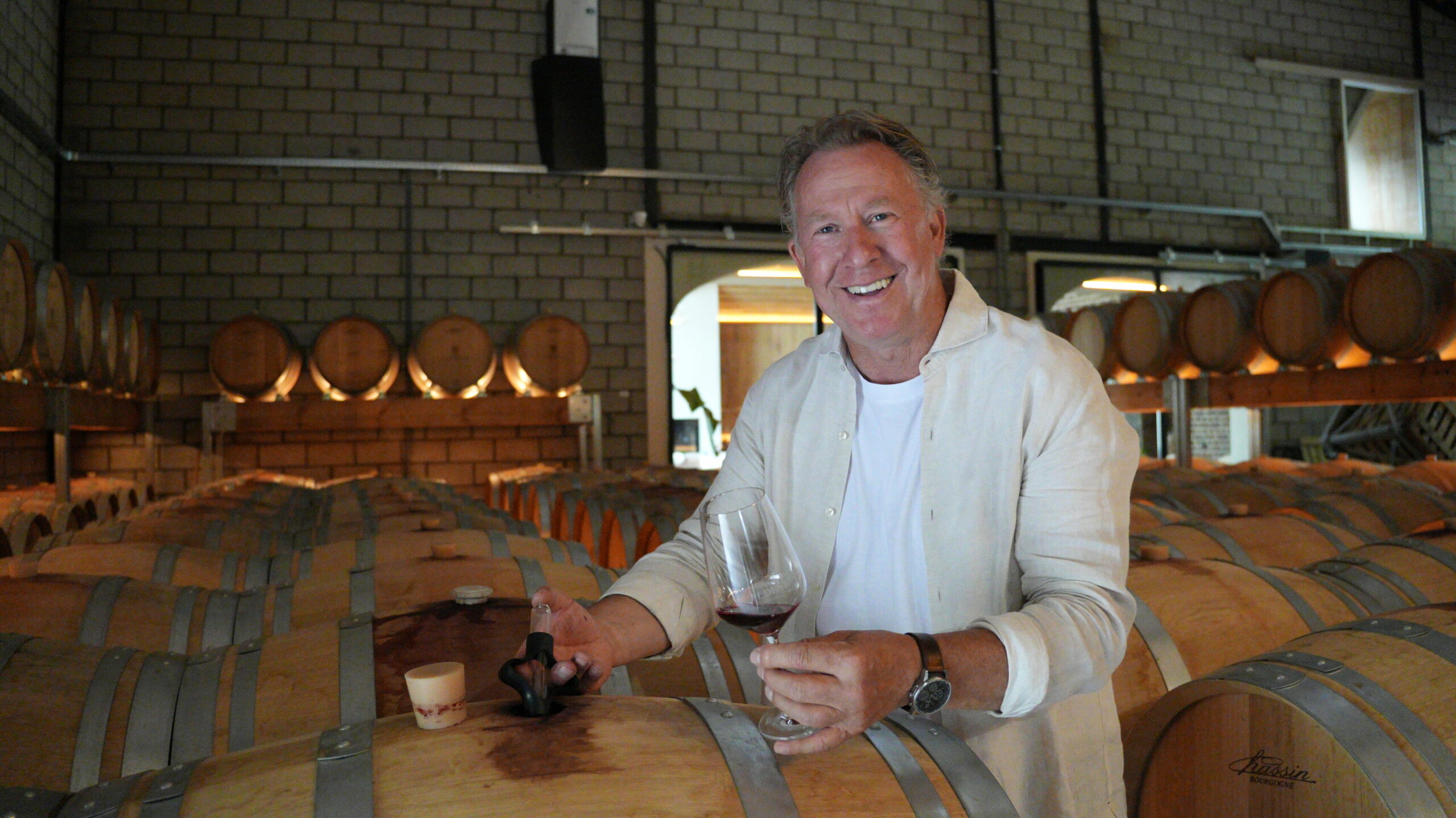
Karel Henckens, owner of the Aldeneyck wine domain in Maaseik (Limburg). Credit: Dries Mockers/The Brussels Times
Looking at the figures, most of Belgium's winegrowers had to wring out their socks last spring: production across the country dropped to roughly 1.226 million litres of wine – the lowest since 2017. Still, the decline is relative, as 2024 is being compared to 2023 and 2022, which both had "exceptional" yields.
But importantly, the Economy Ministry and Henckens emphasised, the grapes that managed to make it through the cold and the wet were of "excellent" quality.
While the Aldeneyck domain's proximity to the Meuse river and other water zones usually ("Knock on wood," Henckens says) protects it from the worst of the frost, the 12 hectares of vineyards – located in what is known as the driest region in the Benelux – suffered from much more rainfall than usual.
"Grapes absolutely cannot handle that, especially not during the flowering period. We were only able to harvest half of our usual yield," Henckens says. "So in that sense, it was a bad year. But the less we harvest, the better the quality."
Difficult year, difficult climate?
The bad shoots are cut off immediately, allowing the plants to focus on what's left of their bunches. "A vine that normally feeds 30 bunches and now only has 15 develops more sugars, more flavour. Still, I have to be honest: I would have absolutely preferred my barrels to be full."
"So that was the bad part," he says. "But I would not call it a bad year, I prefer to speak of a difficult one."
When asked if "difficult" years are not par for the course in Belgium's frequently cold, grey and wet climate, Henckens says that much depends on how you deal with what nature throws at you. And about focusing on what you have, instead of getting hung up on what you don't.
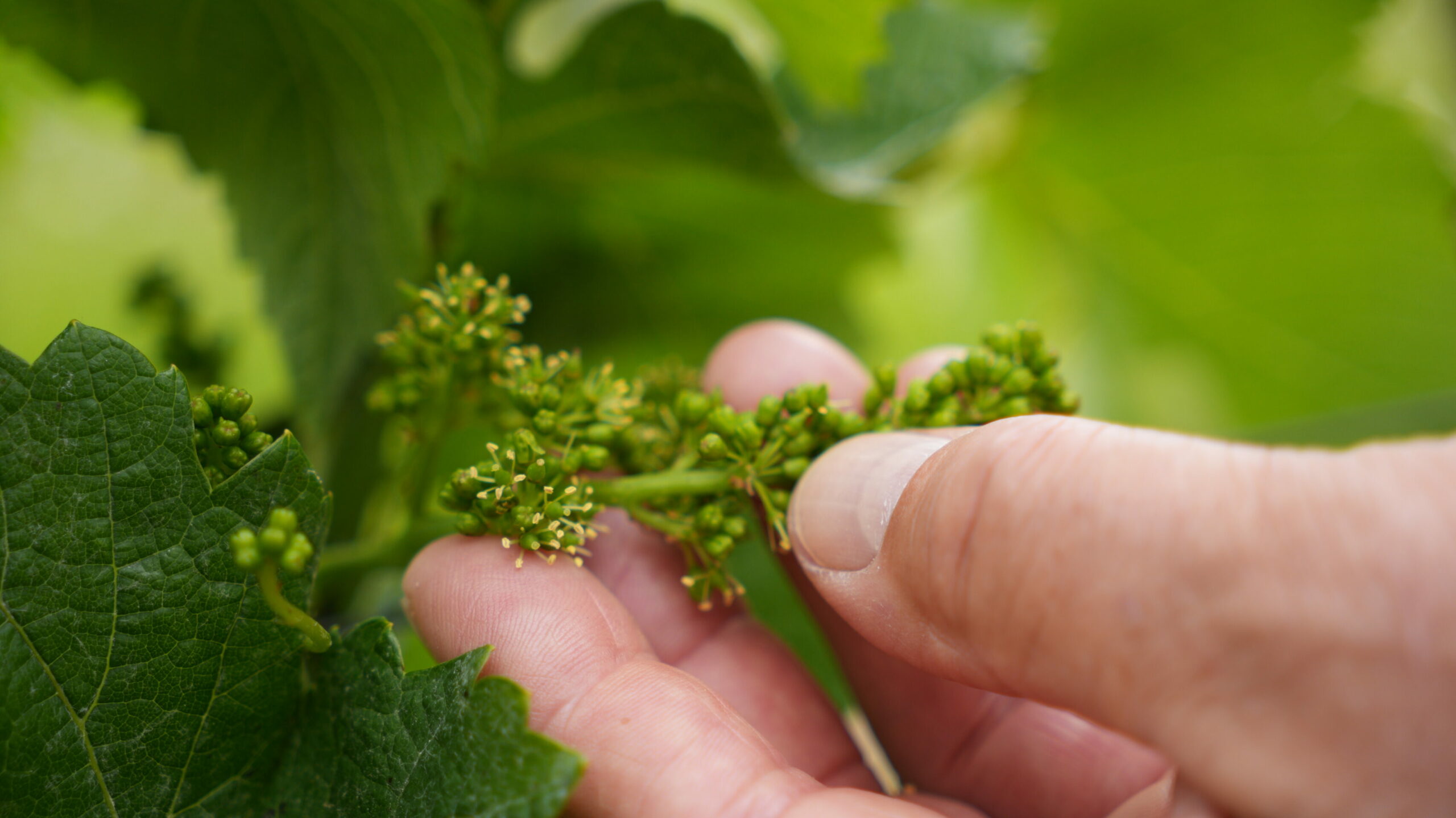
The start of a new bunch of grapes in the small vineyard near Henckens' home. Credit: Dries Mockers/The Brussels Times
"Winegrowers in traditional wine regions have been experimenting for hundreds of years, trying to figure out what works there and what does not. A Pinot Noir, for example, has been around for 500 years. That wheel has already been invented. I do not need to do that again," Henckens says.
Instead, he focuses on the nuances of the soil and terroir that are present in his plot of land. "It is my job to bring that to a successful conclusion and show people, 'look, this is the flavour we can create here.' But within that, everything is possible: we have reds, whites, rosés and sparkling wines too."
"People often rely on comparison, but a Chardonnay from here is different from one that comes from Burgundy, its birthplace. And it should be. Do I strive to make the same thing? No. I don't want to be a lookalike," he stresses. "I am proud of my region. This is our style, and that is what I offer to people."
The art of Belgian balance
And Aldeneyck's style, as well as that of Belgian wines more broadly, is being recognised abroad – for its continuity and for the elegant way it balances flavours. "Germans make wine that is a bit rigid, like the Germans themselves tend to be. The French, also true to how they are known as people, play around with it a bit more: they use more wood, more mulch, more interfermentation."
"In Belgium, we take from others what is important for us. It is a bit of a compromise between the two, a balance. That is what we are known for," Henckens says. He does not say it in so many words, but his meaning is clear: the main characteristics used to describe Belgium's wines are the same ones used to define its people.
While regarded by some as boring, balance and compromise seem to be exactly what many are looking for: Belgium has been experiencing a veritable wine boom in recent years – something that Henckens, who was one of the pioneers, can only encourage.
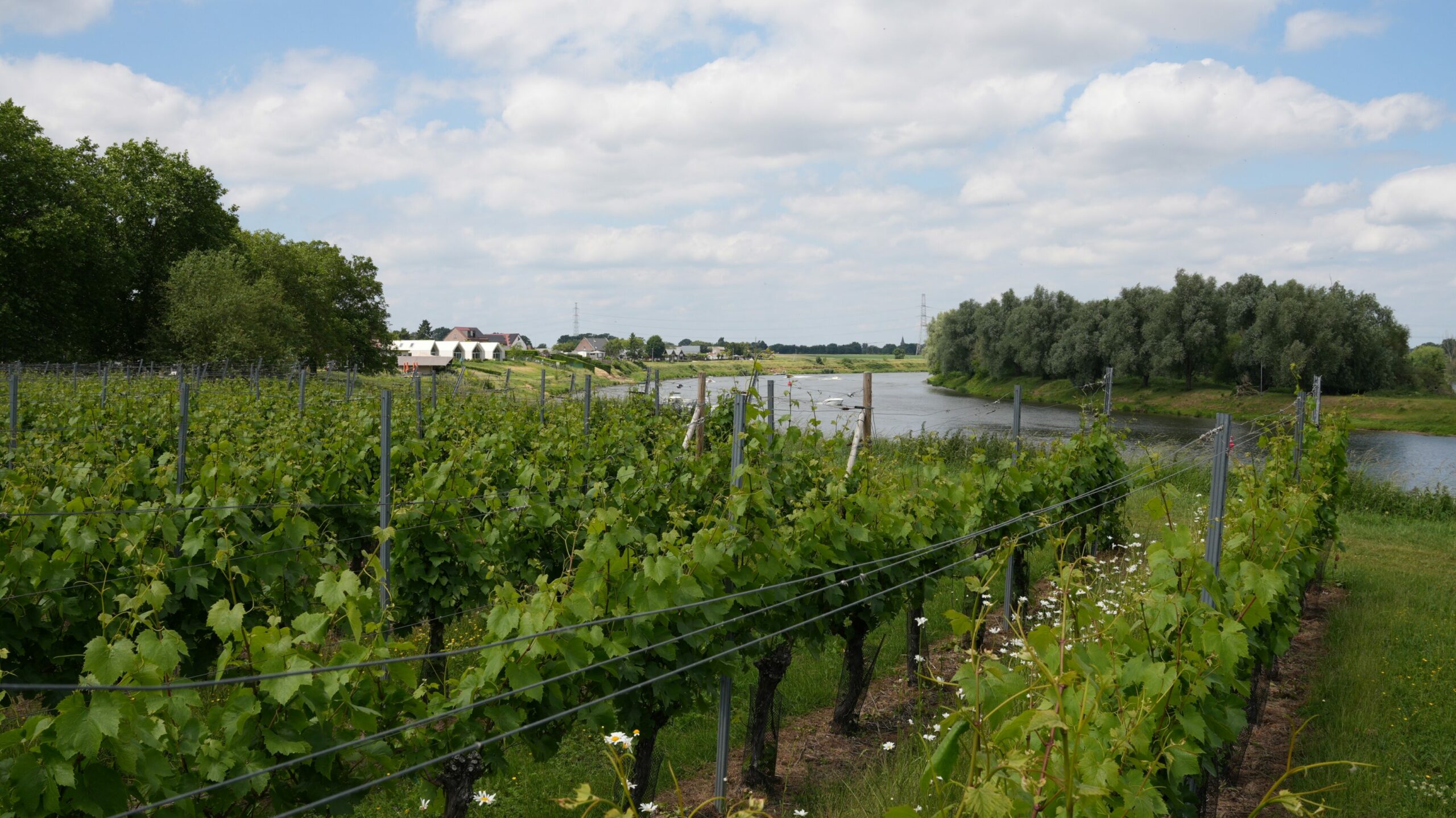
Aldeneyck wine domain in Maaseik (Limburg). Credit: Dries Mockers/The Brussels Times
"It is so good to see. The more, the merrier," he says, stressing that the number of Belgian winegrowers is rising year after year. Nearly 1000 hectares were used for vines in Belgium last year, a doubling compared to 2020.
"Belgian wine is no longer niche, even if we will likely always remain one of the smaller players," Henckens believes. The German Moselle region, for example, now has 8,000 hectares. Bordeaux has 120,000 hectares, but some 20,000 are being removed because of a major crisis: they can no longer sell their large wine stocks. "But here, more vines are still being planted. Belgian wines are hot."
