
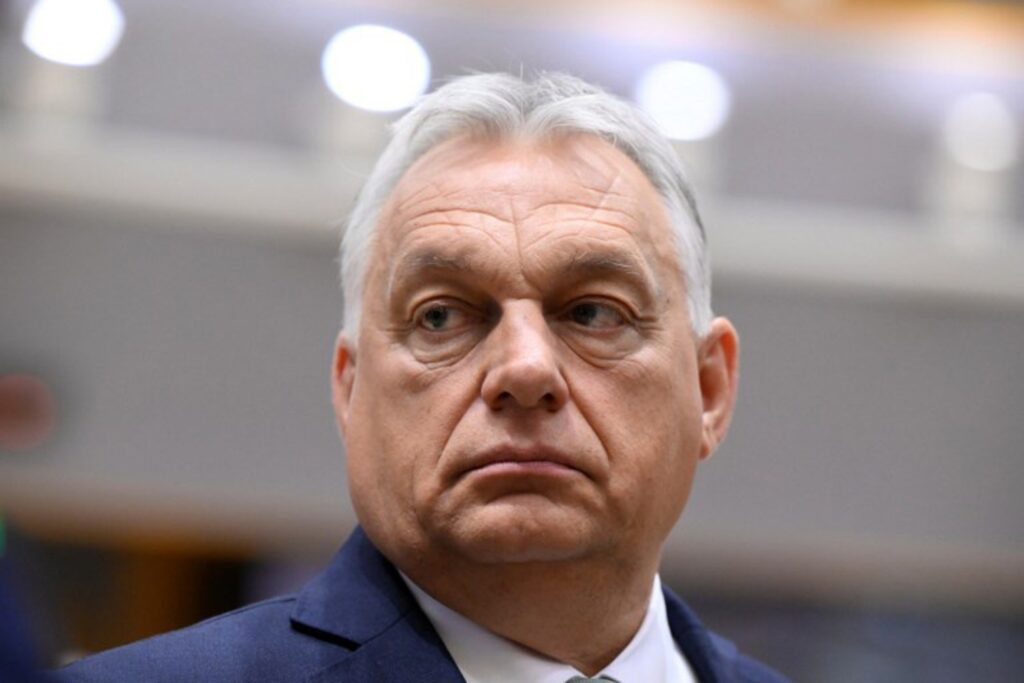
Hungarian Prime Minister Viktor Orban has claimed that the European Union risks “collapsing,” suggesting that only a multi-level integration model can save it.
The concept of a multi-speed EU allows certain member states to move at different rates in European integration regarding various policies and issues.
Nationalist leader Orban, known for using his veto power within the EU and criticising Brussels, made these comments following a speech at a summer university in Baile Tusnad, a town in Romania’s Transylvania region with a Hungarian ethnic minority.
When asked what he would do if he led the European Commission, Mr Orban stated that he would return rights to member states and begin constructing “concentric circles” of European integration.
The first of these circles would focus on security, including Ukraine and Turkey, two countries that aim to join the EU. However, Orban raised several objections and obstacles to Ukraine’s integration into the Union.
The second circle would address economic integration and the Schengen Area, in which he affirmed Hungary’s continued participation.
The third circle would encompass the current eurozone, and the fourth would be a circle of “constitutional institutions” for member states aspiring to “an even stronger union.”
“Building this Europe of concentric circles is the only way to save the European Union. Otherwise, it will collapse, disintegrate, and begin to connect with external reference points like the British,” Orban asserted.
The Hungarian Prime Minister cited immigration as an example, as Hungary and other countries seek to avoid the EU’s common asylum policy.
