

Twelve years ago, Sébastien Boussois arrived in Belgium’s capital with wonder. A French researcher and political scientist, he saw in Brussels what many Parisian newcomers still hope to find: a calmer, softer alternative to Paris, a city with a provincial charm and a cosmopolitan promise, a European microcosm held together by a quiet art of living.
"I used to adore Brussels," he says to The Brussels Times, full of nostalgia. "It was more relaxed than Paris, more pleasant, healthier in a way. But that’s all gone."
Boussois speaks today with the candour of someone who is truly disappointed. His recent essay, provocatively titled Bruxelles poubelle, je te fuis bientôt (Brussels, trash city, I will soon flee you), ricocheted across Belgian media. It is not an attack from afar, he insists, but the grief of someone who once loved this city deeply.
Brussels is no ordinary capital. It is not just the seat of Belgium’s divided federal state but also the heart of the European Union, home to the European Commission, the European Council and NATO. It should, Boussois argues, radiate the prestige and confidence of a continent.
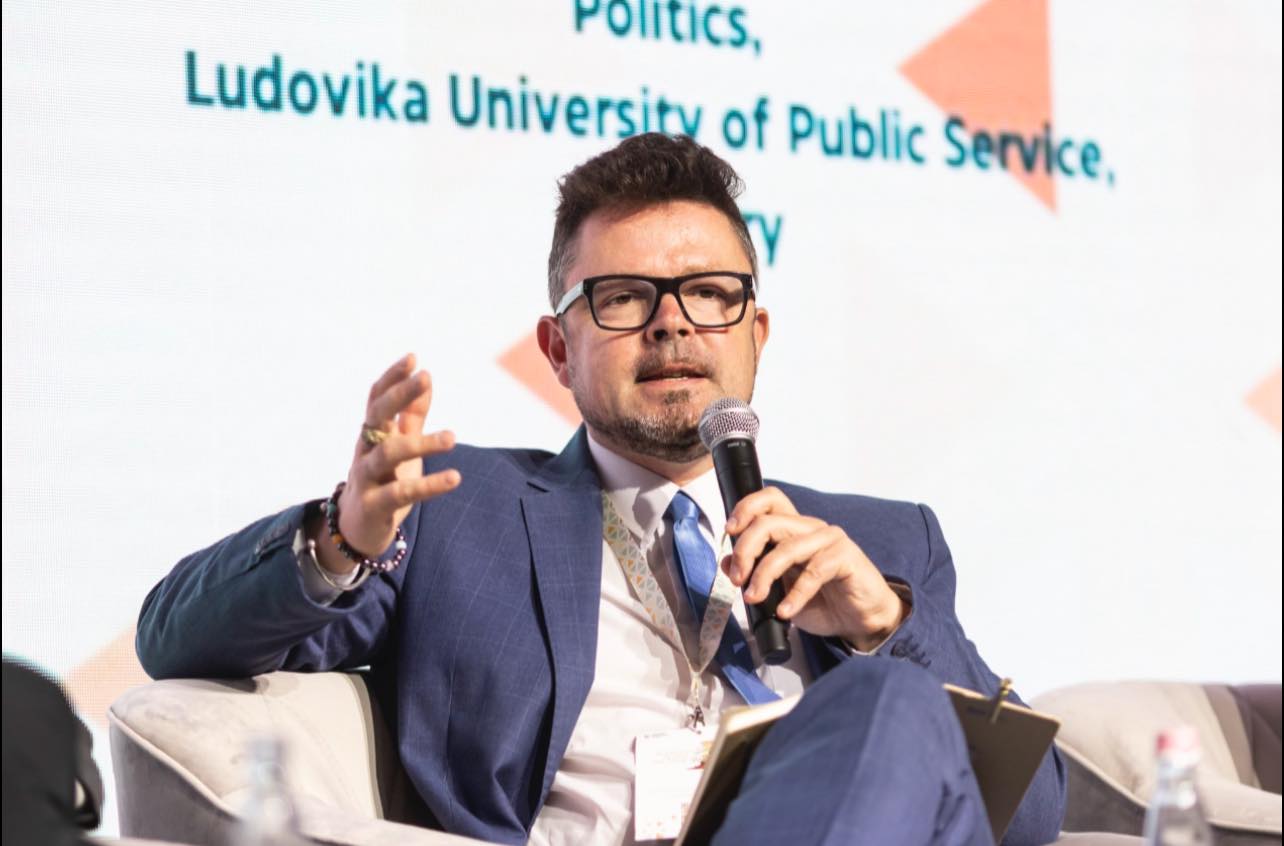
Sébastien Boussois during a conference. Credit : handout.
"There’s an enormous gap between what we should expect from Brussels and what it has become," he says. "People imagine it embodies Europe’s values and achievements, but in reality, it has almost become the opposite."
"Rome, Paris, London, Madrid, these cities carry a cultural and historical weight. Brussels doesn’t inspire. It's generally not loved by Walloons, nor by Flemings because it isn’t Antwerp. It’s a bastard city."
From the Gare du Midi, where many visitors first set foot on Belgian soil, to Zaventem Airport, he says, the journey feels like moving through a corridor of disappointment: graffiti-scarred trains, streets littered and neglected. The city that once charmed him now feels unloved, and in turn, unloving.
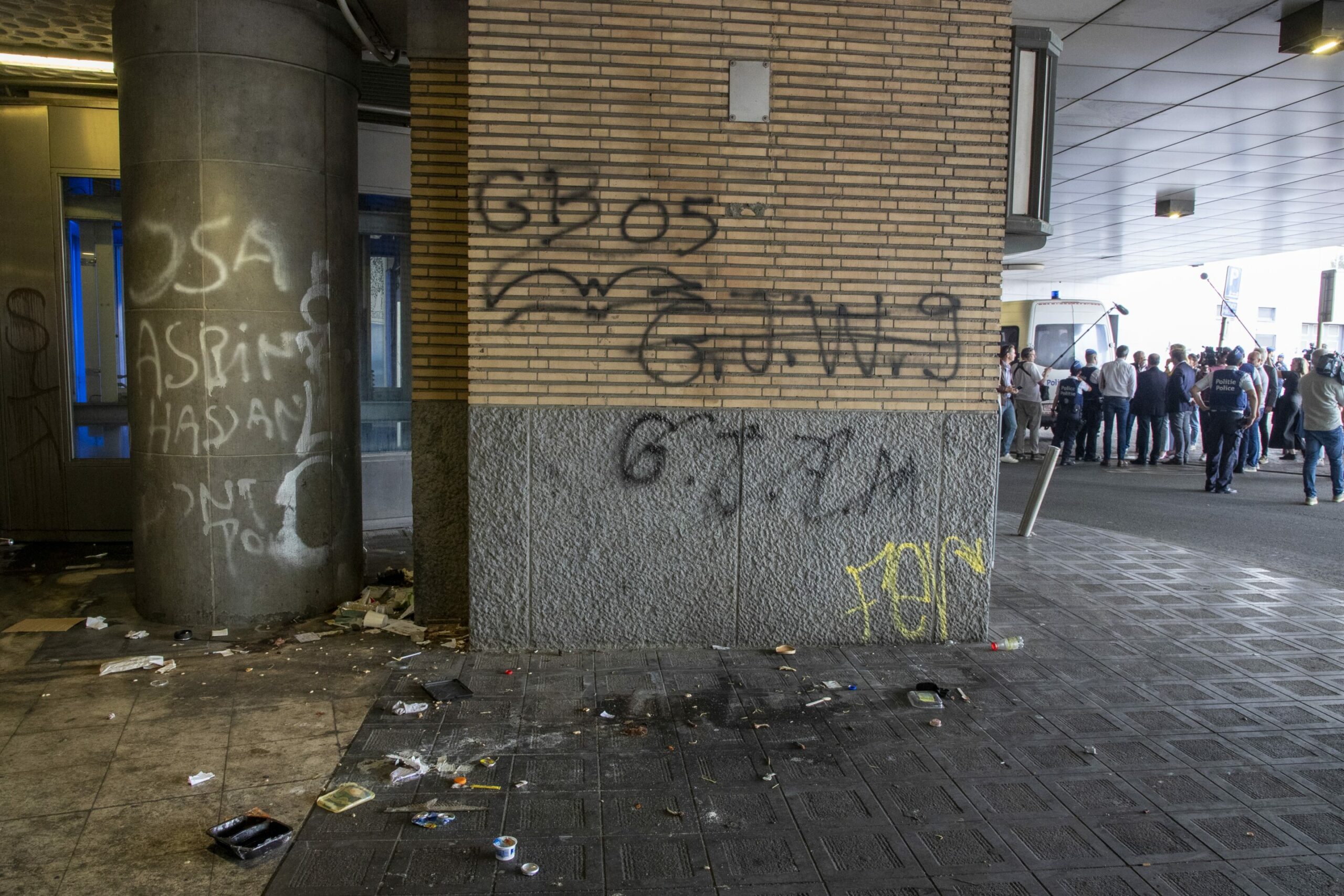
Graffiti and trash pictured during a police action related to crime and anti-social behaviour in and around Brussel-Zuid/ Bruxelles-Midi Brussels South Railway Station, Saturday 26 August 2023. Credit : Belga / Nicolas Maeterlinck
Slowly unravelled
Boussois does not pretend there was a single breaking point. Rather, a gradual decay in governance, security and urban life. Brussels, he argues, attracted "too much, too fast": waves of diverse migrant (European and non European) communities, many of whom, in his view, have not integrated into a coherent civic fabric. "There are neighbourhoods that are now clearly divided along European and non-European identities," he says. "These worlds no longer speak to each other – if they ever did."
Saint-Gilles, one of his first homes in the city, remains for him "a curious oasis," especially near the Hôtel Communal (Town hall). But just beyond lies the Parc de Forest, which he calls "a hangout for drug users and delinquents," and the Rue du Croissant, marked by poverty and despair. Even Place Flagey, once chic and convivial, he describes as "a haunt for gangs at night."
Boussois’s diagnosis is not merely cultural. It is also political.
Belgium’s famously complex federal structure – with six governments and a tangle of ministers – has, he says, bred paralysis and waste. "We host NATO and the European Union, yet we hear there’s no money. If that’s not mismanagement, what is?" he wonders.
In his view, Brussels has suffered under decades of what he calls "clientelism and populism," a transactional politics that placated communities without building a shared vision. Criticising the city has become taboo, he argues: "If you say something negative, you’re branded a fascist. If you praise it, you’re an eco-leftist bobo."
What Brussels needs, he says, is neither nostalgia nor vain slogans but "a restoration of order, authority, calm and governance, the basic sovereign functions of a city and a country." Without that, he asks, how can Brussels preach democracy and good governance to Europe’s member states when it cannot keep its own streets safe or clean?
A multicultural cul-de-sac
The conversation on multiculturalism has also reached a breaking point. He does not deny the contributions of decades of immigration. But he sees parallel societies being formed, some rooted in traditions that remain untouched by Belgian civic life.
"I have friends whose parents arrived 40 years ago and still don’t speak a word of French," he says. "That’s a total failure of integration."
The city’s diversity – often celebrated in official speeches – feels, to him, like a façade. "We like to boast that we have 200 nationalities," he says, "but these communities live side by side, not together. Look at the most violent societies today: the United States, Britain, France. They’re all highly multi-cultural."
He is careful to add that prejudice is not the solution. "The Belgian state must protect all minorities – Jews, Muslims, everyone – and punish racism and antisemitism. But we cannot ignore the tension on the ground."
Boussois 'slags off' Brussels with bleakness. Yet there is sense of hope, or at least defiance. "I don’t write to condemn Brussels," he says, "but because I want to save something of it."
What might that look like? He offers three scenarios, all drastic. First, a genuine reassertion of Belgian state authority – "a re-empowerment," as he calls it. Second, a European rescue package, with member states investing in the city they all claim as their capital. And if neither is possible? Then, he says, the unthinkable: "Move the EU capital elsewhere – to Vienna, to Budapest, somewhere that still inspires."
For now, he plans to leave, likely for Ghent – "the most beautiful city in Belgium," he says admiringly, "clean, organised, internationally minded compared to Brussels."
Boussois’s lament is far from being the final word on Brussels. This is not the first time Brussels has been on the receiving end of harsh words from across the border. Years ago, Jean Quatremer, the long‑time Brussels correspondent for French newspaper Libération, made quite a stir with his own blistering assessment of the city’s dysfunction.
The city reflects the common tensions of a late-modern European (and western) city. Sociologists have long noted that capitals which serve as crossroads of migration and supranational governance often struggle to generate a shared civic identity, and that in a way is the DNA of Brussels and its longtime struggle to compromise. The fragmentation Boussois deplores might be in a part the product of globalisation itself, which concentrates diversity and inequality in the same streets. His disappointment, sharply worded, touches on real questions about integration, governance and the limits of multicultural coexistence. Yet big cities (mostly capitals) are also laboratories where new realities emerge.
Brussels, for all its blemishes, is a living case study of Europe’s promises and its contradictions. And it remains for many, a place of reinvention.
